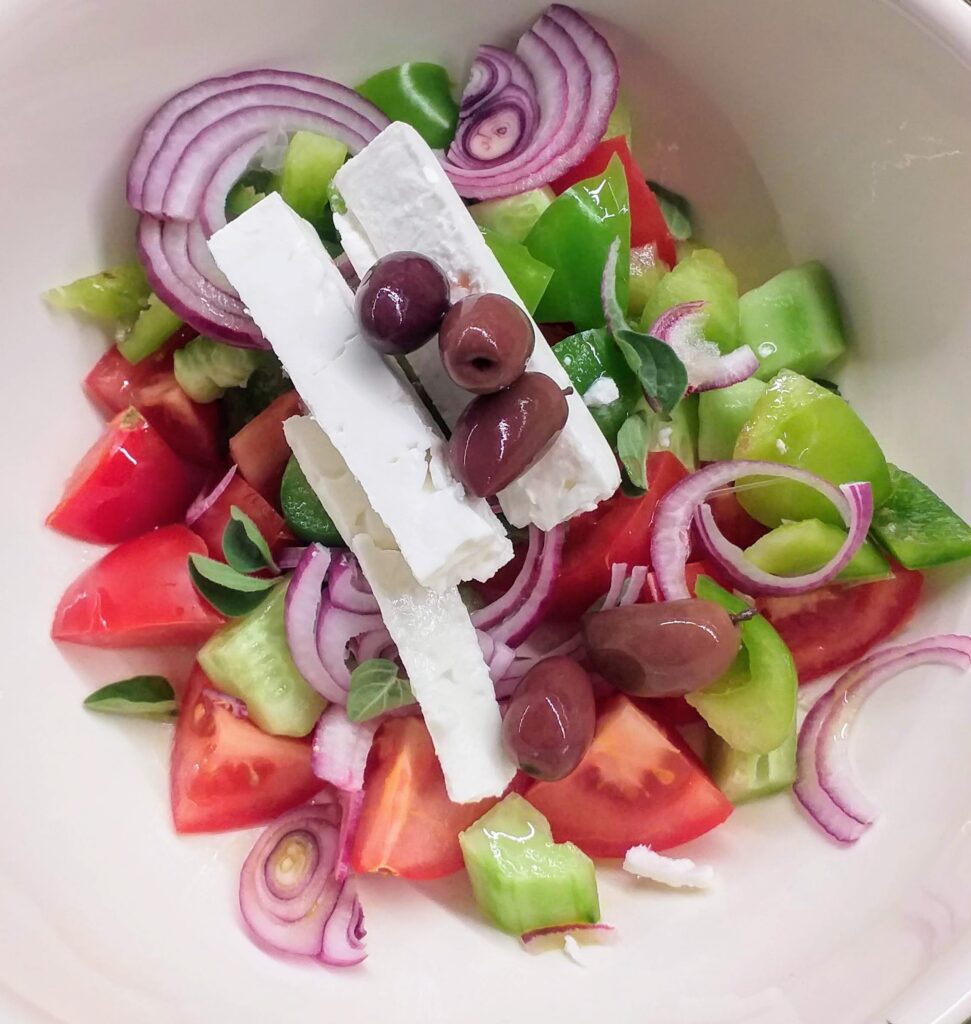
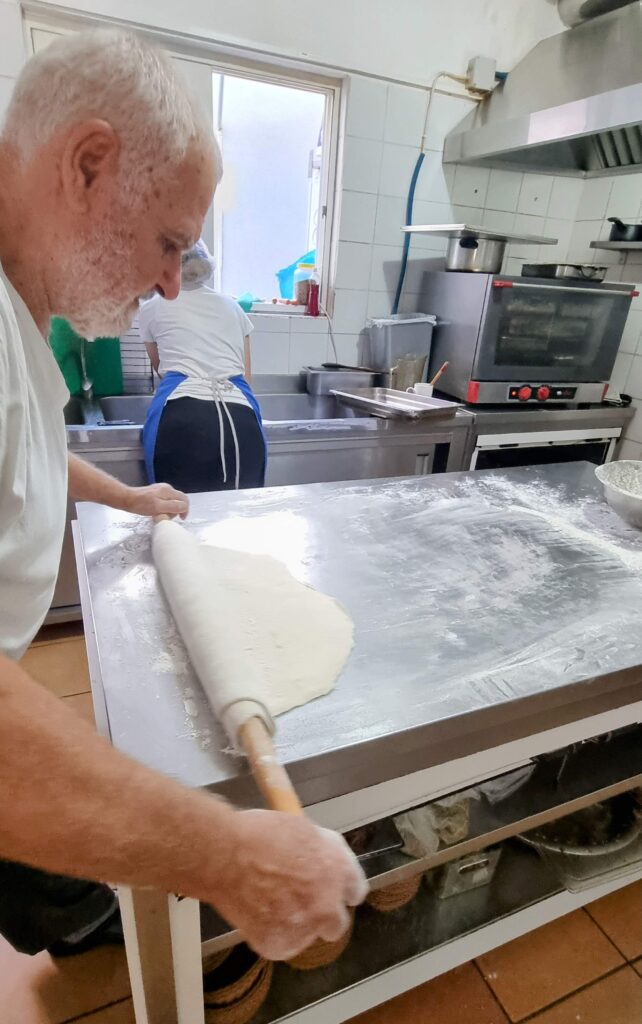
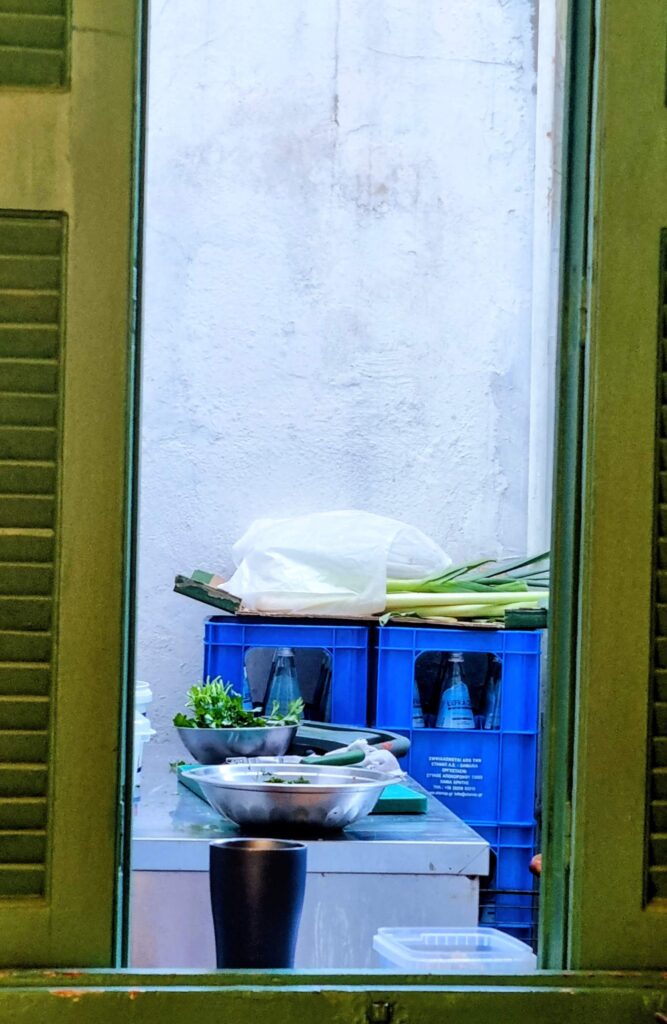
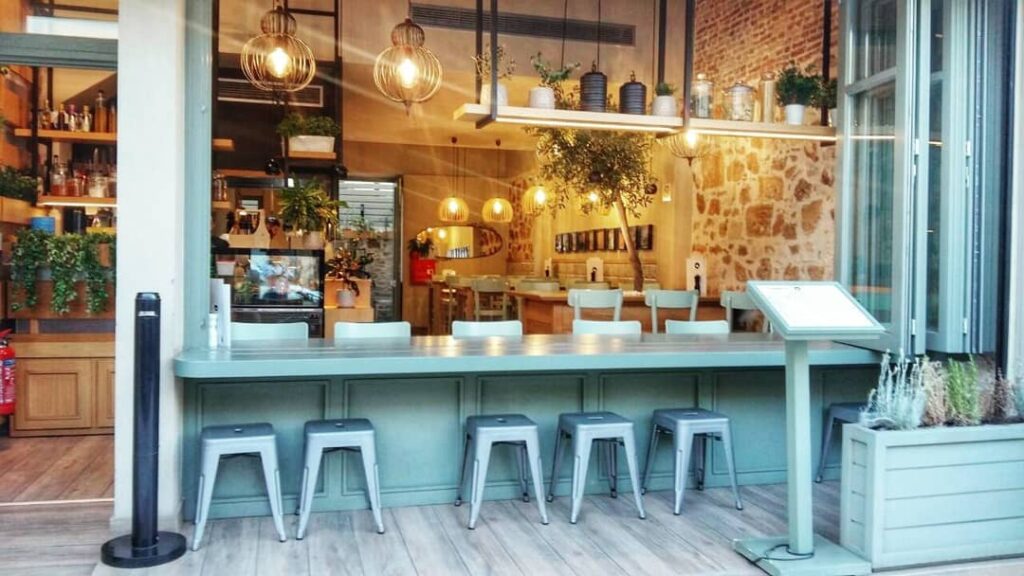
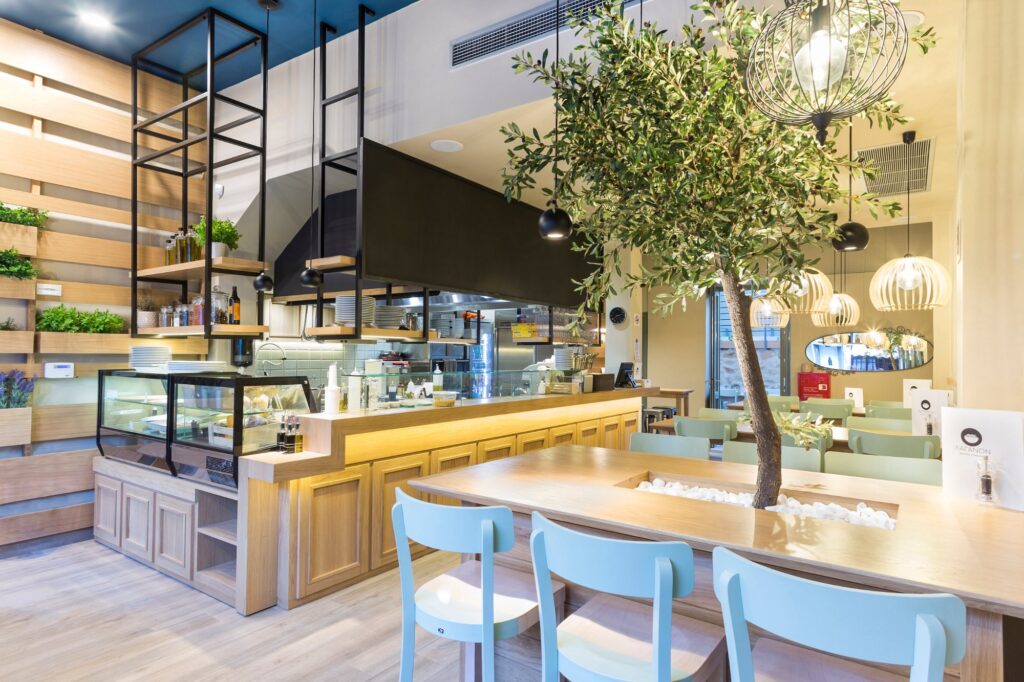
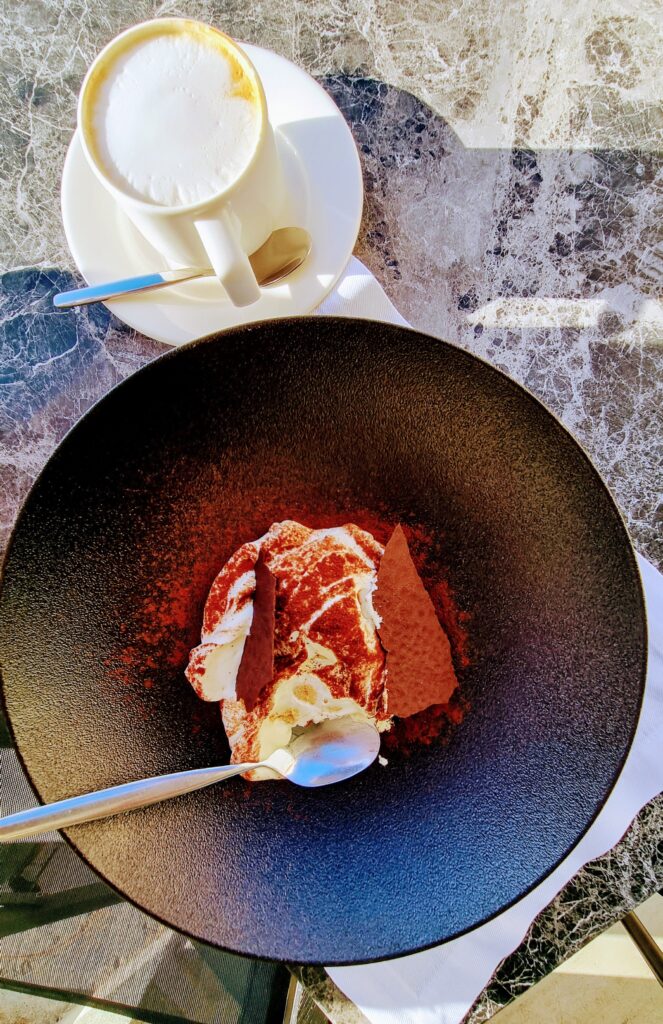
Khoriatki salata (Χωριάτικη σαλάτα) is one of the most classic Greek dishes. The ingredients of this salad, brilliant in its simplicity (rural in its name), are always the same in Greece, small variations are allowed. But really small ones, and I will defend this conviction like King Leonidas – Thermopylae.
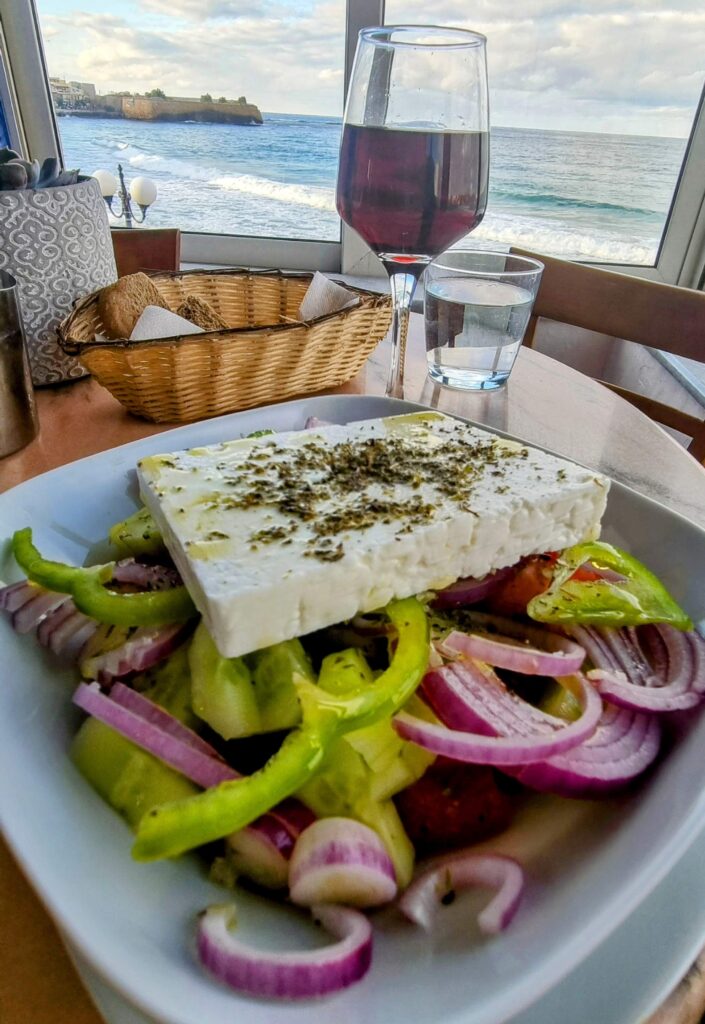
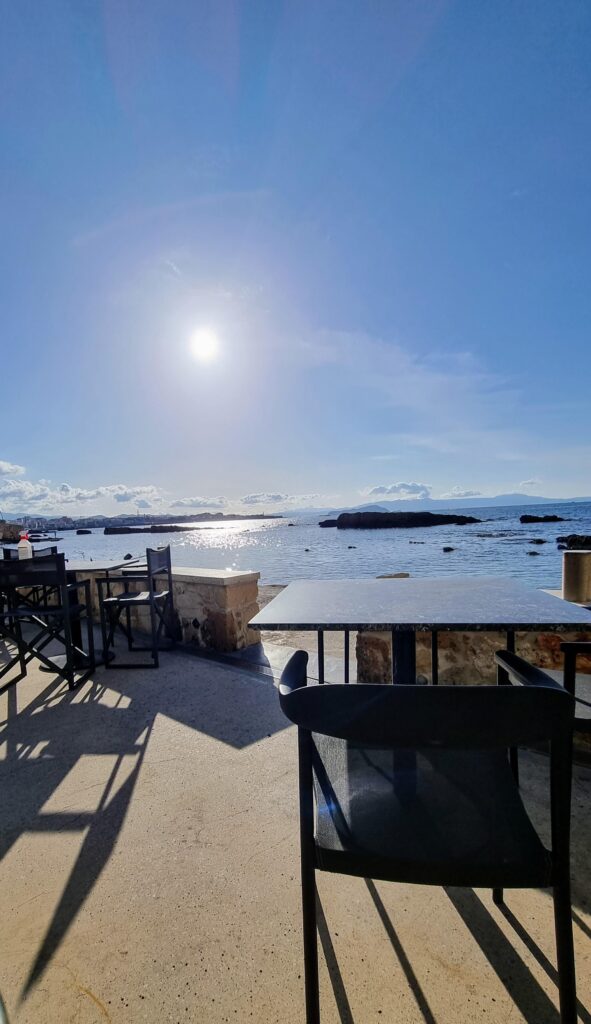
TRight side photo taken at a lovely Demek, Koum Kapi, Chania
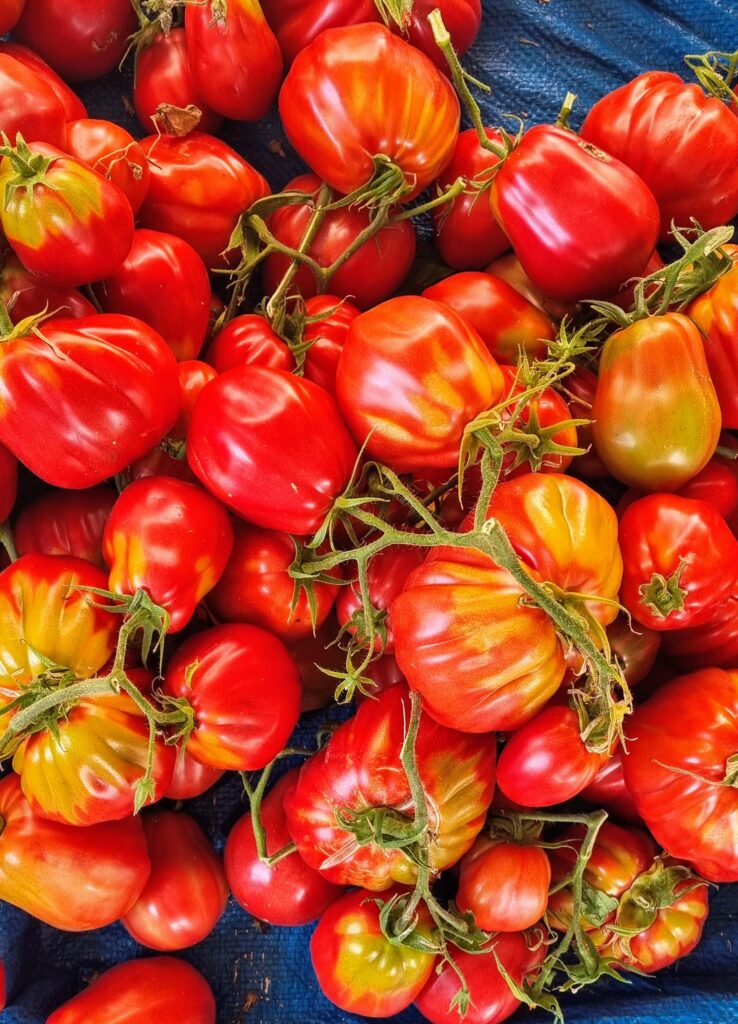
Well, the bowl should contain ripe tomatoes, cucumbers, red onions, which are juicy and sweet in the south, peppers (but green, green!), all chopped thickly and drizzled generously with the best quality olive oil. A thick slice of feta cheese is placed on top and sprinkled with Greek oregano. Often you’ll also find black olives, white wine vinegar for a little acidity, and a little salt, although in my opinion good feta is salty enough. It is standard to serve bread with choriatiki, usually unsophisticated but good enough to soak up the remaining juice at the bottom of the bowl.
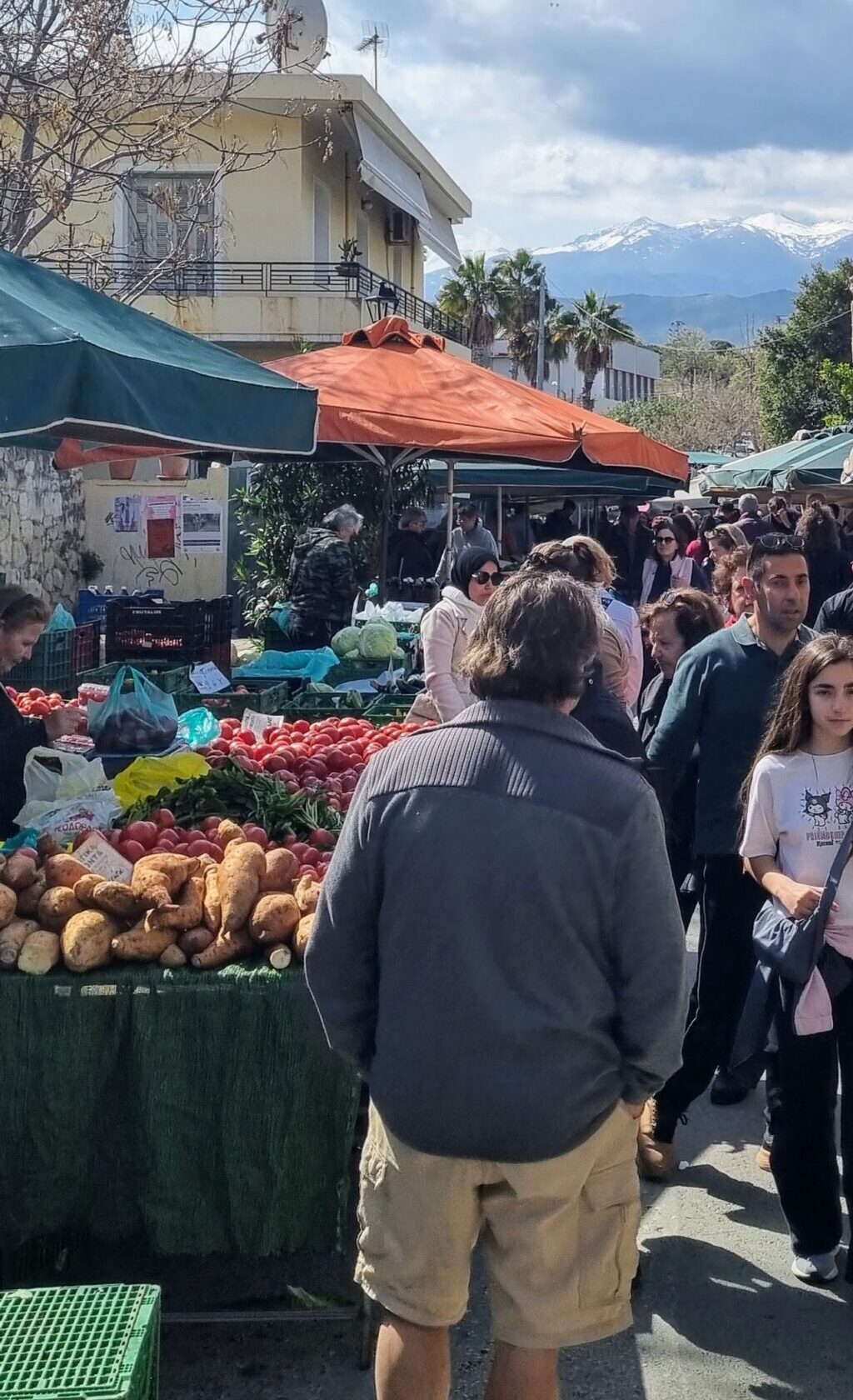
There is nothing better in hot weather, when the crisp and cool vegetables release their juices and flavours with every bite, the friendly human bustle echoes in the background and the air smells of sun, herbs, sea and freedom.
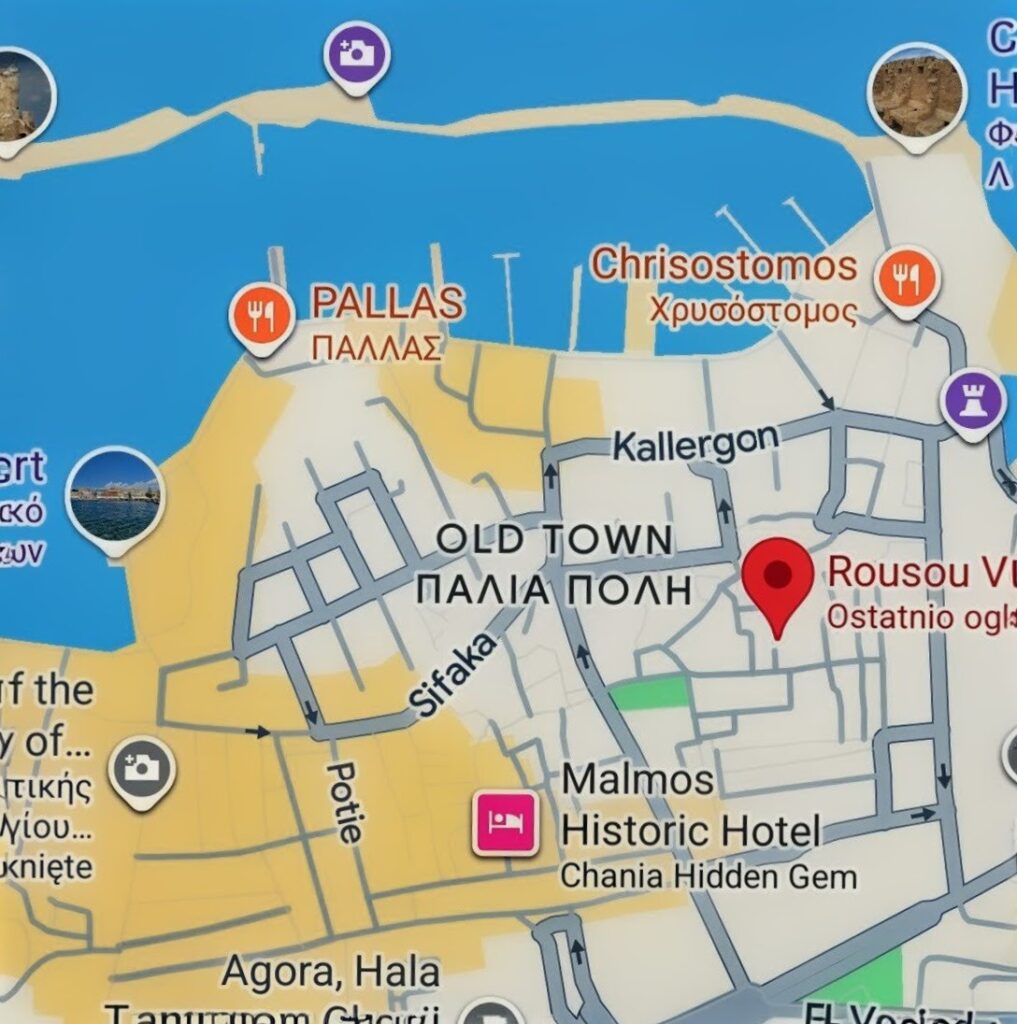
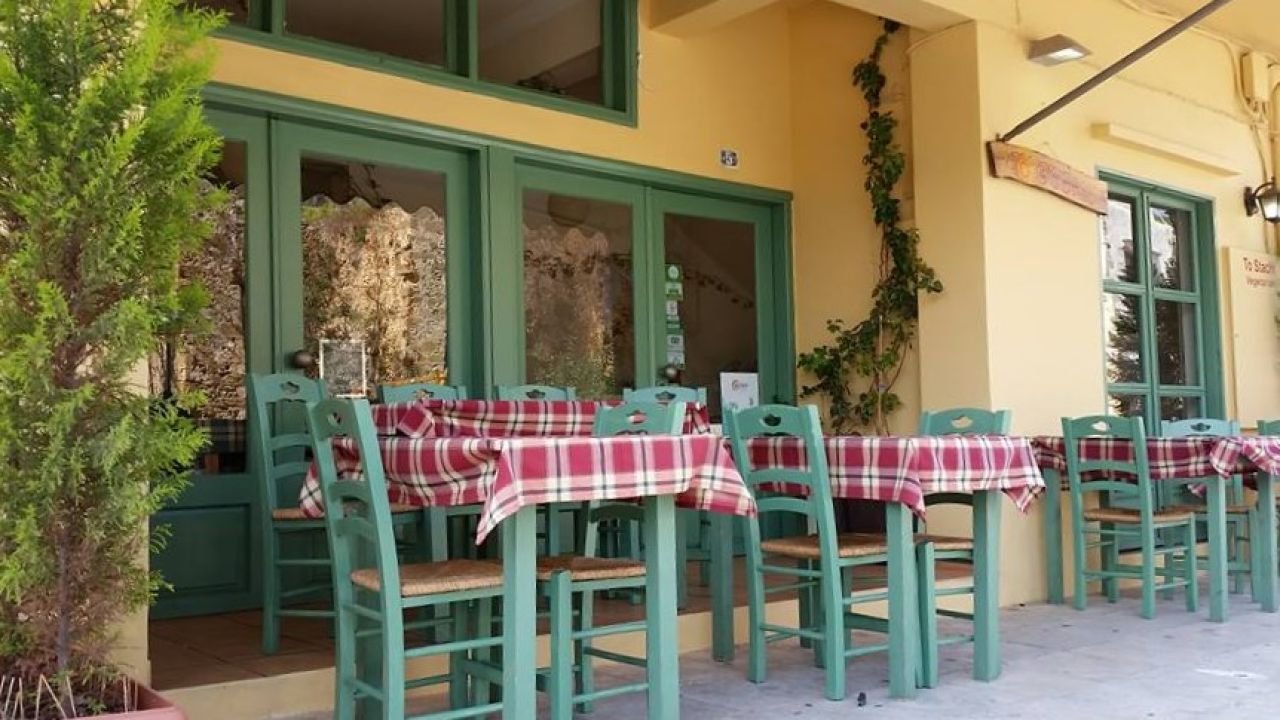
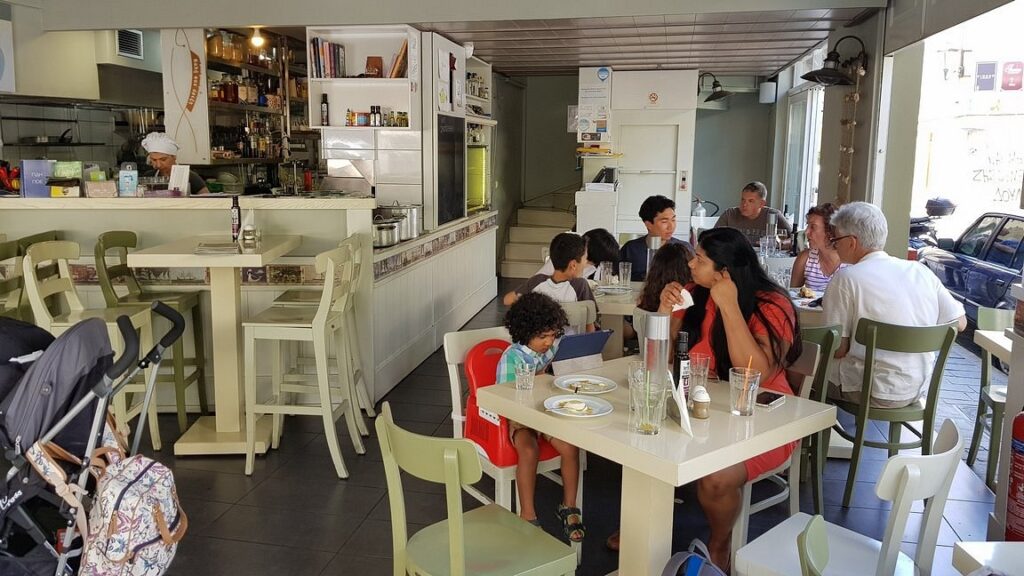
If you are a vegetarian (or not!), you must go there. A wide selection of vegan and vegetarian dishes that will satisfy all palates. Non-alcoholic beers and wines, natural wines – you are sure to find something to accompany your meal. On top of that the intergenerational family that runs the restaurant are the lovliest people in town!
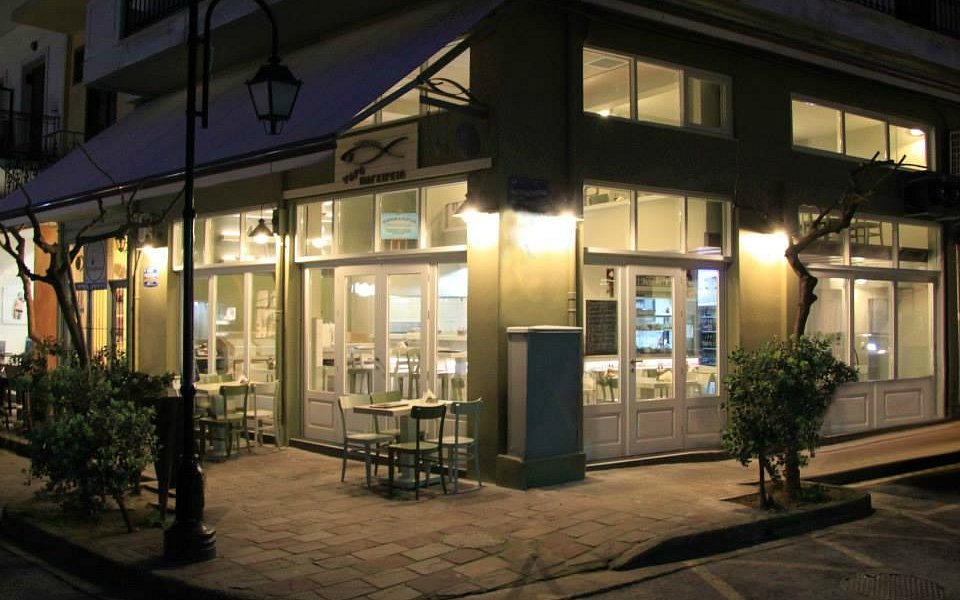
It is a place of reference in Chania when it comes to fresh fish and seafood. The restaurant is located very near Splantzia square, offers outside and inside tables spread on two floors. It is always bustling with the sounds of conversation, laughter, the clatter of cutlery and plates, and waiters rushing about.
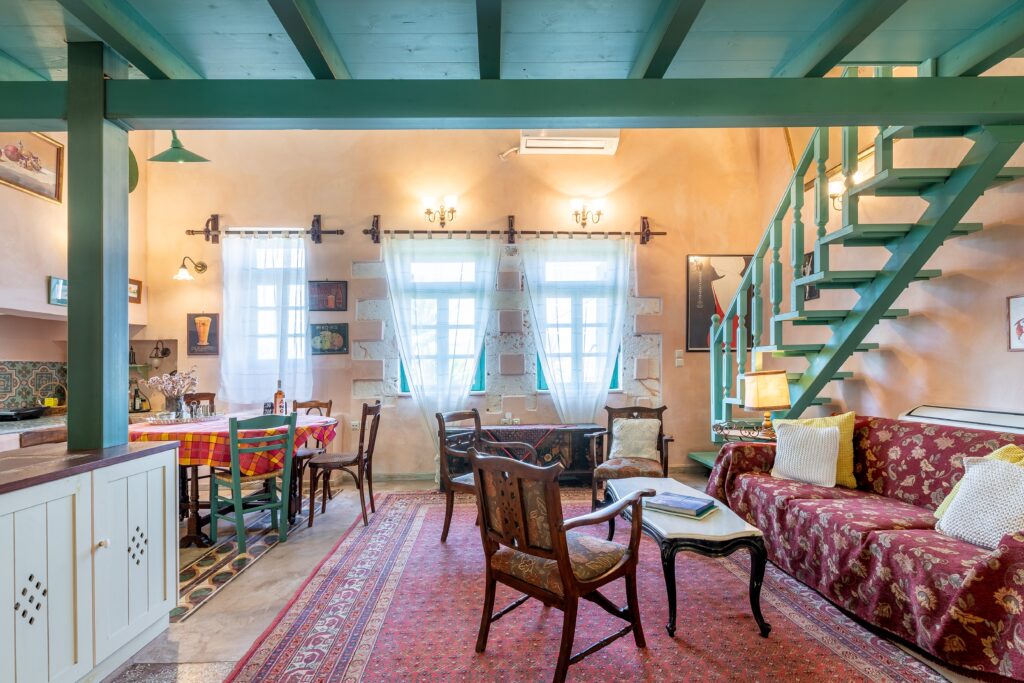
Our apartment, which is spacious and airy (ca.100 m2) can accommodate up to 6 guests. It has one private bedroom that sleeps two, a living room that sleeps two more and a mezzanine just above the living room for two more guests.
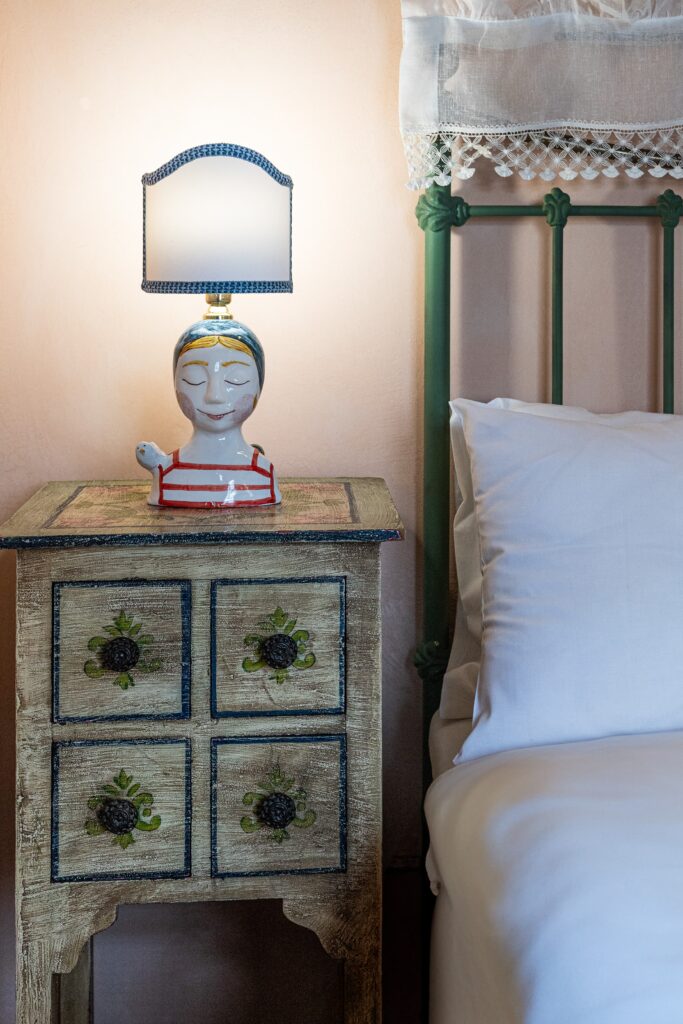
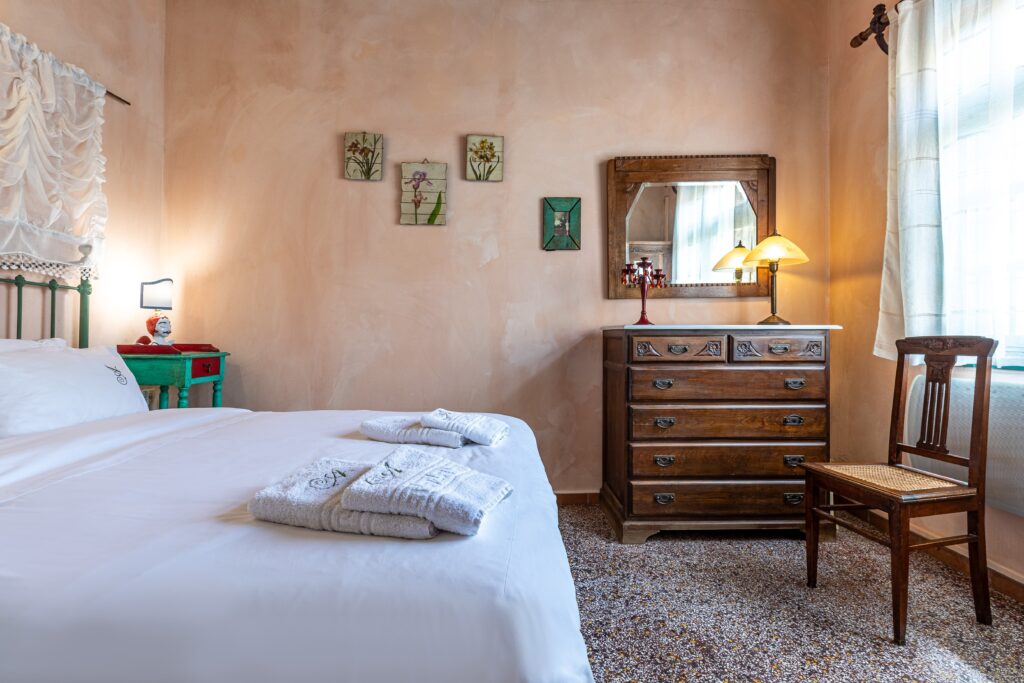
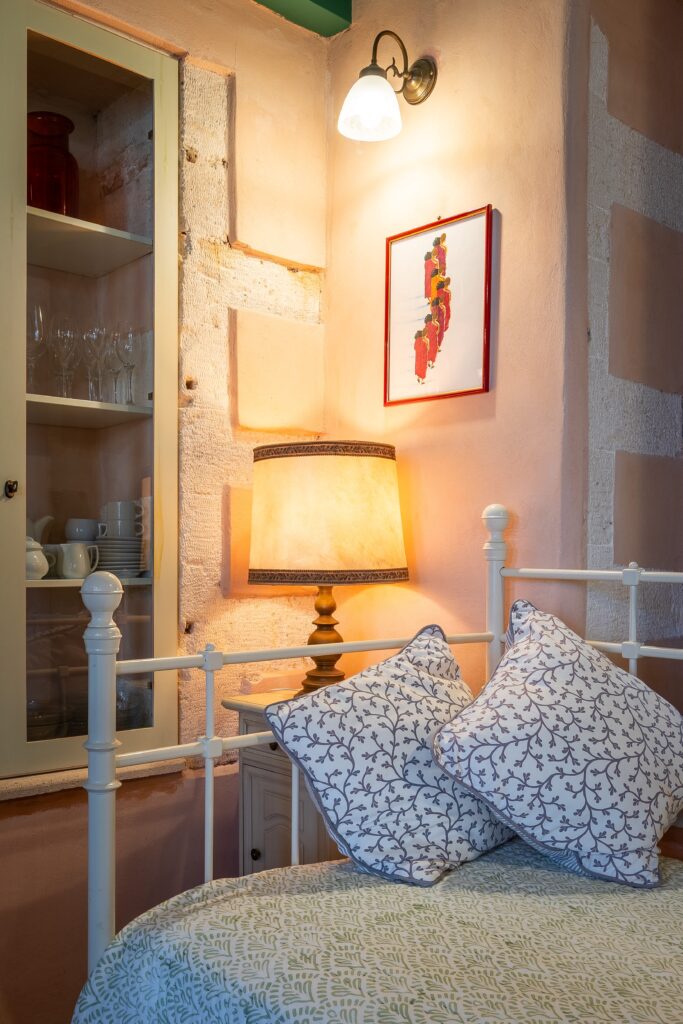
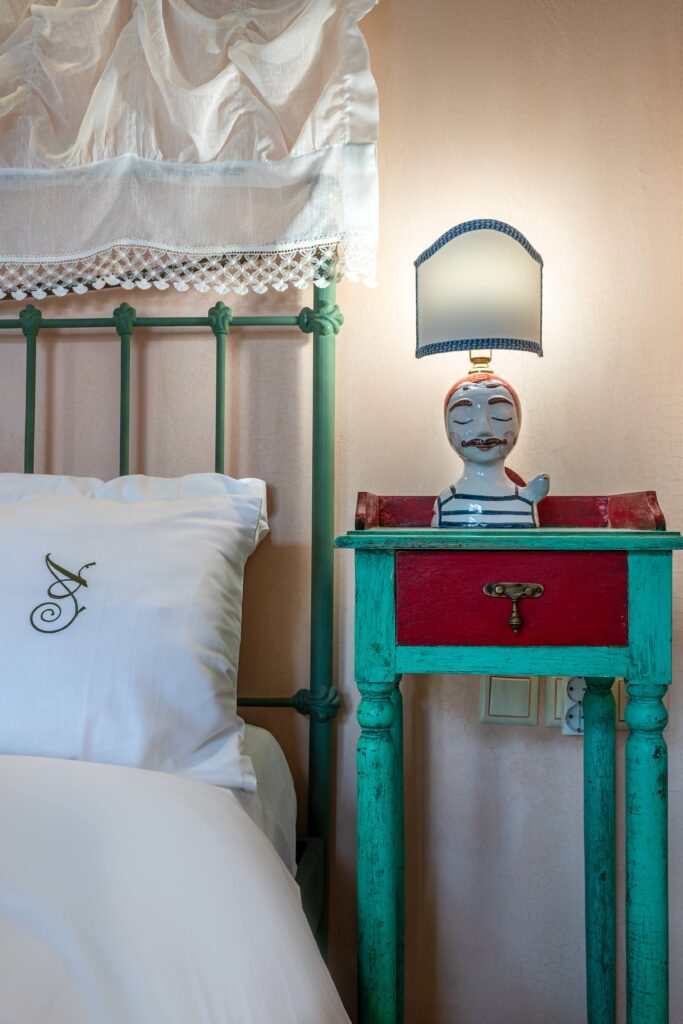
The private bedroom (after you enter and to the right) comes with a double bed (153 x 200 cm), a wardrobe, two bedside tables, and a chest of drawers. The window overlooks the front porch and the garden. There is an air conditioner and a ceiling fan, if you get hot in the summer, and a heater +air conditioner if you get cold.
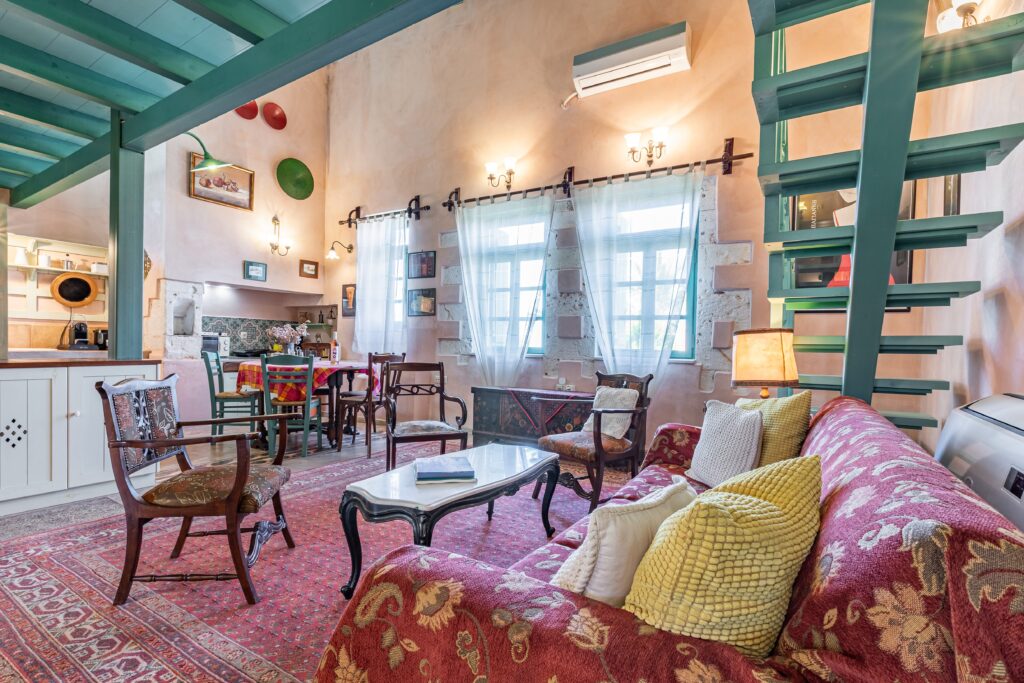
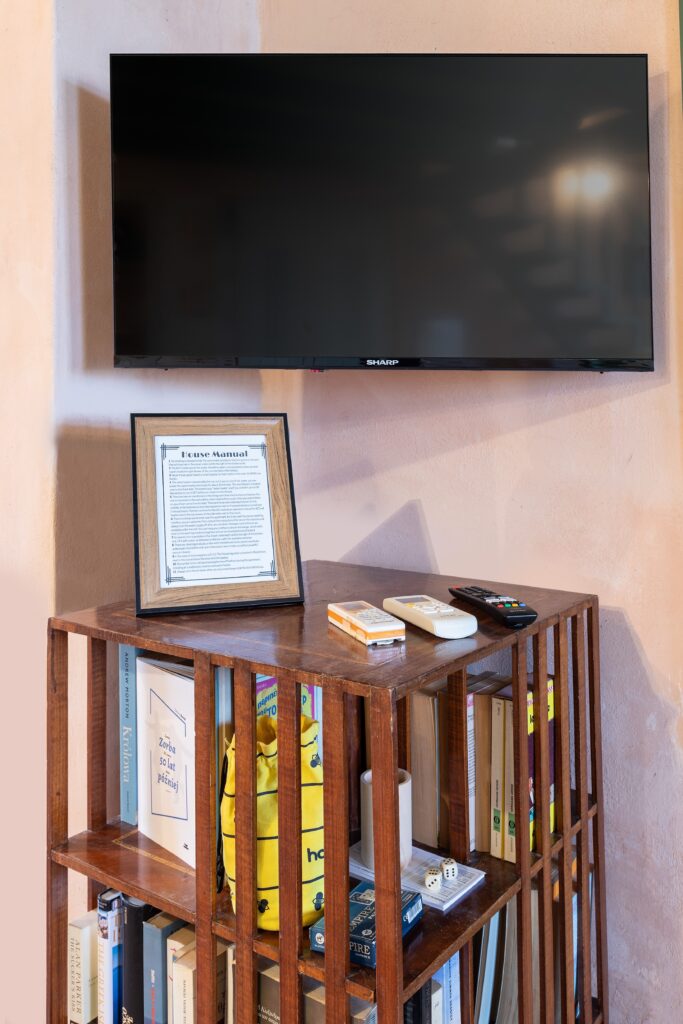
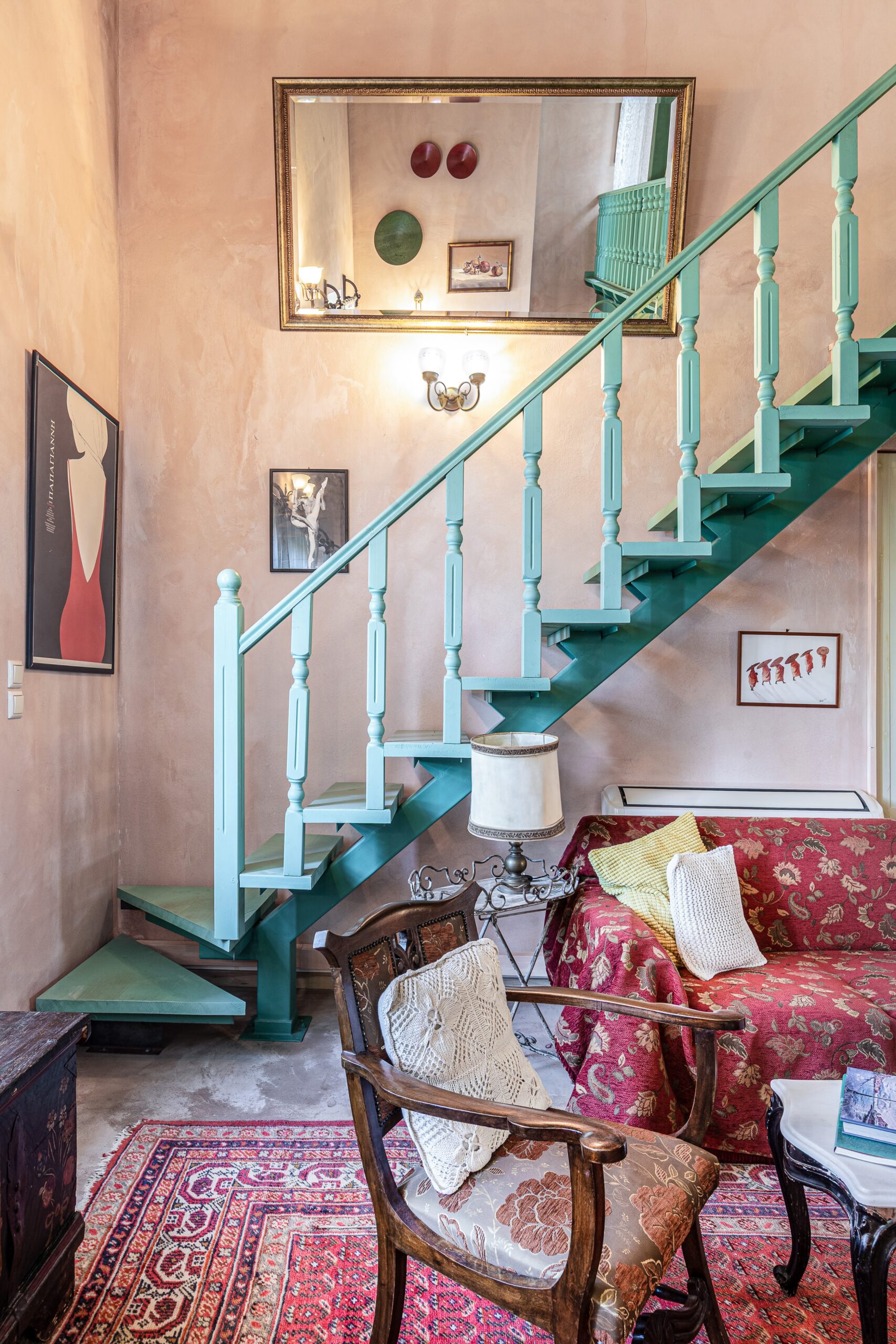
The living room area features a cosy sofa bed (90 x 200 cm) with a pullout bed (87 x 190 cm) tucked away underneath, a couch, armchairs, an old chest, an antique revolving bookcase, and a TV. The living room windows overlook a series of backyards with lush greenery, beyond which you can see the sea. The living room is equipped with two air conditioners that also function as heaters, plus a ceiling fan.
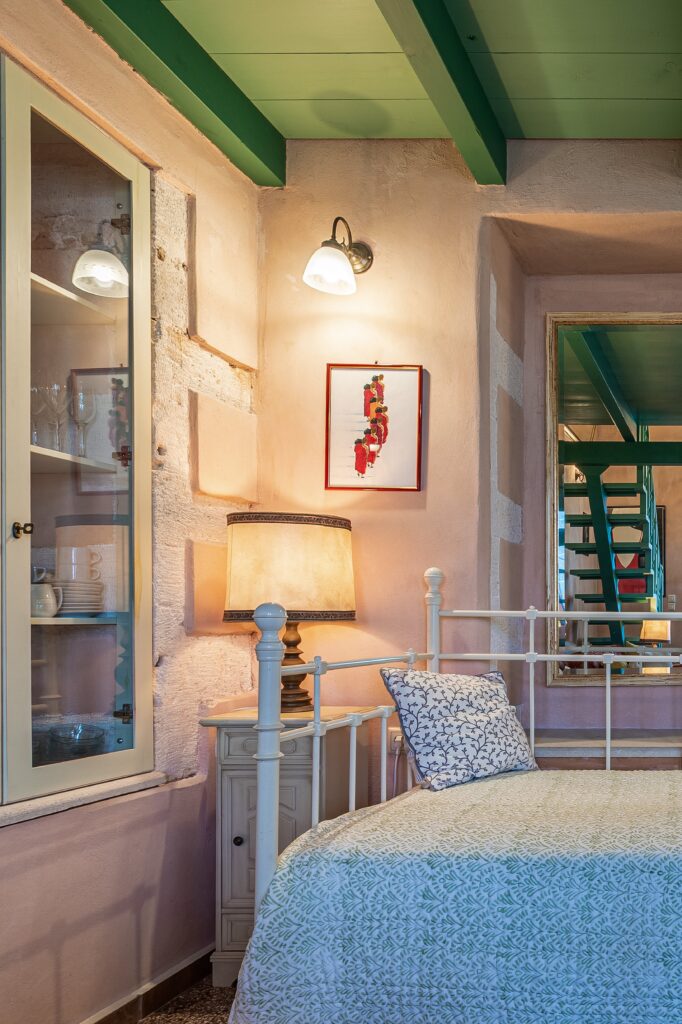
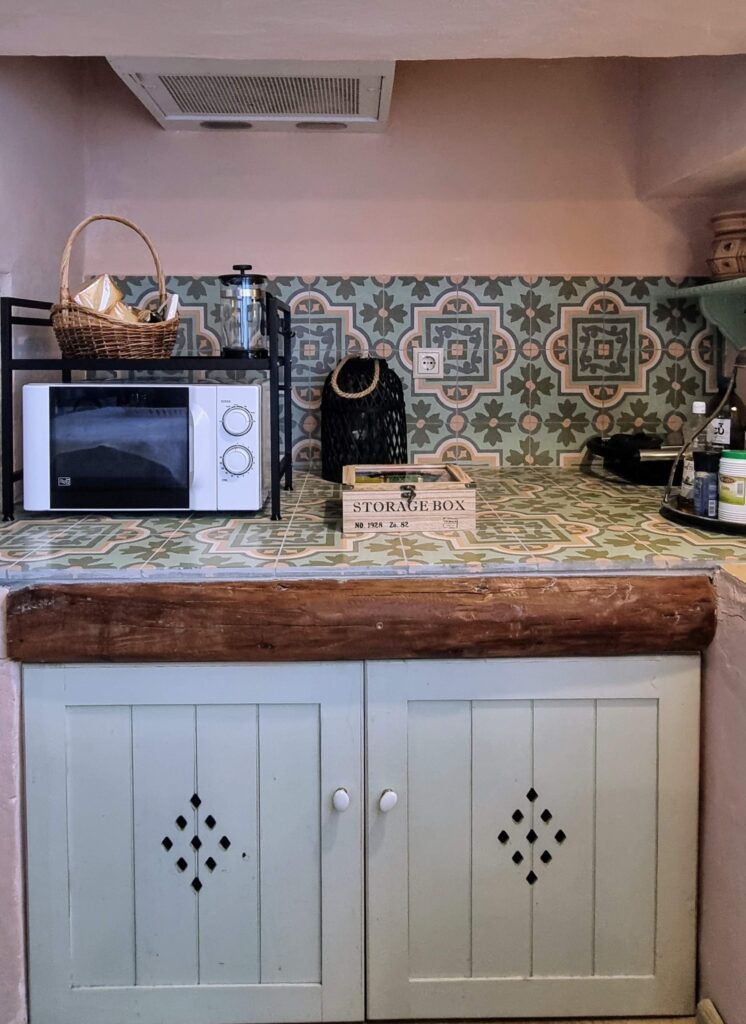
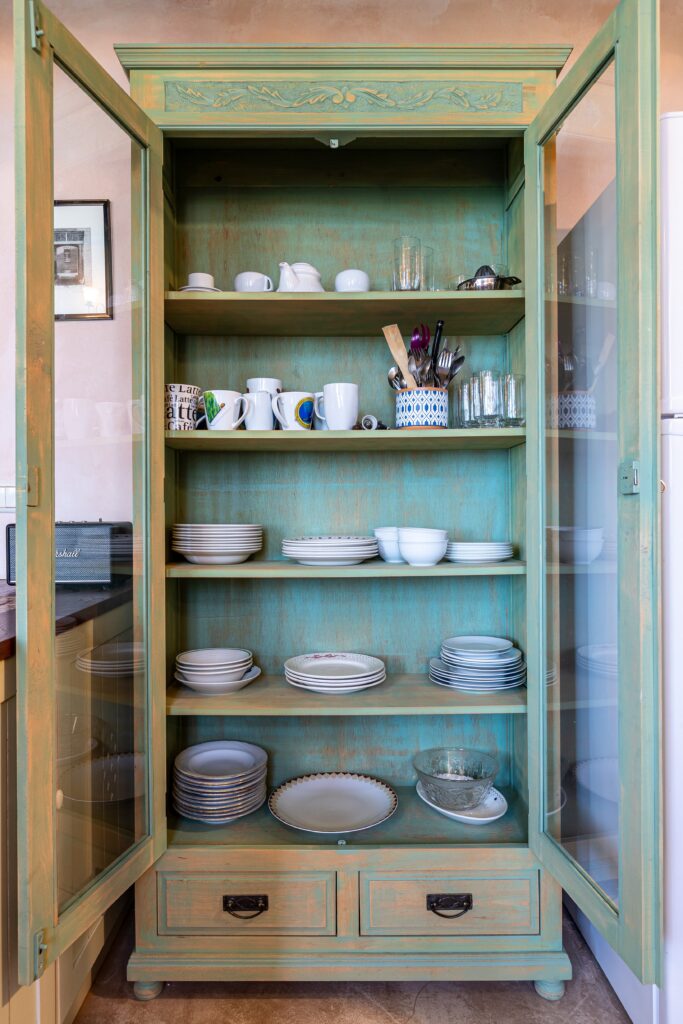
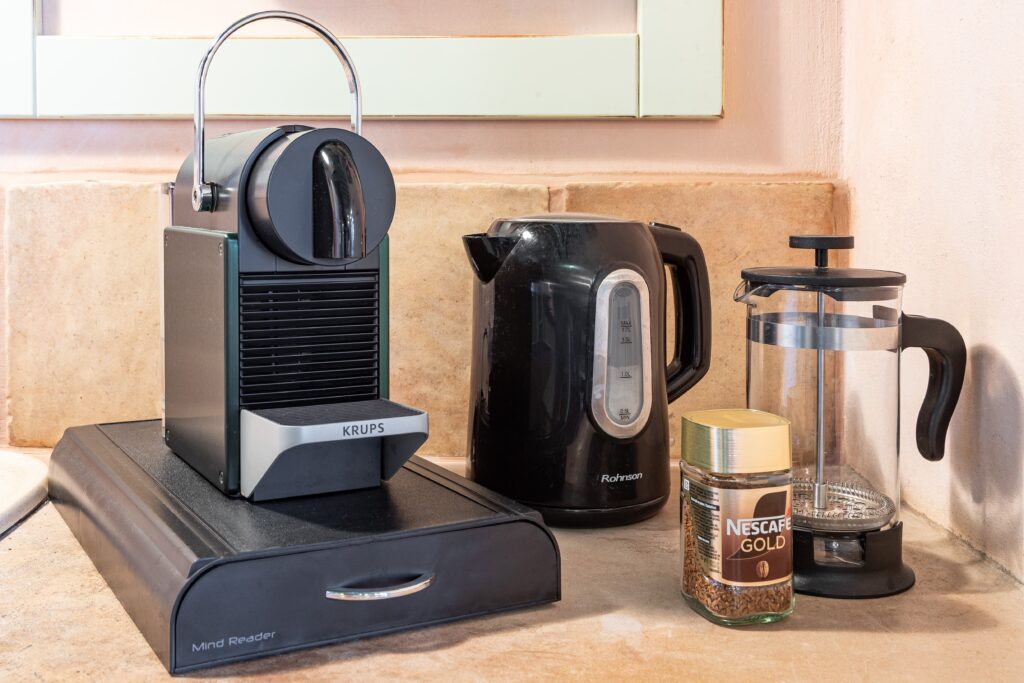
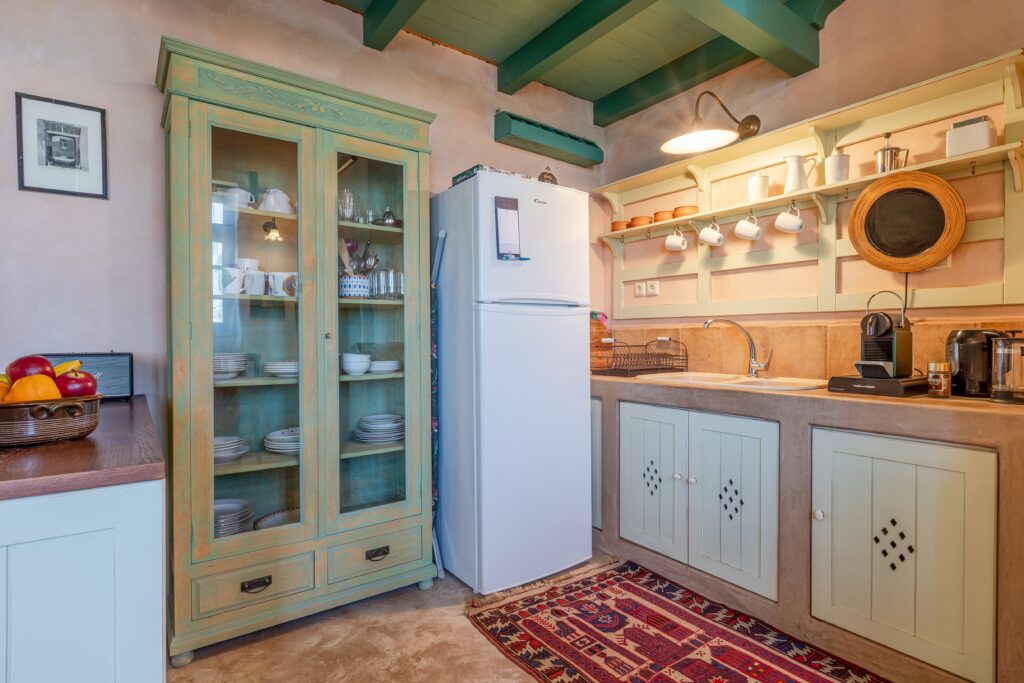
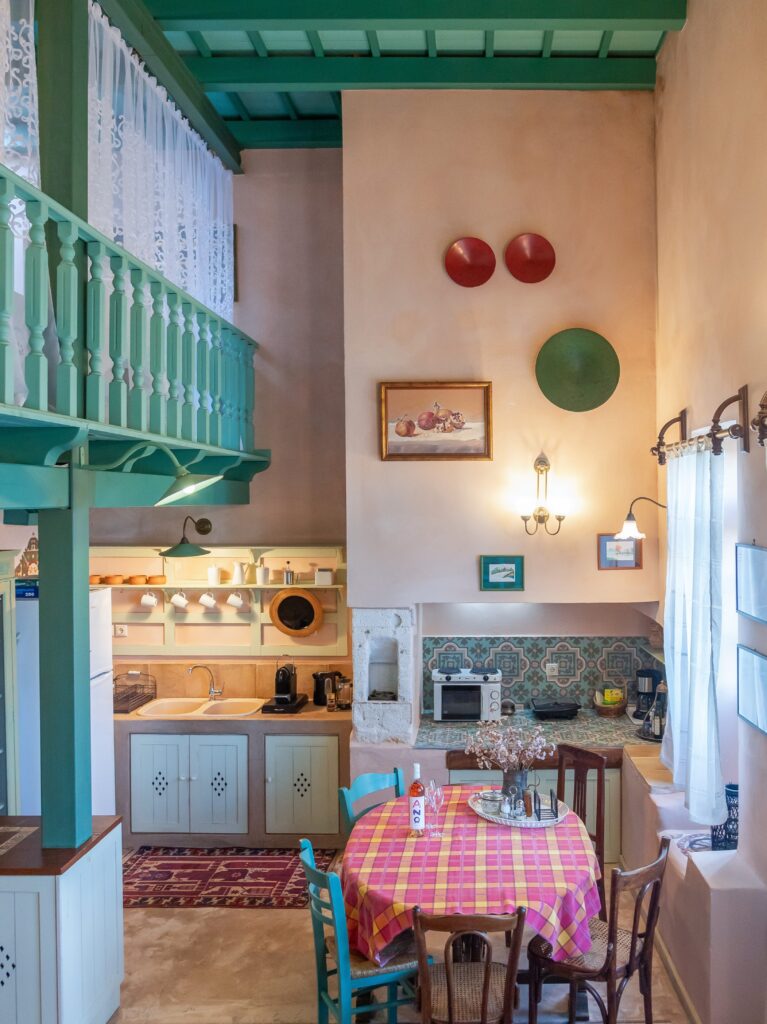
The kitchen is in the same space. It features a dining table with chairs that you can also use as a workspace, a glass cabinet with everything you may need (plates, cups etc), a big fridge, coffee maker, kettle, two hotplates, and a microwave.
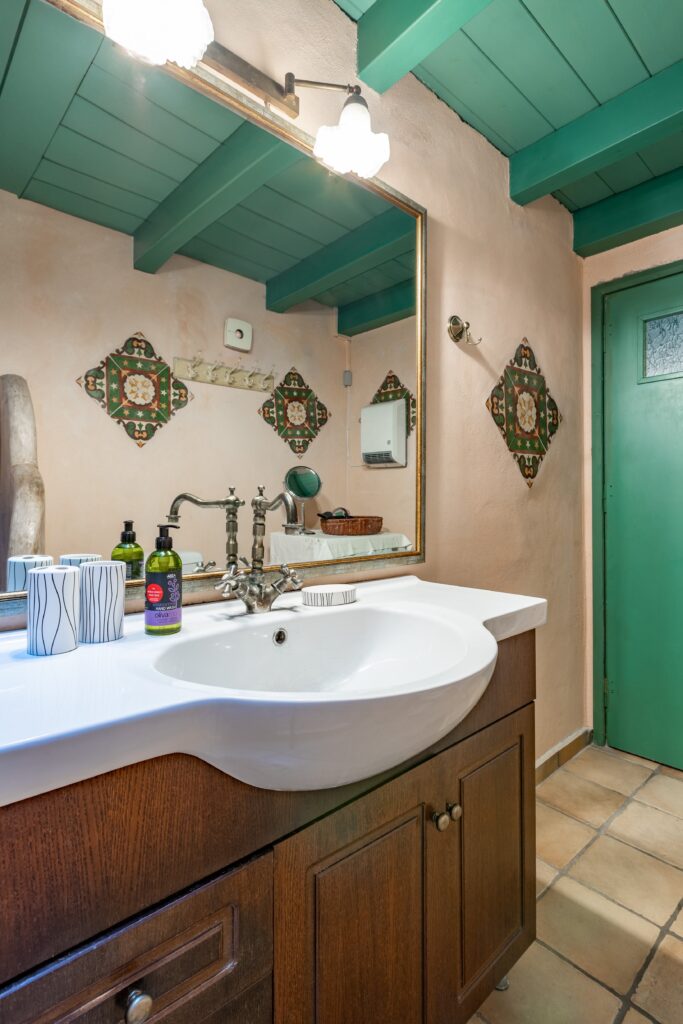
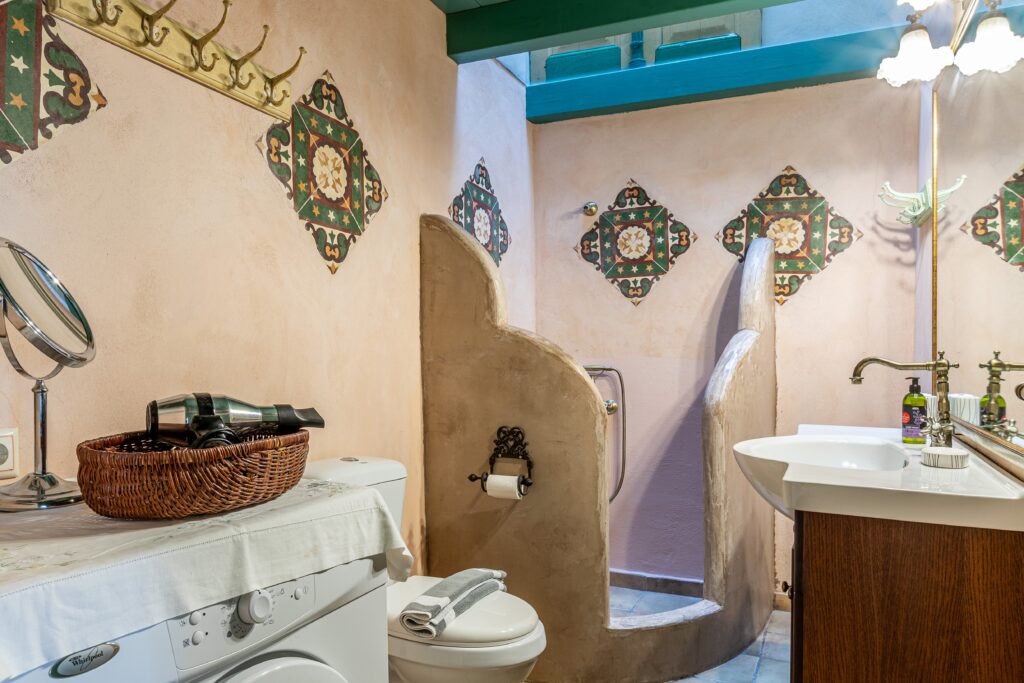
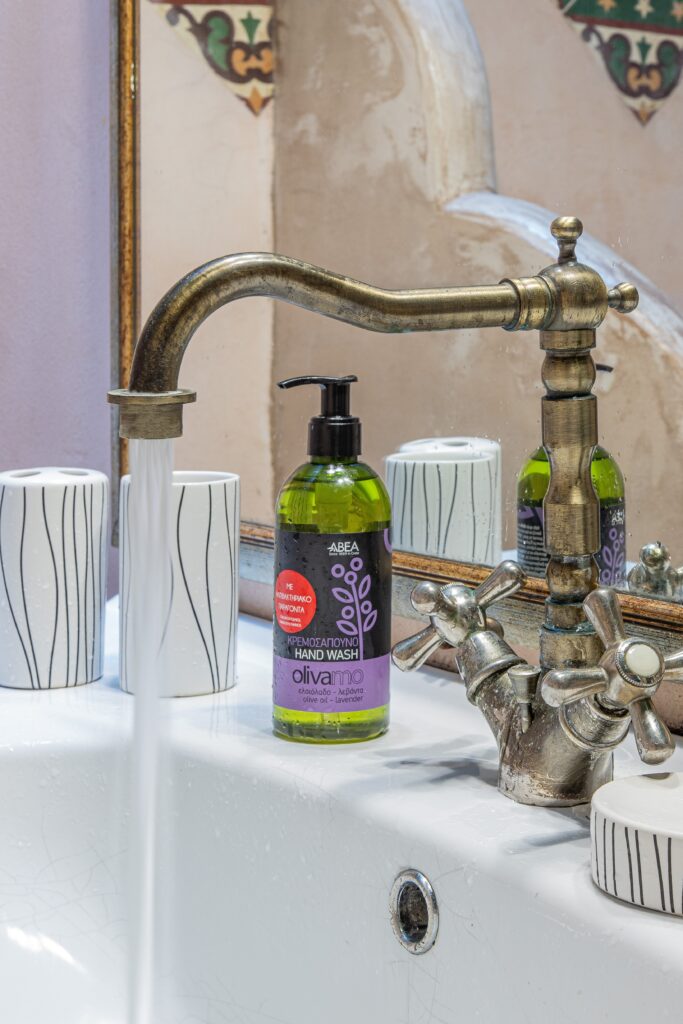
The bathroom, right next to the kitchen, features a toilet, a sink and a shower with a glass ceiling, which allows the bathroom to be lit naturally during the day by a skylight on the roof. We hope that you will enjoy natural cosmetics of ABEA – the oldest olive oil company established in Chania. There is also a washing machine, which you are welcome to use. A clothes hanger rests next to the washing machine. Iron board and electric iron are also available.
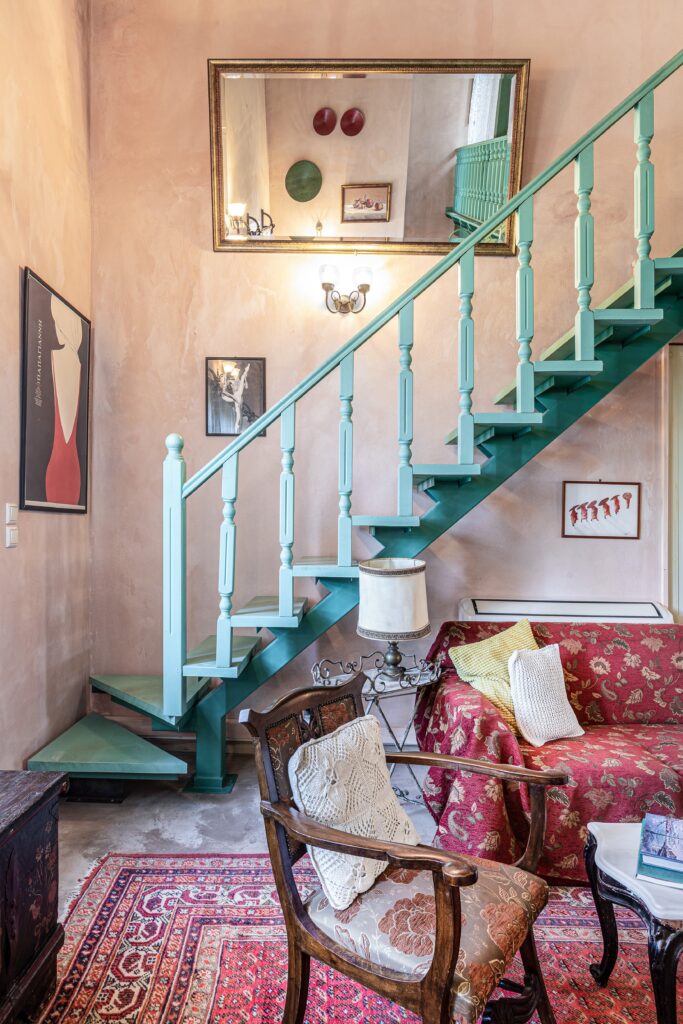
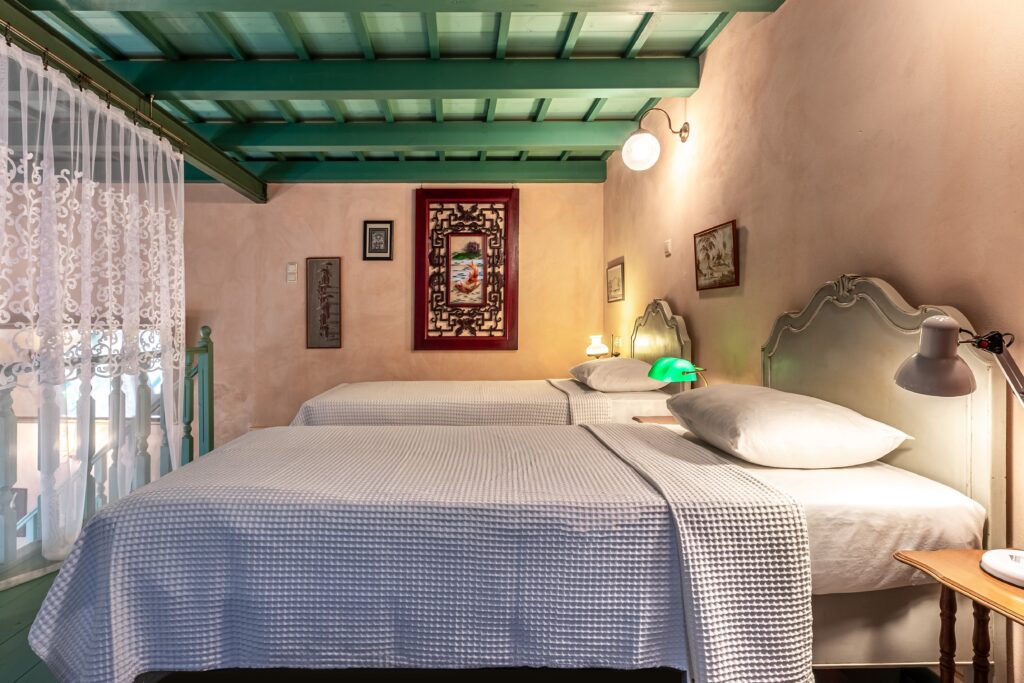
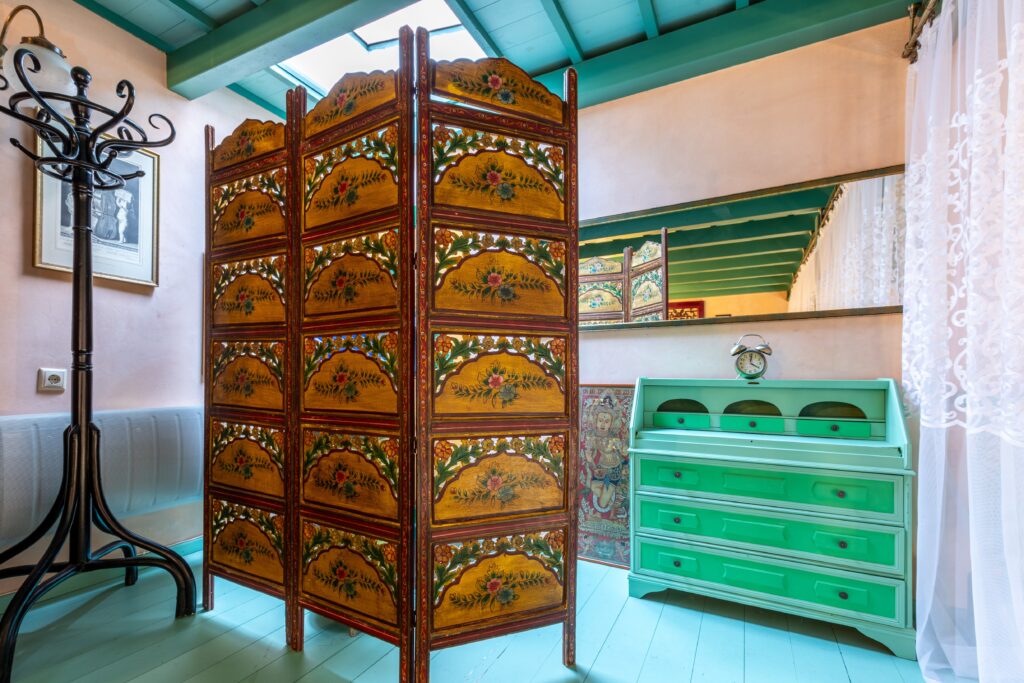
On the mezzanine, accessible via a staircase, there are two more single beds with bedside tables, a wardrobe, a chest of drawers, an extra table with a chair that you can use as a workspace, a chest, and an antique folding screen, which hides the bathroom’s glass ceiling.
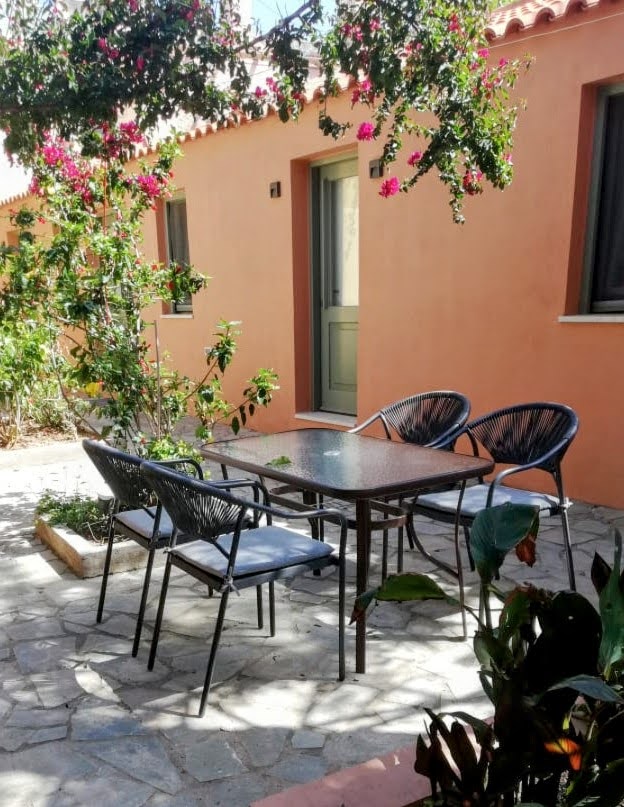
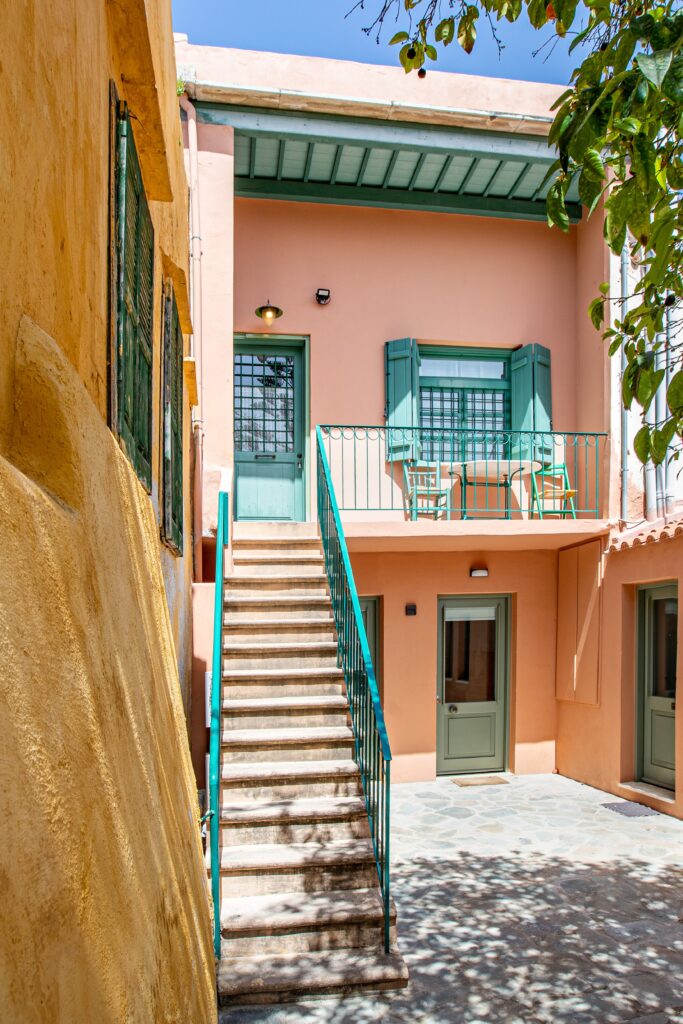
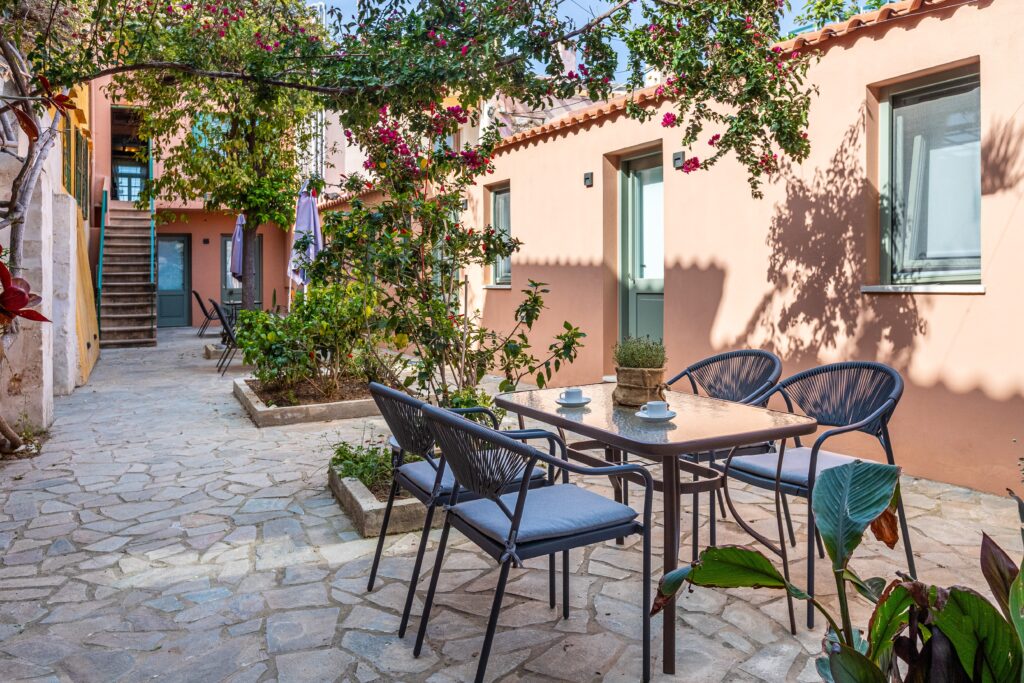
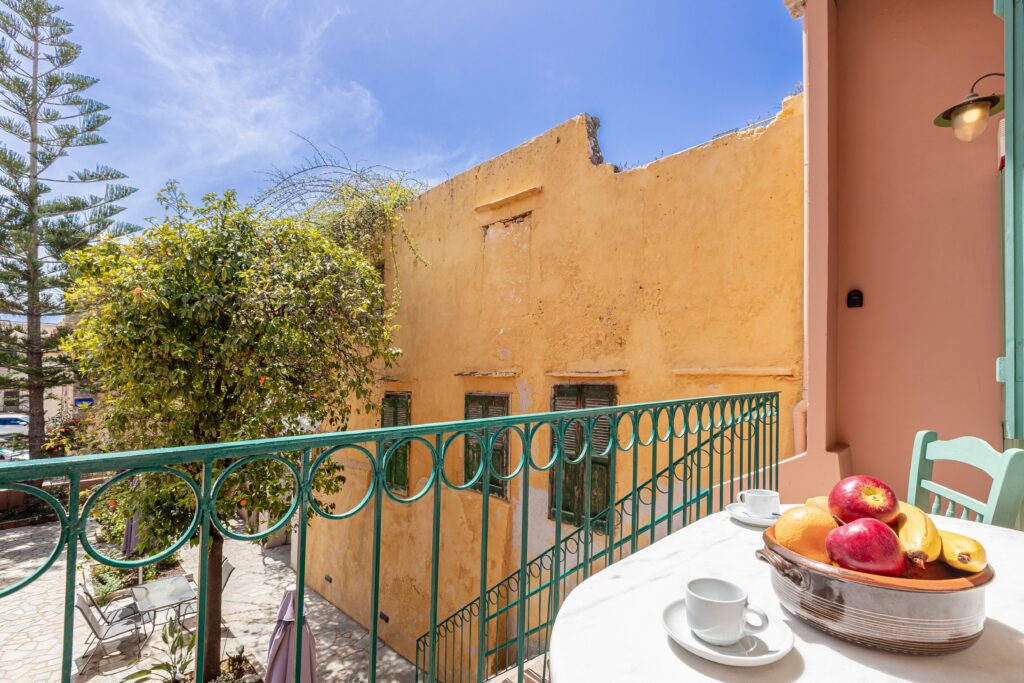
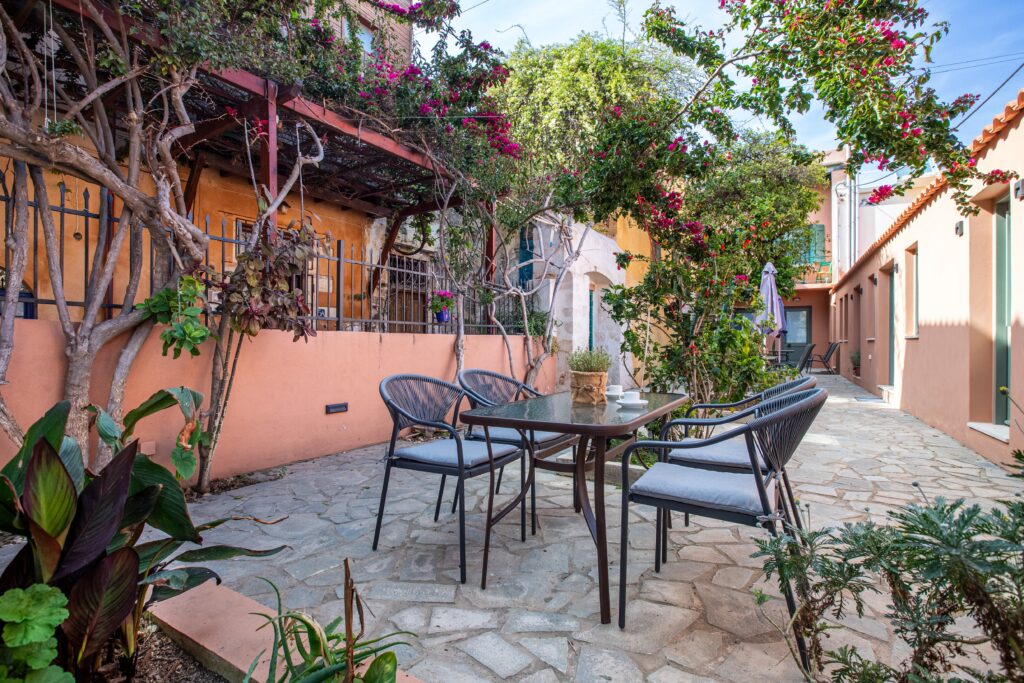
The apartments also have a charming balcony with a table and two chairs. From this balcony, you can admire a bitter orange tree and the stylish, flower-filled inner courtyard.In the courtyard, near the entrance gate, there is a table with chairs for four people. Above it, a magnificent araucaria tree spreads its crown.
The apartment is self-catering. Towels, sheets, pillows, blankets, and duvets will be at your disposal and if you are staying for more than five days you will be provided with an extra pair of towels and sheets. The water heater is solar-powered, but if you run out of hot water you can always power the heater electrically.
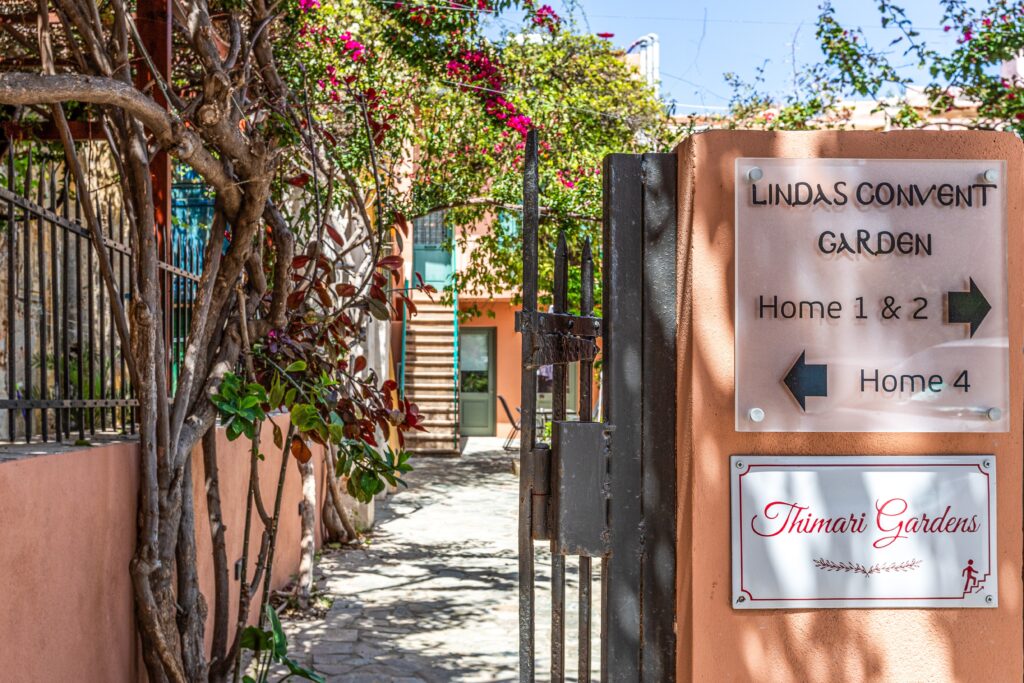
Thimari Gardens is more than yet another Airbnb place. A century old house was built on ruins of Dominican Convent dated back to 1320 A.D. 100 sqm house with a mezzanine, gives a lot of space, while green spaces we have on both sides keep temperatures moderate. What is really unusual for old towns, it remains calm, without street noises.
You will find the apartment in the historic Turkish quarter of Splantzia, next to the Dominican temple of St. Nicholas and Splantzia Square (aka ‘Plateia 1821’).
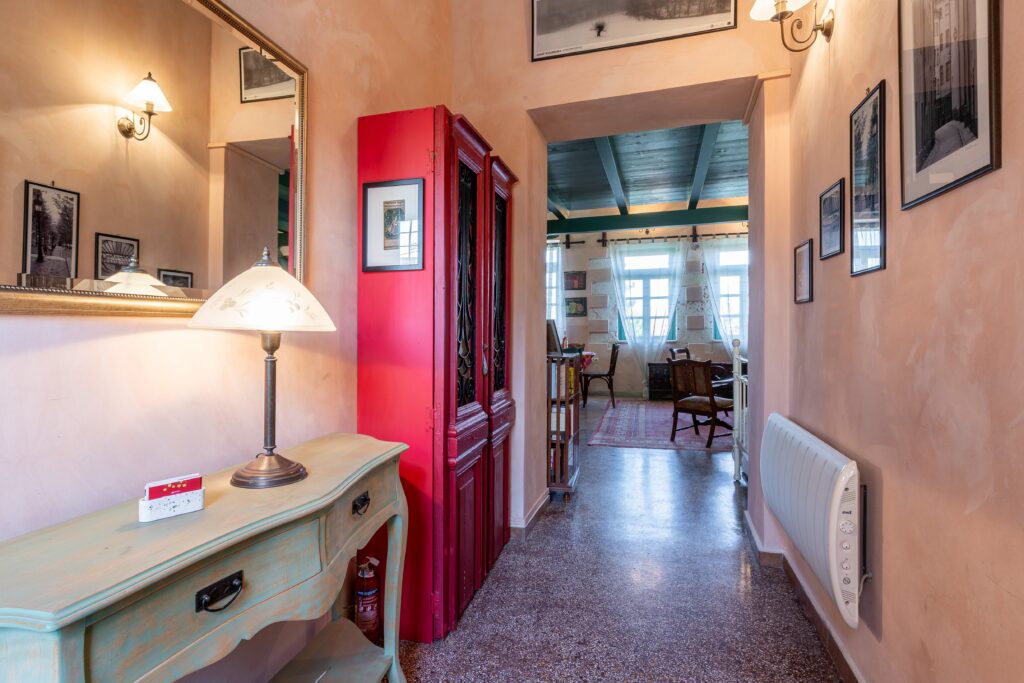
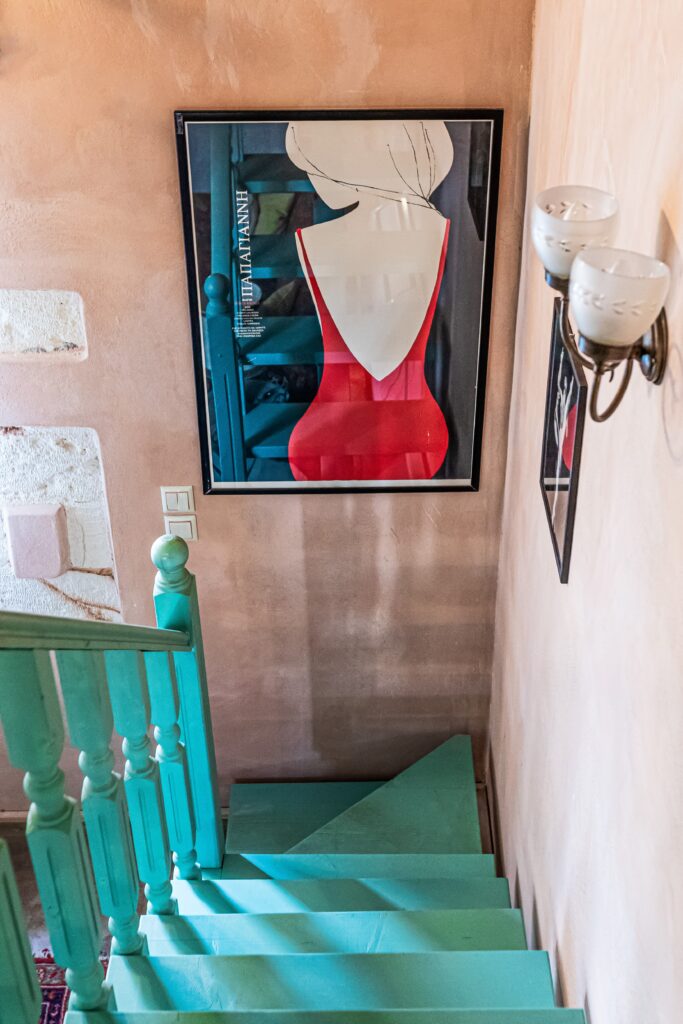
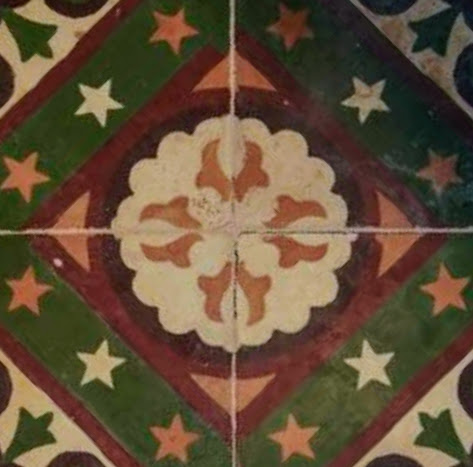
Our apartment once constituted part of the closter built during Venetian rule and assumed its present form, more or less, during the 1930s. In 2007 it went through a major renovation and it was made sure that as many aspects as possible of the 1930s structure were preserved. The mosaic floors were kept where possible and all the kitchen floor tiles that remained intact got used as decoration on the bathroom and kitchen walls. In the living room, you can see some of the stones the walls are made of and ‘Stucco Veneziano’ throughout the house, giving it the texture you see on many buildings of the Old Town.
Special attention and respect were paid to details and the rustic character resembling that of the old town. Lovers of antiques and all things vintage will appreciate its character and will find it welcoming and easy to inhabit, especially after a busy day out in town.
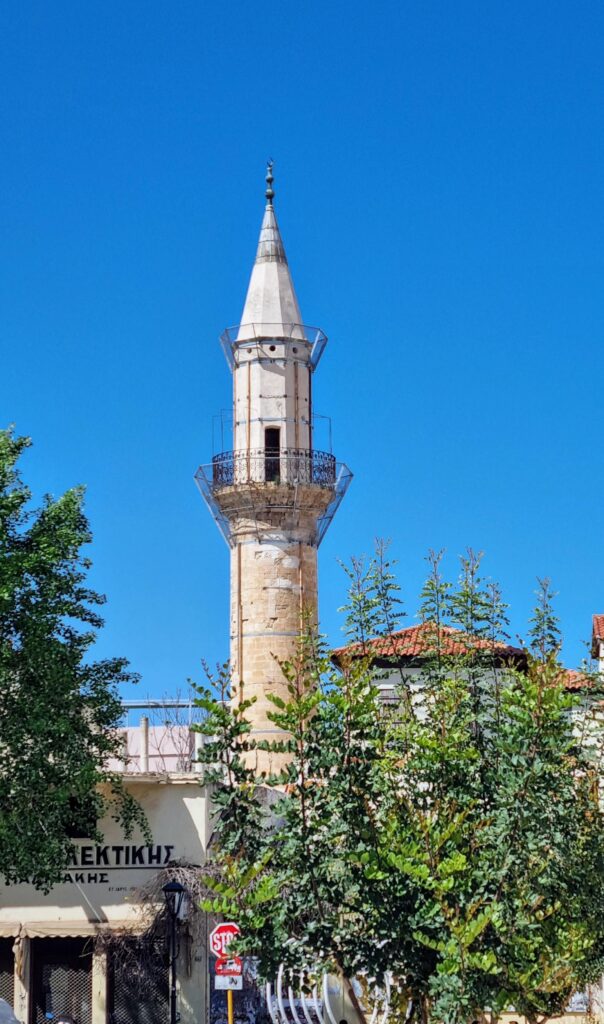
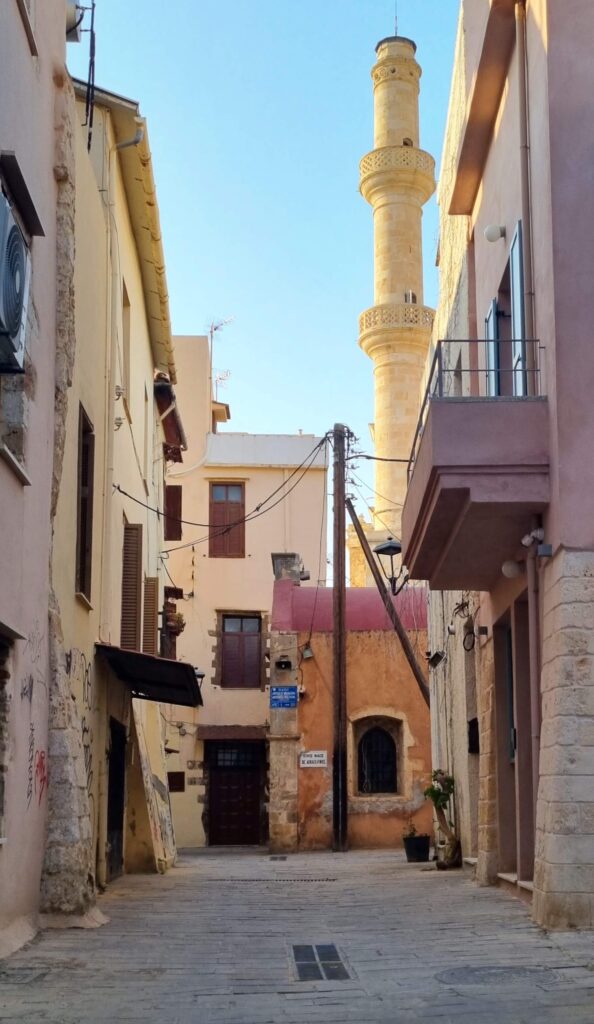
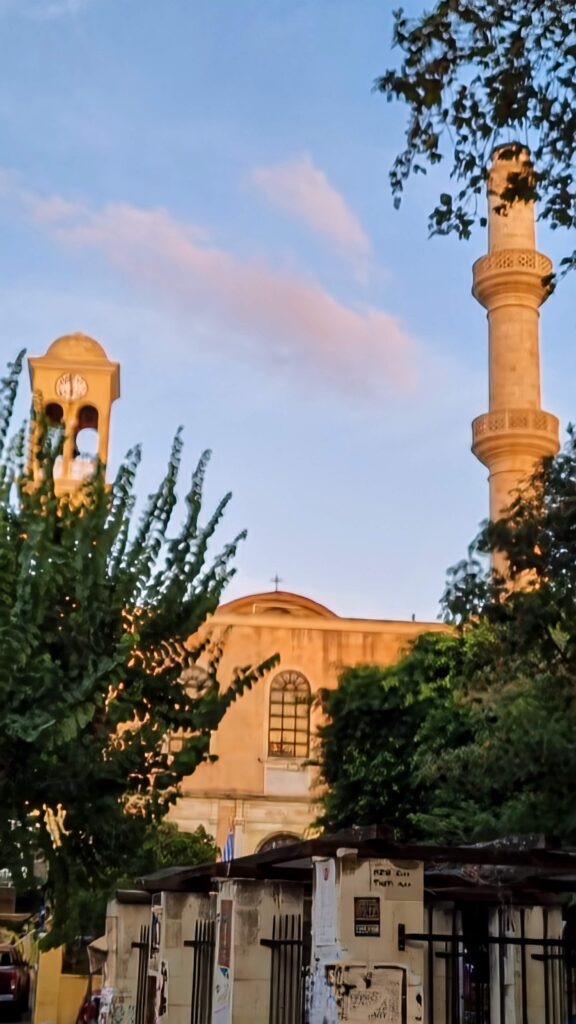
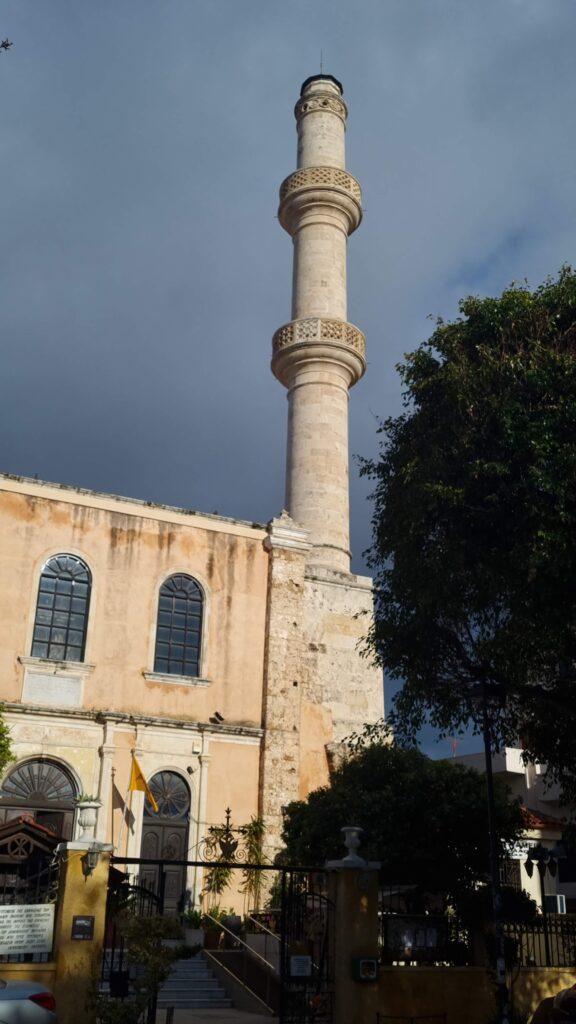
The area has a long and interesting history, going all the way back to the Venetian era. Back then, it was called Ponte Dei Viari, which means ‘bridge of the viari’ in Italian. This was because there was a bridge that connected the eastern gate of the Kasteli settlement with modern Daskalogianni Street and Splantzia Square. The bridge was named after a rich Venetian family who helped the city out when it was down on its luck. The area had lots of underground water, which explains why there were underground Venetian water tanks that could supply the city for six whole months. The current St. Nicholas Church was originally the monastery’s temple, which was run by the Order of the Dominican monks. It was built in 1320. After the Turks took over in 1645, they turned the church into a mosque called Houghiar Tzamissi – Hünkâr Camisi, by adding a minaret on the south side of the building.
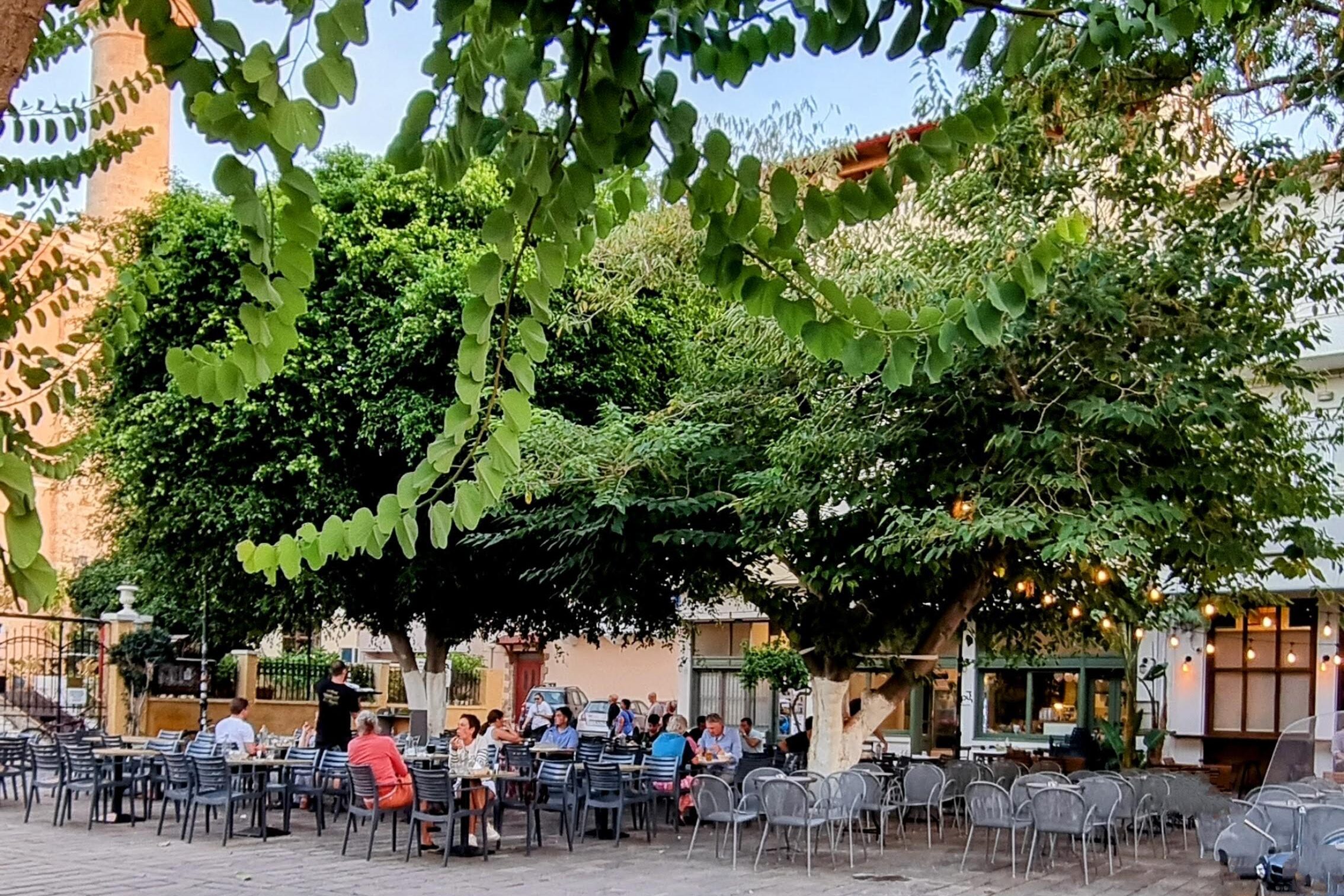
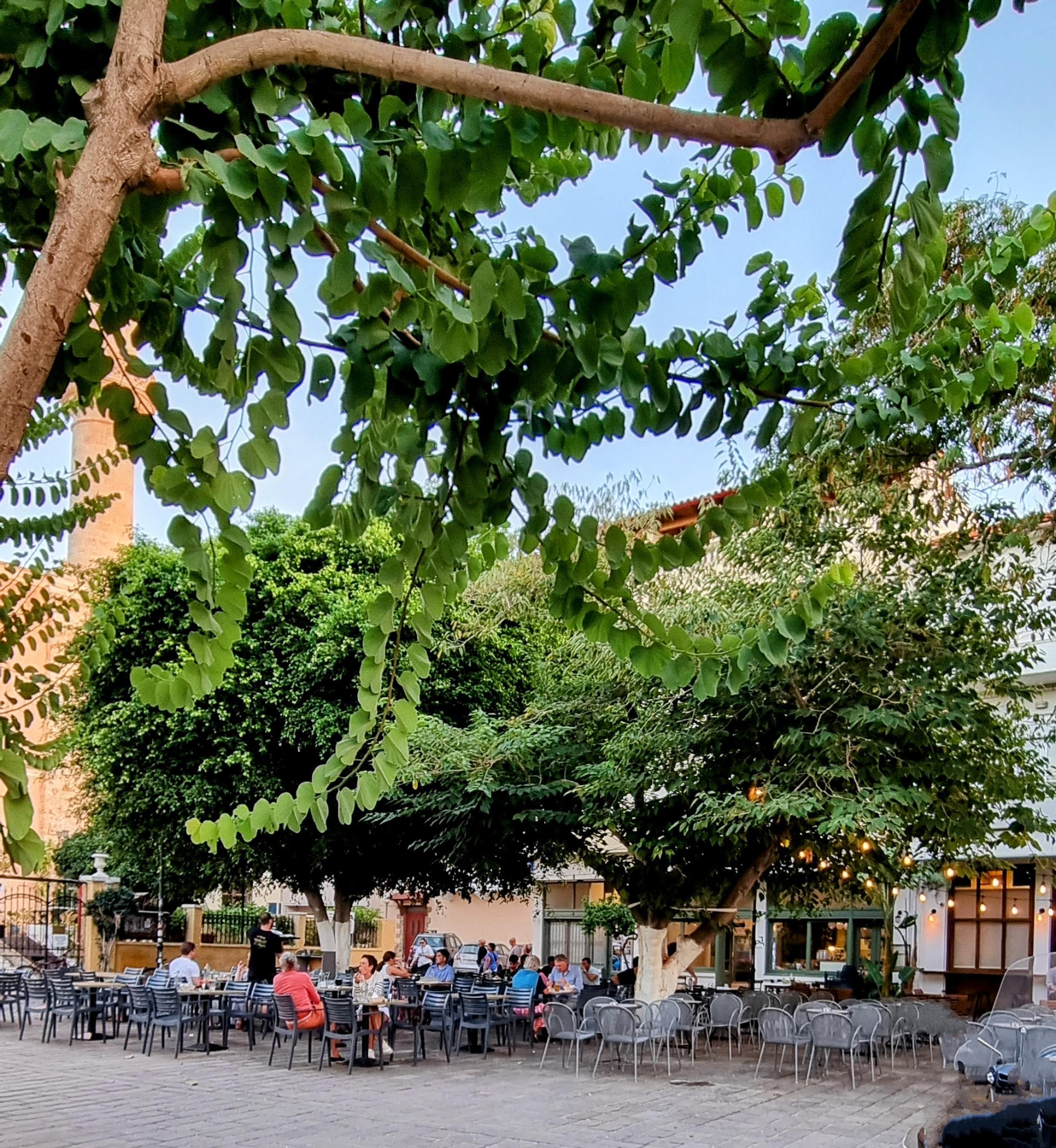
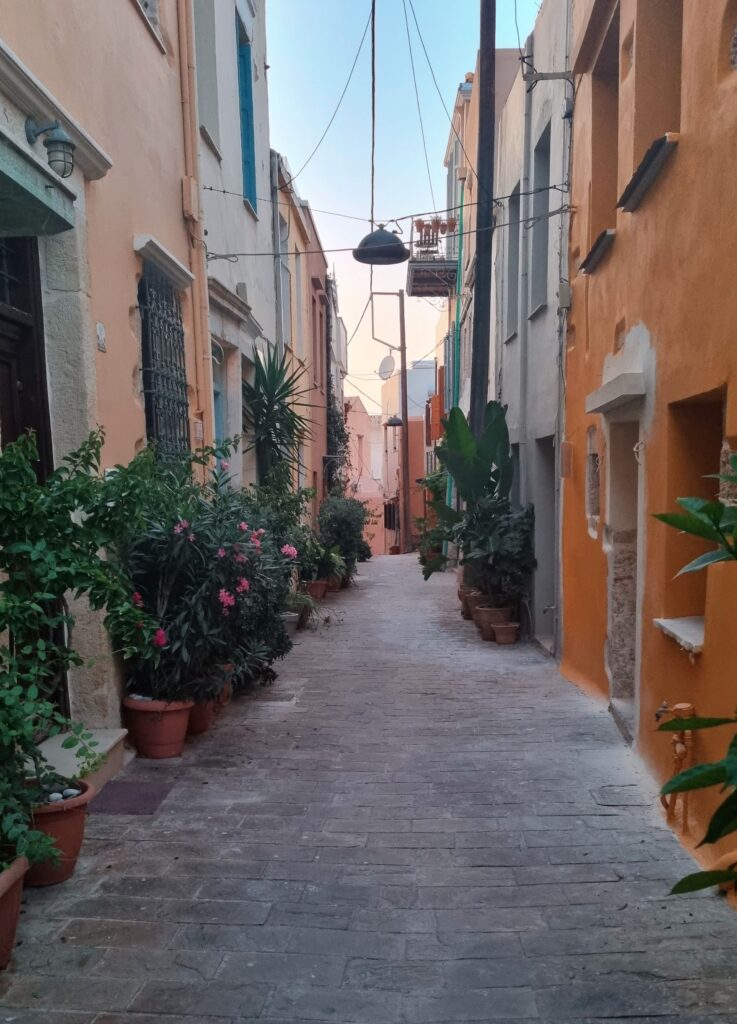
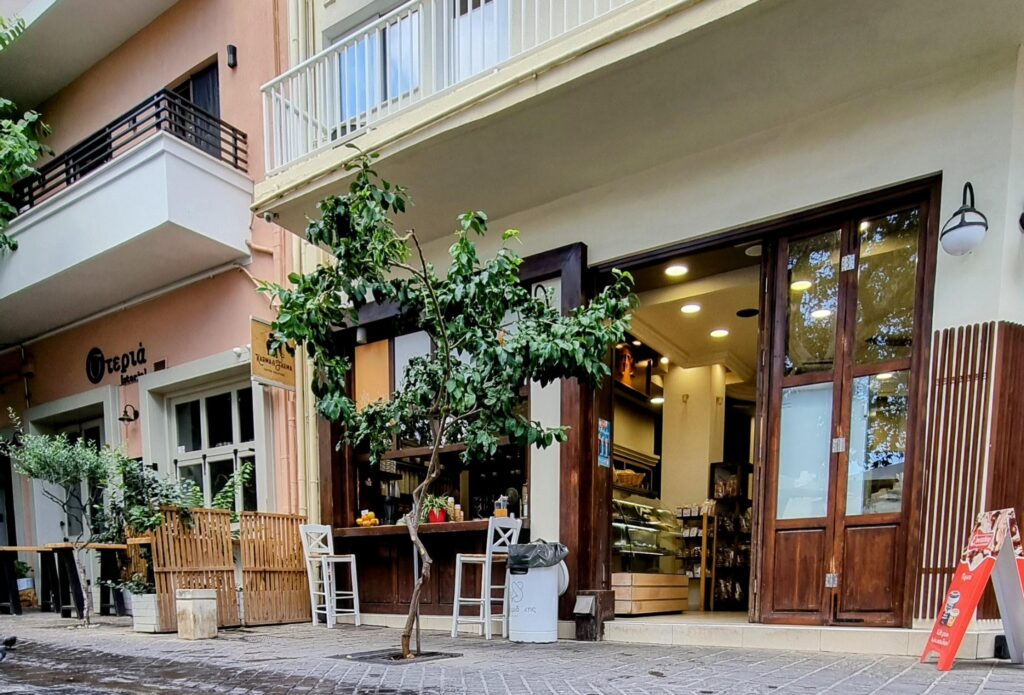
The Splantzia district after the Turks had been made to leave it (and whole Crete) entirely in the 1920s was synonymous with neglectand rough neighbourhood. However in recent years it has cleaned up its act, with many of its houses renovated, lots of young and alternative businesses popping up, and it has transformed into the most independent district of the old town. Fortunately, it has not yet succumbed to mass tourism, so it retains its local atmosphere, making it ideal for those seeking refuge rather than a tourist hotspot. The centrepiece of the neighbourhood is the historic square, officially known as ‘Plateia 1821’, with the equally historic Dominican church of St. Nicholas mentioned before. Either at the square or just a few steps away, you will find everything you need: a bakery, a mini-market, a pharmacy, a bookshop, a laundrette, as well as many interesting and high-quality restaurants and bars. Some of them are located right next to the square, under an old tree, which offers a pleasant place to relax on hot summer days and nights.
Some information in the post come from www.chaniatourism.gr
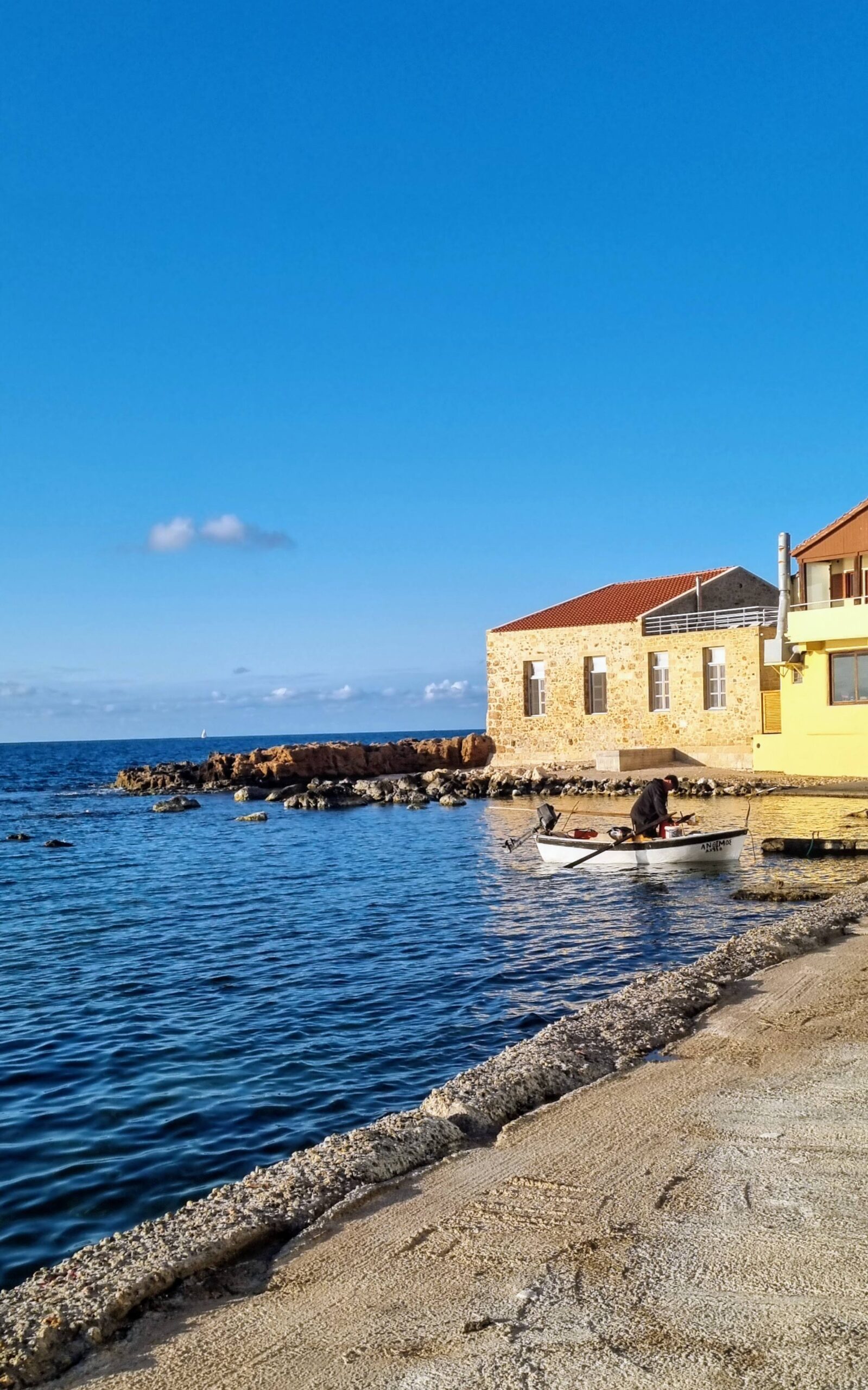
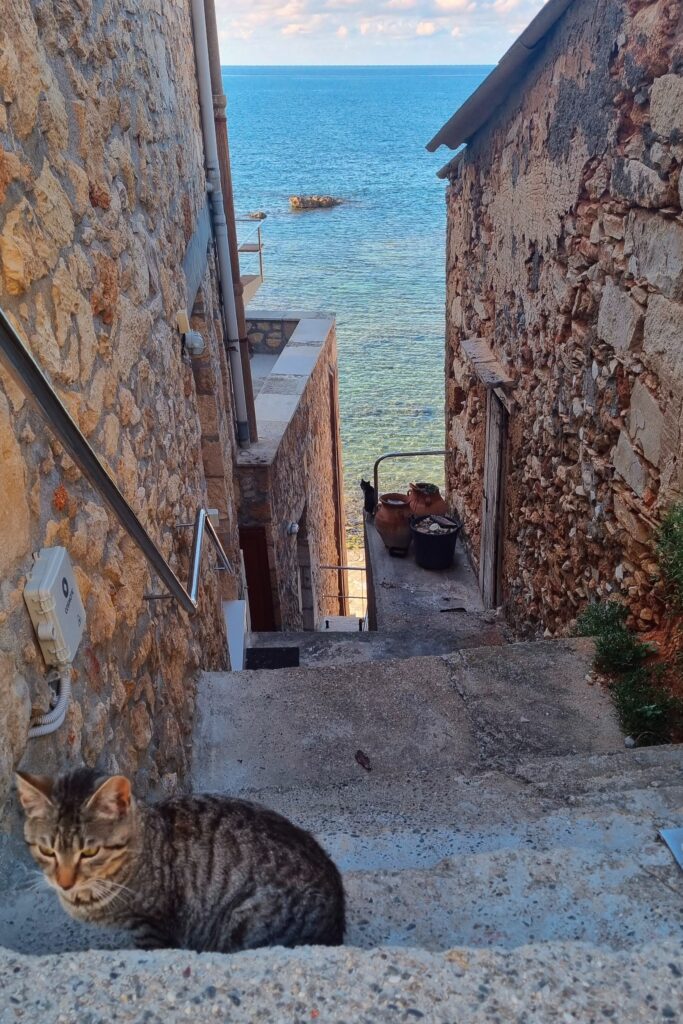
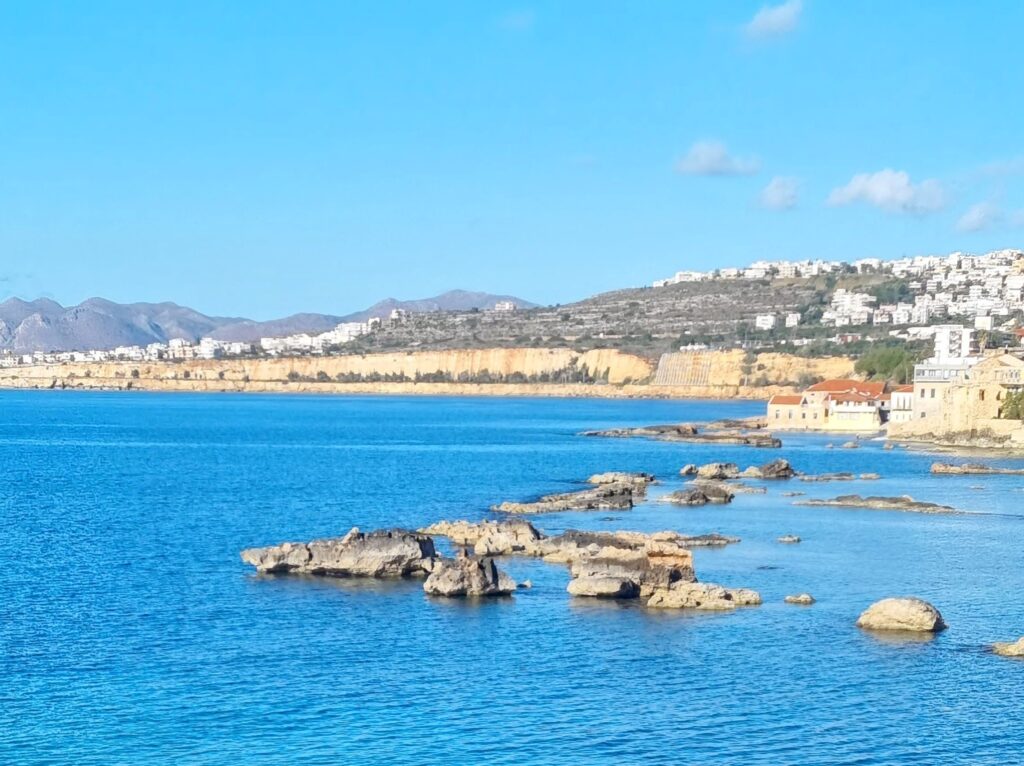
Today we headed to Tabakaria (Ταμπακαριά), roughly two kilometers from Thimari Gardens to the east. What a marvelous walk there, full of celestial blue, carpets of flowers in bloom and sweet scents of spring. Tabakaria, which used to be an area full of tanneries from the mid XIX century to the 70s of the XX century (80 of them at a certain point of history) now is slowly but constantly being revitalized. I predict that in 5-10 years its popularity may catch up with the old town of Chania as the views and its general ambiance are truly captivating.
It takes a lifetime for someone to discover Greece, but it only takes an instant to fall in love with her – Henry Miller.
About
My name is Marta, a Pole with Greece in heart. I am also a living proof that longlife dreams can come true. I always dreamt of having my place in beloved Greece and now here it is! And not just anywhere, but in the most wonderful city, steeped in the culture of ancient Greece, the Venetian Republic and the Ottoman Empire, my dream city of Chania, Crete.
This blog aims at promoting Crete, Chania but also our home there- Thimari Gardens - which is seasonally rented out. More information about the apartment is available when you press the tab above named Thimari Gardens.
If you wish to ask about our rental offer, send an email at thimarigardens@gmail.com