Posted on Leave a comment

Nistisimo – Greek-style fasting

I believe that everyone has heard about Orthodox monasteries in Greece. The monastic cuisine is a culinary tradition naturally shaped by centuries of Orthodox Christian fasting, local agricultural practices, and in case of Crete abundant natural resources. Cretan monks cook with fresh vegetableswild greenslegumes, and grains, all seasoned with local herbs like oregano, thyme, marjoram, and fennel.
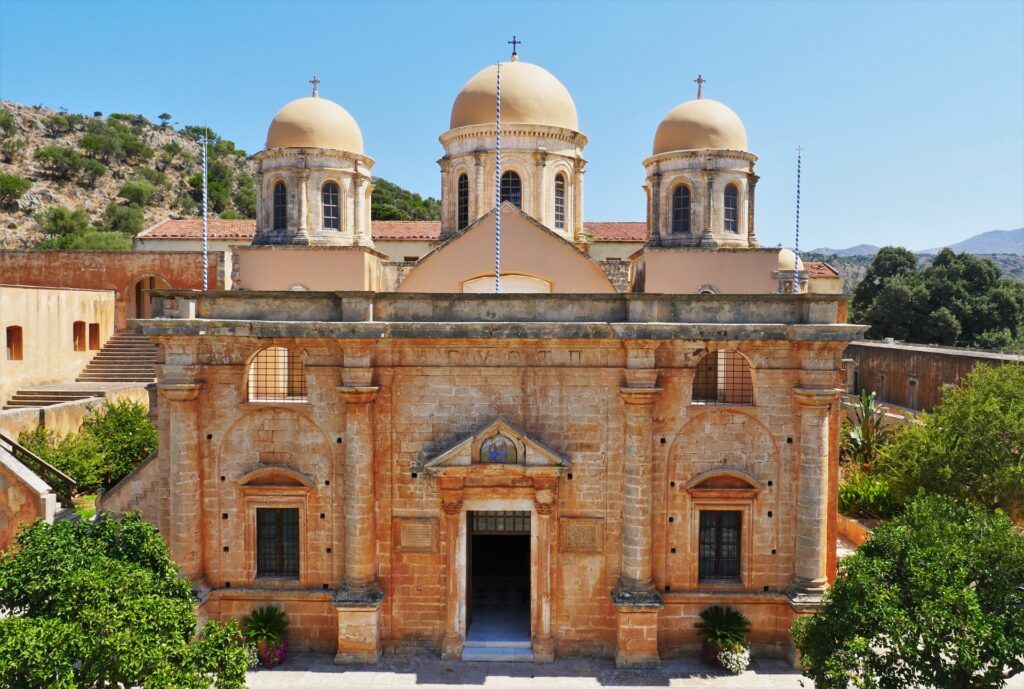
Agia Triada Monastery in Crete

photo credit allincrete.com

Both, the attitude and the practice is shared by plenty of the faithfull and as there are numerous days associated with religious holidays in Greece, many who wish to follow the recommendations of the church may and do fast or follow a restrictive diet for up to two hundred days a year.

Fasting was and is intended to prepare us for the coming holiday, to cleanse our bodies, but also indirectly our souls, to make us lighter. Its purpose was also to instil discipline in us, to teach us to limit ourselves and to appreciate what we have.

Nowadays, we read a lot about the growing popularity of intermittent fasting, which contributes to weight loss, but also to improved health and well-being.

Vegetarianism and veganism, which are becoming increasingly widespread, are an expression of a deep concern for animals, the climate and resources.

All these aspects indicate that it may be worth taking advantage of the wide range of excellent dishes that have been part of the cuisine of the Balkan countries and the Middle East for centuries.

I do not plan to describe the holidays and diets associated with them in detail, but for those interested, I highly recommend Georgina Hayden’s cookbook ‘Nistisima’, which inspired me to write this post. Instead, I will focus on a few interesting facts:
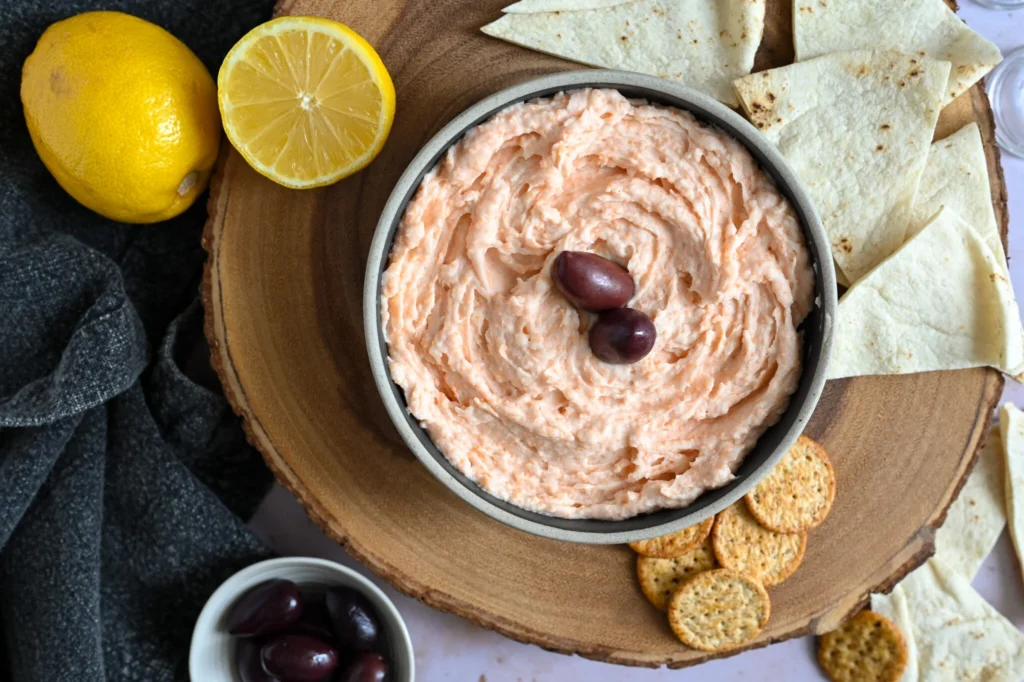
– Some holidays allow the consumption of seafood, but it is important that the creatures do not have a spine (e.g. mussels and taramosalata – a salad with roe – are allowed).

– Often, olive oil is not allowed. This is because in the past it was stored in sheep’s skin.

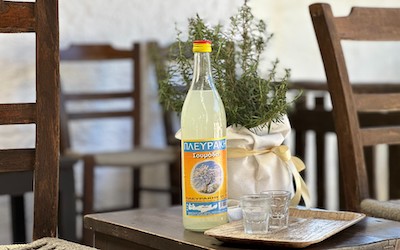
– Almond milk, a substitute for cow’s milk, has been known in Greece, Cyprus and the eastern Mediterranean for a very long time. It is called soumada. In Crete, it is made with a mixture of fresh, locally-grown almonds, sugar, and water, which is simmered in sugar syrup to create this drink.

The most popular vegetarian dishes available daily in traditional Greek restaurants are:

Fava – split pea paste

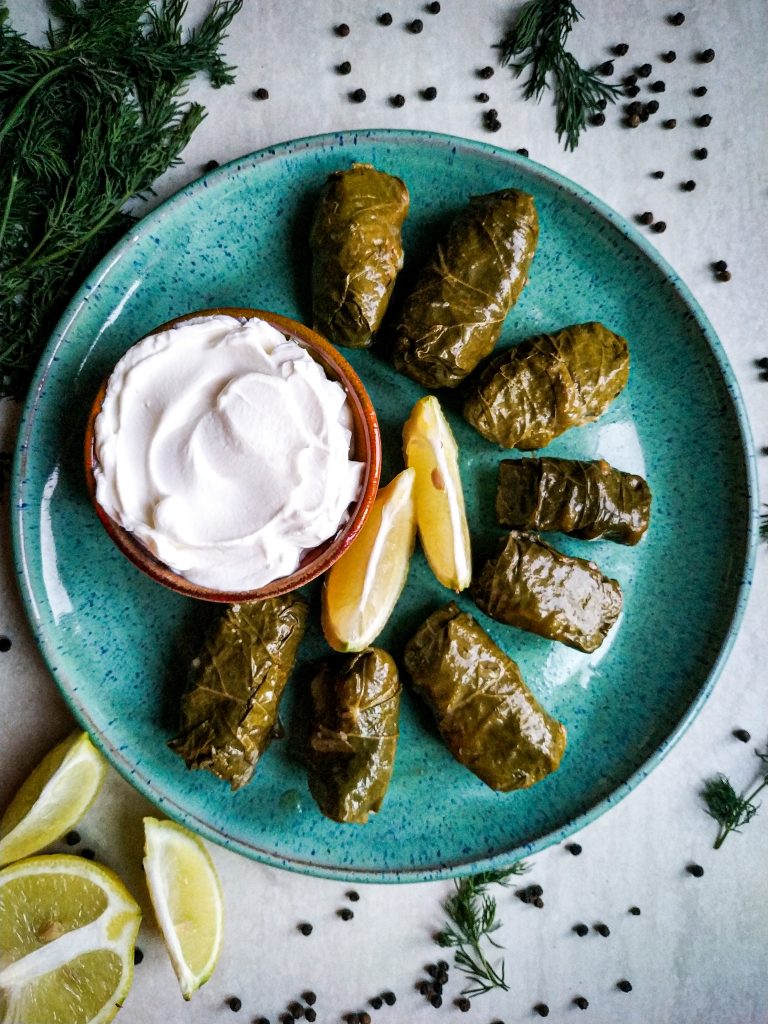
Dolmades – grape leaves stuffed with seasoned rice, sometimes with pine nuts or raisins

Gemista – stuffed vegetables

Lachanorizo – cabbage and rice stew

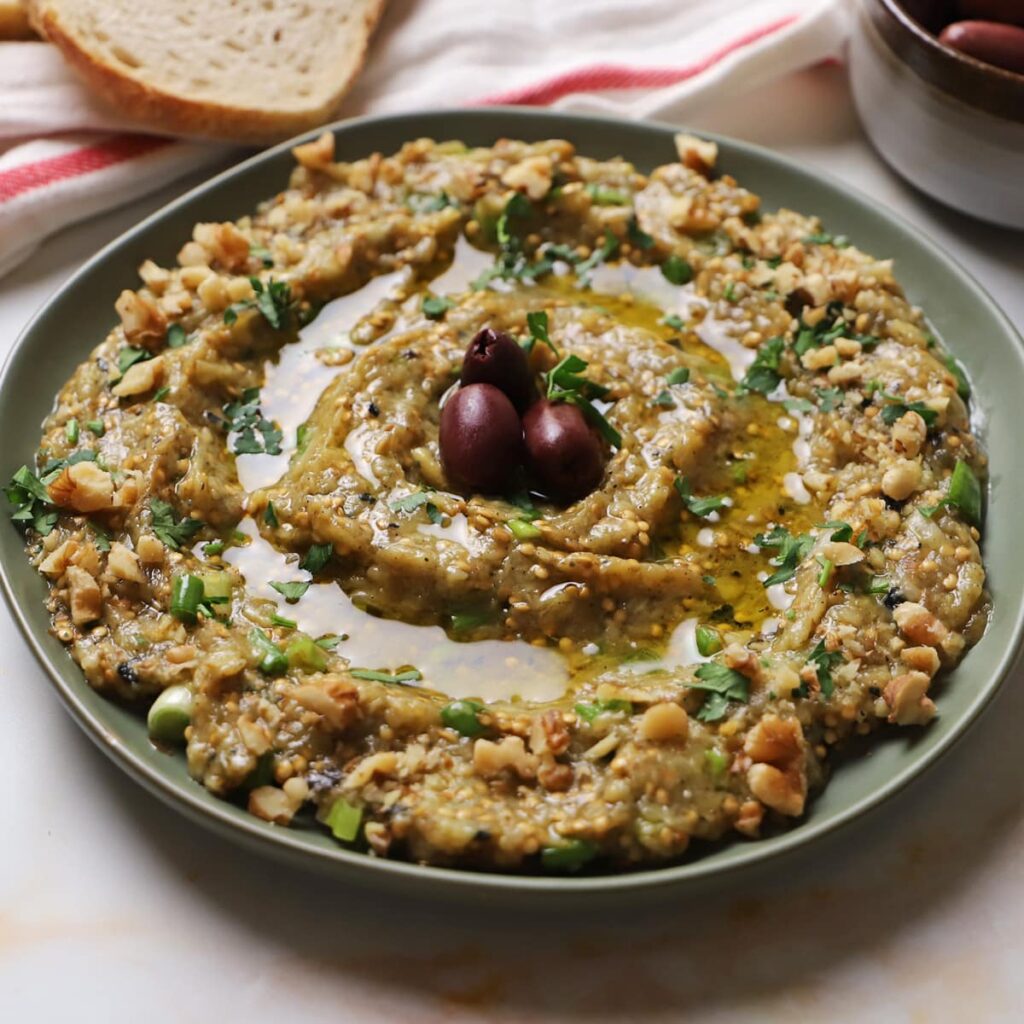
Melitzanosalata – eggplant dip

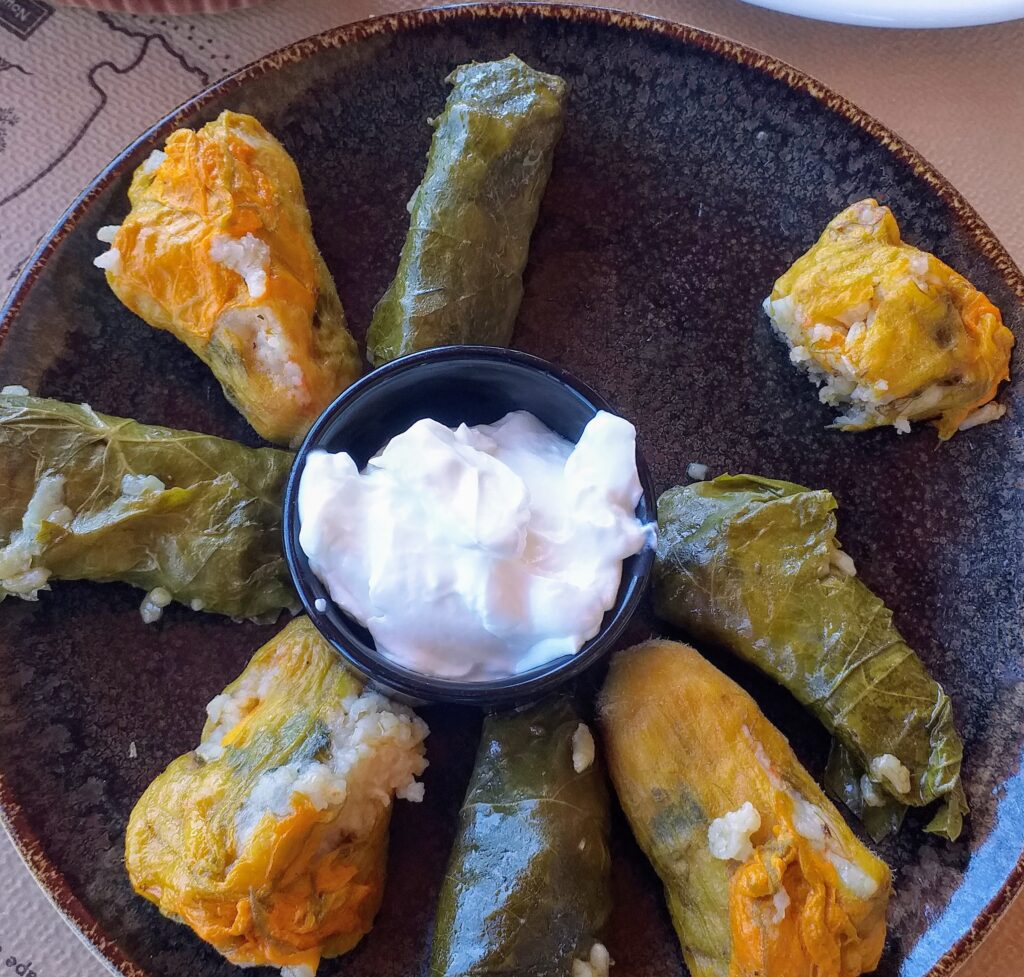
Kolokithoanthi – stuffed courgette flowers

Briam – roasted vegetables medley
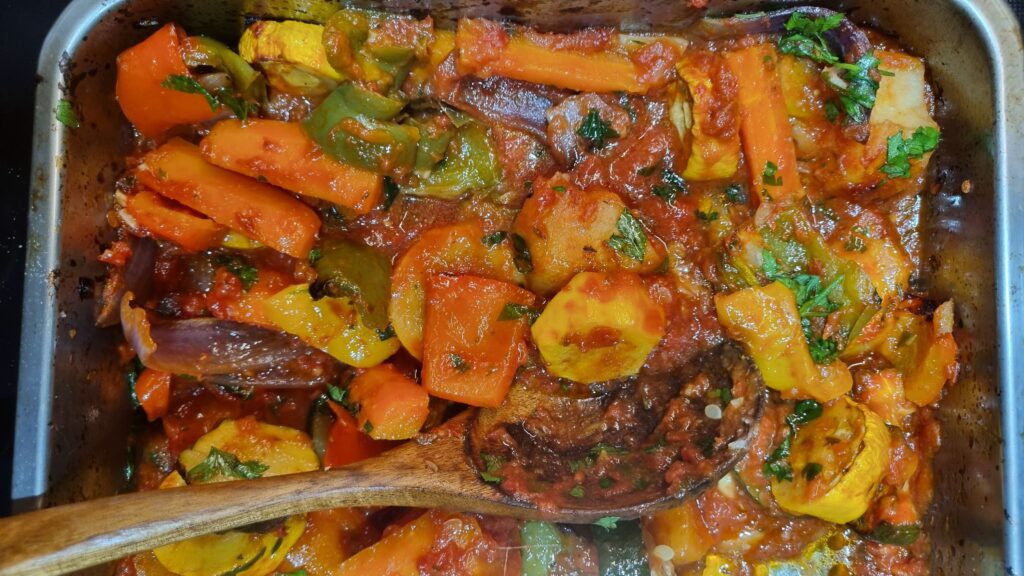
This one in the photo is homemade, but still (or maybe more) delicious !

Posted on Leave a comment

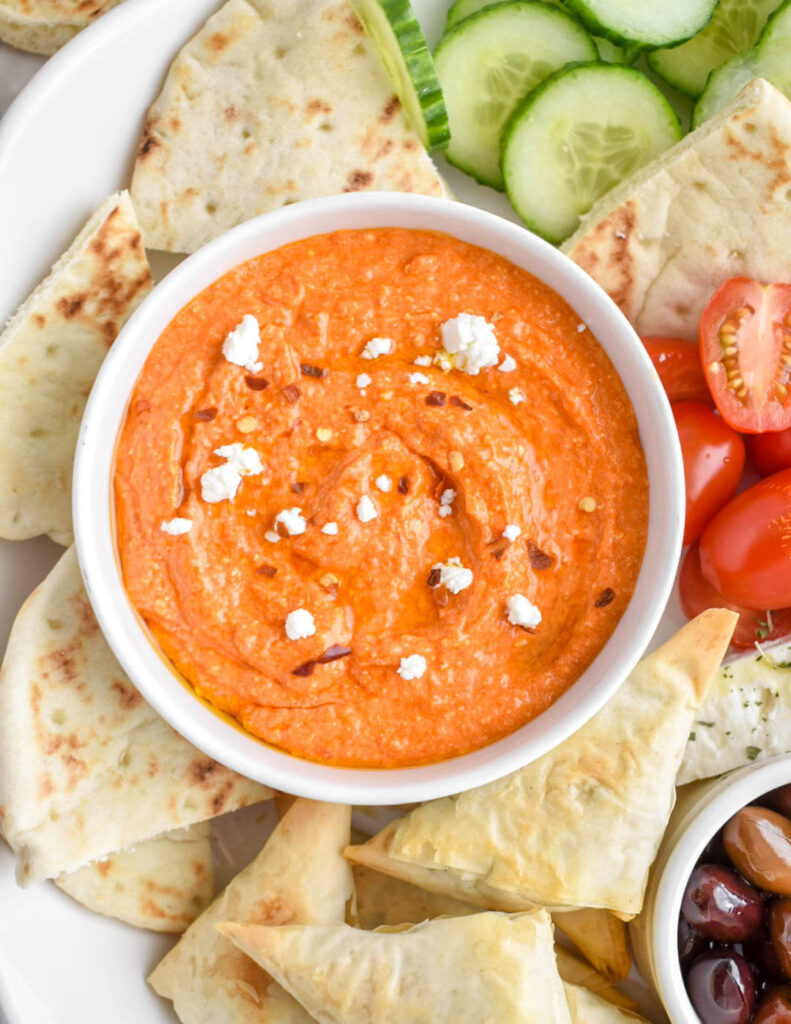
Greek mezedes – dips

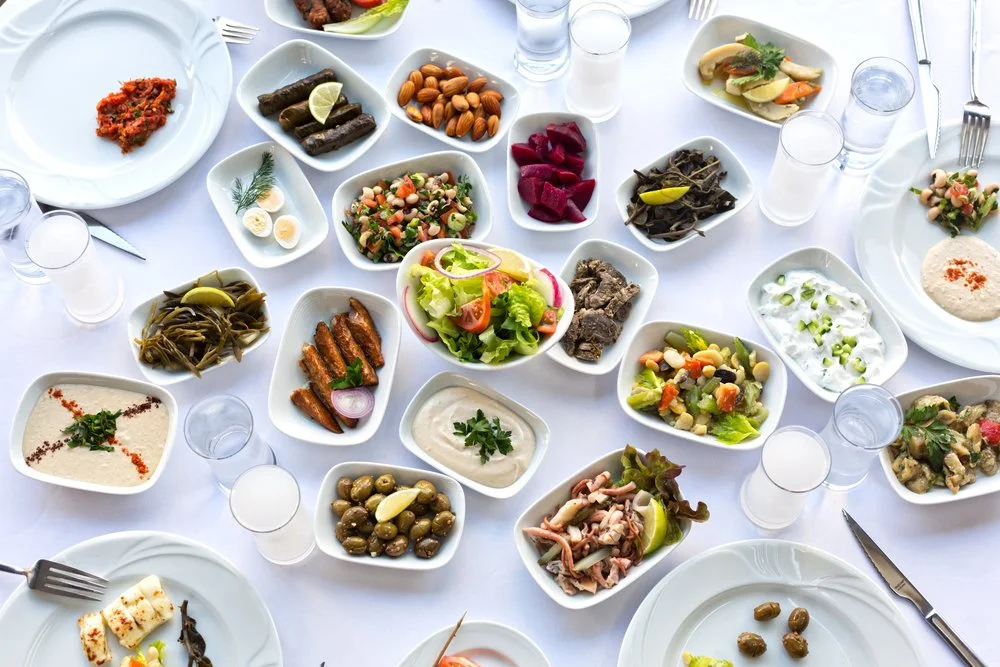
The first thing that comes to mind when I think of Greek cuisine is the simplicity of the dishes, their freshness and the social aspect of eating, i.e. enjoying delicacies together and sharing them. In Greece, hardly anyone eats alone, and as proof of how deeply and long this has been rooted in the culture, there is a whole selection of tiny dishes, appetisers, or as the Greeks say – mezedes (from the singular meze), which we share while sitting at a common table. Meze(des) always occupy a large part of the menu in restaurants and taverns, and it often happens that a few selected from the menu constitute a whole meal for several people.

photo credit wwwkrasiboston.com

Some Greek appetisers are served hot, others cold, and the vast majority are vegetarian or vegan (in Greek, we would use the word nistisima, meaning fasting).

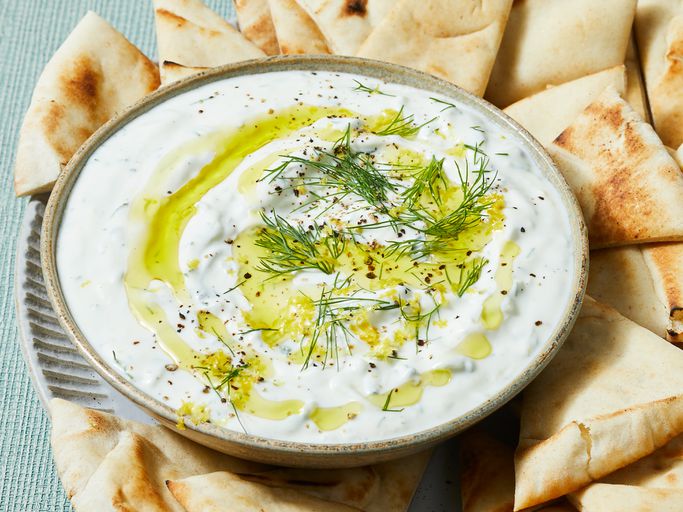
Here, I will write about four extremely popular dip-type appetisers. The first of these is tzatziki, which is a staple on 90% of menus. Tzatziki is a thick Greek yoghurt-based sauce mixed with finely chopped or grated fresh cucumber, dill and garlic. It is extremely refreshing on hot days.

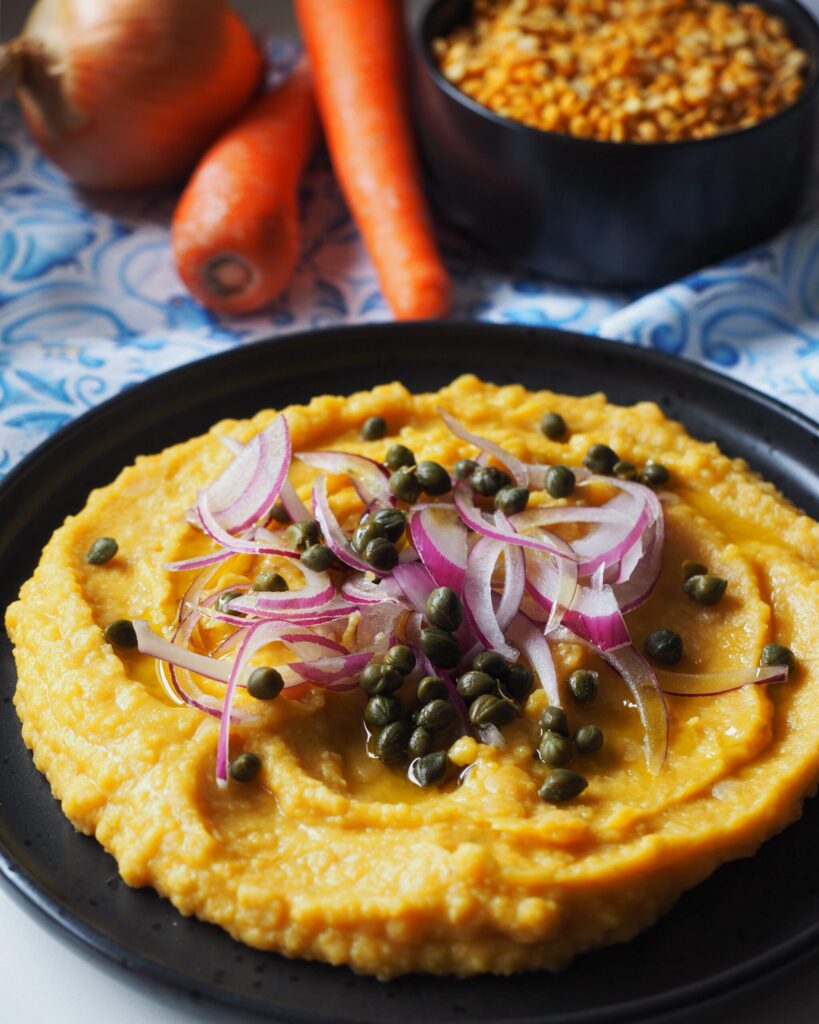
Another dip served with bread or pita is fava. It is a delicious paste made from yellow split peas, seasoned with onion, garlic and lemon. Due to the availability of ingredients, it is one of the oldest known dishes. Archaeological excavations confirm that the peas needed to prepare fava were grown in Santorini over 3,500 years ago.

Another delicacy, sometimes called a dip, sometimes a salad, is melitzanosalata, which is roasted and peeled aubergine, garlic, olive oil and lemon. This dish is best when the aubergine is roasted whole and its skin has had a chance to brown a little – the dish then takes on a smoky aroma. Some people add chopped walnuts, which give it a little crunch.

The last dip requires the use of feta, the most famous Greek cheese. It is called tirokafteri and, apart from the cheese, it contains roasted peppers, chilli peppers, olive oil, vinegar and garlic. This appetiser is creamy and spicy, a real flavour bomb!

Posted on Leave a comment

Dolmadakia

In fact, in every tavern, and certainly in a traditional Greek tavern, you will find dolmades (or dolmadakia, the diminutive form) among the starters. What is it? Of the dishes known to us Poles, it most resembles stuffed cabbage rolls, except that it has a vegan filling based on rice with onion, parsley and herbs, which is formed into neat oblong parcels using young grape leaves.

Although the roots of this dish are Turkish, it is now considered typically Greek, served cold, lightly drizzled with olive oil, but I have also eaten it warm with yoghurt to break up the flavour.

It is worth mentioning that during the season when they are available, courgette flowers are also stuffed with the same filling. It tastes like heaven and the chefs at To Stachi in Chania are masters at preparing them.

This reminds me of a little anecdote. Twenty years ago, I attended my first Greek language course. It took place in Warsaw, at the Olimp Society, and the classes were taught by Lefteris Tsirmirakis, who was already quite elderly at the time, but still full of vigour and wit. Our teacher found himself in Poland shortly after the war, fleeing the persecution that threatened all members of the Communist Party of Greece, especially the partisans. In Poland, he started a family, marrying a Polish woman. He was a great Greek patriot and tried to infect us with his fascination for his country of origin. He did this by sometimes bringing delicacies to class that he had grown up with in the Thessaloniki area. One day, he brought dolmadakia made by his Polish wife and was clearly proud that she knew how to prepare this typical Greek delicacy so well 🙂

Posted on Leave a comment

The olive tree, its fruit, oil and wood

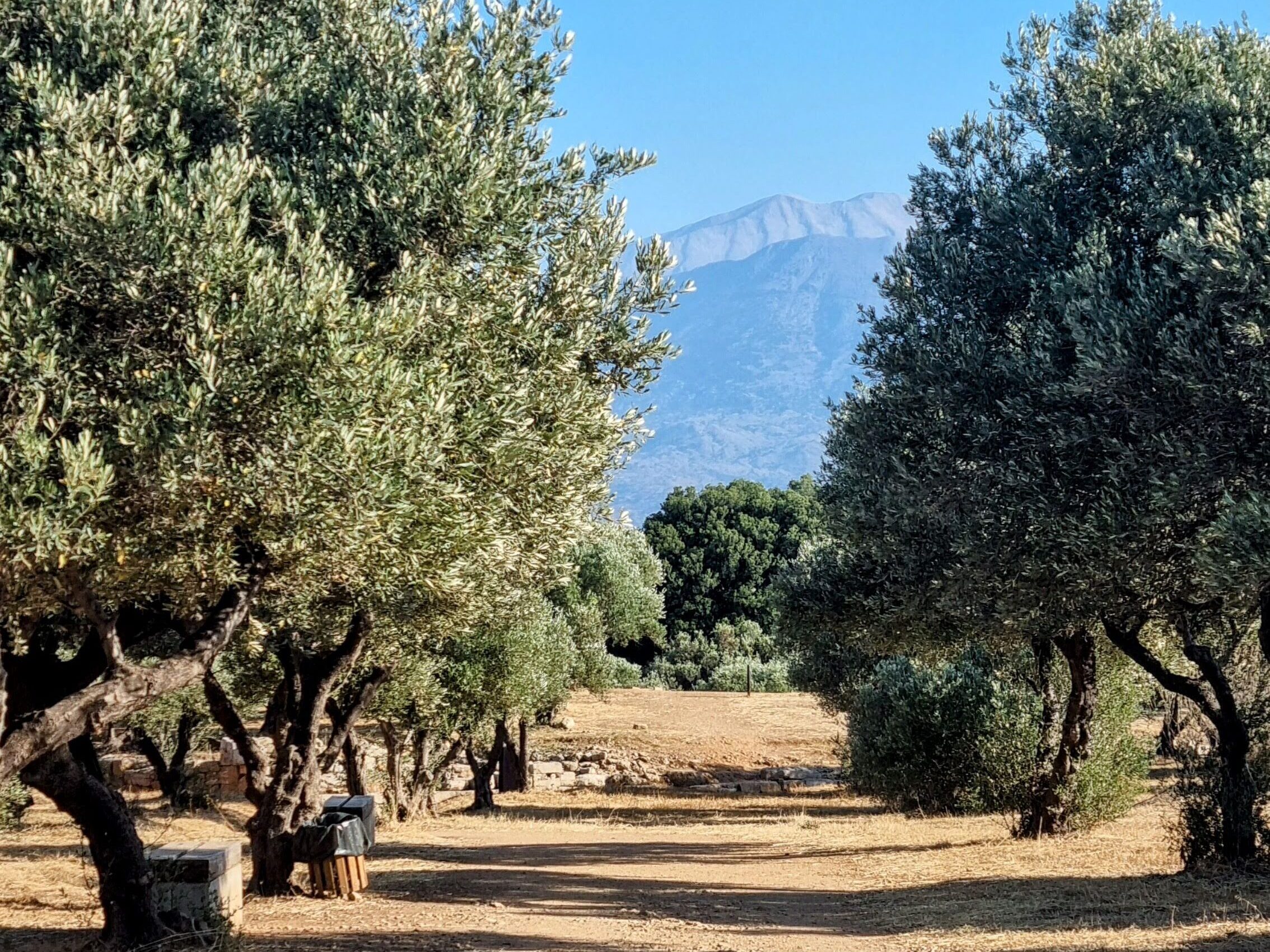
The olive tree, which we know and see today in many Mediterranean countries, has an extremely long history, growing alongside us and satisfying our needs with its wood, fruit and oil. For example, we know that as early as 100,000 years ago in Africa, its wood was certainly used as fuel, and people at that time may also have consumed olives. We also have evidence that it was cultivated in the Mediterranean basin as early as 7,000 years ago. In Crete, its importance as one of the basic crops (along with cereals and vines) reached a very high level in 3000 BC, and many scientists believe that its commercial cultivation and trade were the source of the wealth of the Minoan civilisation. At that time, however, olive oil was mainly used for lamps (including sacred ones), for skin and hair care, and for anointing. Since then, the olive tree and its fruit have held an unshakeable position as the main crop in the Mediterranean region, whether in Spain, Italy or Greece.

The name of the olive tree (Latin: Olea Europea) most likely derives from the Proto-Greek language, and its first written form appeared in the Mycenaean syllabic script Linear B (2200-1900 BC).

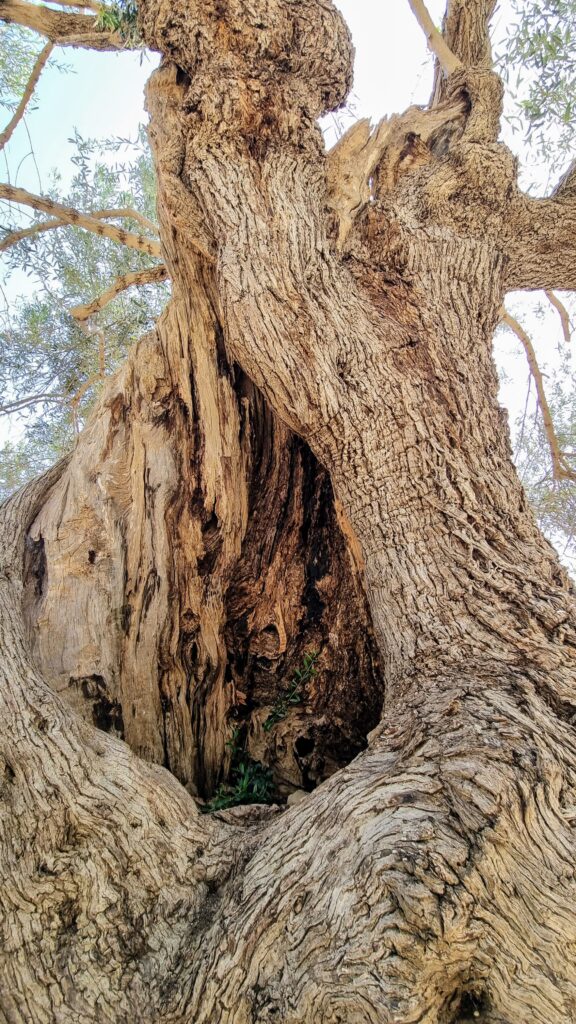
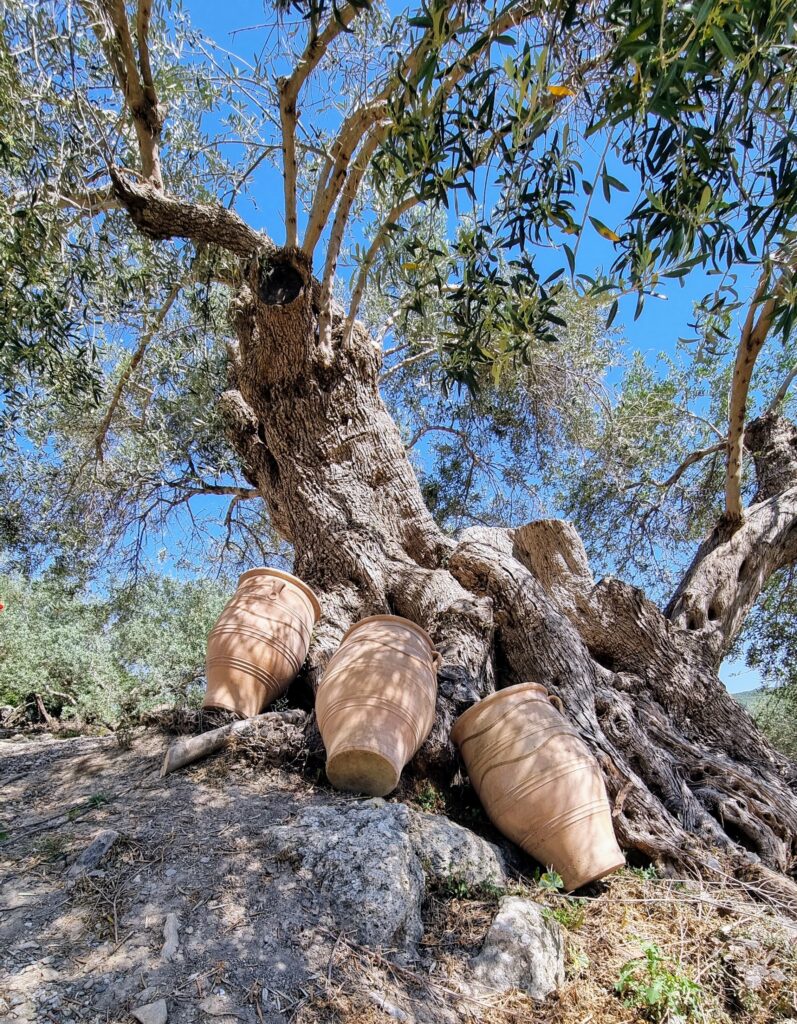
The olive tree has always been a symbol of wisdom, peace, strength, fertility and purity. This is not surprising, as the tree itself is quite remarkable. To thrive, it simply needs sunshine, a little water and well-drained soil. This is enough to keep it alive for hundreds, sometimes thousands, of years. In Crete, in the village of Vouves, 30 kilometres from Chania, you can see the famous olive tree, estimated to be between 2,000 and 4,000 years old. If you decide to visit this national monument, don’t miss the interesting Olive Tree Museum nearby.

Today, Greece remains one of the leading producers of olive oil. Crete alone has about 30 million trees, and annual olive oil production reaches 120,000 metric tonnes, 80% of which is extra virgin olive oil. Although Greece ranks third as a European olive oil producer (after Spain and Italy), it proudly leads the world in olive oil consumption, with 24 litres per capita per year! This is not surprising, as its quality is the highest. The fresher the olive oil, the better. In Crete, olive oil production takes place immediately after the autumn harvest (October-November), the olives are crushed whole, and the greenish, intensely fragrant liquid fills bottles and cans. It is available for sale from December.

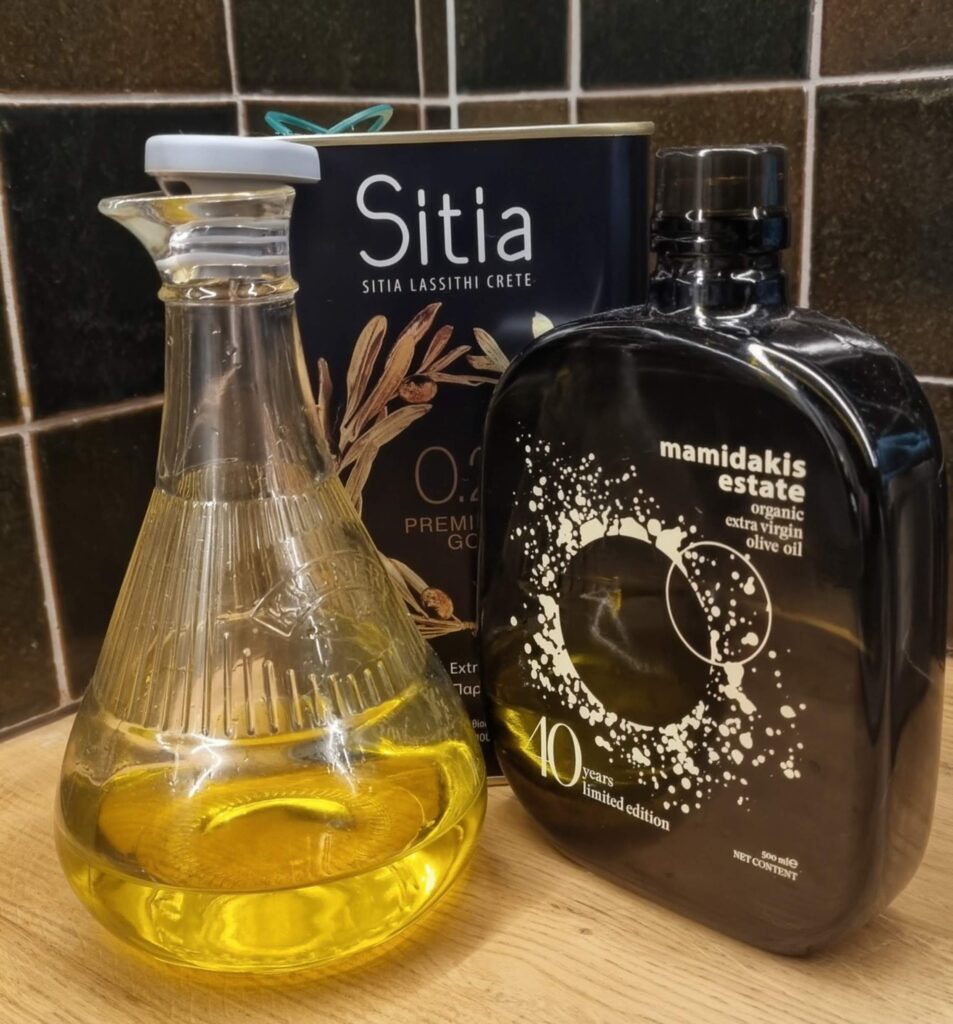
Cretan olive oil is mainly obtained from two varieties: Koronaiki and Tsounadi. The quality of the oil is excellent (as I mentioned earlier, 80% is Extra Virgin, which translates into low acidity – below 0.8% free acidity and a fruity flavour), but the oils naturally differ in taste depending on the region they come from. The Chania region is famous for the producers Chania Kritis and Kolymvari Chanion Kritis, whose oils are known for their slightly peppery taste. Those who prefer milder, less ‘demanding’ types can try olive oil from Kritsa or Sitia. For the more adventurous, many producers offer oils with added herbs (e.g. rosemary), lemon or orange peel.

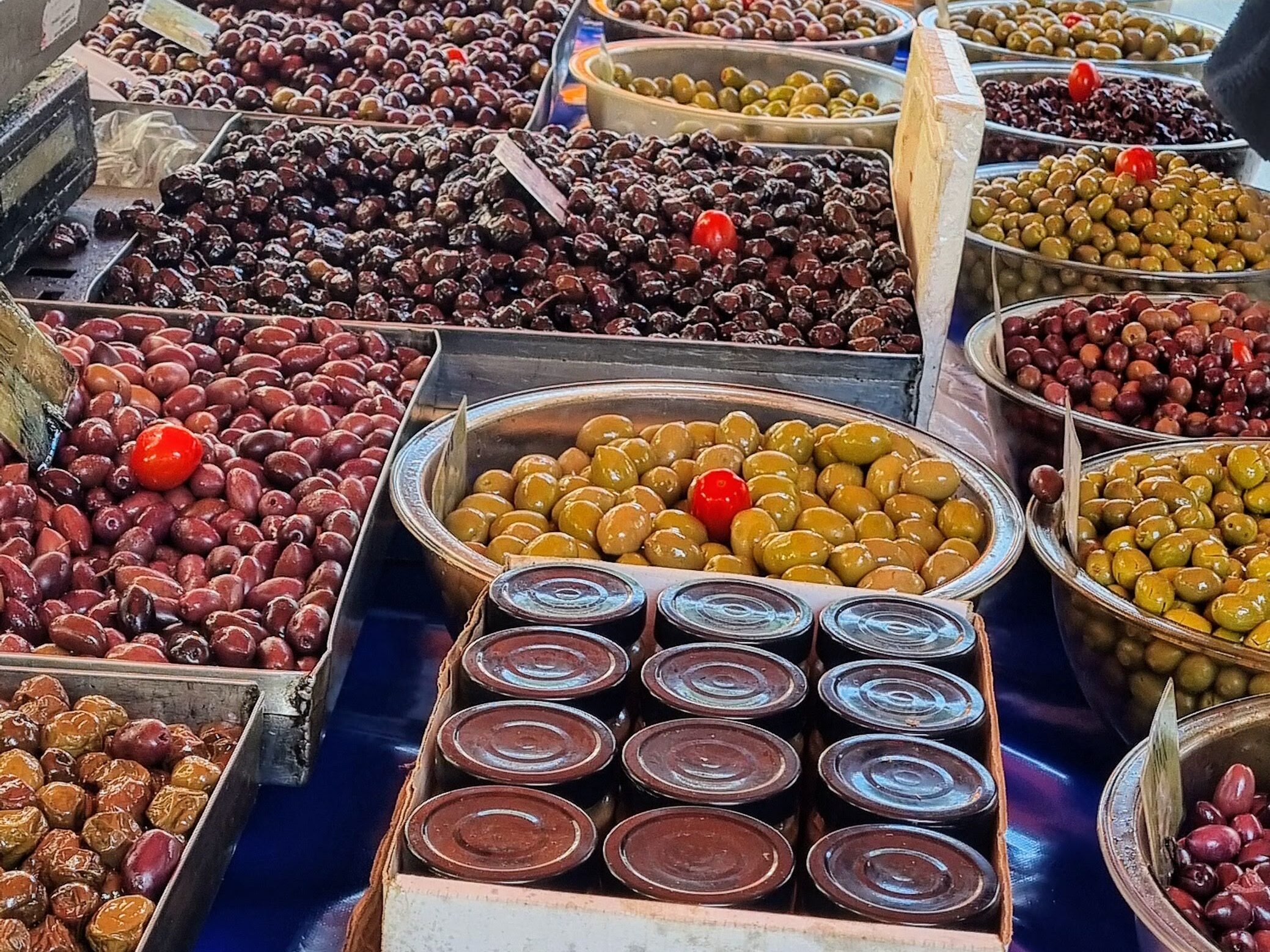
In addition to buying olive oil, tourists are keen to choose from dozens of types of marinated olives, and often buy kitchen utensils or bowls made of hard, durable but very decorative olive wood.

Posted on Leave a comment

The Queen is one!

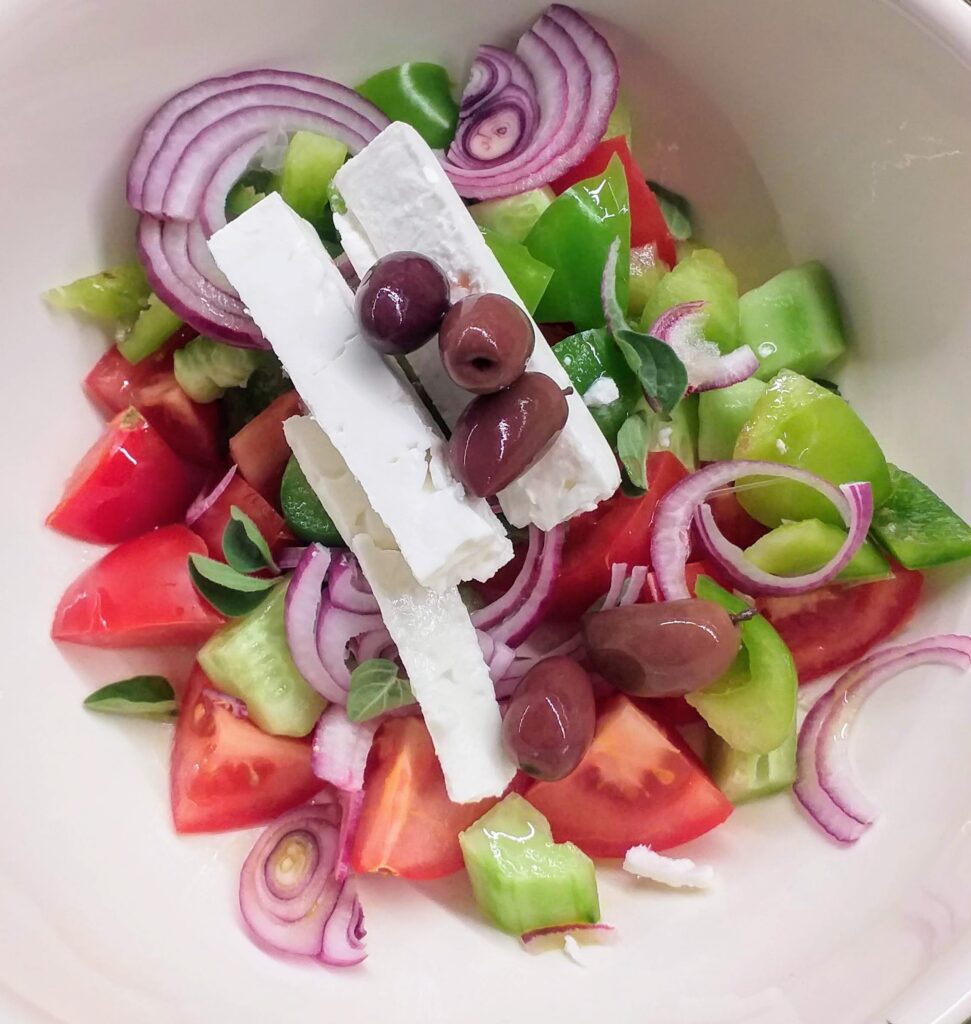
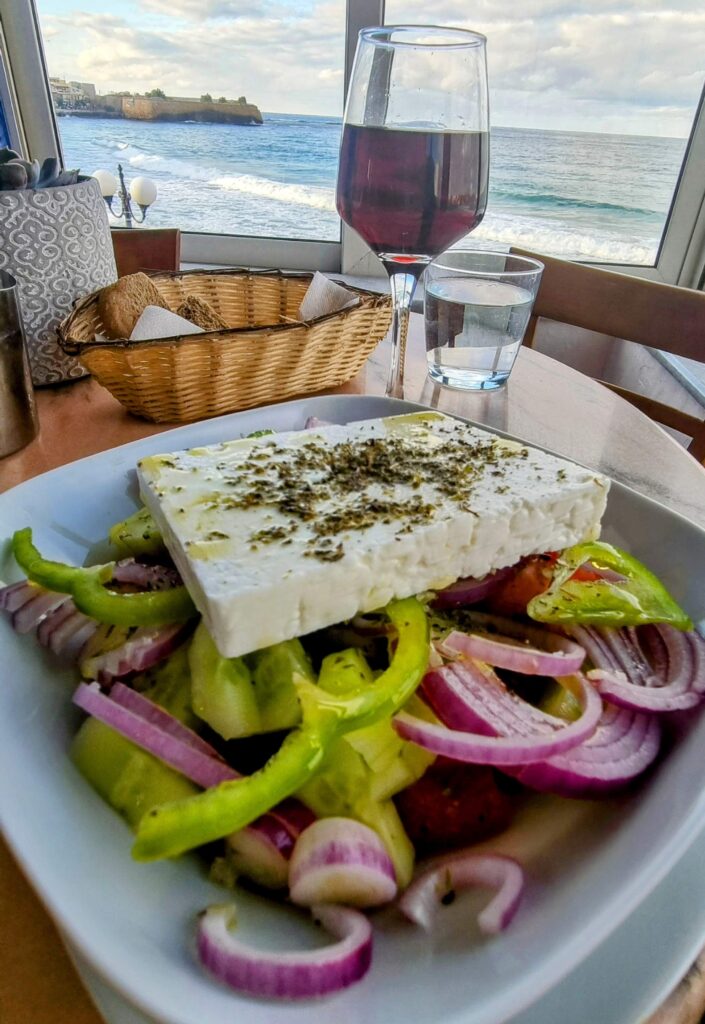
Khoriatki salata (Χωριάτικη σαλάτα) is one of the most classic Greek dishes. The ingredients of this salad, brilliant in its simplicity (rural in its name), are always the same in Greece, small variations are allowed. But really small ones, and I will defend this conviction like King Leonidas – Thermopylae.

Well, the bowl should contain ripe tomatoes, cucumbers, red onions, which are juicy and sweet in the south, peppers (but green, green!), all chopped thickly and drizzled generously with the best quality olive oil. A thick slice of feta cheese is placed on top and sprinkled with Greek oregano. Often you’ll also find black olives, white wine vinegar for a little acidity, and a little salt, although in my opinion good feta is salty enough. It is standard to serve bread with choriatiki, usually unsophisticated but good enough to soak up the remaining juice at the bottom of the bowl.

There is nothing better in hot weather, when the crisp and cool vegetables release their juices and flavours with every bite, the friendly human bustle echoes in the background and the air smells of sun, herbs, sea and freedom.