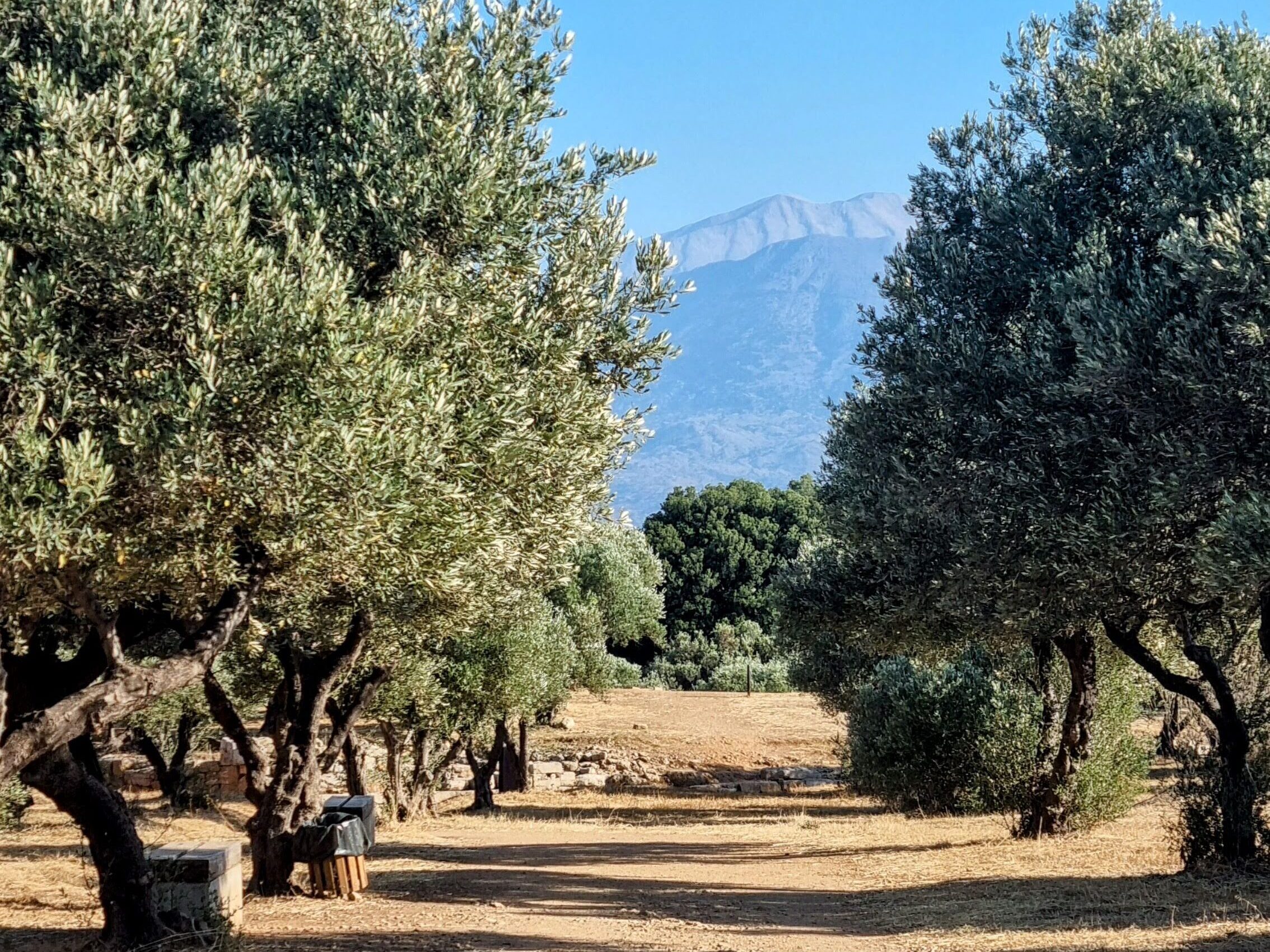
The olive tree, which we know and see today in many Mediterranean countries, has an extremely long history, growing alongside us and satisfying our needs with its wood, fruit and oil. For example, we know that as early as 100,000 years ago in Africa, its wood was certainly used as fuel, and people at that time may also have consumed olives. We also have evidence that it was cultivated in the Mediterranean basin as early as 7,000 years ago. In Crete, its importance as one of the basic crops (along with cereals and vines) reached a very high level in 3000 BC, and many scientists believe that its commercial cultivation and trade were the source of the wealth of the Minoan civilisation. At that time, however, olive oil was mainly used for lamps (including sacred ones), for skin and hair care, and for anointing. Since then, the olive tree and its fruit have held an unshakeable position as the main crop in the Mediterranean region, whether in Spain, Italy or Greece.
The name of the olive tree (Latin: Olea Europea) most likely derives from the Proto-Greek language, and its first written form appeared in the Mycenaean syllabic script Linear B (2200-1900 BC).
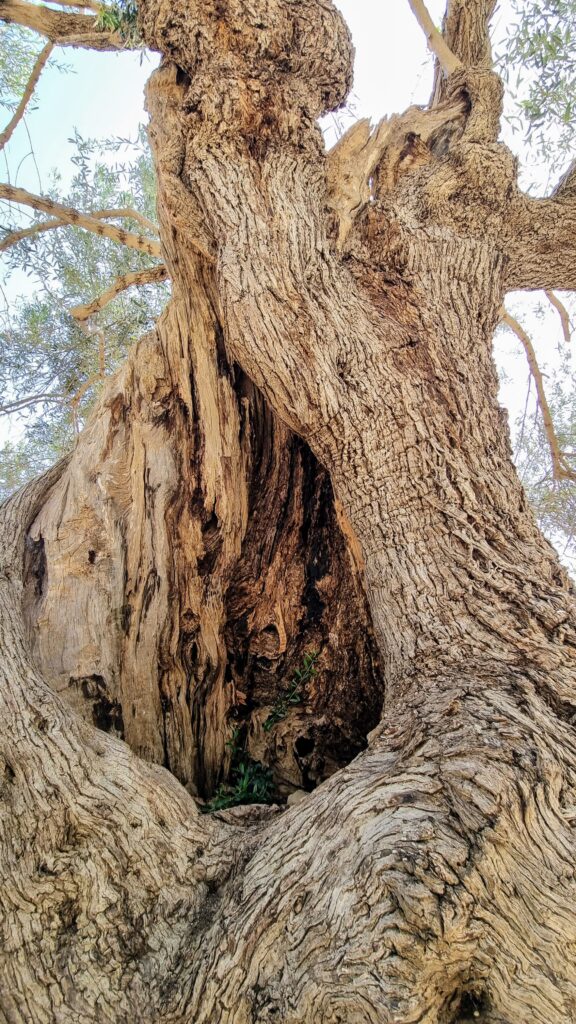
The olive tree has always been a symbol of wisdom, peace, strength, fertility and purity. This is not surprising, as the tree itself is quite remarkable. To thrive, it simply needs sunshine, a little water and well-drained soil. This is enough to keep it alive for hundreds, sometimes thousands, of years. In Crete, in the village of Vouves, 30 kilometres from Chania, you can see the famous olive tree, estimated to be between 2,000 and 4,000 years old. If you decide to visit this national monument, don’t miss the interesting Olive Tree Museum nearby.
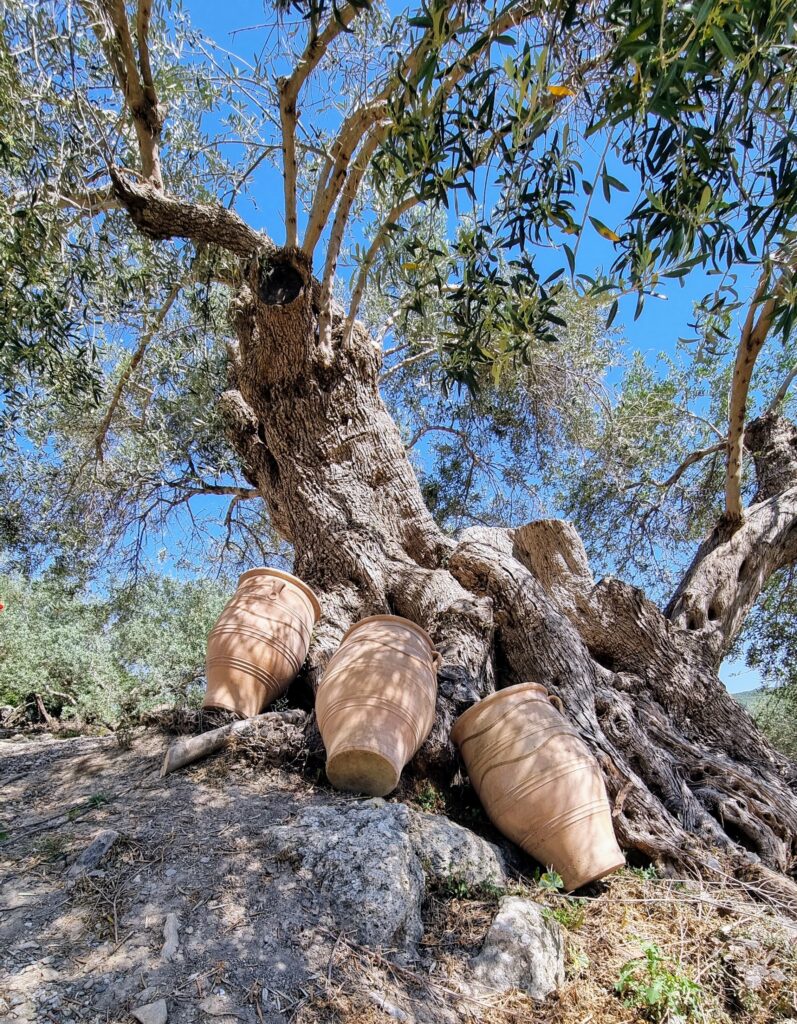
Today, Greece remains one of the leading producers of olive oil. Crete alone has about 30 million trees, and annual olive oil production reaches 120,000 metric tonnes, 80% of which is extra virgin olive oil. Although Greece ranks third as a European olive oil producer (after Spain and Italy), it proudly leads the world in olive oil consumption, with 24 litres per capita per year! This is not surprising, as its quality is the highest. The fresher the olive oil, the better. In Crete, olive oil production takes place immediately after the autumn harvest (October-November), the olives are crushed whole, and the greenish, intensely fragrant liquid fills bottles and cans. It is available for sale from December.
Cretan olive oil is mainly obtained from two varieties: Koronaiki and Tsounadi. The quality of the oil is excellent (as I mentioned earlier, 80% is Extra Virgin, which translates into low acidity – below 0.8% free acidity and a fruity flavour), but the oils naturally differ in taste depending on the region they come from. The Chania region is famous for the producers Chania Kritis and Kolymvari Chanion Kritis, whose oils are known for their slightly peppery taste. Those who prefer milder, less ‘demanding’ types can try olive oil from Kritsa or Sitia. For the more adventurous, many producers offer oils with added herbs (e.g. rosemary), lemon or orange peel.
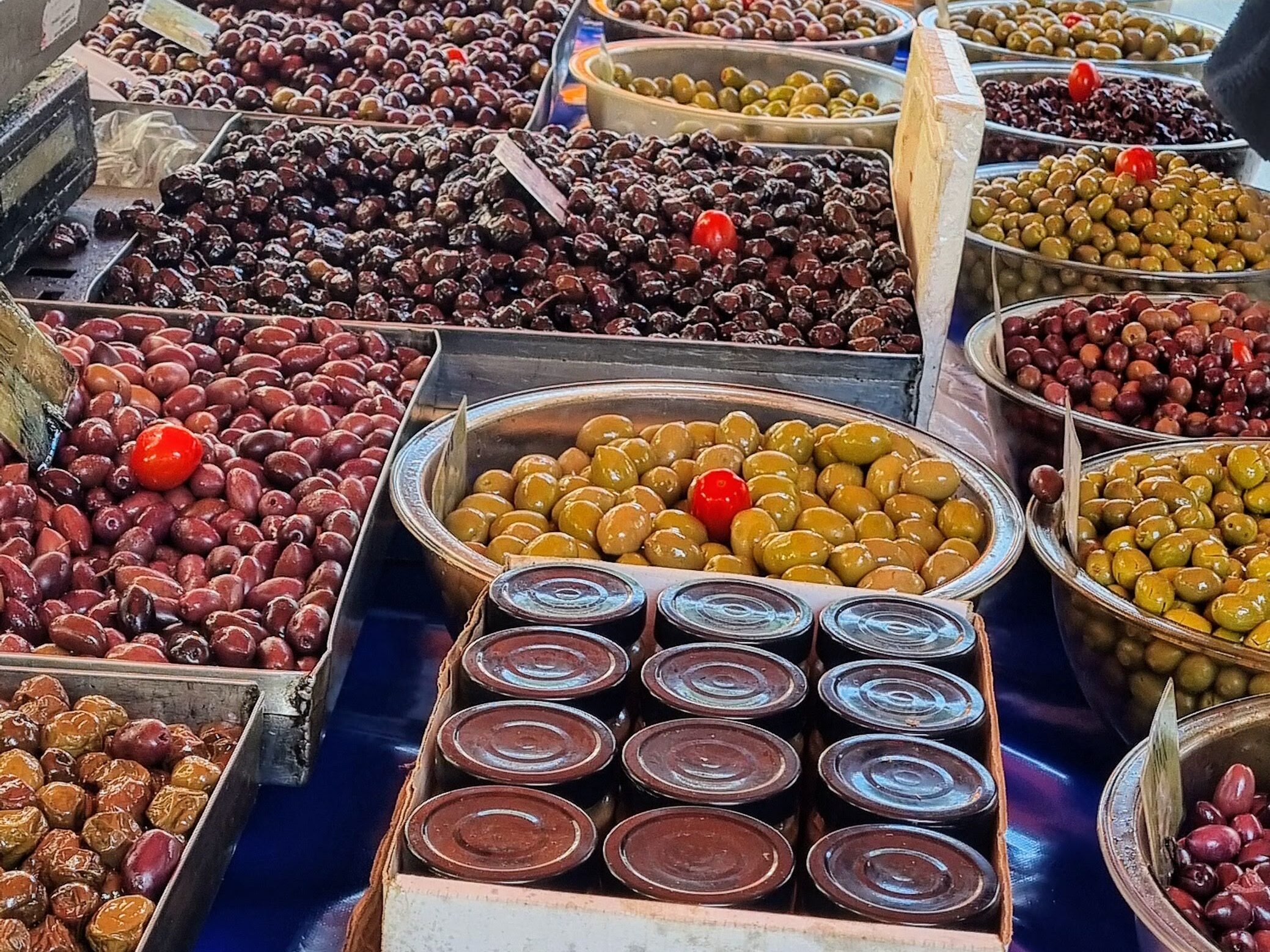
In addition to buying olive oil, tourists are keen to choose from dozens of types of marinated olives, and often buy kitchen utensils or bowls made of hard, durable but very decorative olive wood.