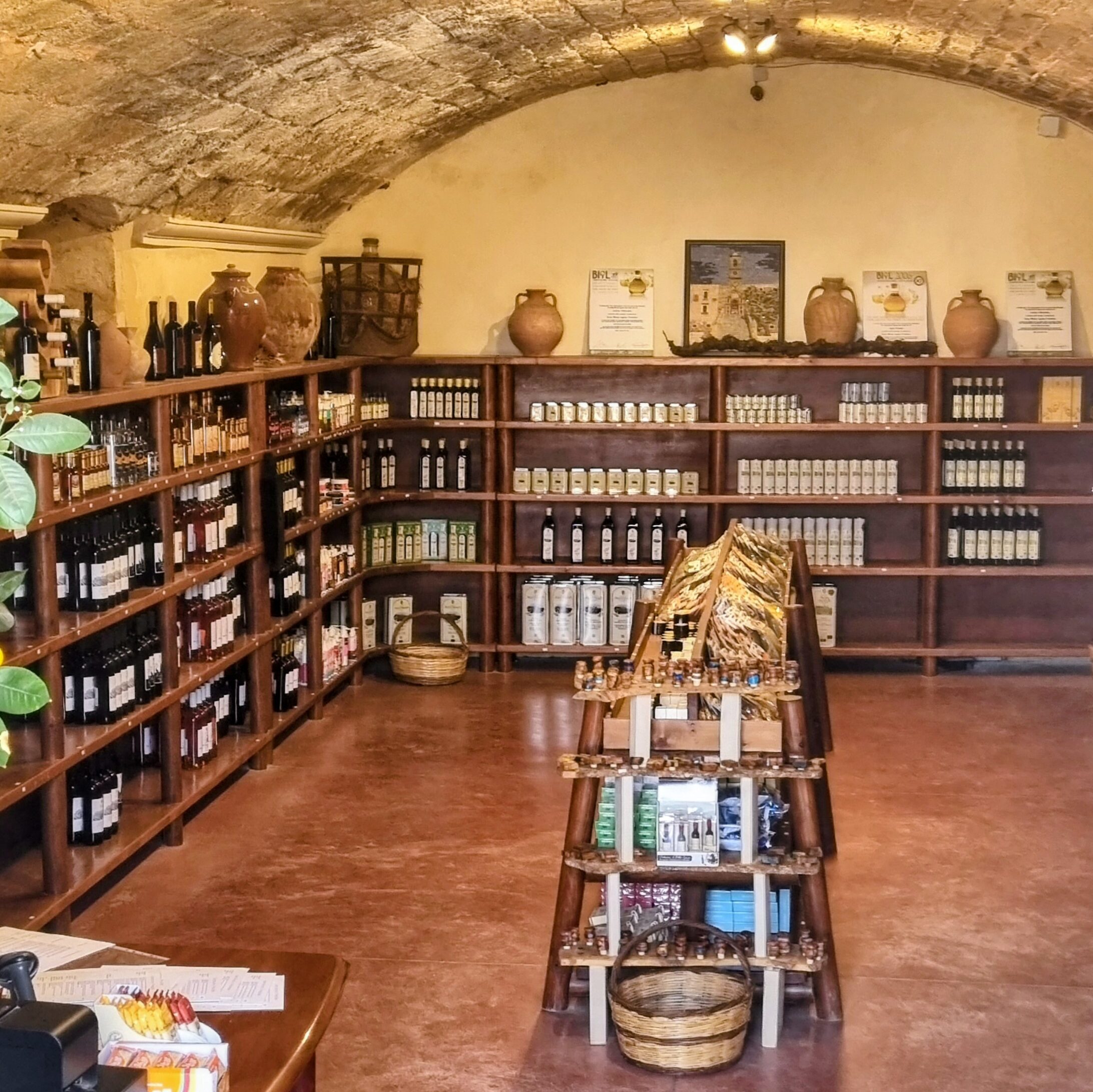
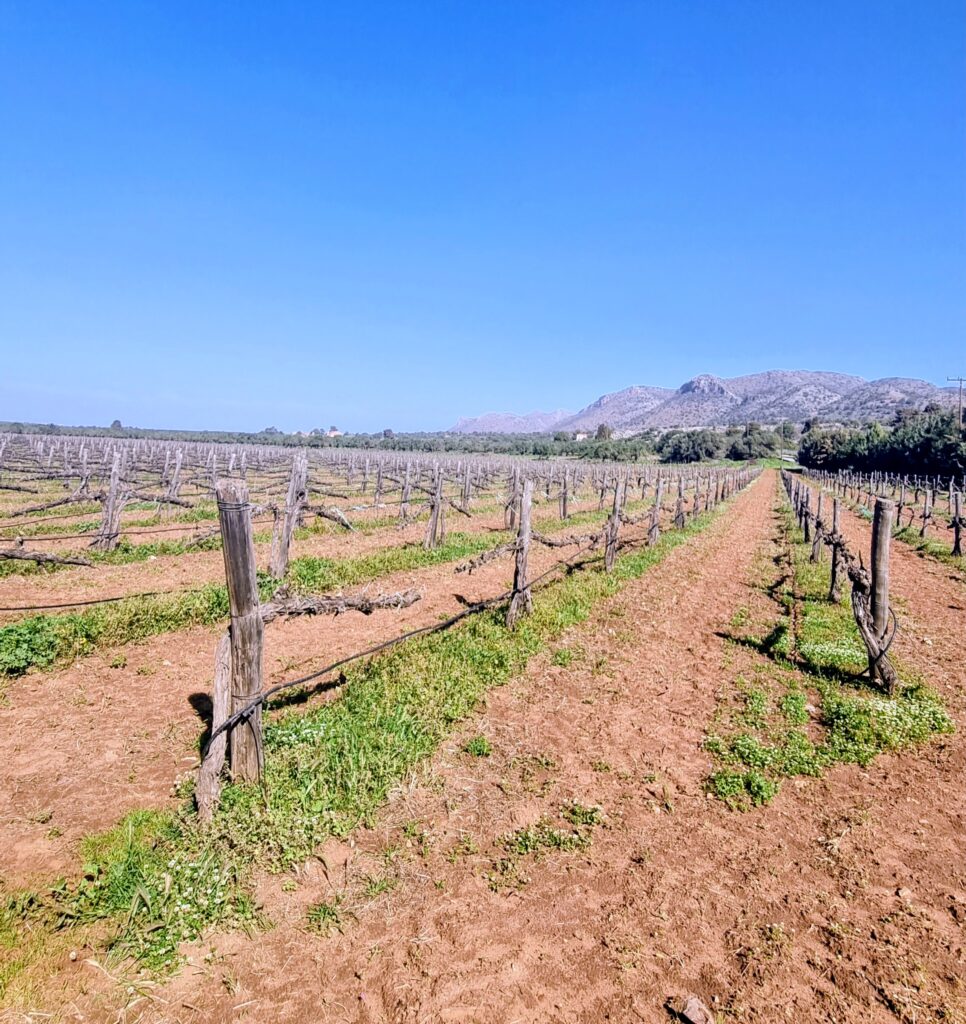
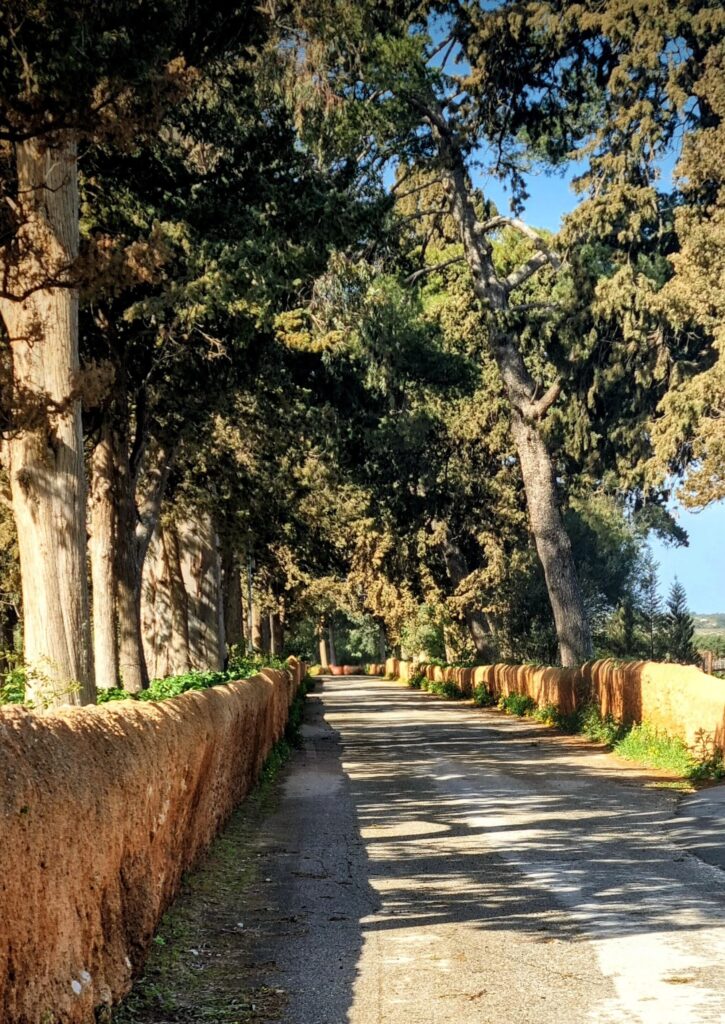
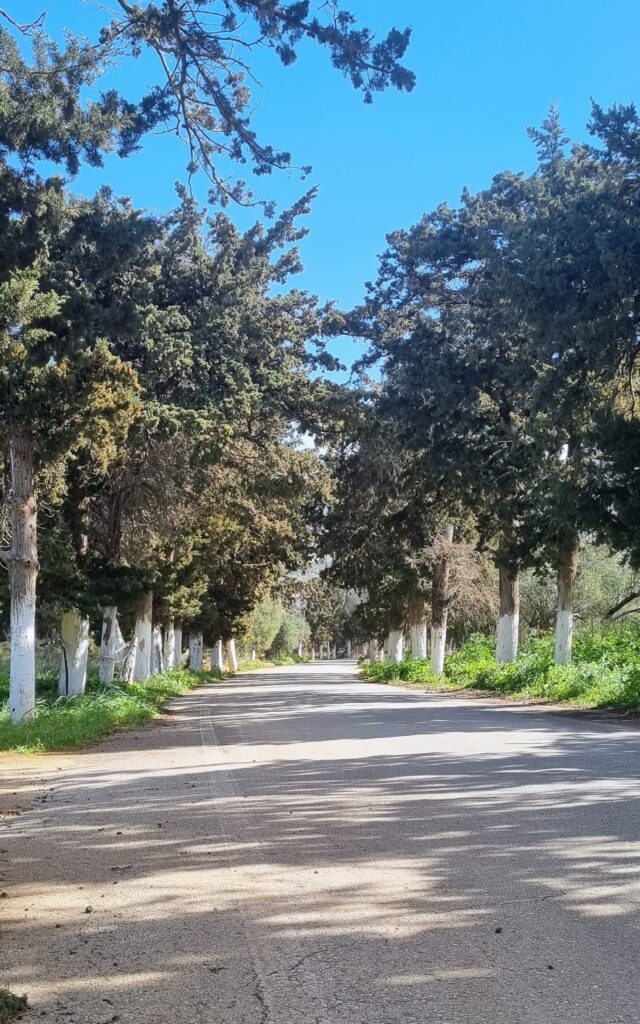
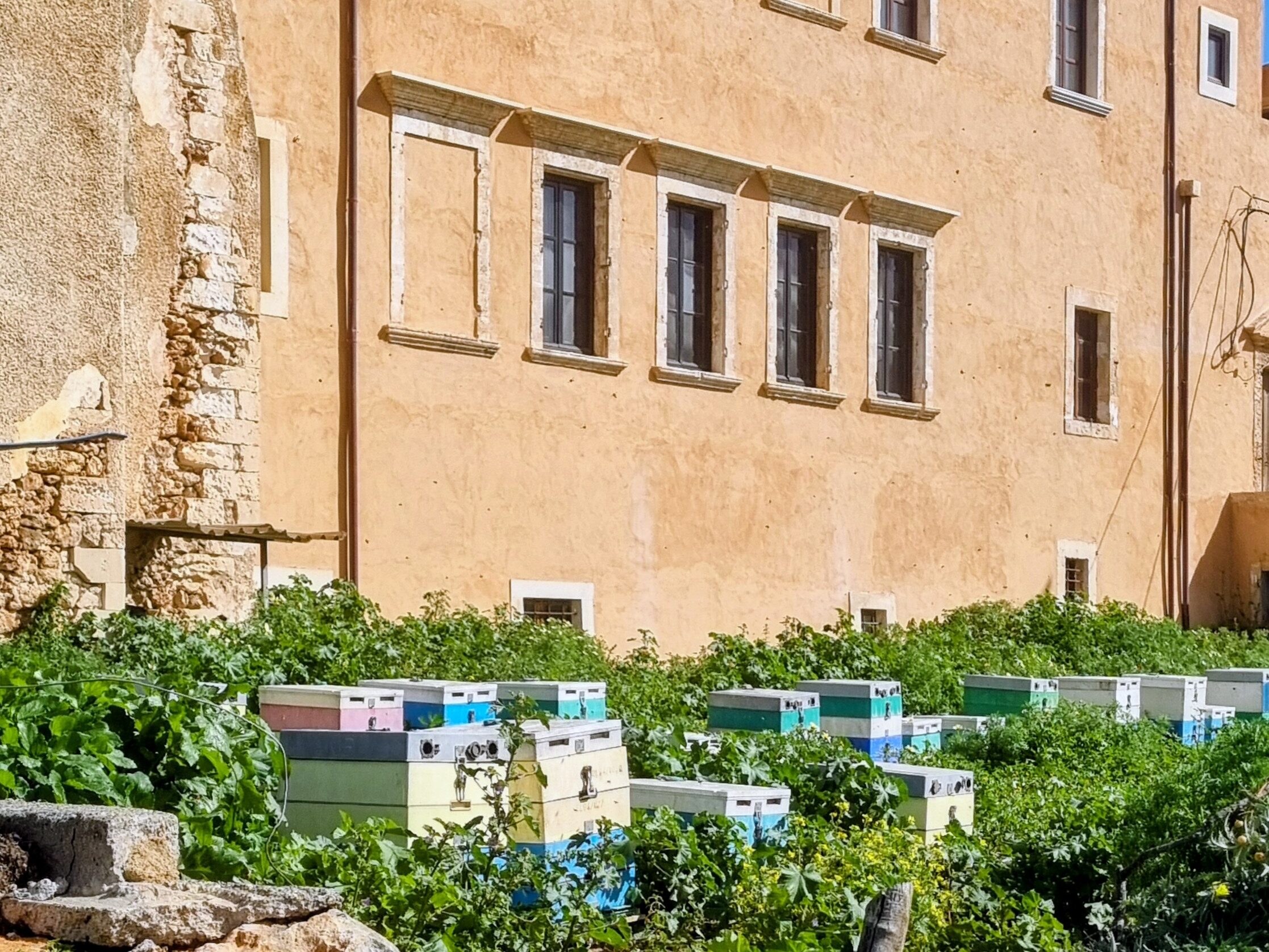
One of the most appealing nearby excursions is a trip to the Agia Triada Monastery, located on the Akrotiri Peninsula. It is only a 30-minute drive from Chania, and the route largely follows the same path as the one to the airport. The drive itself is a real pleasure; a narrow strip of asphalt leading to the monastery is flanked by a row of whitewashed cypress trees, with vineyards and olive groves (including trees up to 500 years old) belonging to the monastery stretching out behind it. As you might guess, the monks are hard at work, reaping the benefits not only by pressing excellent olive oil (20 tons a year, including exquisite organic olive oil), but also by producing four types of wine, balsamic vinegars, honey, and olive soaps. The funds raised in this way help maintain the monastery, but also support schools located in Chania.
Once we arrive, we can park the car in the spacious parking lot and head toward the main entrance.
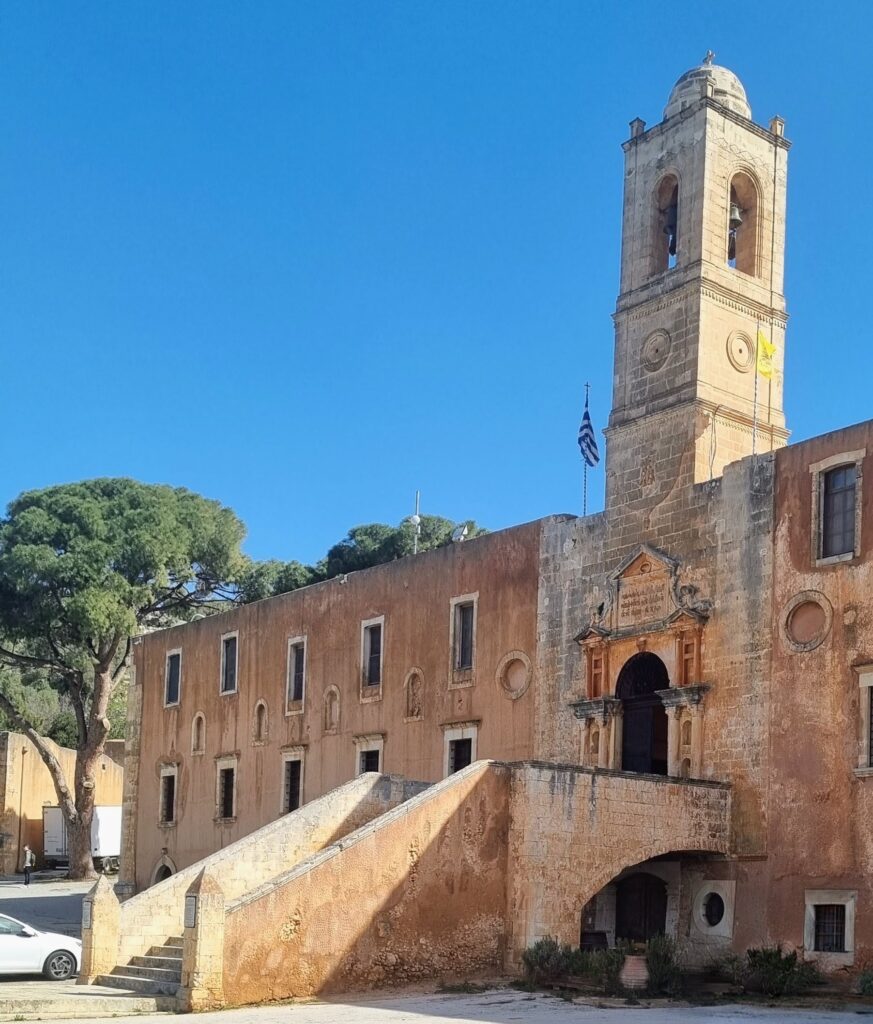
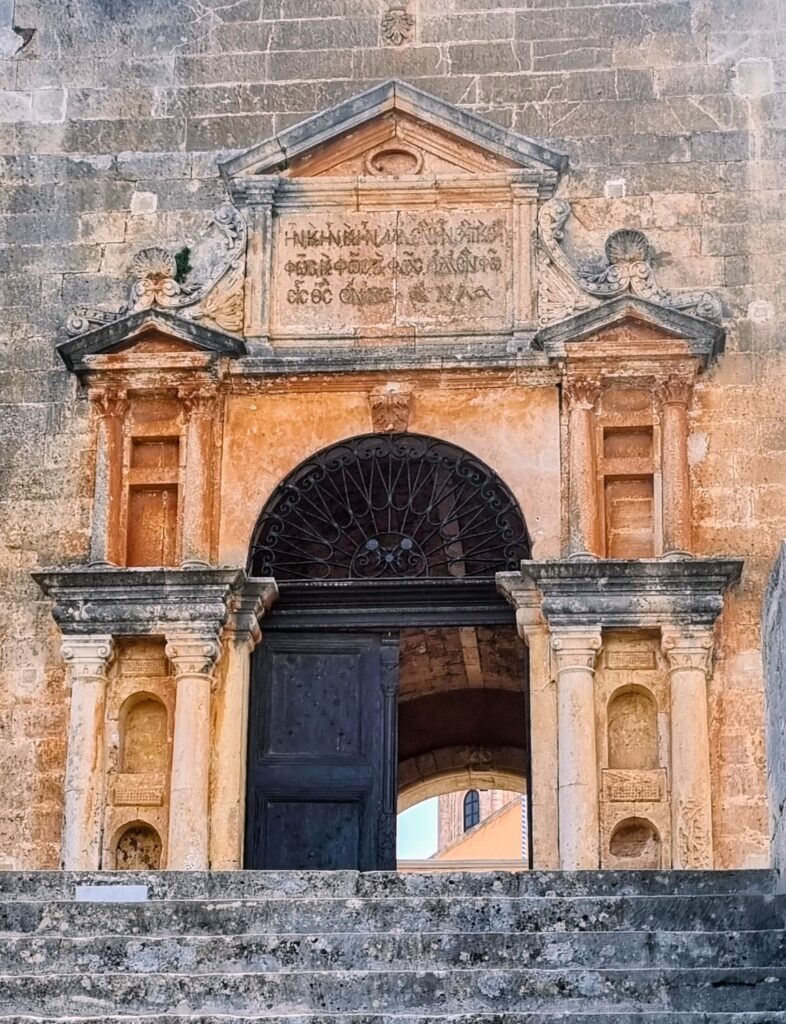
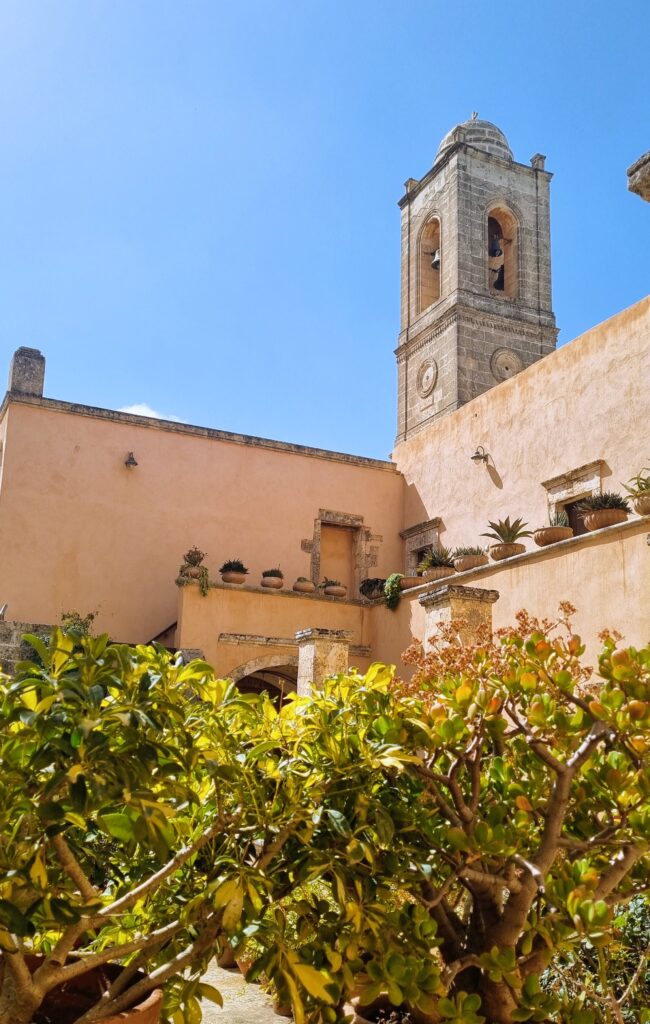
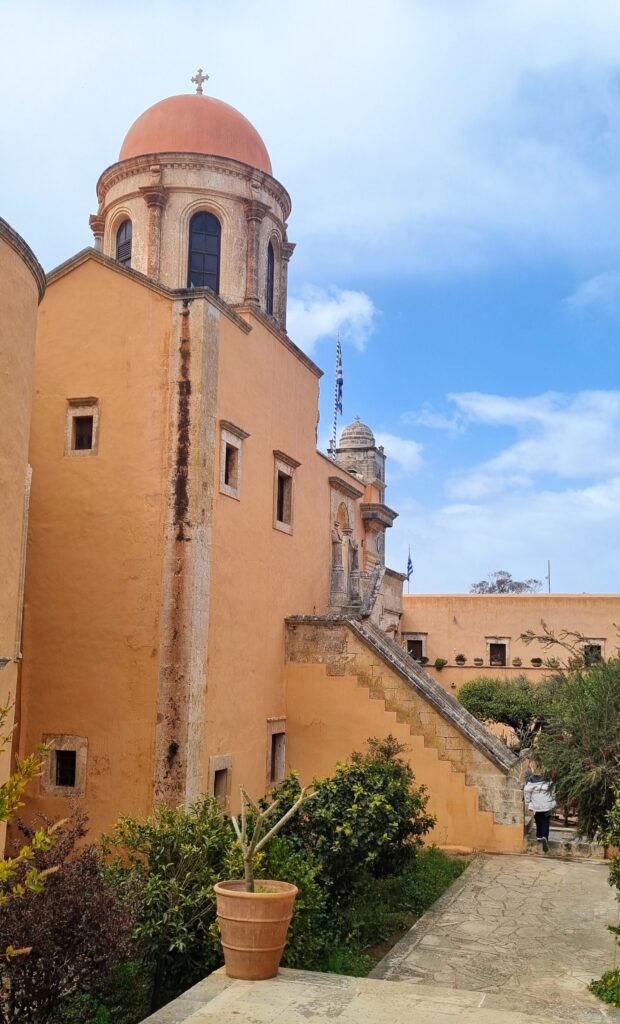
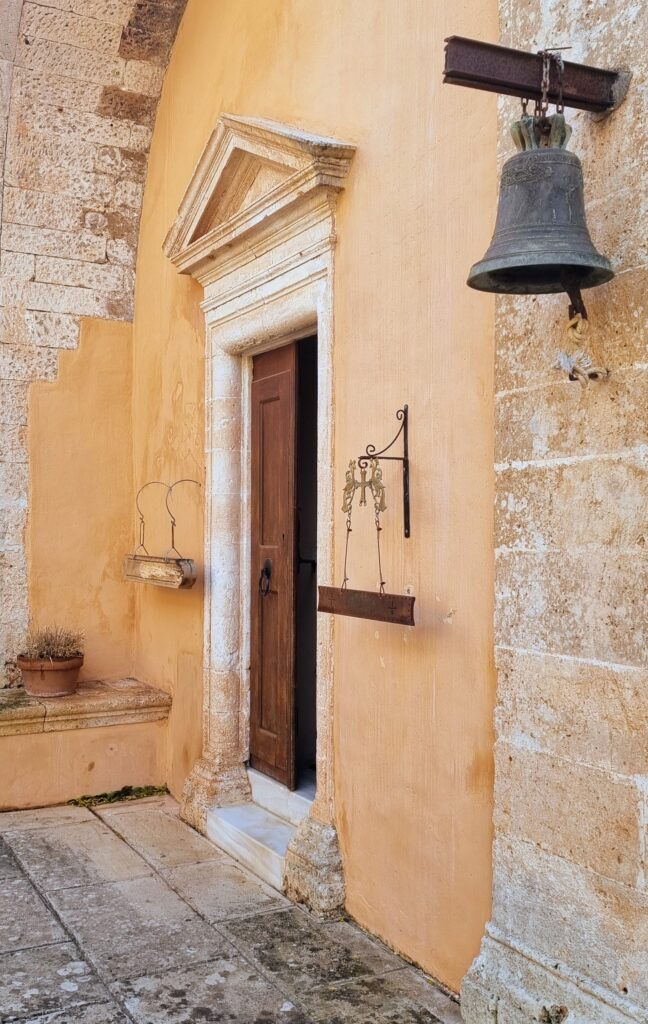
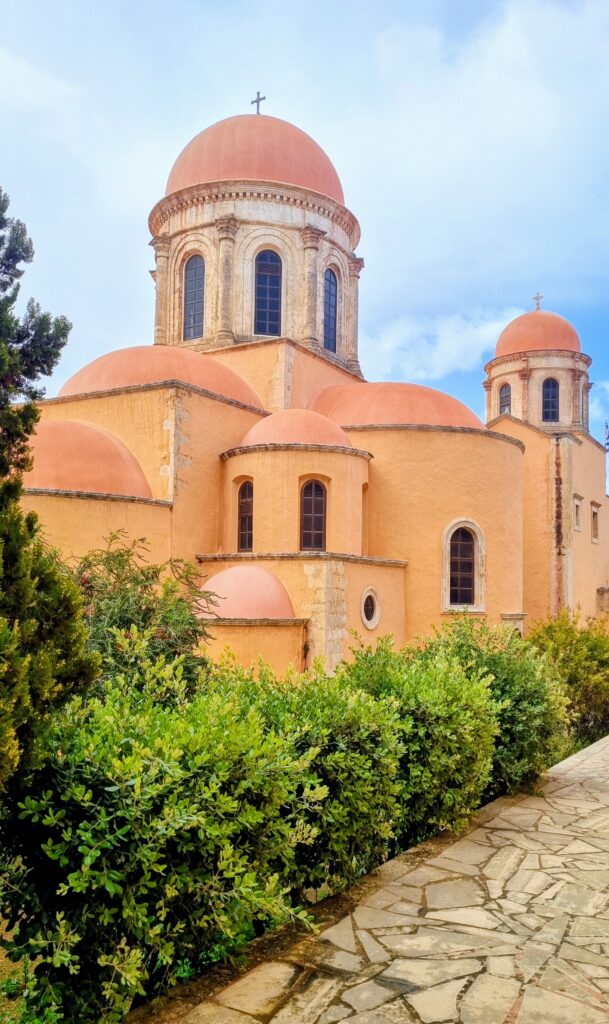
The outer walls, built on a rectangular plan, are tall and austere, giving no hint of what lies within. An impressive entrance staircase leads to an ornate stone entrance in typical Venetian style, and the entire façade clearly reflects the Renaissance principle of symmetry. After passing through the entrance gate and purchasing an admission ticket for 3 euros, you’ll find yourself in a lovely courtyard, and your gaze will be drawn to the stone Byzantine church with three domes. The courtyard and the cats there invite you to immerse yourself in the atmosphere of this place—an oasis of greenery, peace, and contemplation.
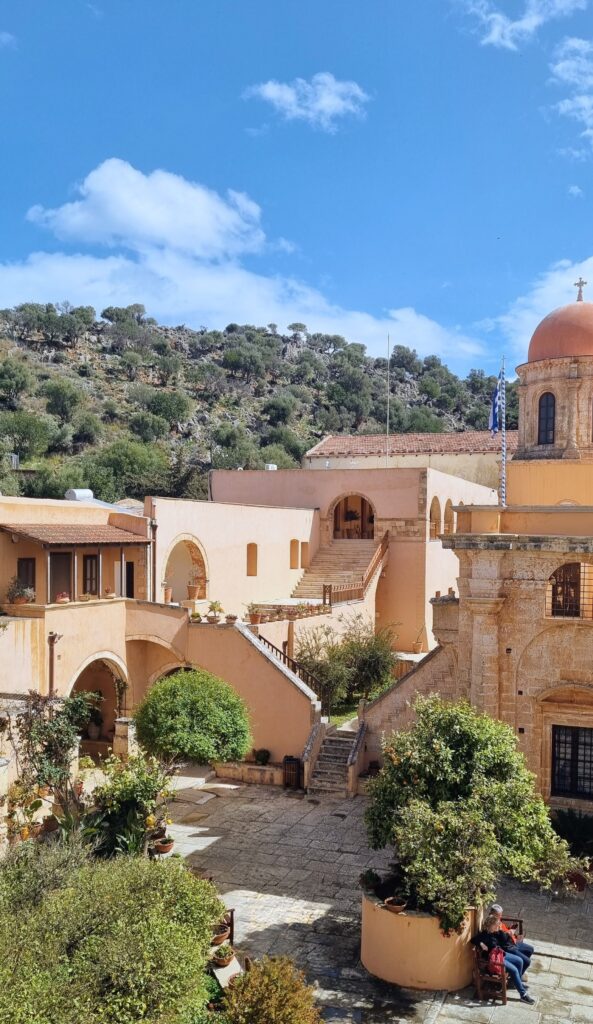
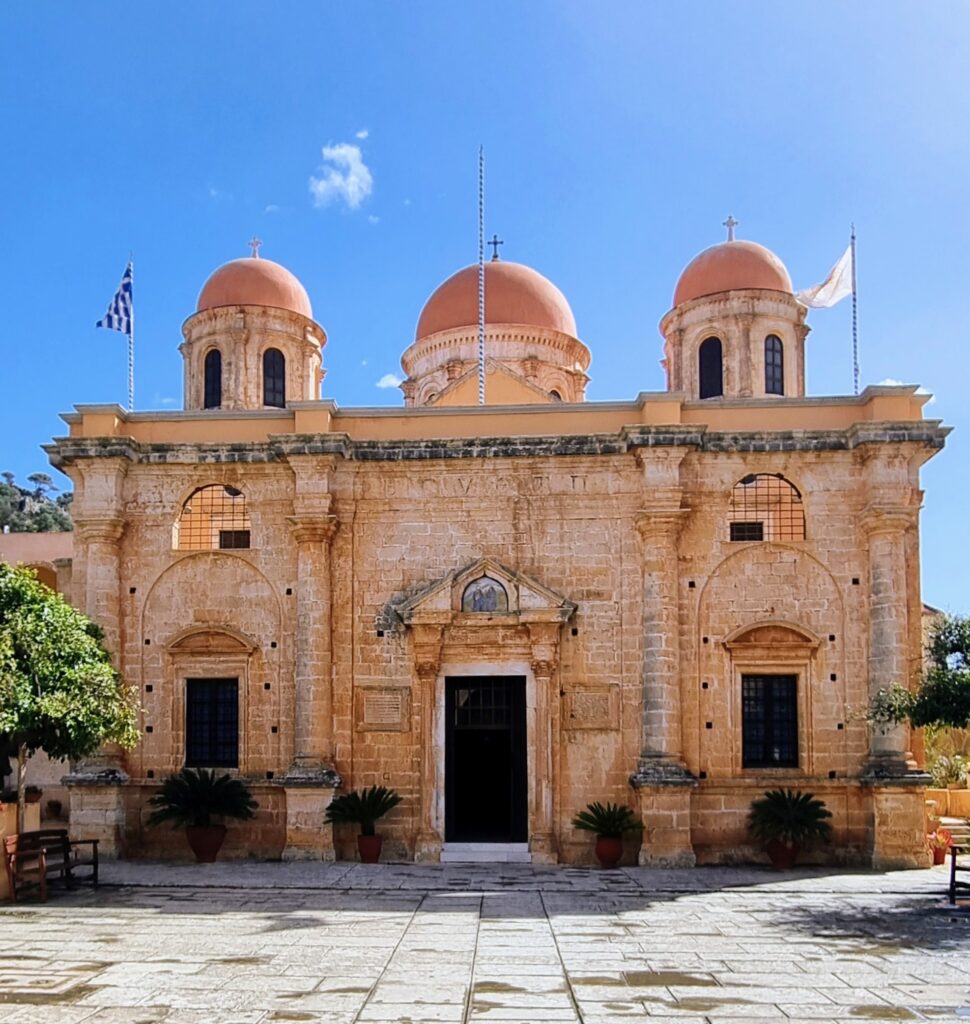
The Agia Triada Monastery (Αγία Τριάδα) was founded in 1634. It was designed and built by two monk brothers who came from the influential Cretan-Venetian Jagarolon family. In 1645, the Turks took control of Crete, and the unfinished monastery fell into their hands. In 1821, an uprising broke out in Crete against the Turkish occupiers. The monks managed to flee, but they left behind relics and manuscripts, which unfortunately fell into the hands of the Turks and were destroyed. That same year, the monastery was burned down. The buildings were rebuilt, and the entire complex was not completed until after World War II.
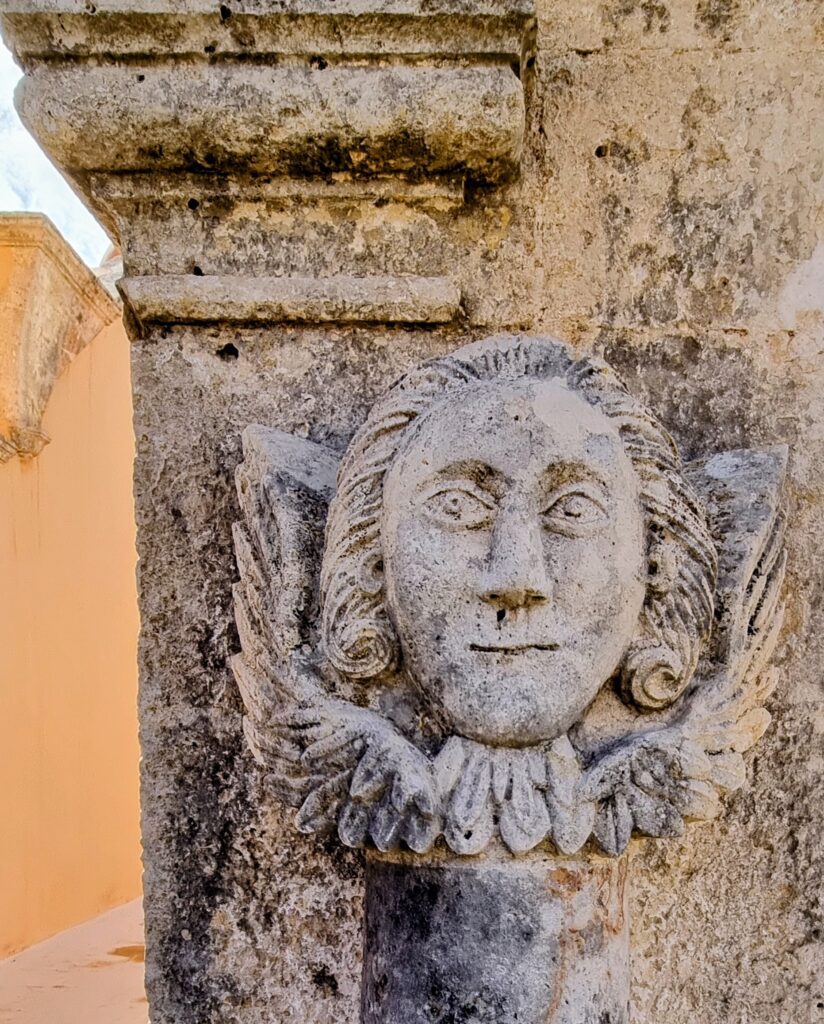
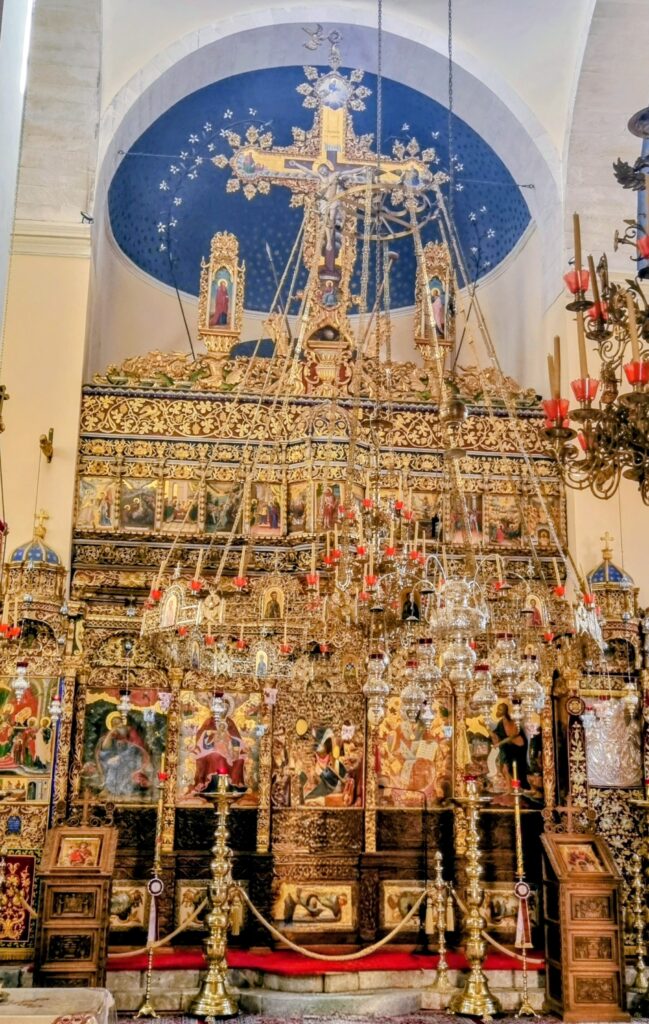
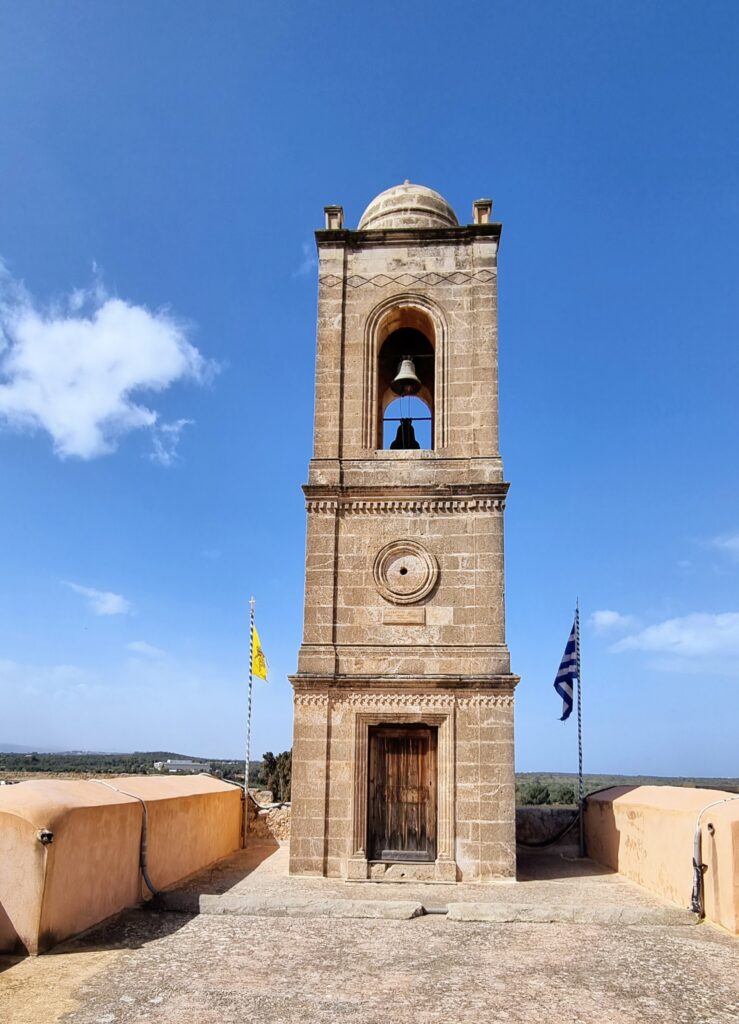
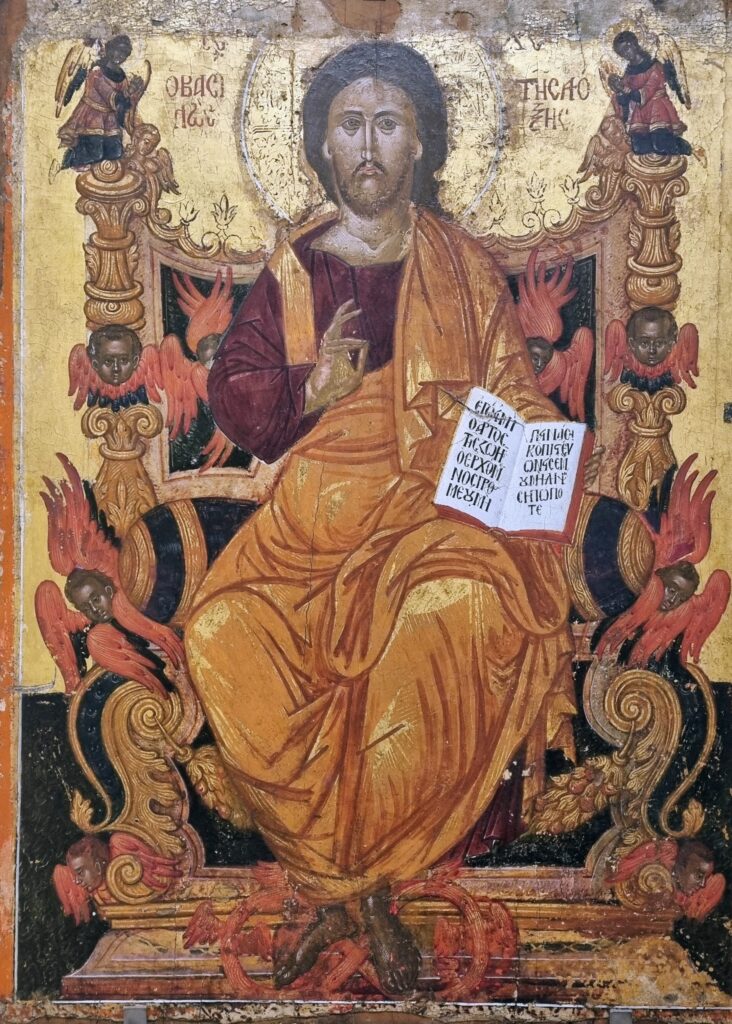
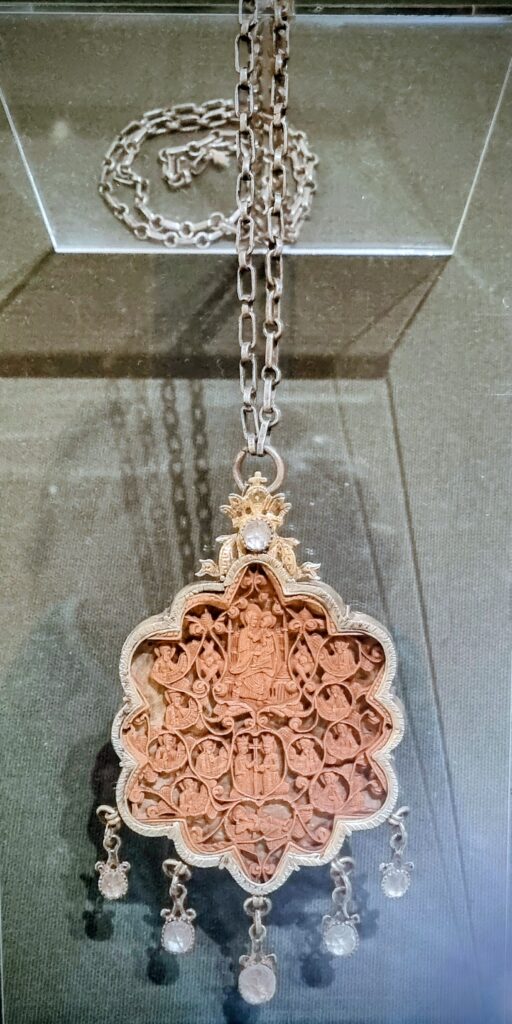
Today, the most interesting building to visit is undoubtedly the Holy Trinity Church, located at the center of the complex. Its impressive iconostasis and distinctive chandelier, reminiscent of *One Thousand and One Nights*, are truly breathtaking. You can also stroll through the shaded cloisters, climb up to the balconies and the terrace beneath the bell tower to admire the bird’s-eye views. The small museum, which houses artifacts testifying to the colorful and turbulent history of these buildings, is particularly interesting. My attention was especially drawn to the 15th- and 16th-century icons, ancient hand-copied manuscripts, and intricately carved wooden amulets.
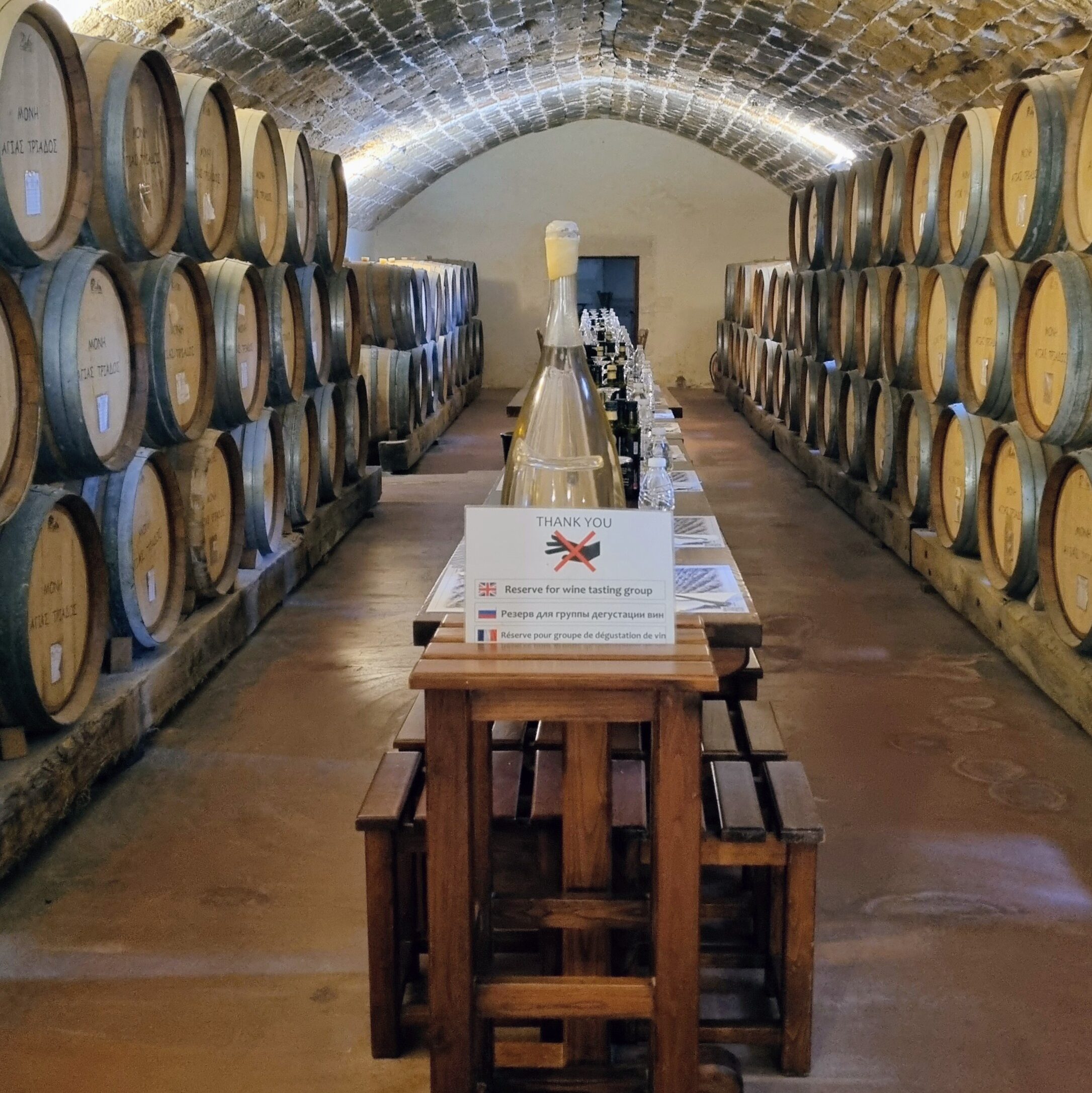
You can support the monastery and its community initiatives by shopping at the on-site store or booking a spot for a tasting of local wines and olive oil.