Posted on — Leave a comment

Archaeological Museum in Chania

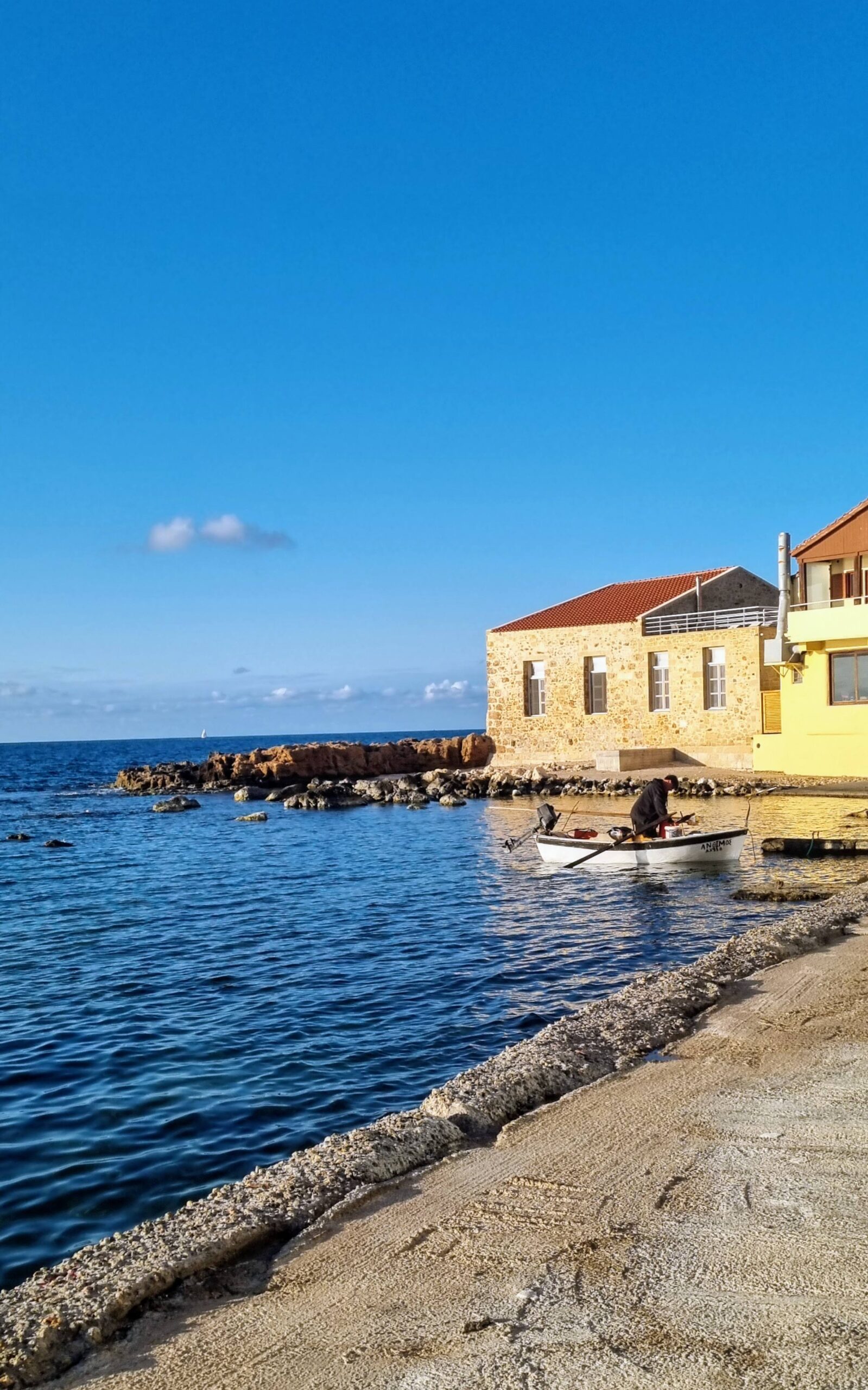
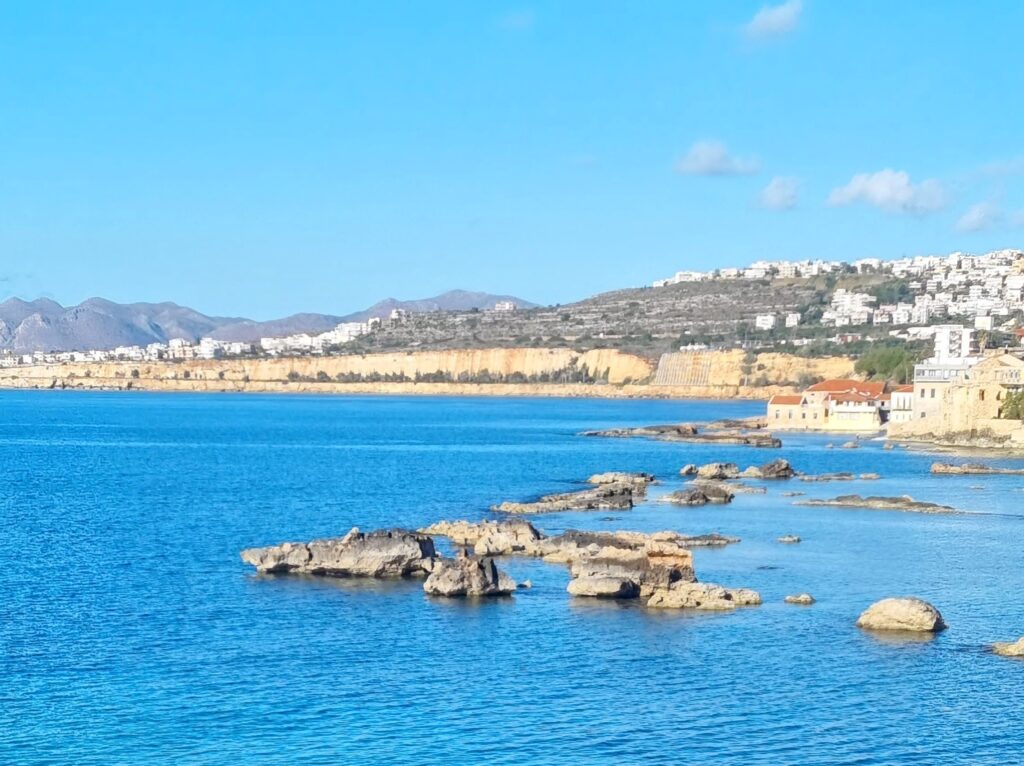
We were assured that tickets to the museum could be easily purchased on site, so we set off leisurely from Thimari Gardens on a beautiful October day around 11 a.m. Leisurely and on foot. Google suggested that the walk would take 25 minutes and would run picturesquely along the coast, from Splantzia in the old town of Chania, eastwards towards the Halepa district, where the modern and eco-friendly new building of the Archaeological Museum is located.
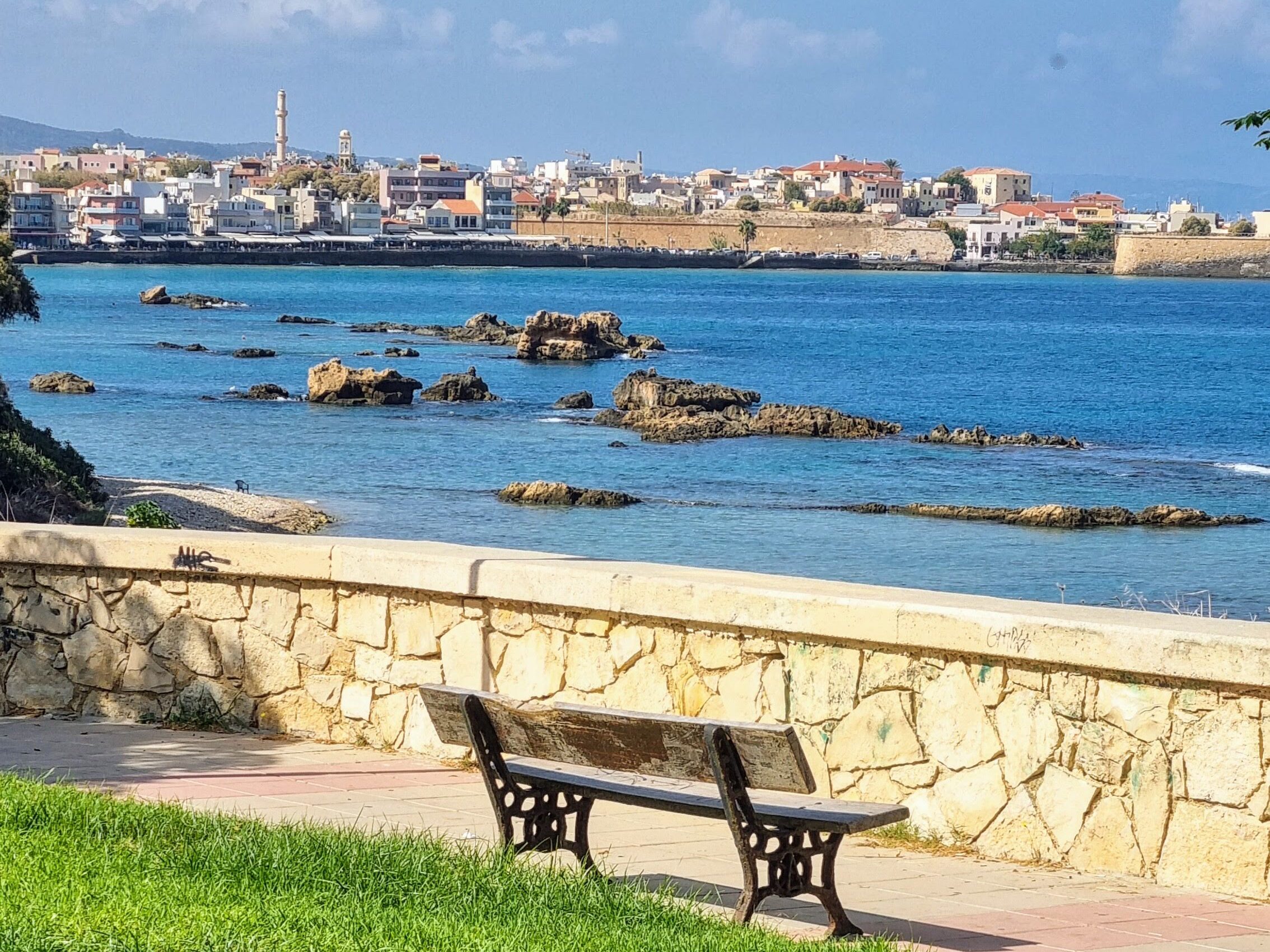
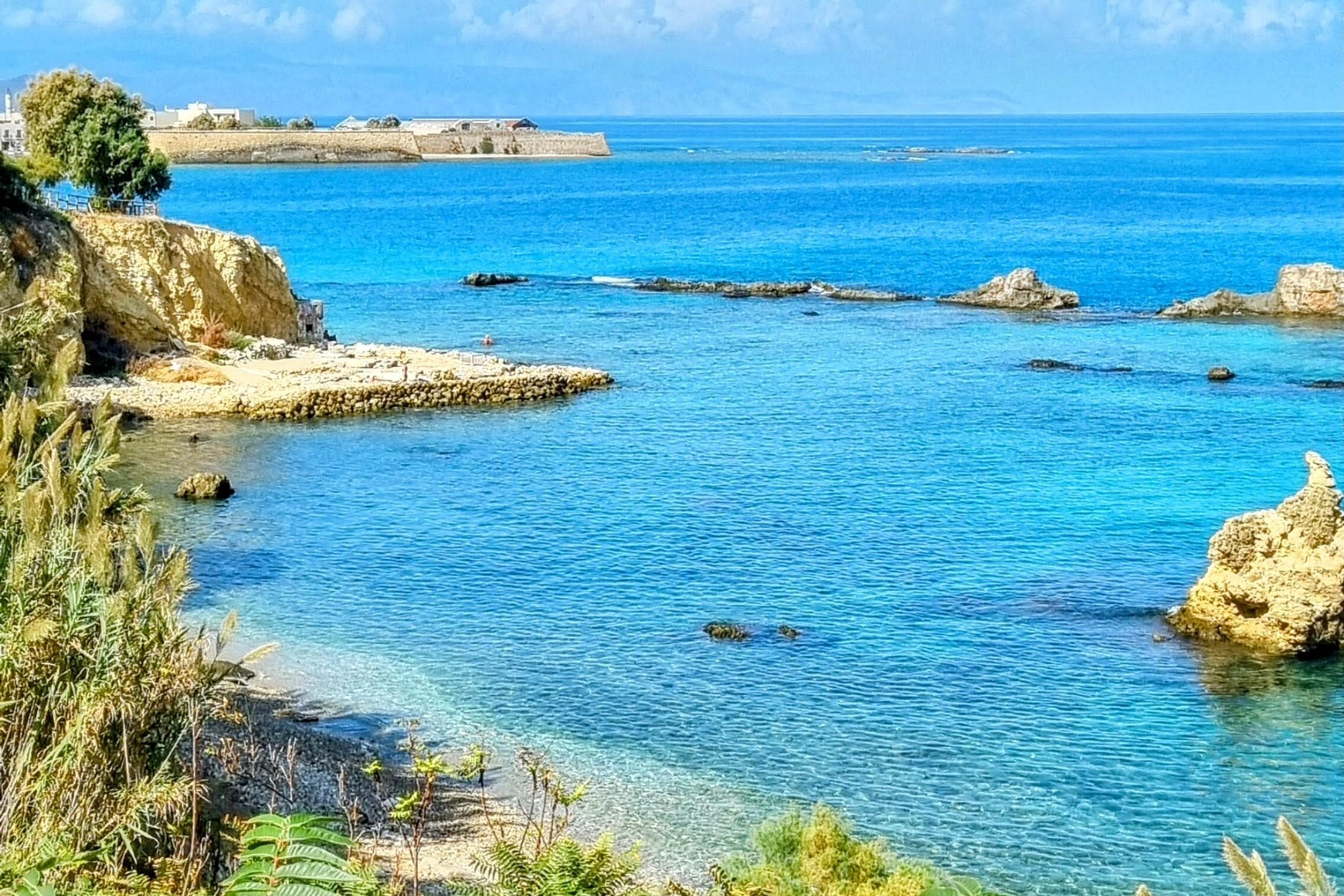
We were not disappointed. The coastal road winds along the high rocky shore and allows you to either see the magnificent Venetian gate of Chania (Sabbionara) from a new perspective or enjoy tropical views. The last 300 metres lead into the city, but there is still plenty to admire here, because Halepa gained its fame in the 19th century as a centre of politics and business for the greats of this world, which resulted in the creation of many beautiful and unusual villas and estates, which, either carefully renovated or still waiting for an investor with a bag of money, can be seen on the way to the museum.

But there is also the museum building. Low, blending into the hill, quite discreet from the outside, bright, uncluttered and open inside.

Standard tickets cost €6, but all EU residents under the age of 25 enter for free. Audio guides are also free of charge.

The permanent exhibition, covering the period from the Palaeolithic to Roman times, is housed in three large rooms. Most of the 4,100 exhibits come from the Chania area and the island of Gavdos, which is famous for its remains indicating that it was inhabited as early as 700,000 BC.
The first room presents the prehistory of this part of the world from the Palaeolithic period to the heyday of Minoan culture, with its palatial period, the remains of which are now mostly hidden in the Kastelli district of Chania, then known as Kydonia.

In the second room, we see a collection covering the Iron Age, the time of city-states, led by Kydonia and Aptera.

The third room is a narrative built around the destruction wrought by the terrible earthquake of 365 AD, and in particular the story of the destruction of a house called Filargyros, whose buried remains have become an excellent source of knowledge about that era.

There is another room on the first floor, which houses Mitsotakis’ private collection donated to the museum. It contains an absolute rarity – a stone seal engraved with the Minotaur, dated 1350 BC.

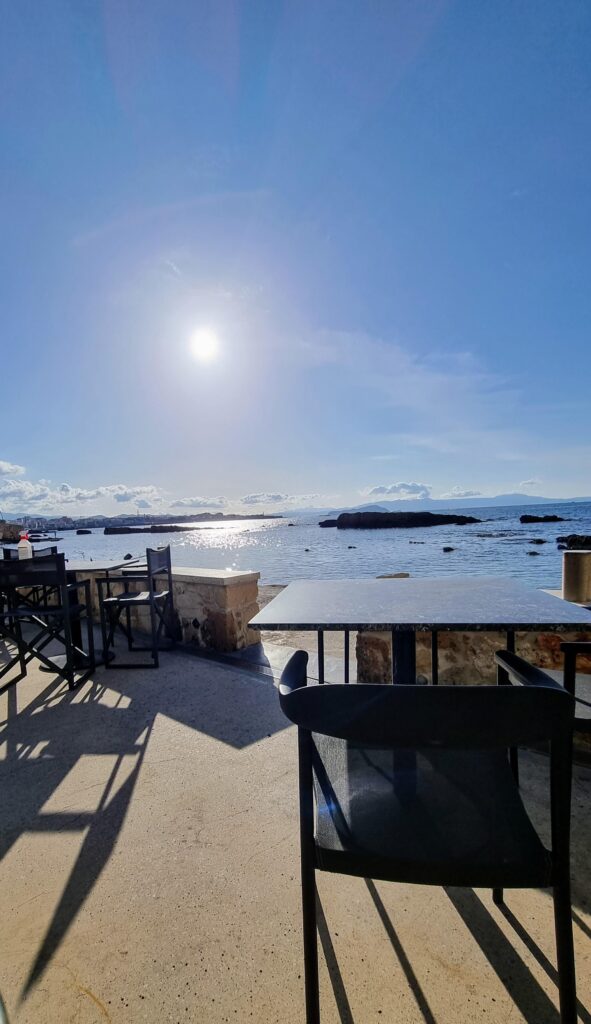
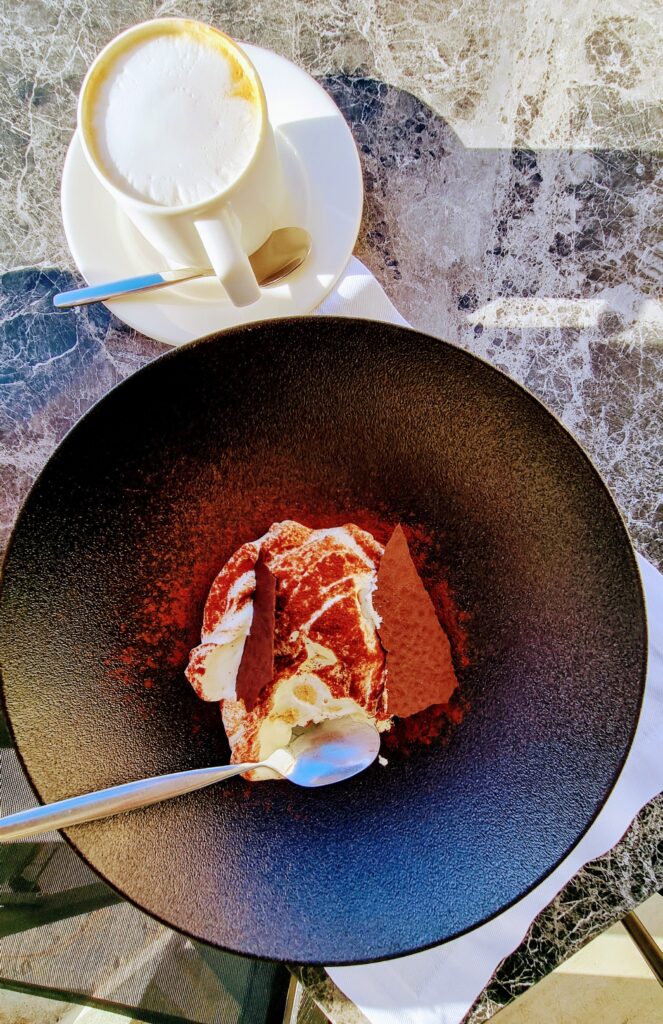
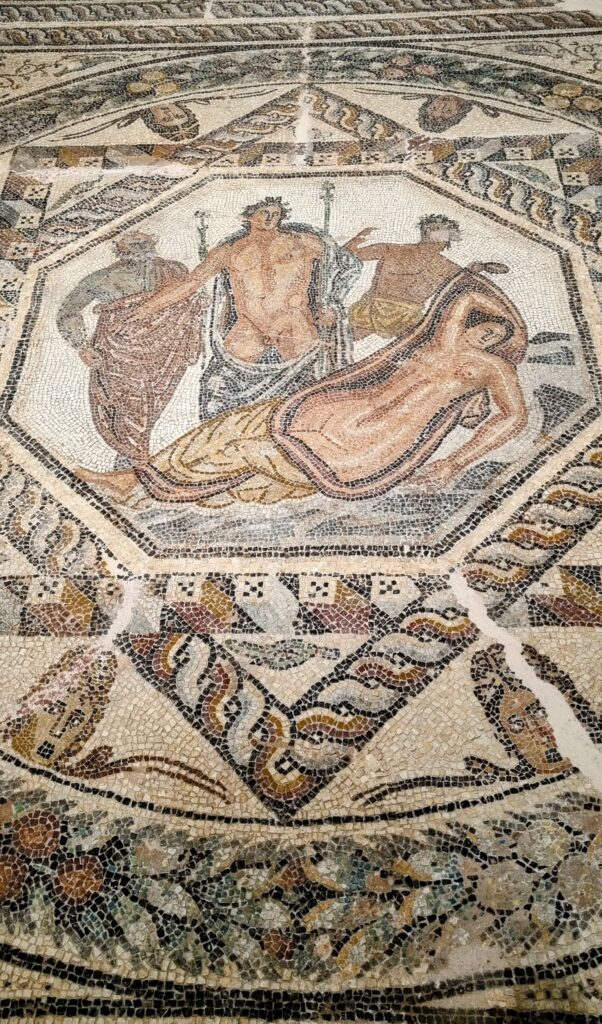
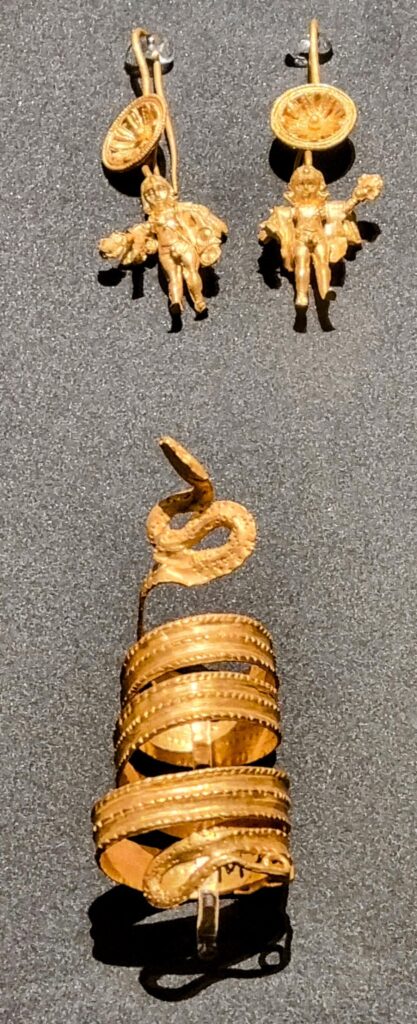
The exhibits are logically arranged, the most interesting ones are displayed and illuminated in an interesting way (I was delighted by the Minoan seal, jewellery, warriors’ graves and Roman mosaics), and clearly described. A leisurely stroll through all the rooms takes about 1.5 hours, and for those who are tired, there is a pleasant café with a terrace on the upper floor, offering an unobstructed, wonderful view of Chania and the Cretan Sea.
Posted on — Leave a comment

Aptera – little explored, yet dazzling

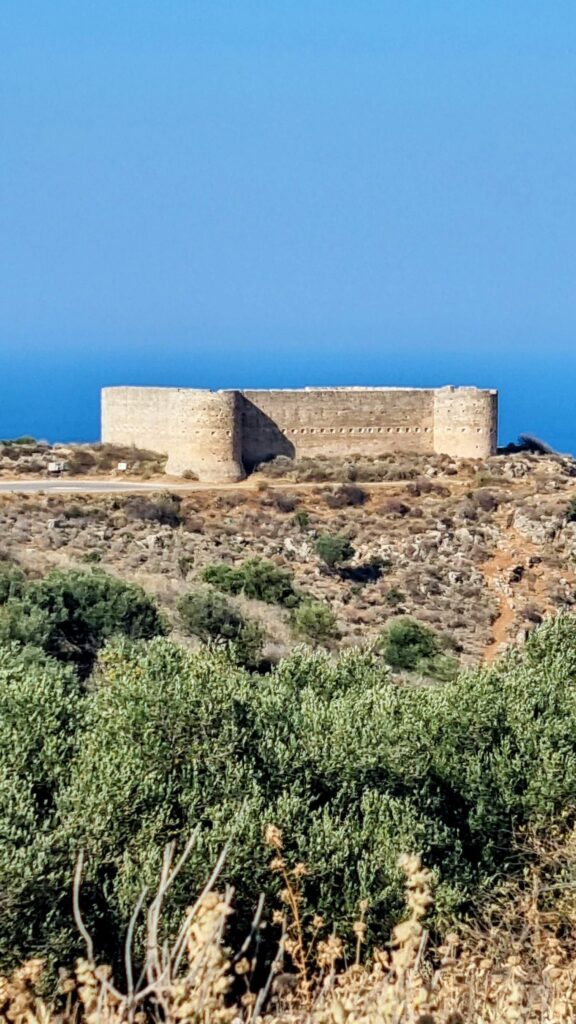
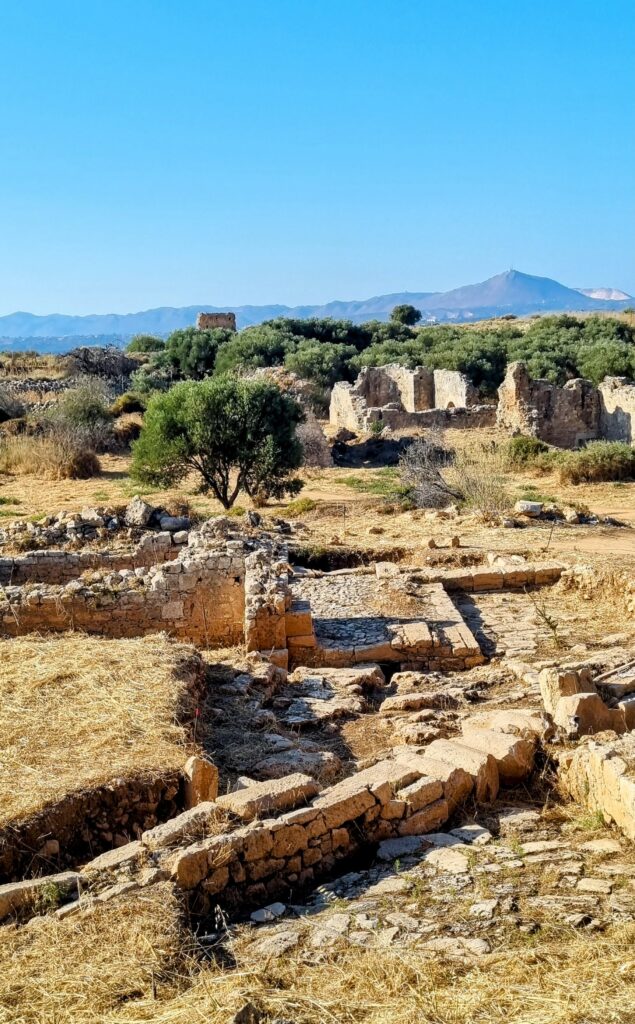
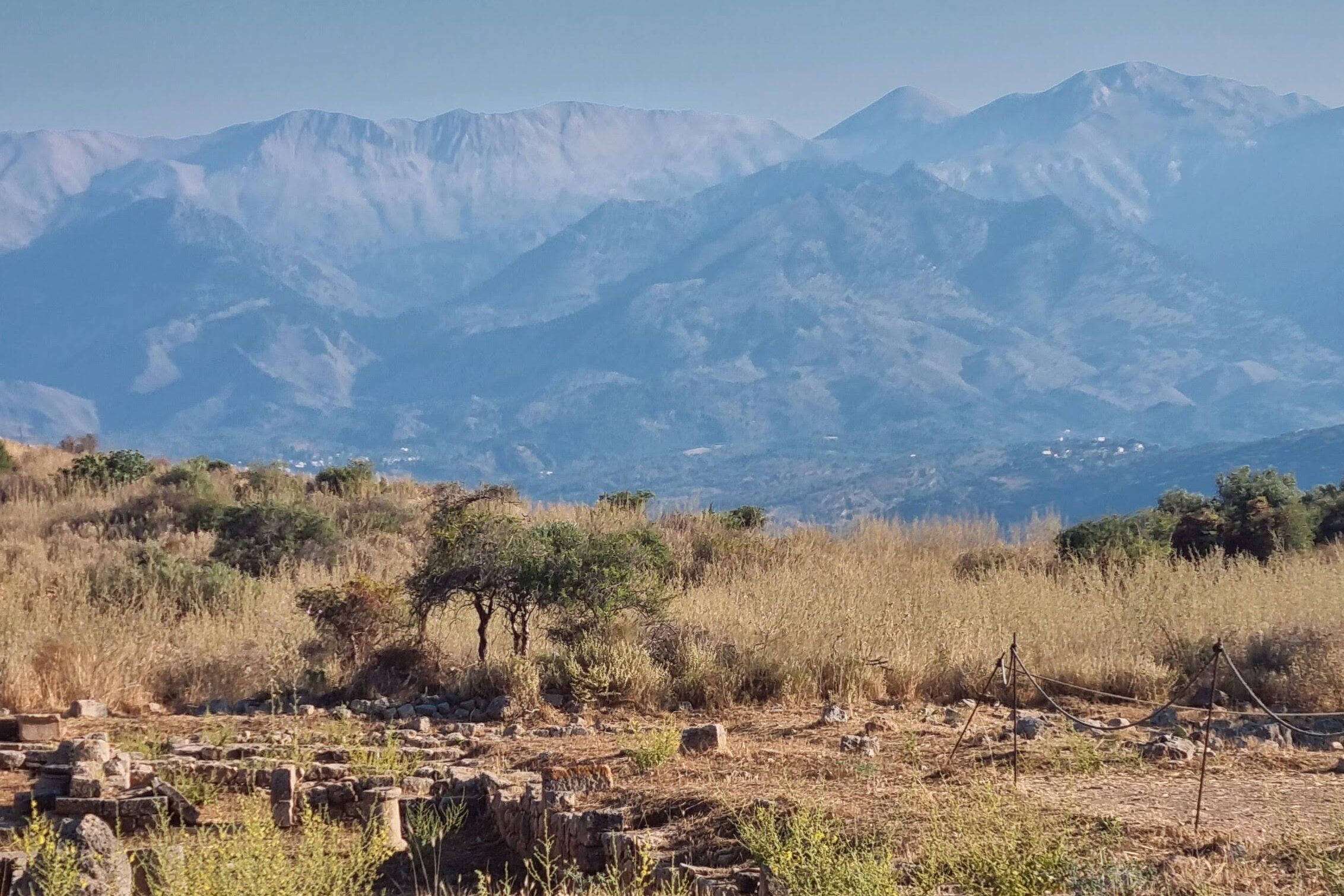
Ancient Aptera, a 30-minute drive east of Chania, stretches across a plateau near the hill of Paliokastro, which dominates the south-eastern part of Souda Bay. Recent archaeological research suggests that settlement in this area began in the 11th-12th century BC.

The 3,480-metre-long defensive wall surrounding the main settlement was built before the mid-4th century BC. The city enjoyed an era of prosperity during the Roman period, but after a terrible earthquake in the 7th century, it was so badly damaged that it was not until the 12th century that it became a significant urban centre again and played an important role until the Venetian period (16th and 17th centuries).

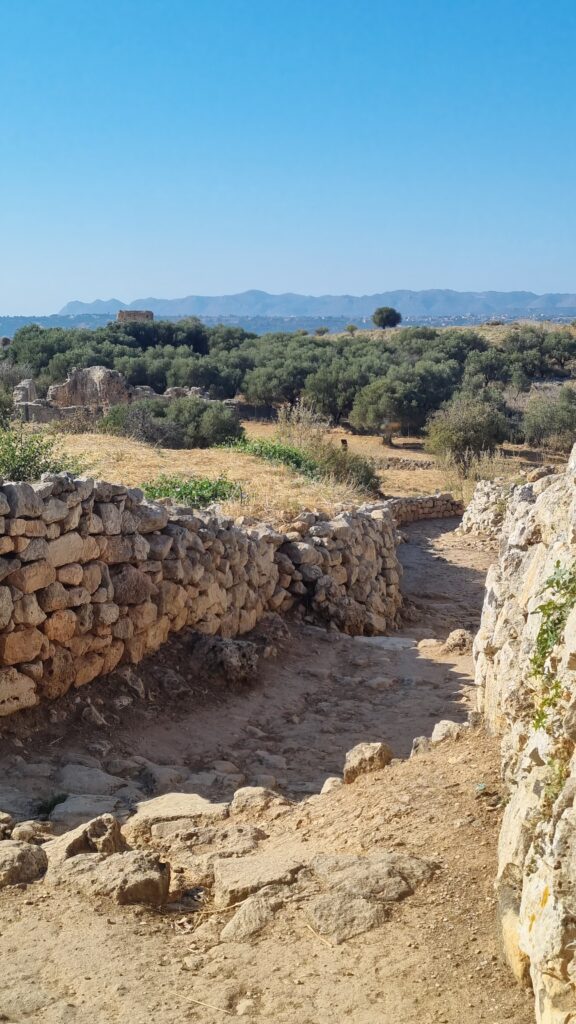
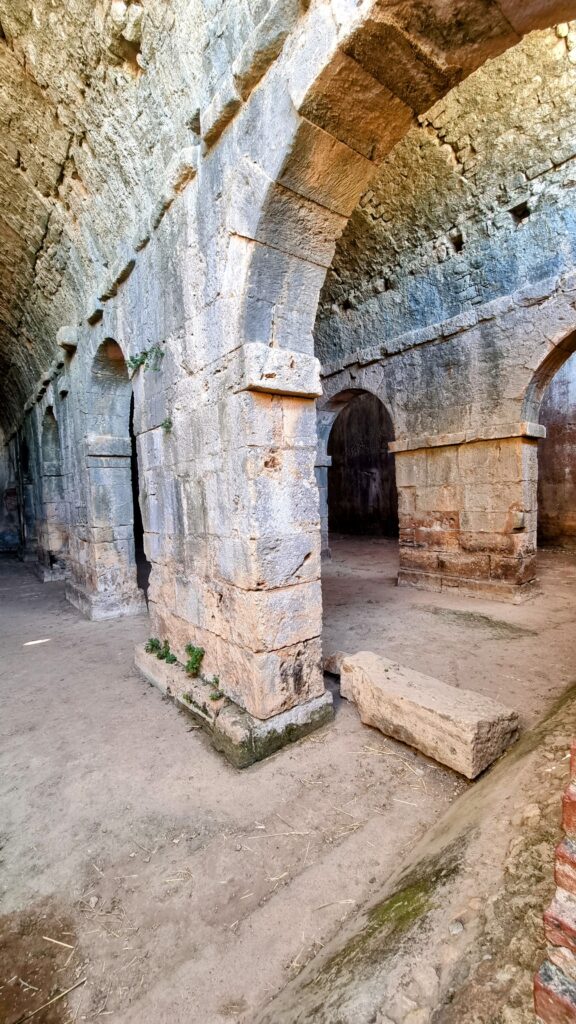
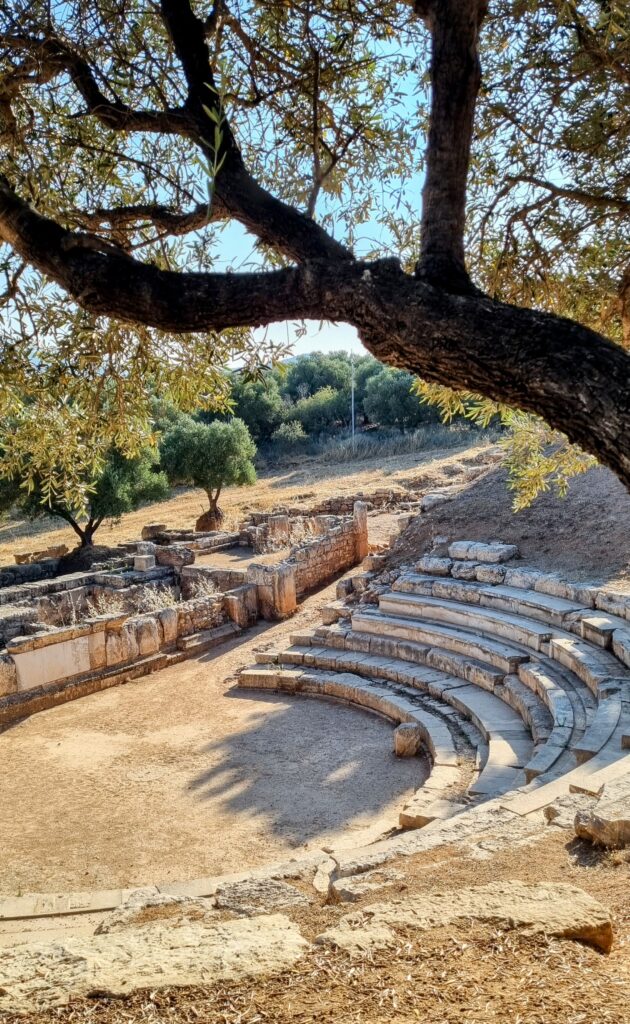
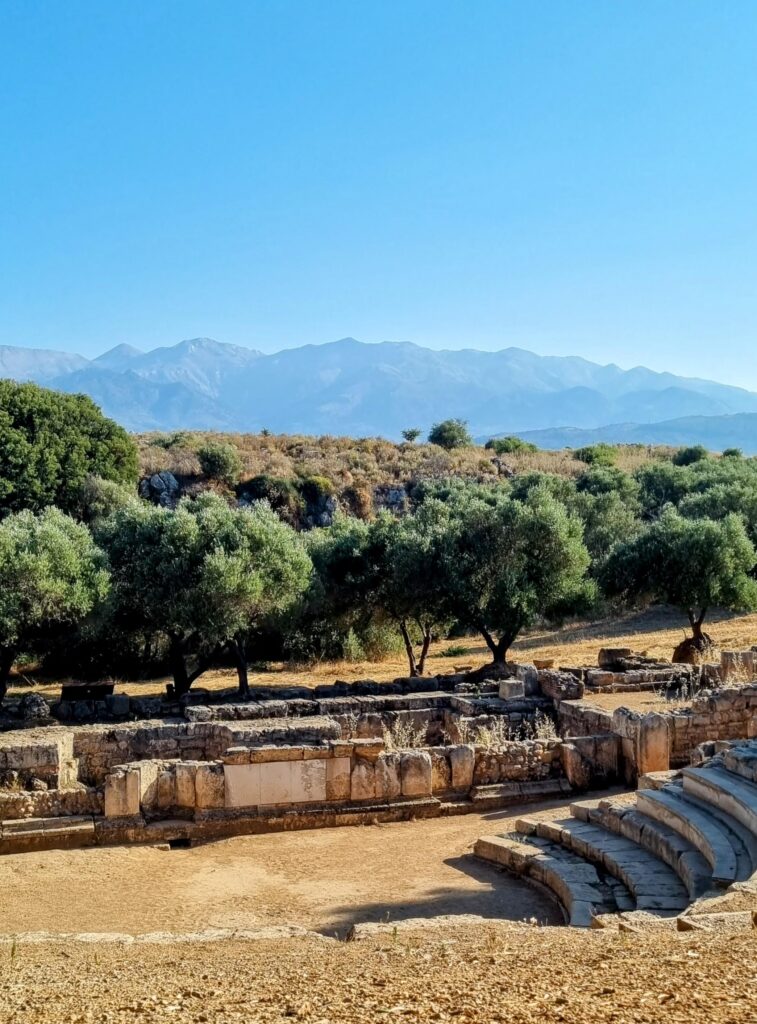
In today’s Aptera, visitors can admire the remains of ancient fortifications, three cemeteries from different periods, Roman cisterns and baths, as well as an ancient theatre, which has recently been partially restored, with comfortable steps leading to the stage, called skene.

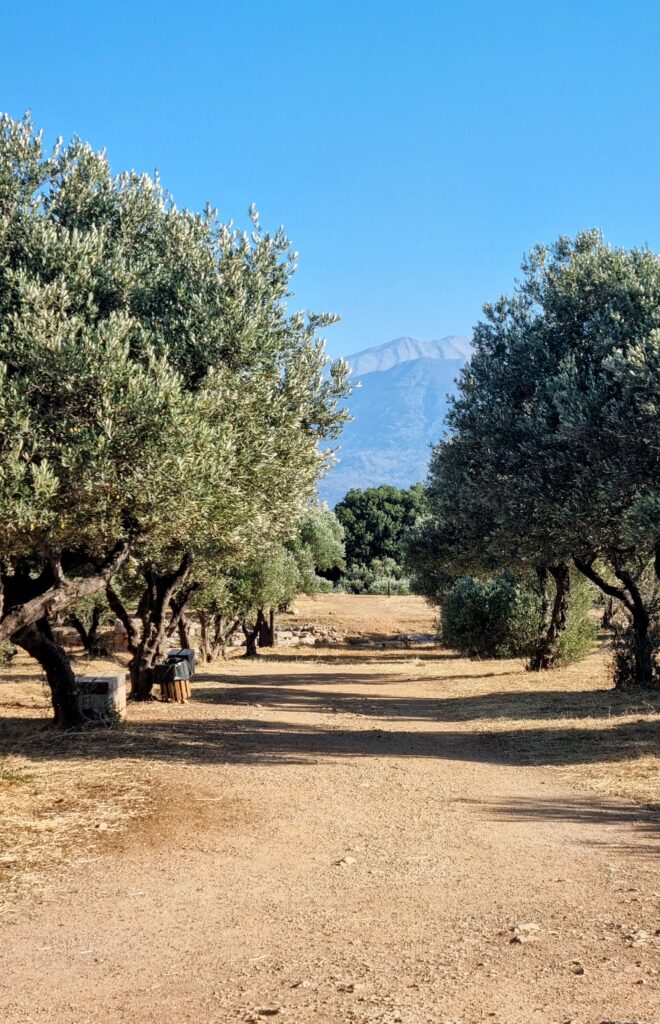
I found Aptera charming, atmospheric and simply beautiful. Perhaps it was its beautiful location between the sea and the mountains, perhaps the vastness of the settlement, or perhaps the fact that there were so few other people there during my visit, but it made a greater impression on me than Knossos.

On the practical side, tickets cost €10 and there is convenient parking for visitors.

As the site is largely unsheltered, you should bring water, sunscreen and a hat.

You can also, and this is what I would suggest, visit this place during the golden hour, both for the temperature and the magnificent views.

Posted on — Leave a comment

Rooms and spaces

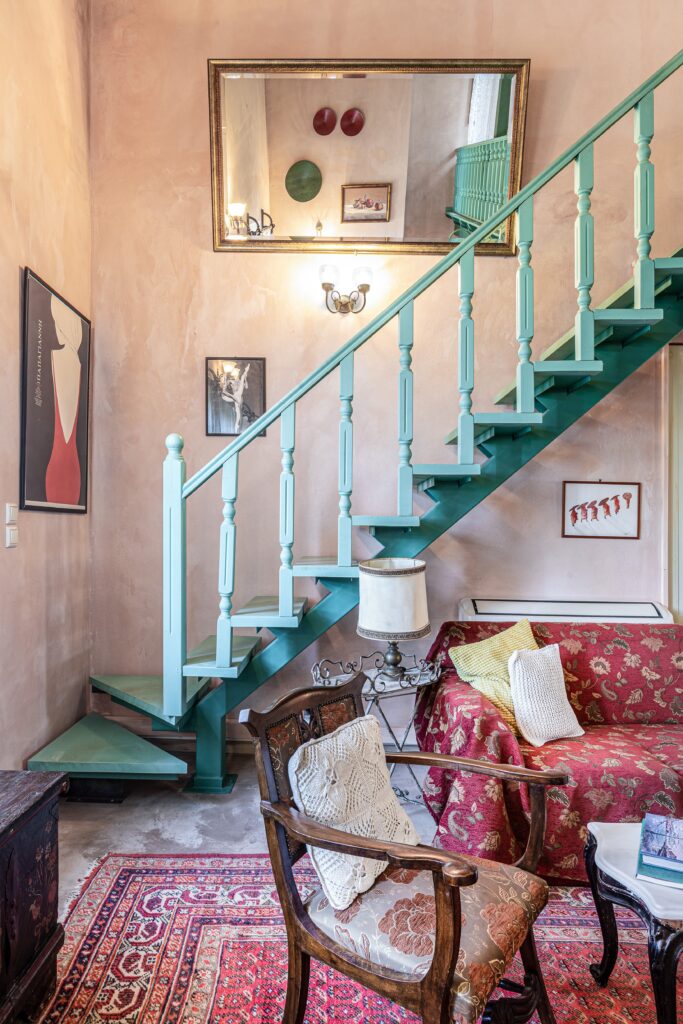
Our apartment, which is spacious and airy (ca.100 m2) can accommodate up to 6 guests. It has one private bedroom that sleeps two, a living room that sleeps two more and a mezzanine just above the living room for two more guests.

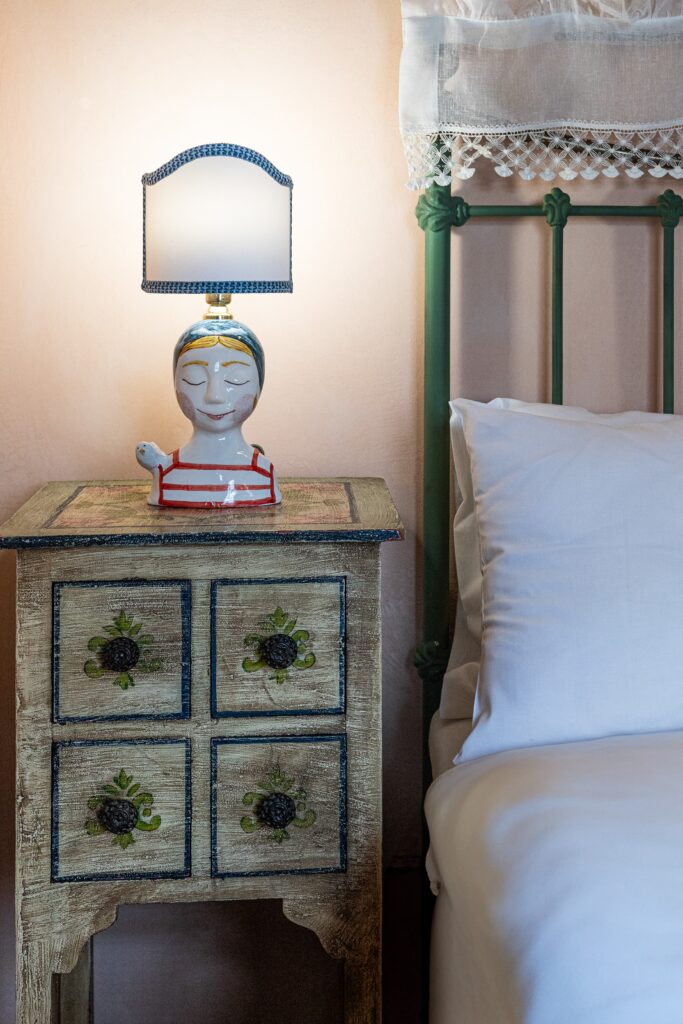
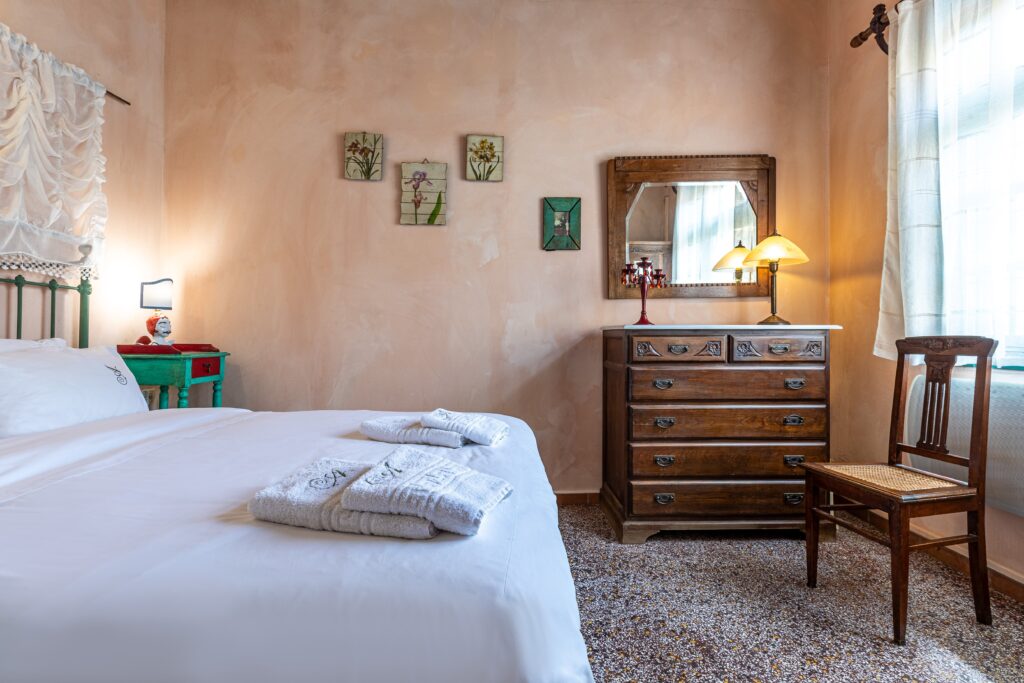
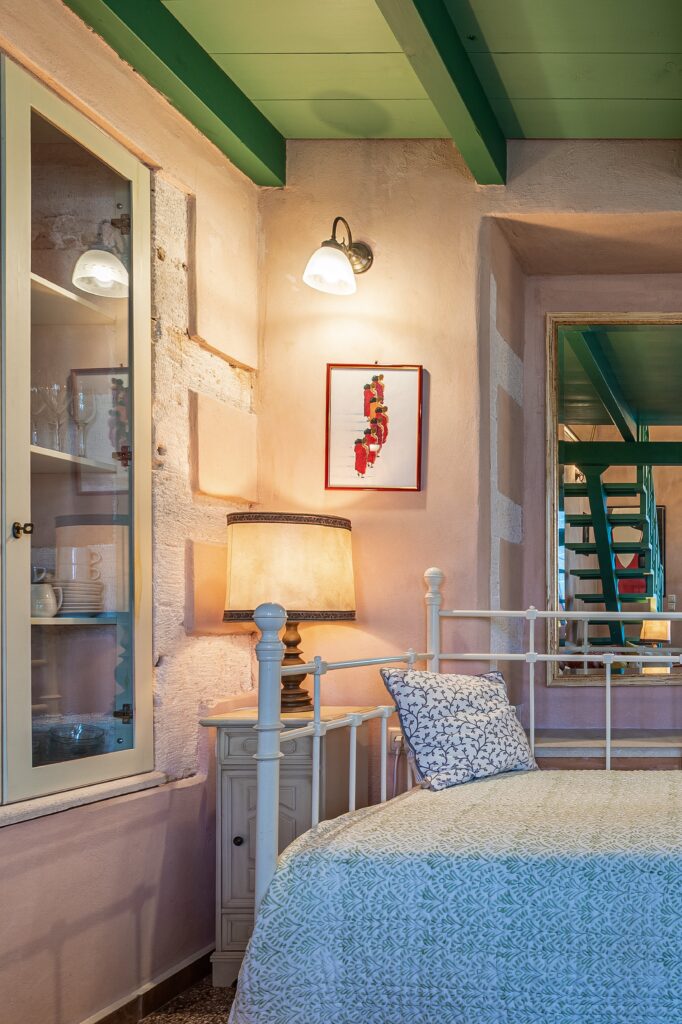
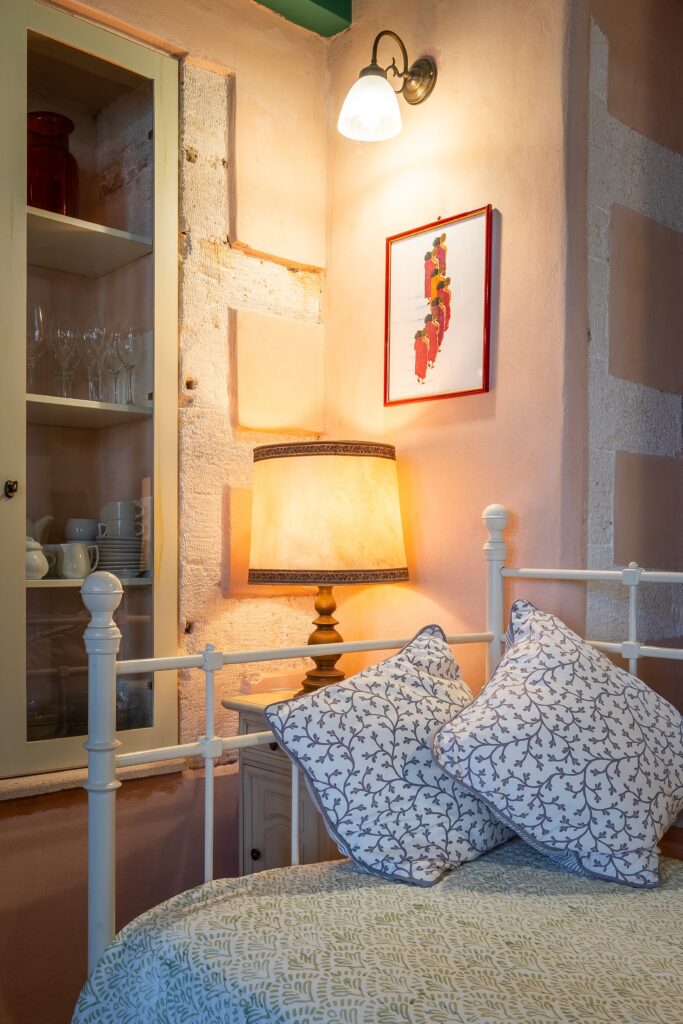
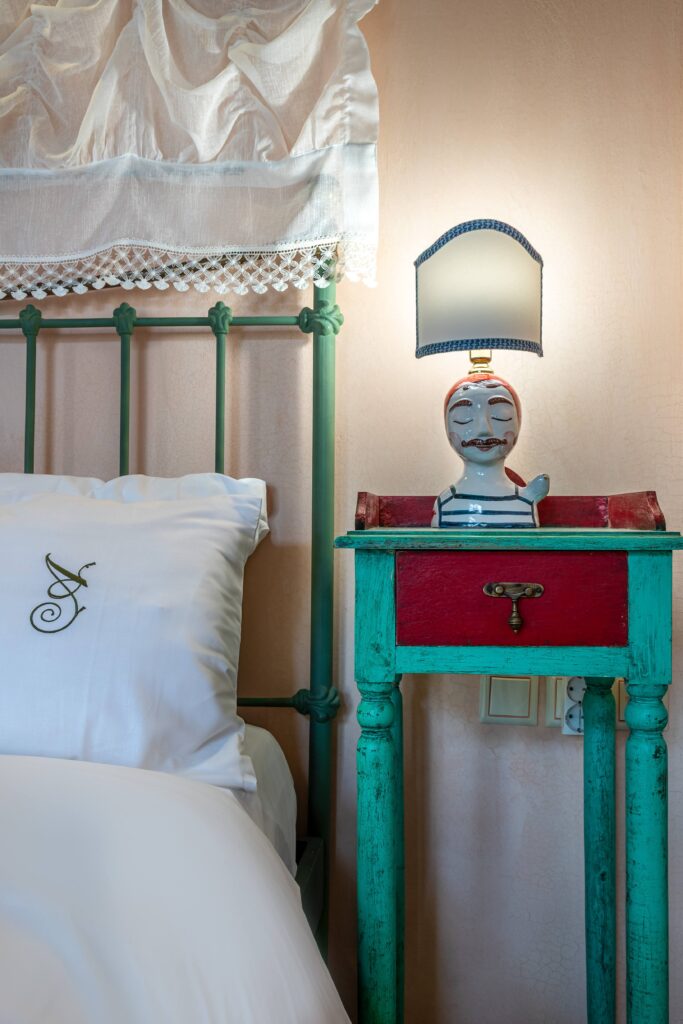
The private bedroom (after you enter and to the right) comes with a double bed (153 x 200 cm), a wardrobe, two bedside tables, and a chest of drawers. The window overlooks the front porch and the garden. There is an air conditioner and a ceiling fan, if you get hot in the summer, and a heater +air conditioner if you get cold.

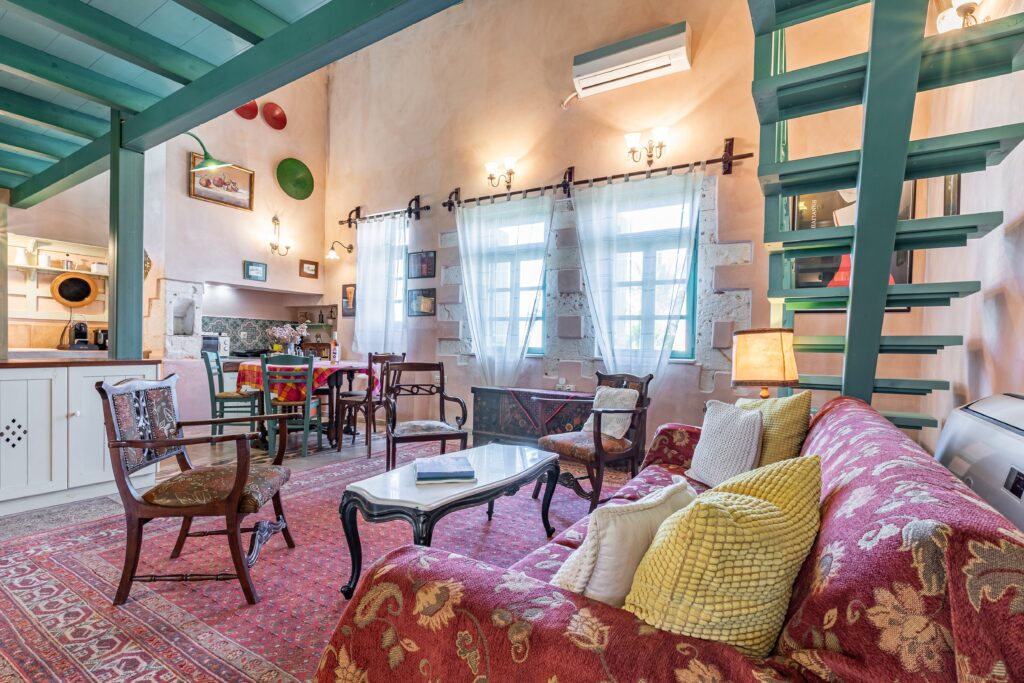
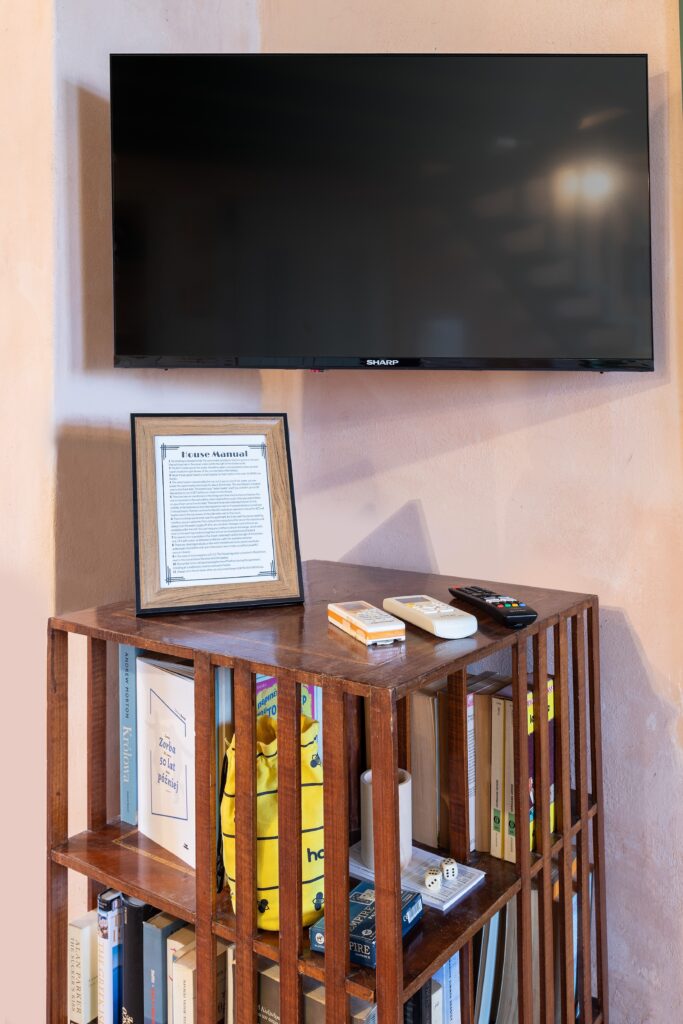
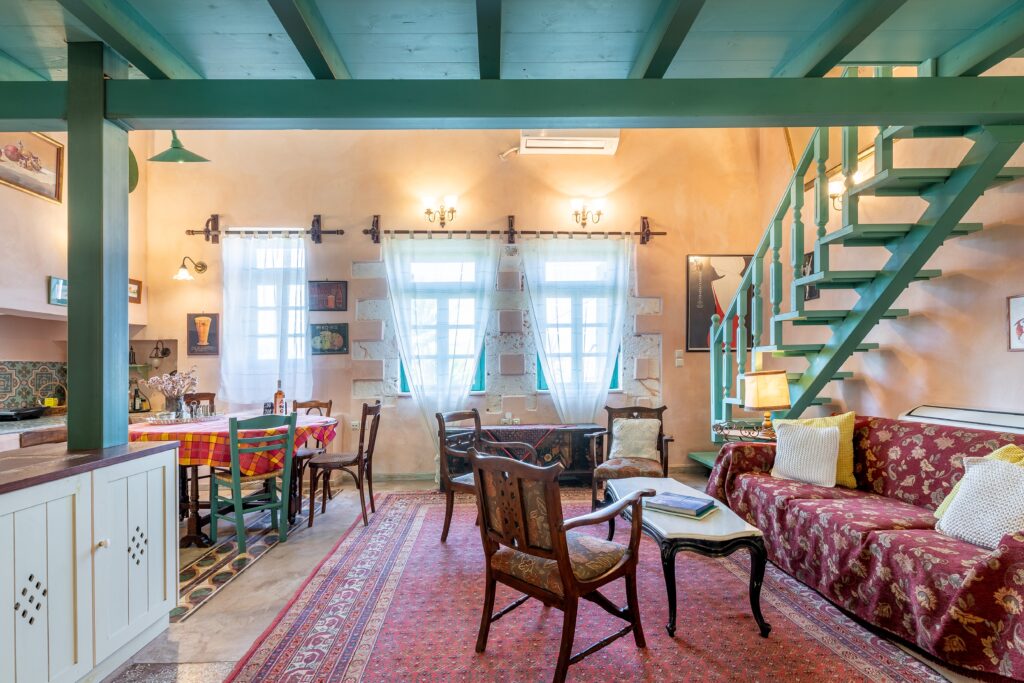
The living room area features a cosy sofa bed (90 x 200 cm) with a pullout bed (87 x 190 cm) tucked away underneath, a couch, armchairs, an old chest, an antique revolving bookcase, and a TV. The living room windows overlook a series of backyards with lush greenery, beyond which you can see the sea. The living room is equipped with two air conditioners that also function as heaters, plus a ceiling fan.
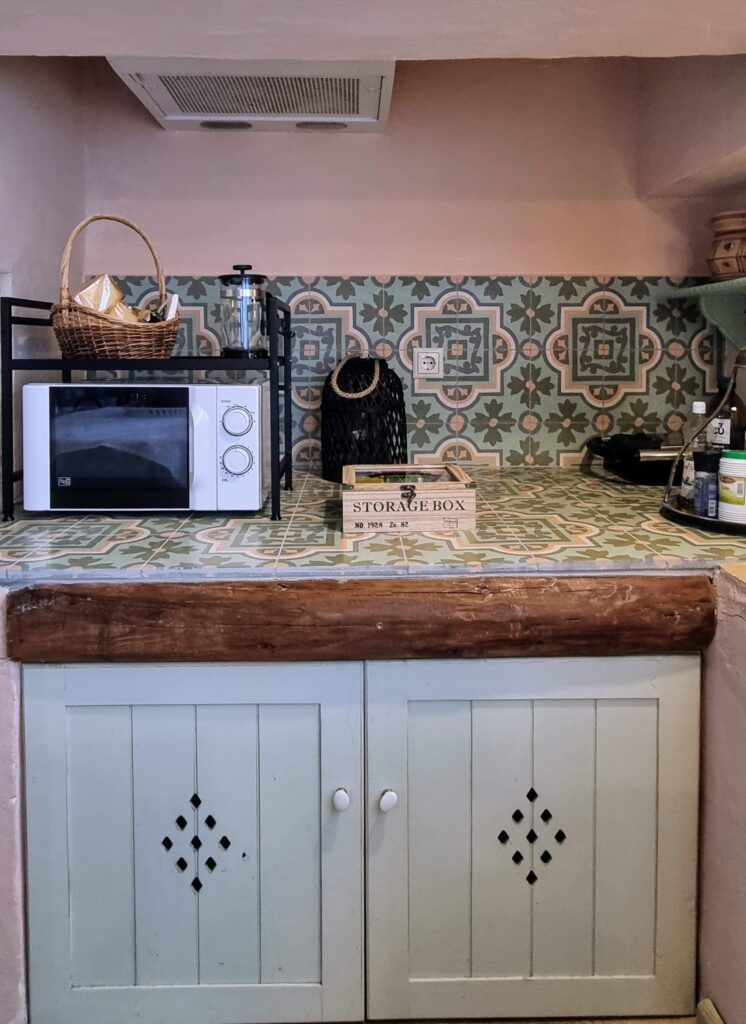
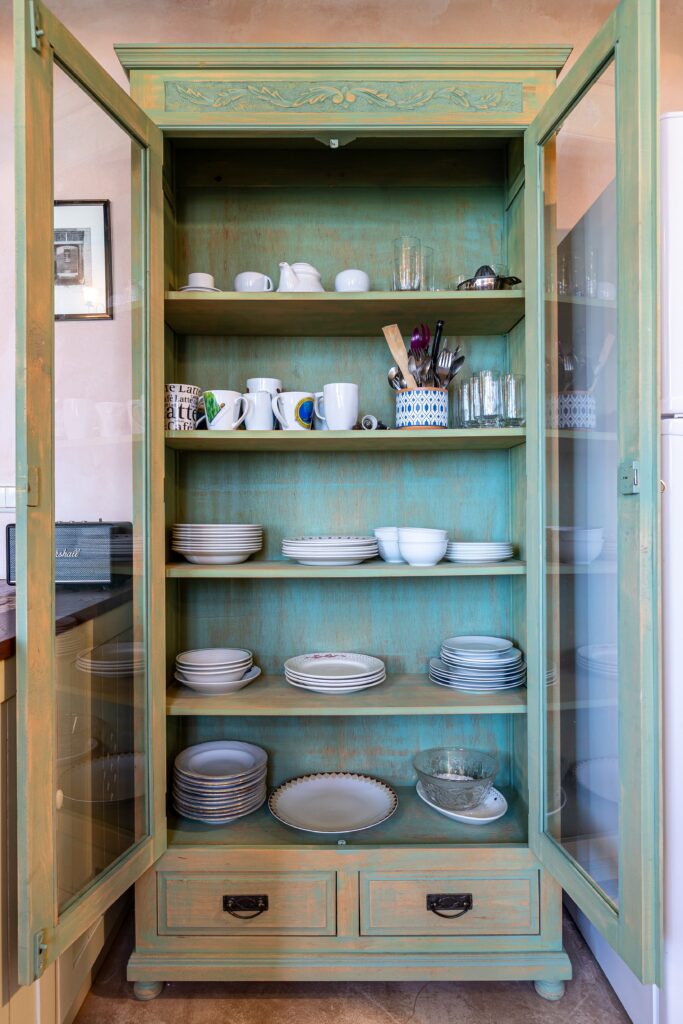
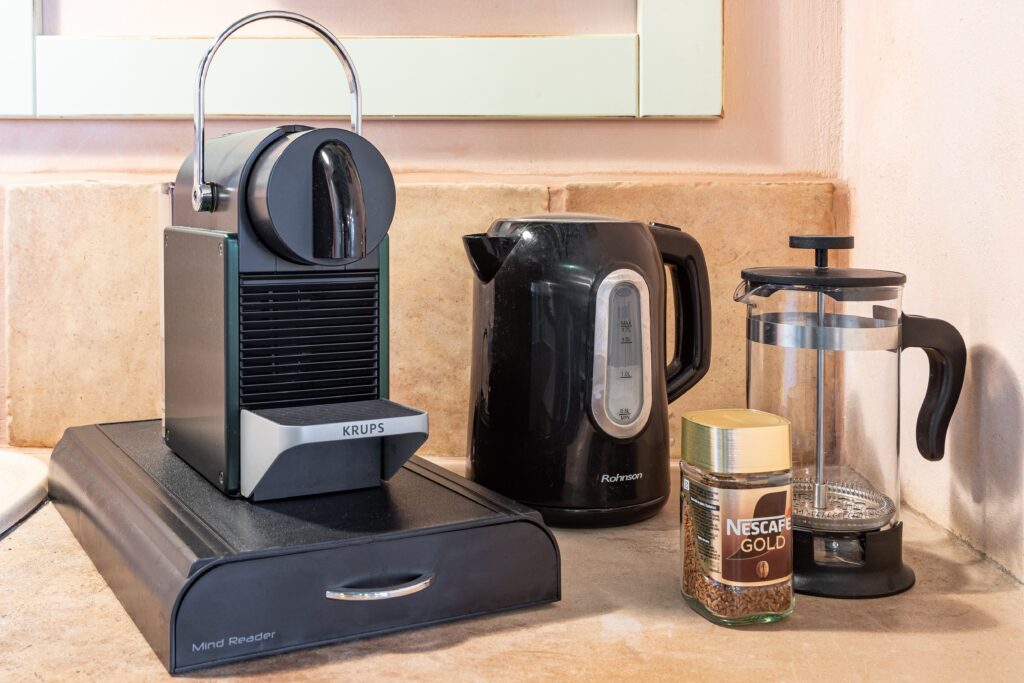
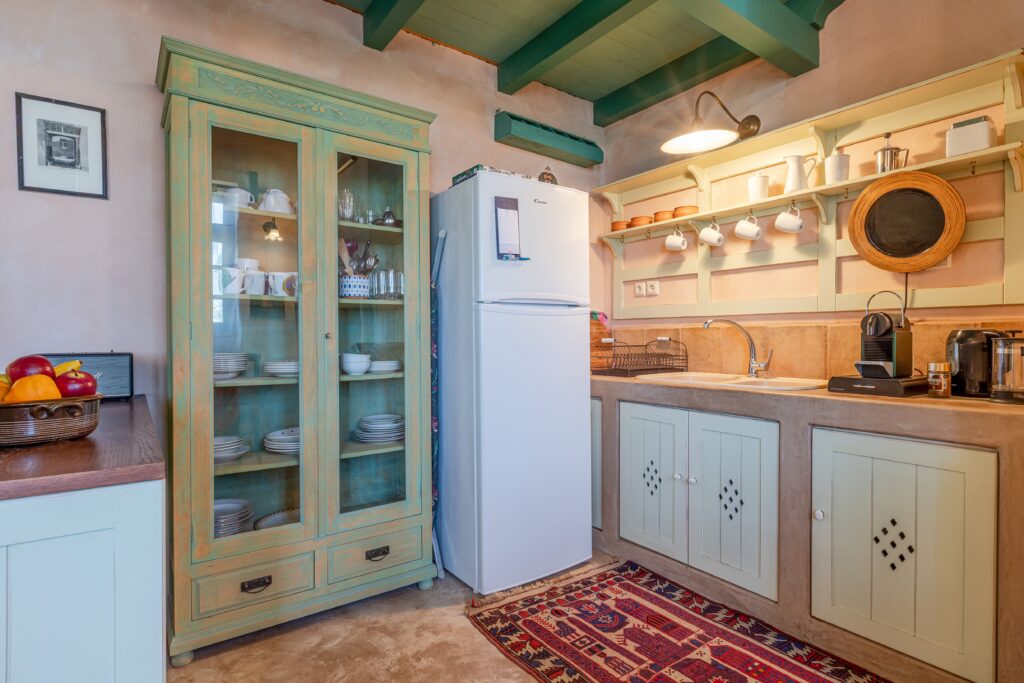
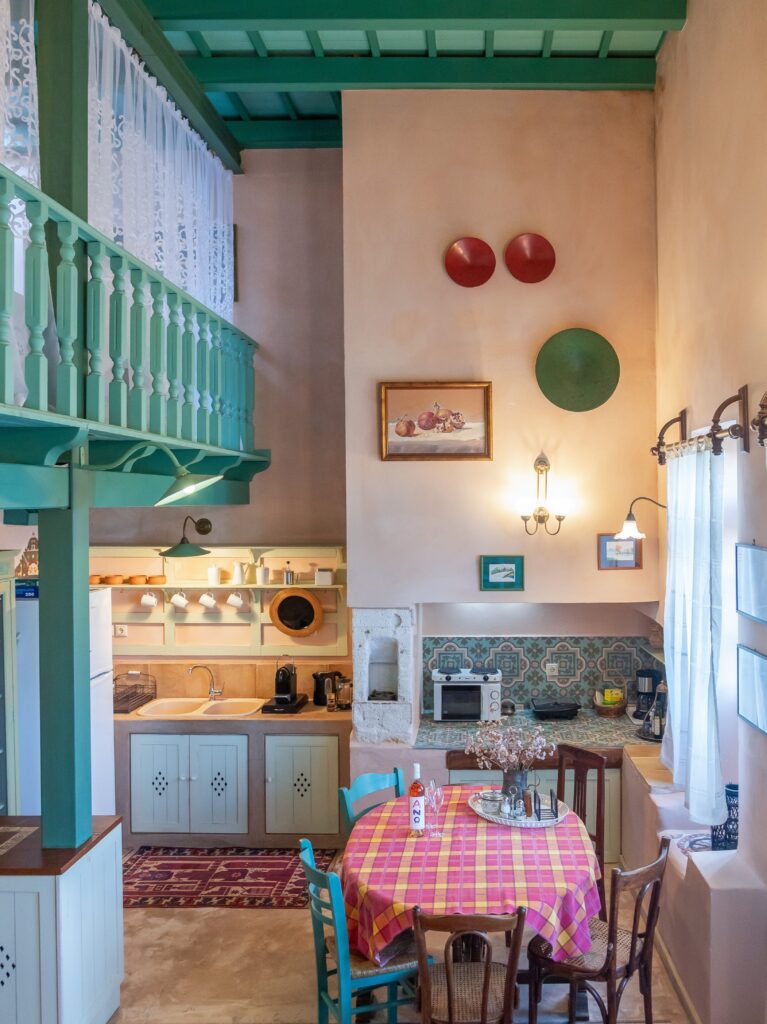
The kitchen is in the same space. It features a dining table with chairs that you can also use as a workspace, a glass cabinet with everything you may need (plates, cups etc), a big fridge, coffee maker, kettle, two hotplates, and a microwave.

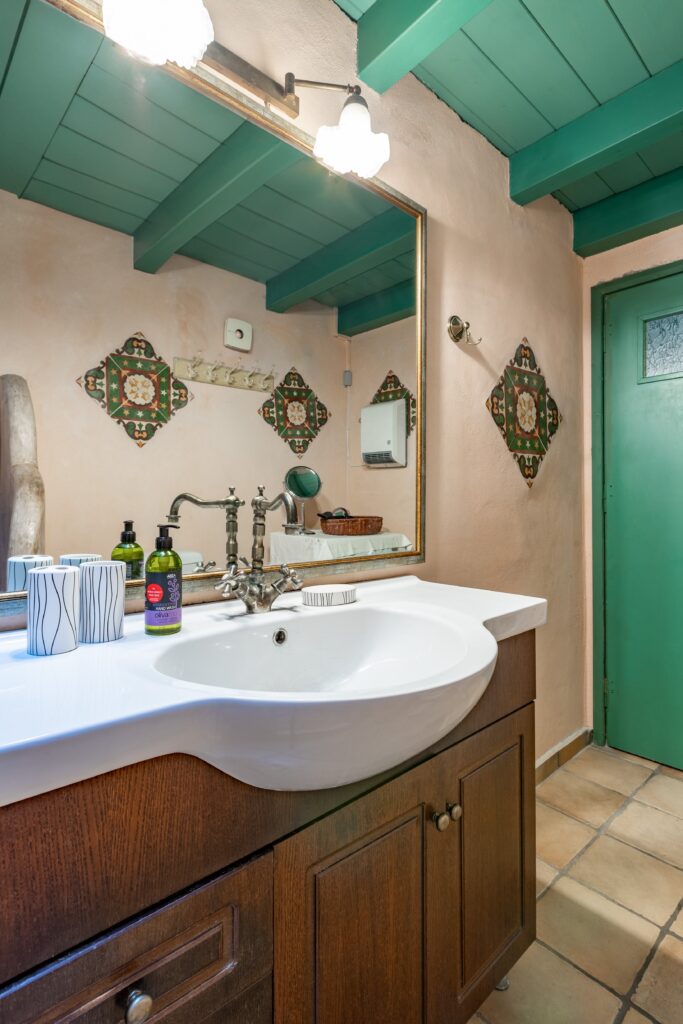
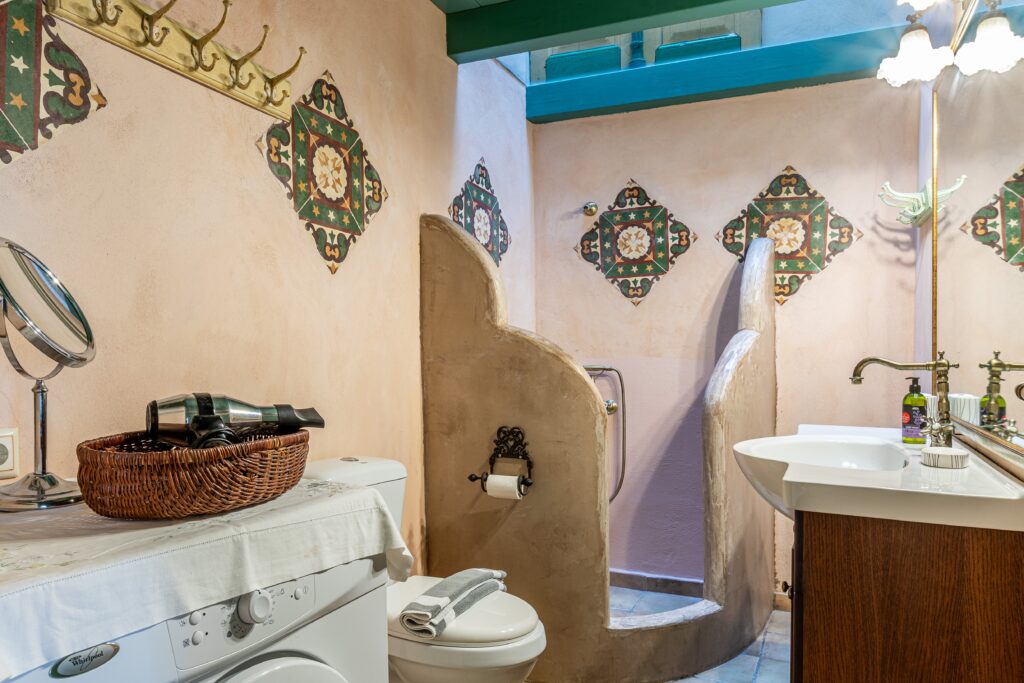
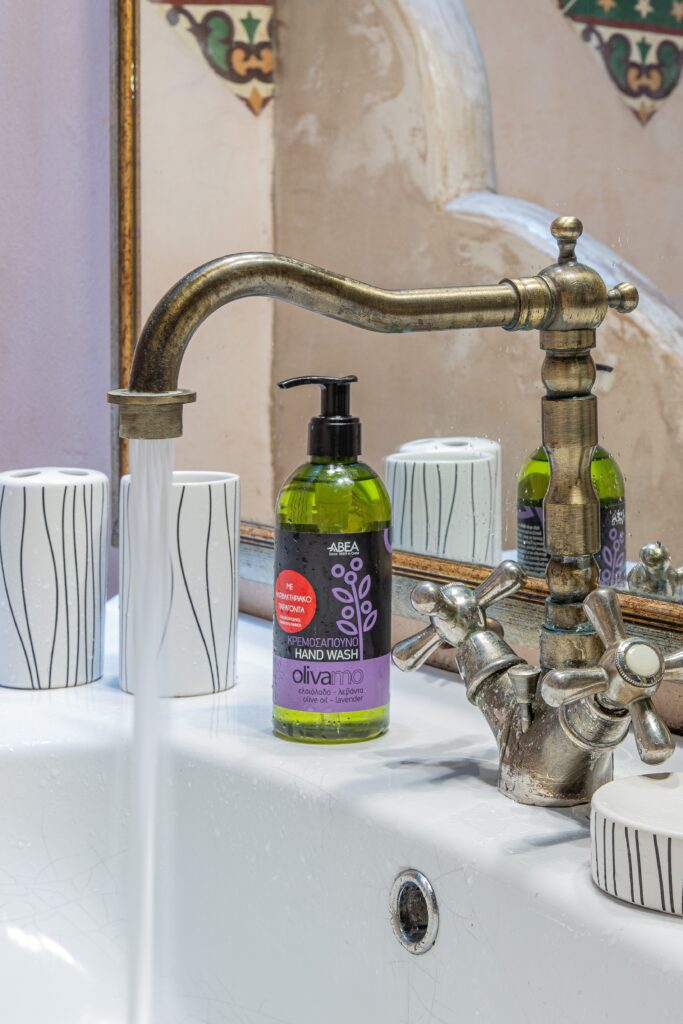
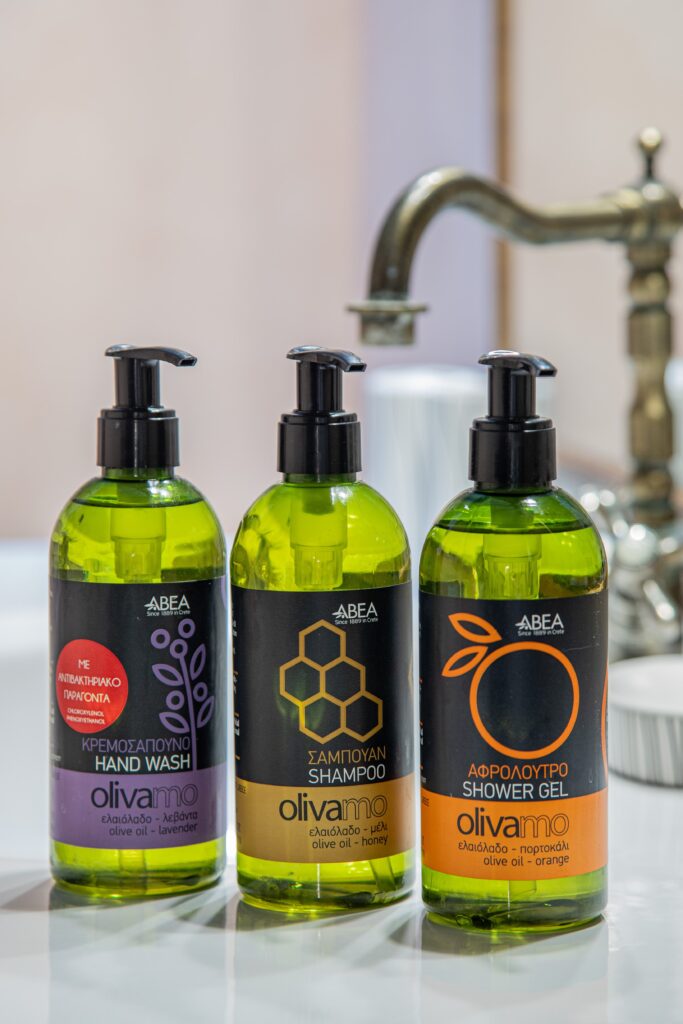
The bathroom, right next to the kitchen, features a toilet, a sink and a shower with a glass ceiling, which allows the bathroom to be lit naturally during the day by a skylight on the roof. We hope that you will enjoy natural cosmetics of ABEA – the oldest olive oil company established in Chania. There is also a washing machine, which you are welcome to use. A clothes hanger rests next to the washing machine. Iron board and electric iron are also available.
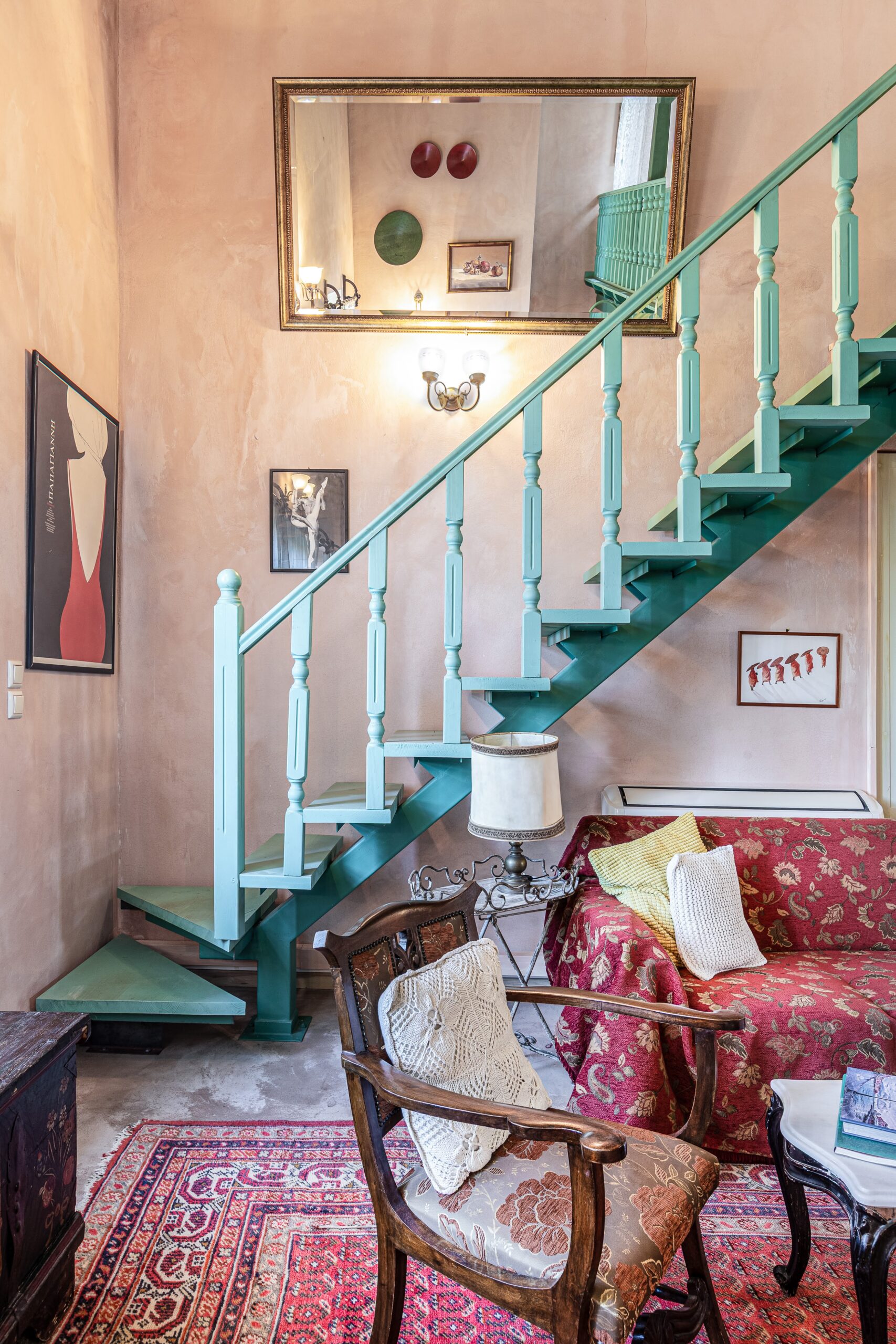
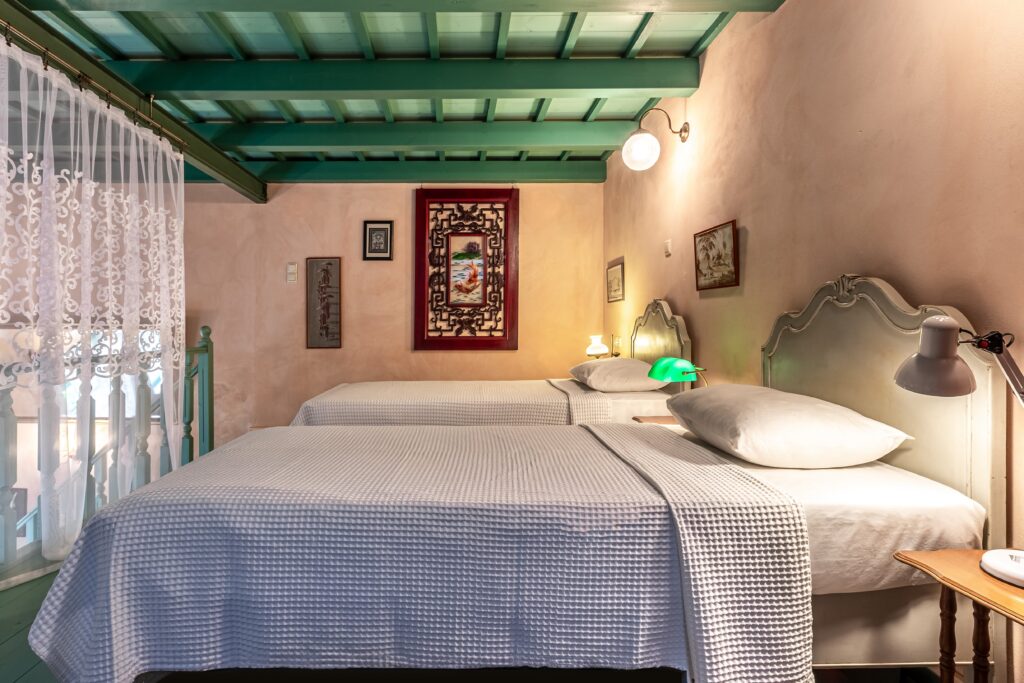
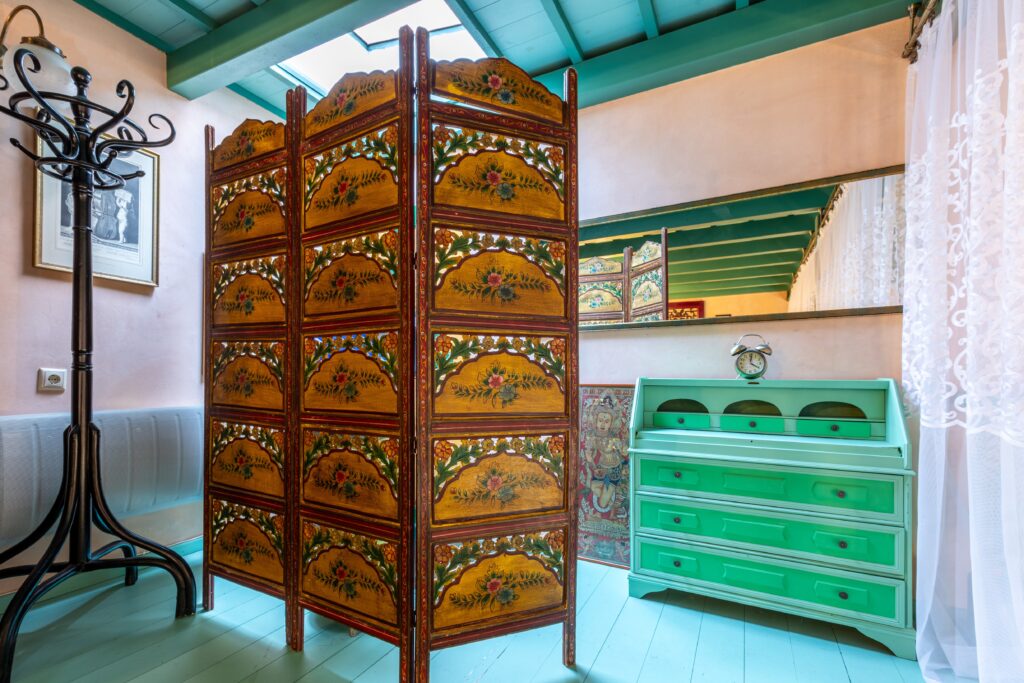
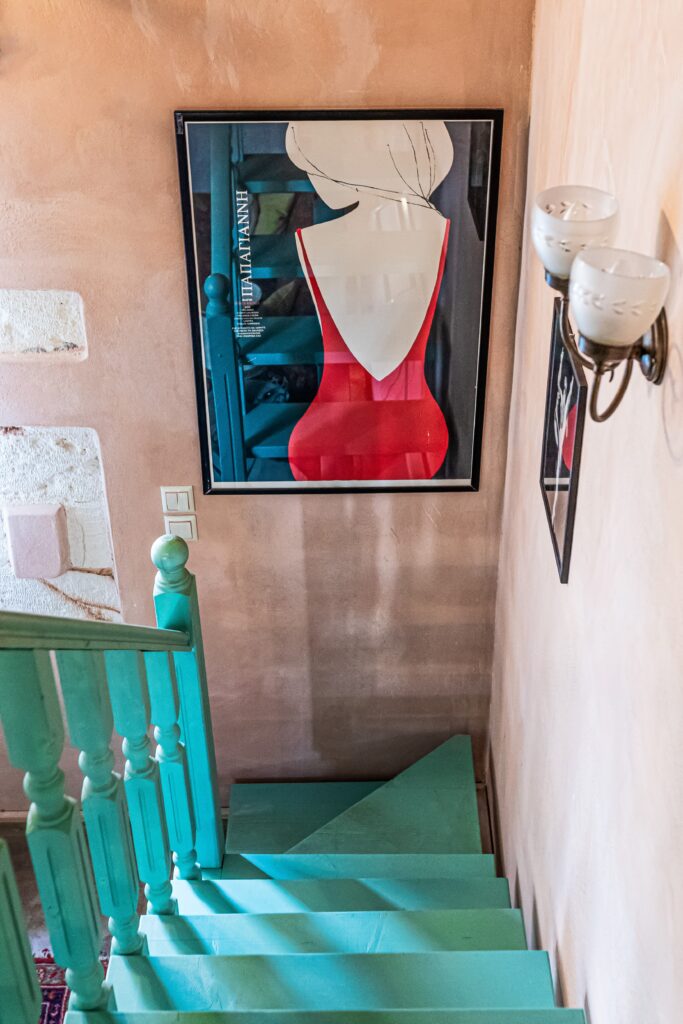
On the mezzanine, accessible via a staircase, there are two more single beds with bedside tables, a wardrobe, a chest of drawers, an extra table with a chair that you can use as a workspace, a chest, and an antique folding screen, which hides the bathroom’s glass ceiling.

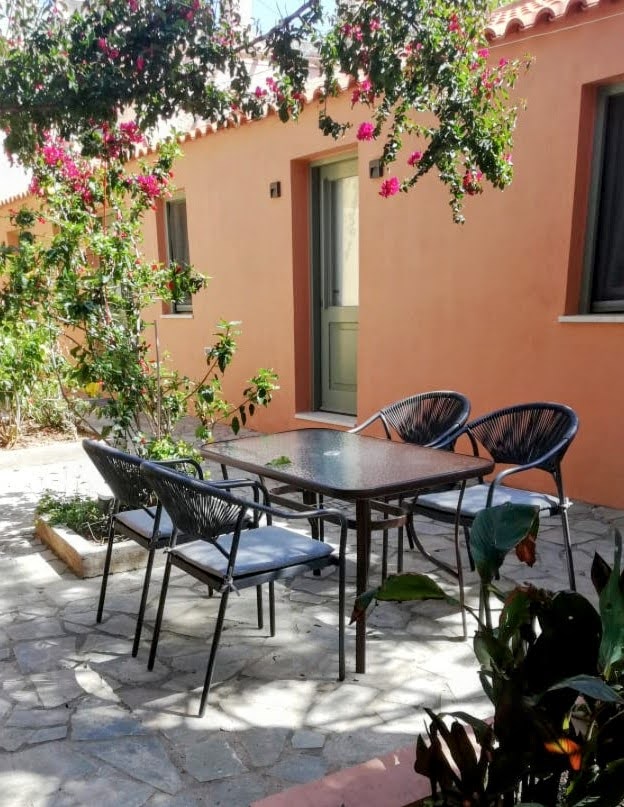
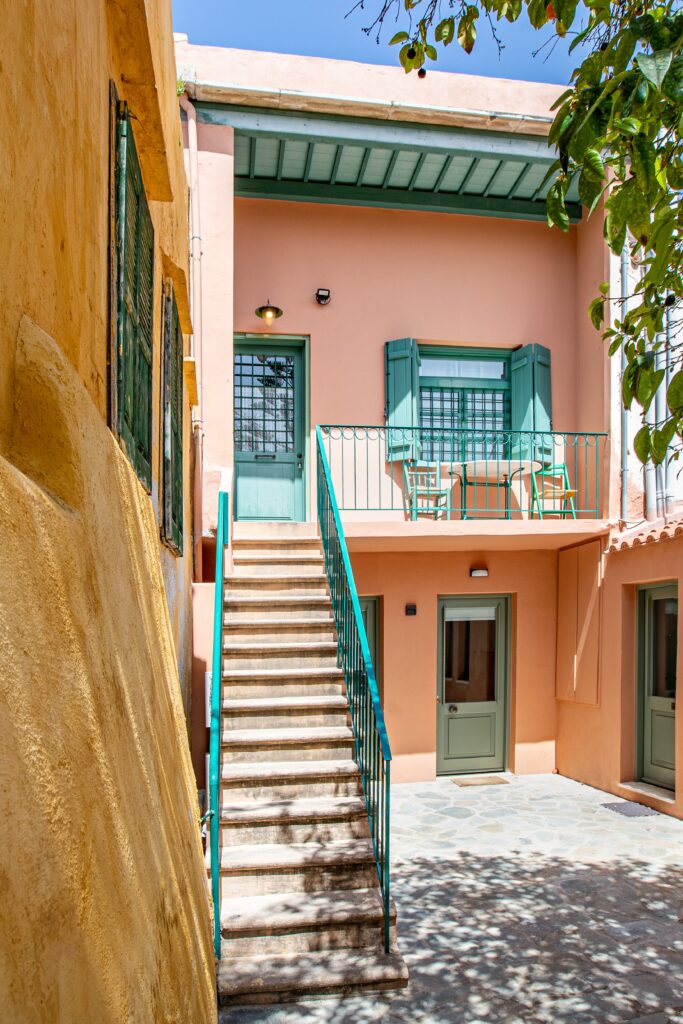
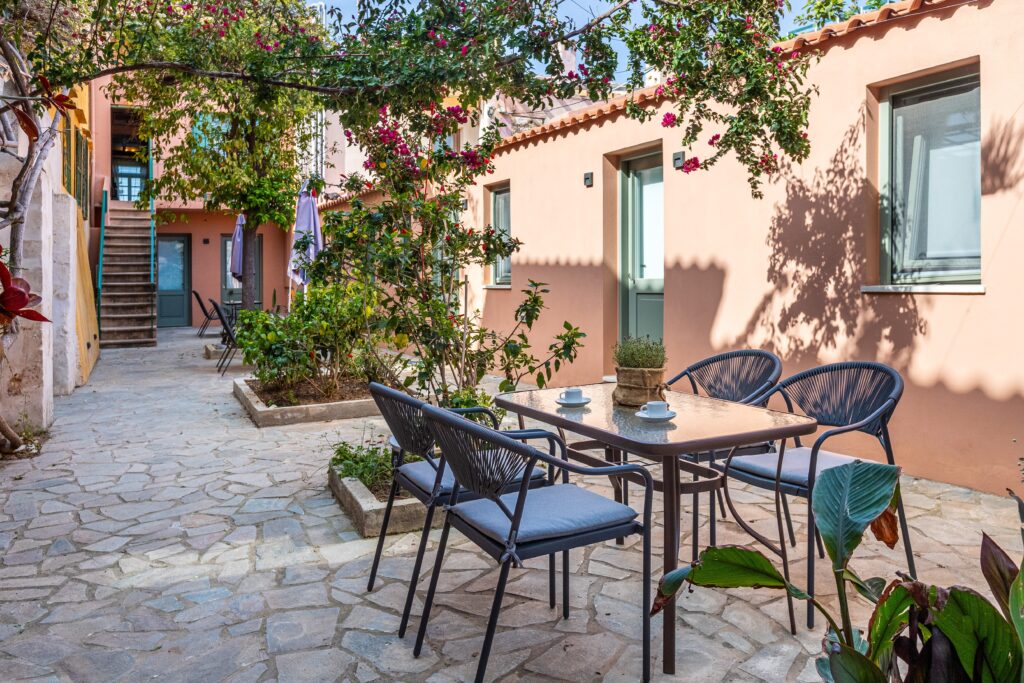
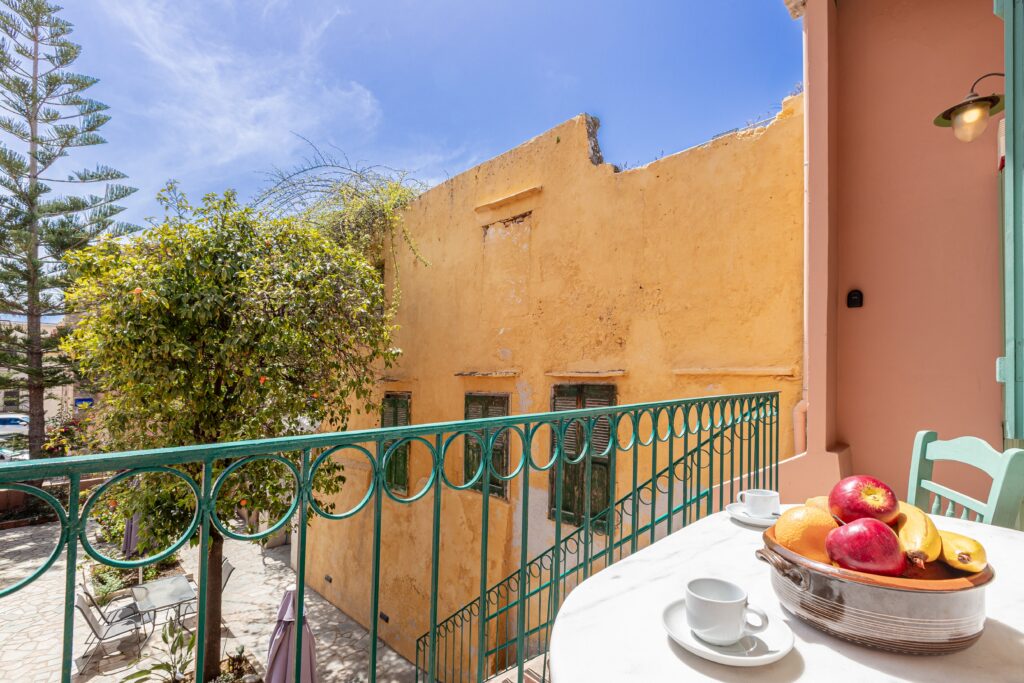
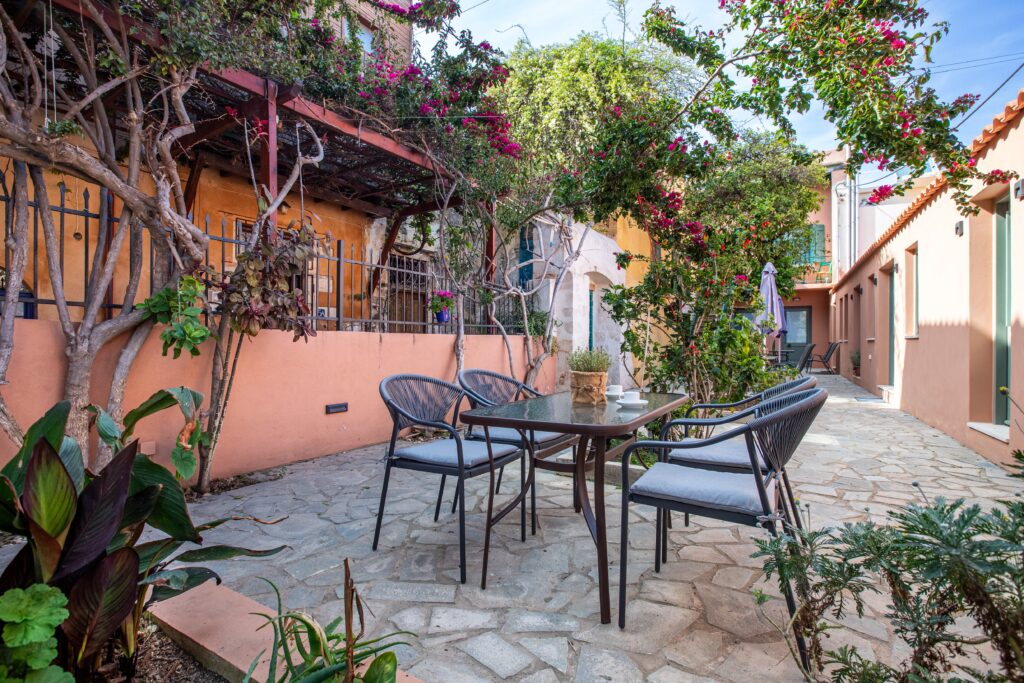
The apartments also have a charming balcony with a table and two chairs. From this balcony, you can admire a bitter orange tree and the stylish, flower-filled inner courtyard.In the courtyard, near the entrance gate, there is a table with chairs for four people. Above it, a magnificent araucaria tree spreads its crown.

The apartment is self-catering. Towels, sheets, pillows, blankets, and duvets will be at your disposal and if you are staying for more than five days you will be provided with an extra pair of towels and sheets. The water heater is solar-powered, but if you run out of hot water you can always power the heater electrically.

Posted on — Leave a comment

Our apartment – history, style and location

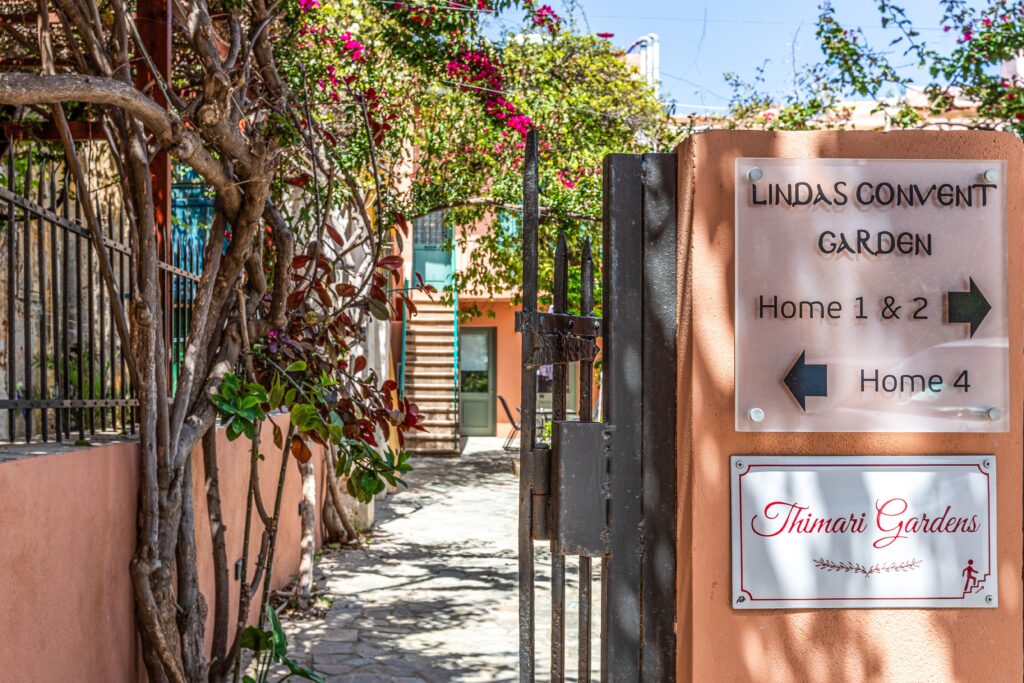
Thimari Gardens is more than yet another Airbnb place. A century old house was built on ruins of Dominican Convent dated back to 1320 A.D. 100 sqm house with a mezzanine, gives a lot of space, while green spaces we have on both sides keep temperatures moderate. What is really unusual for old towns, it remains calm, without street noises.

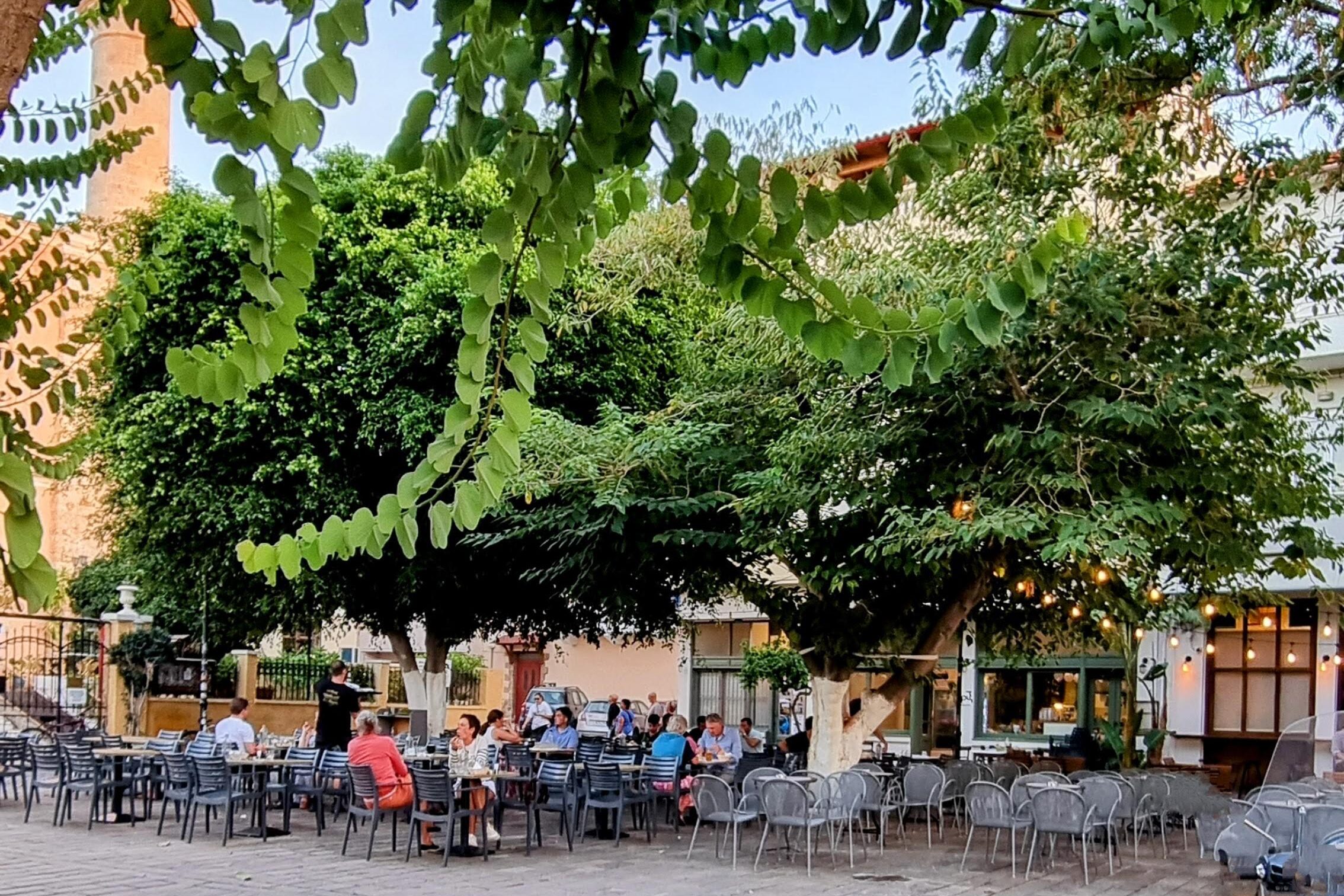
You will find the apartment in the historic Turkish quarter of Splantzia, next to the Dominican temple of St. Nicholas and Splantzia Square (aka ‘Plateia 1821’).

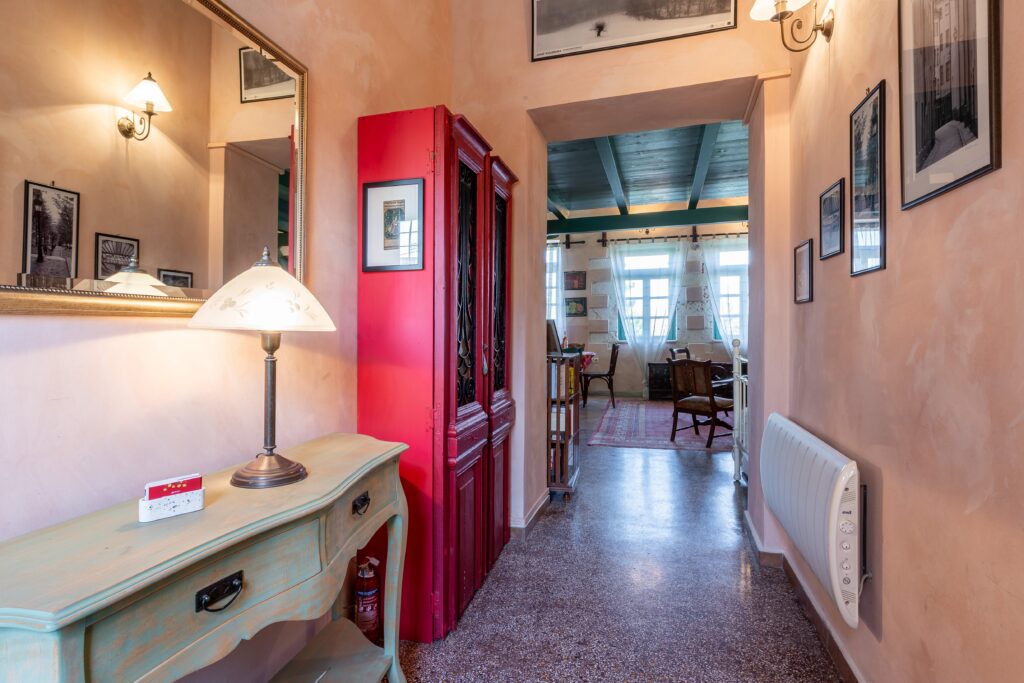
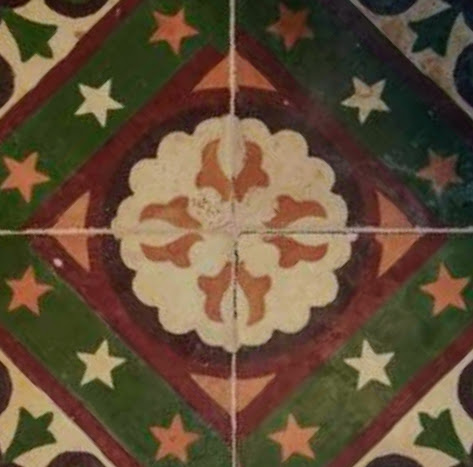
Our apartment  once constituted part of the closter built during Venetian rule and assumed its present form, more or less, during the 1930s. In 2007 it went through a major renovation and it was made sure that as many aspects as possible of the 1930s structure were preserved. The mosaic floors were kept where possible and all the kitchen floor tiles that remained intact got used as decoration on the bathroom and kitchen walls. In the living room, you can see some of the stones the walls are made of and ‘Stucco Veneziano’ throughout the house, giving it the texture you see on many buildings of the Old Town.

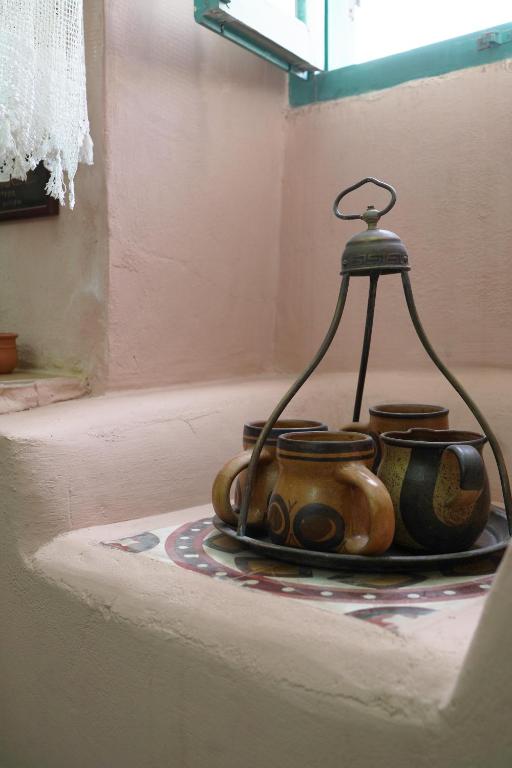
Special attention and respect were paid to details and the rustic character resembling that of the old town. Lovers of antiques and all things vintage will appreciate its character and will find it welcoming and easy to inhabit, especially after a busy day out in town.

Posted on — Leave a comment

Tabakaria (a lovely walk)

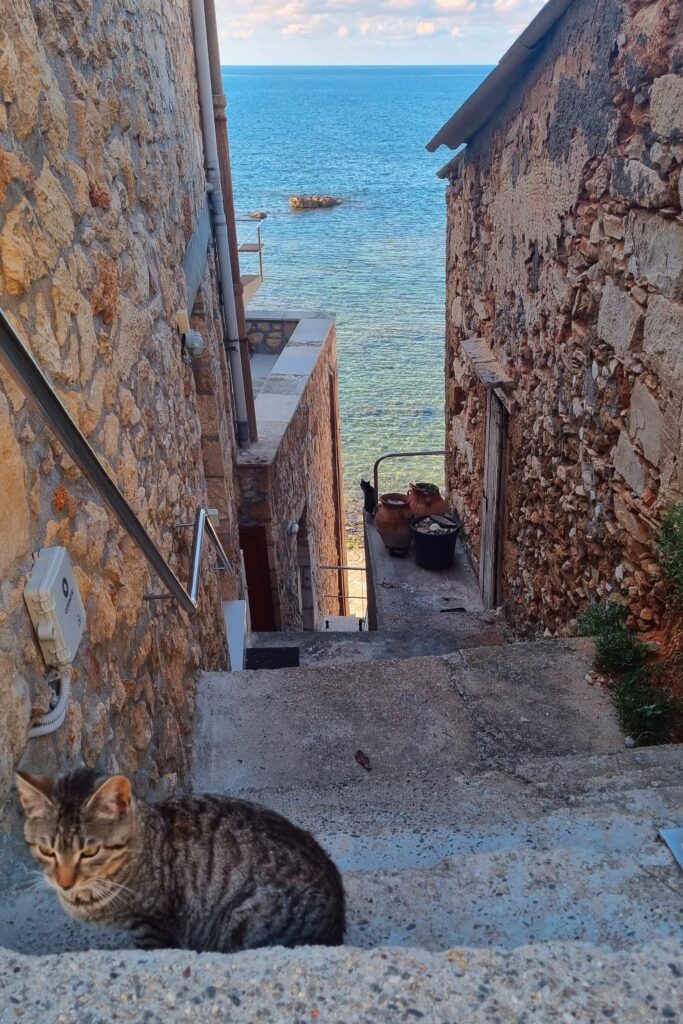
Today we headed to Tabakaria (Ταμπακαριά), roughly two kilometers from Thimari Gardens to the east. What a marvelous walk there, full of celestial blue, carpets of flowers in bloom and sweet scents of spring. Tabakaria, which used to be an area full of tanneries from the mid XIX century to the 70s of the XX century (80 of them at a certain point of history) now is slowly but constantly being revitalized. I predict that in 5-10 years its popularity may catch up with the old town of Chania as the views and its general ambiance are truly captivating.