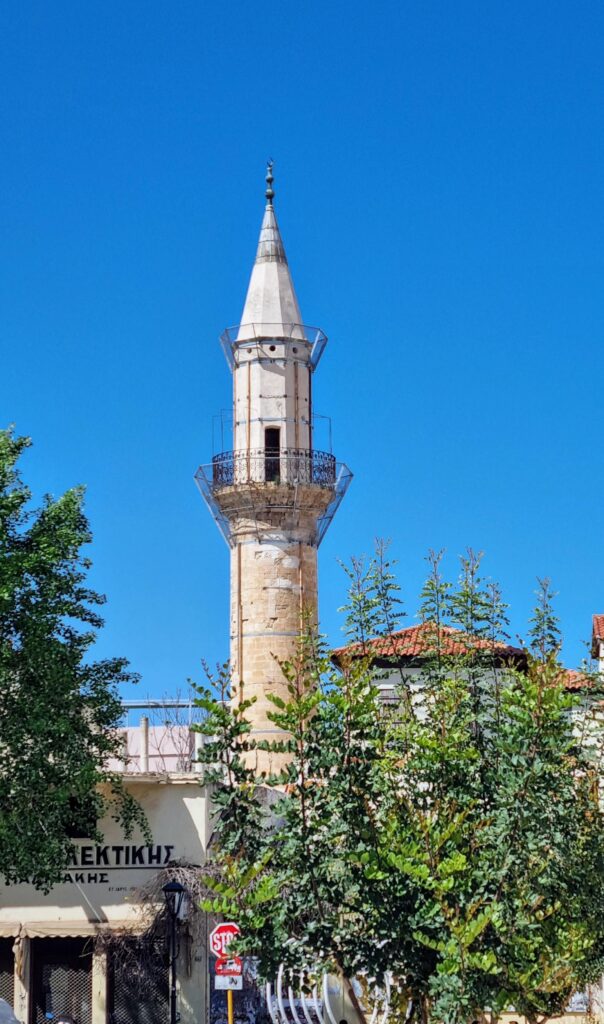
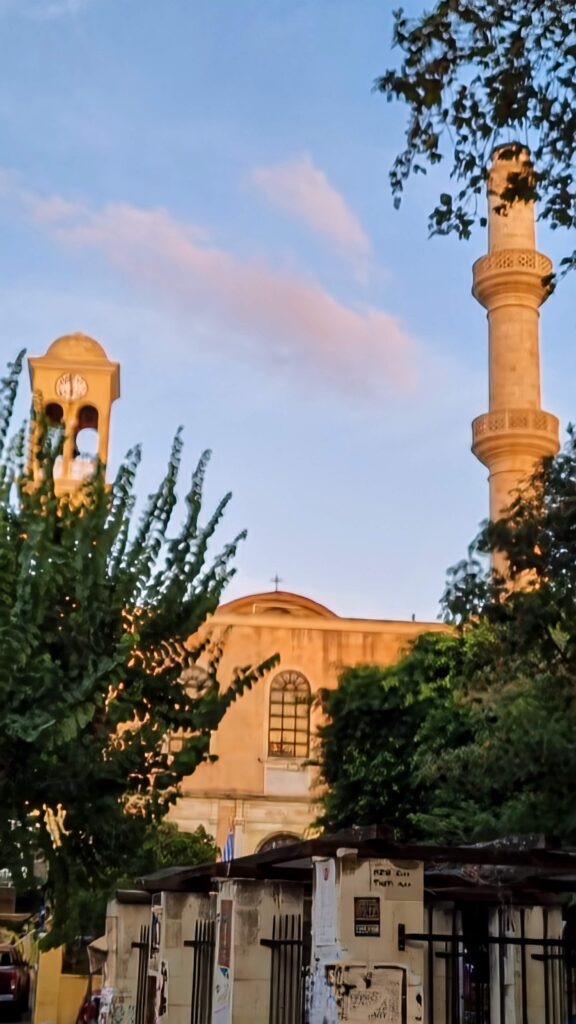
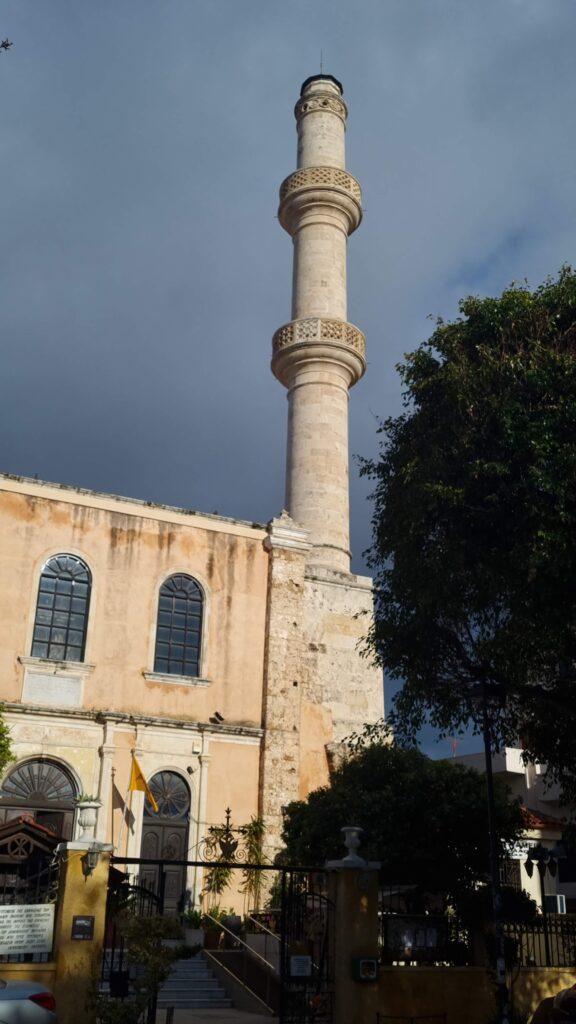
The area has a long and interesting history, going all the way back to the Venetian era. Back then, it was called Ponte Dei Viari, which means ‘bridge of the viari’ in Italian. This was because there was a bridge that connected the eastern gate of the Kasteli settlement with modern Daskalogianni Street and Splantzia Square. The bridge was named after a rich Venetian family who helped the city out when it was down on its luck. The area had lots of underground water, which explains why there were underground Venetian water tanks that could supply the city for six whole months. The current St. Nicholas Church was originally the monastery’s temple, which was run by the Order of the Dominican monks. It was built in 1320. After the Turks took over in 1645, they turned the church into a mosque called Houghiar Tzamissi – Hünkâr Camisi, by adding a minaret on the south side of the building.
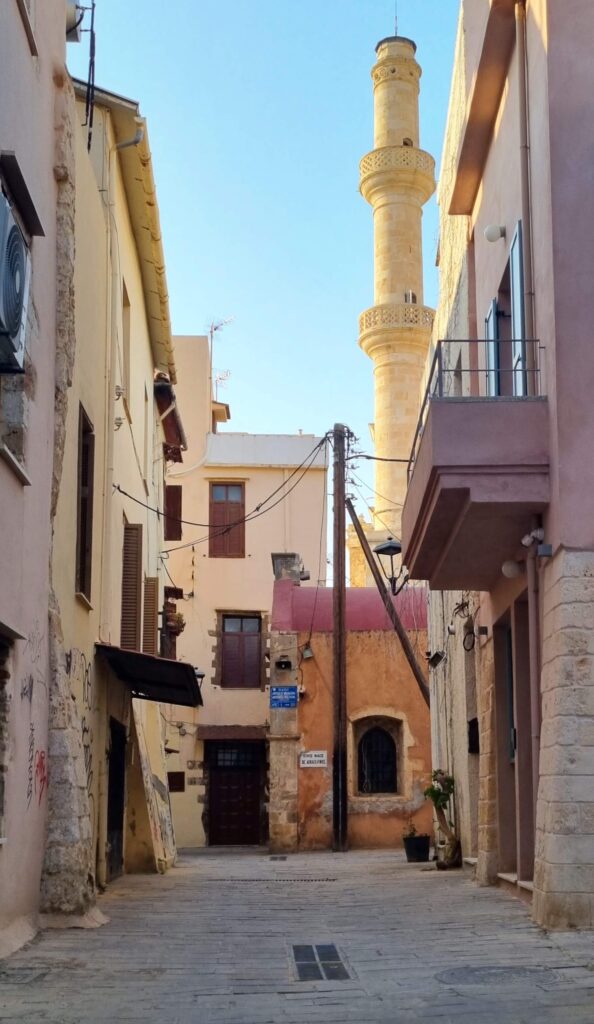
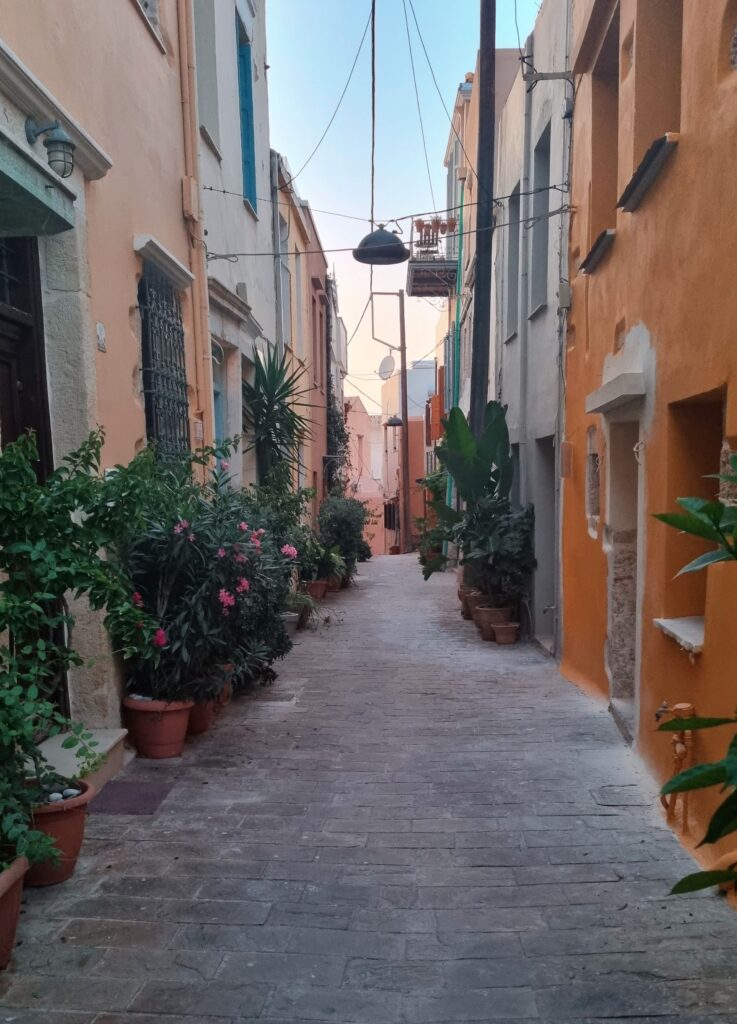
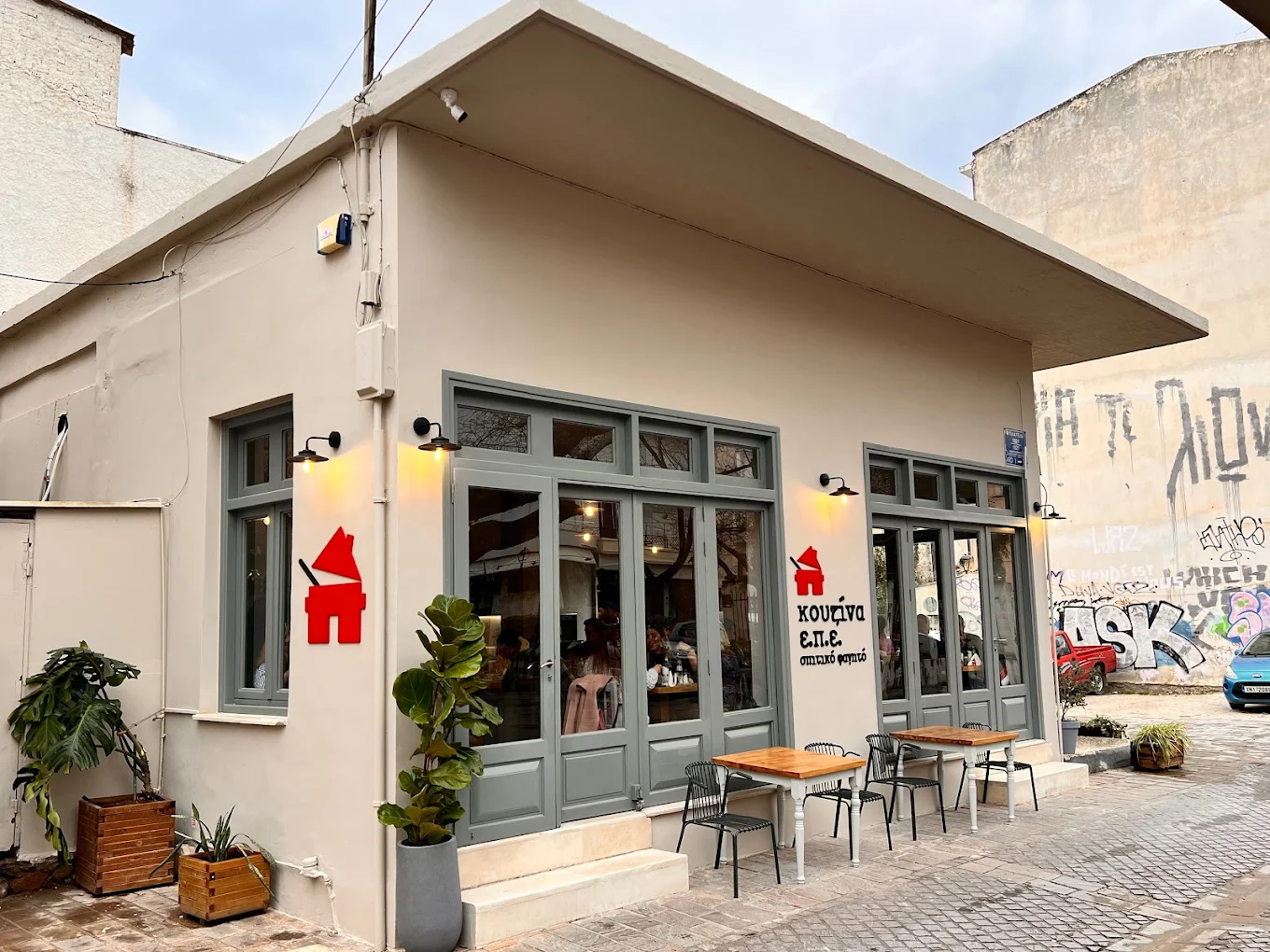
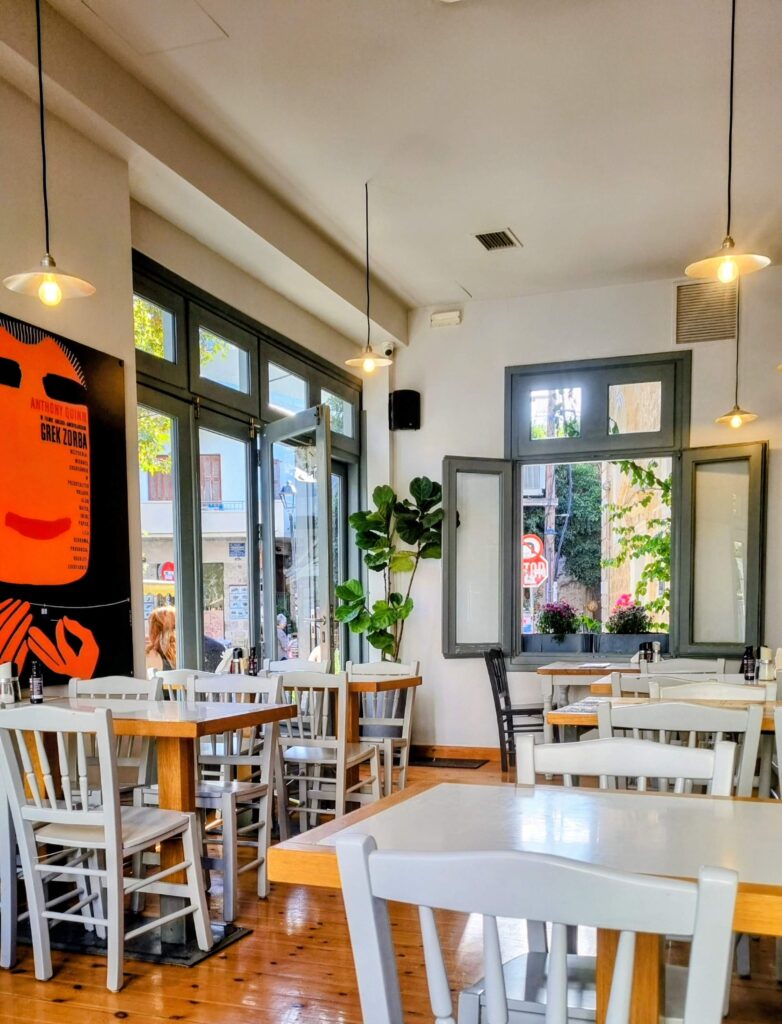
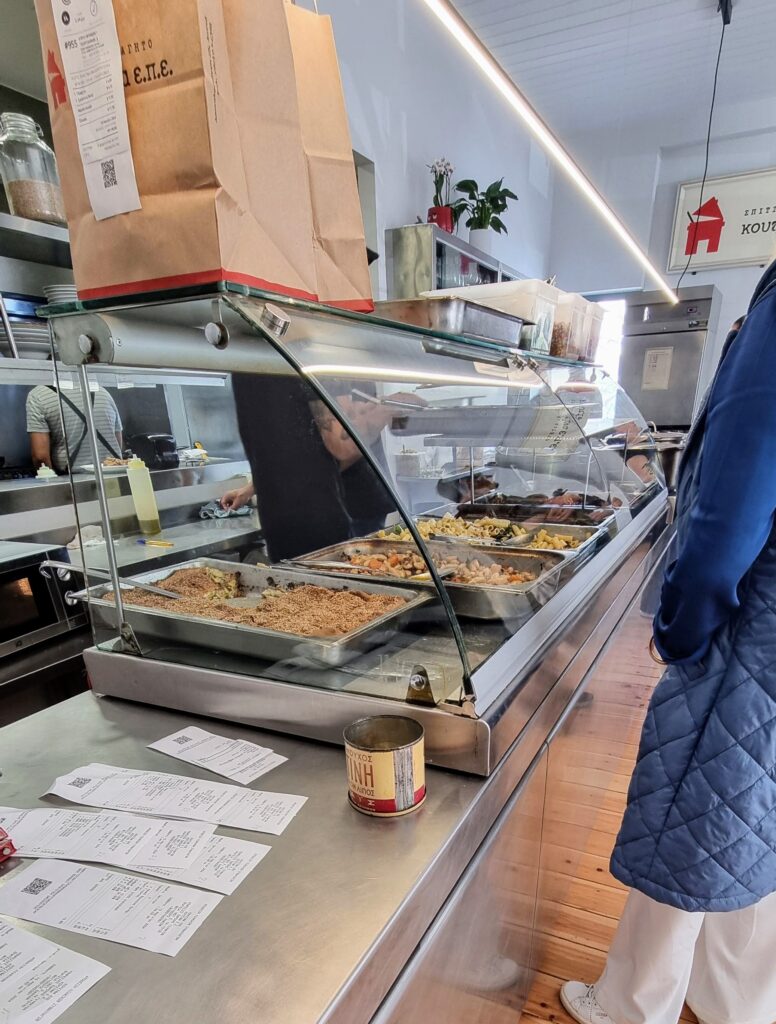
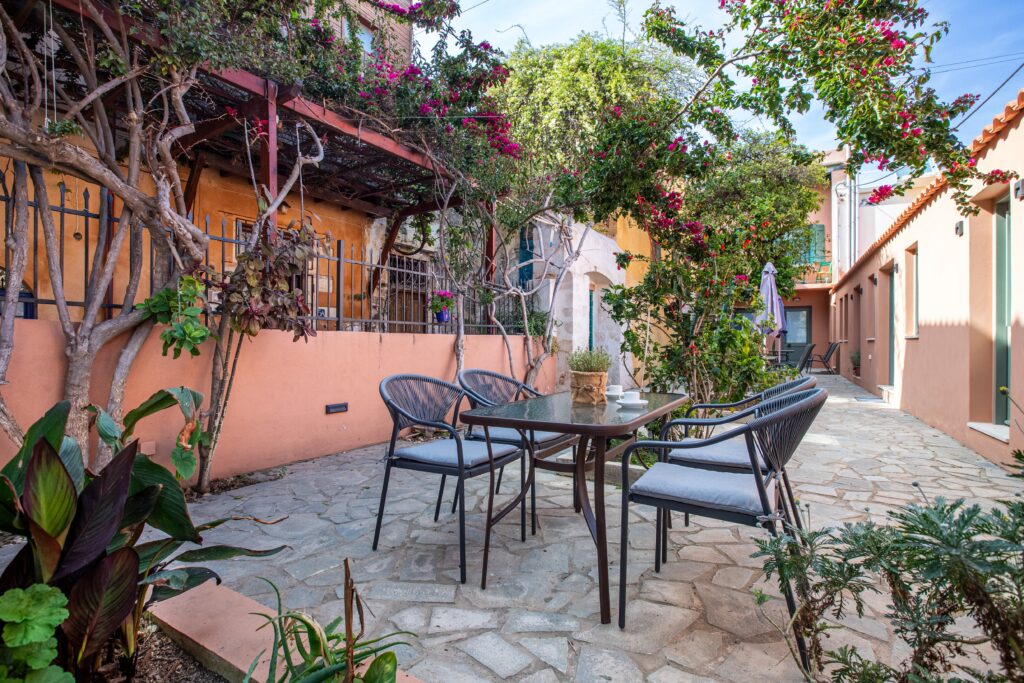
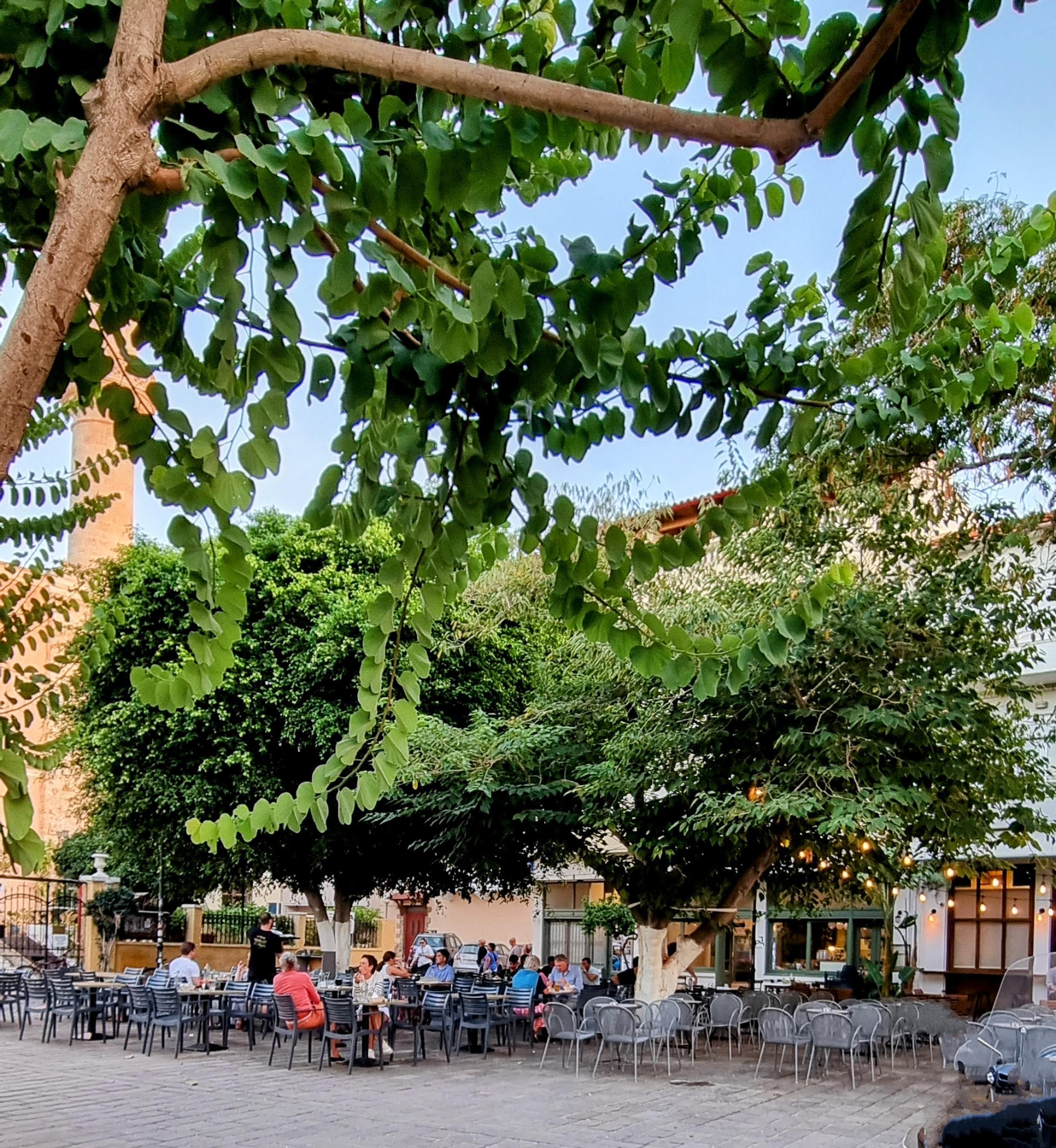
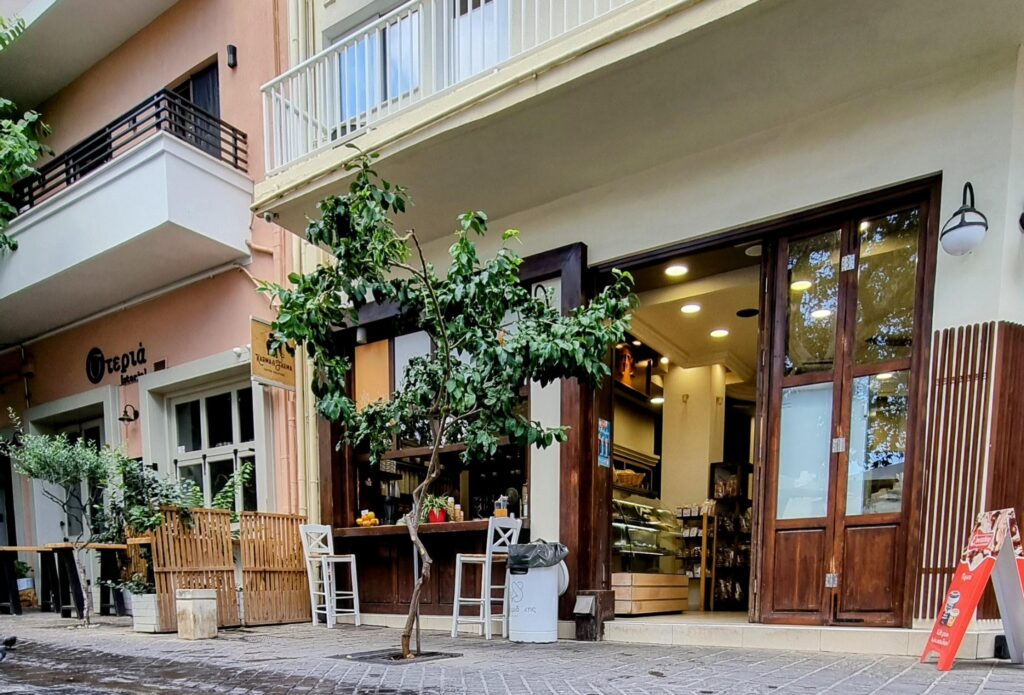
The Splantzia district after the Turks had been made to leave it (and whole Crete) entirely in the 1920s was synonymous with neglectand rough neighbourhood. However in recent years it has cleaned up its act, with many of its houses renovated, lots of young and alternative businesses popping up, and it has transformed into the most independent district of the old town. Fortunately, it has not yet succumbed to mass tourism, so it retains its local atmosphere, making it ideal for those seeking refuge rather than a tourist hotspot. The centrepiece of the neighbourhood is the historic square, officially known as ‘Plateia 1821’, with the equally historic Dominican church of St. Nicholas mentioned before. Either at the square or just a few steps away, you will find everything you need: a bakery, a mini-market, a pharmacy, a bookshop, a laundrette, as well as many interesting and high-quality restaurants and bars. Some of them are located right next to the square, under an old tree, which offers a pleasant place to relax on hot summer days and nights.
Some information in the post come from www.chaniatourism.gr