Milia is a secret known only to those in the know, but I will share it with you.
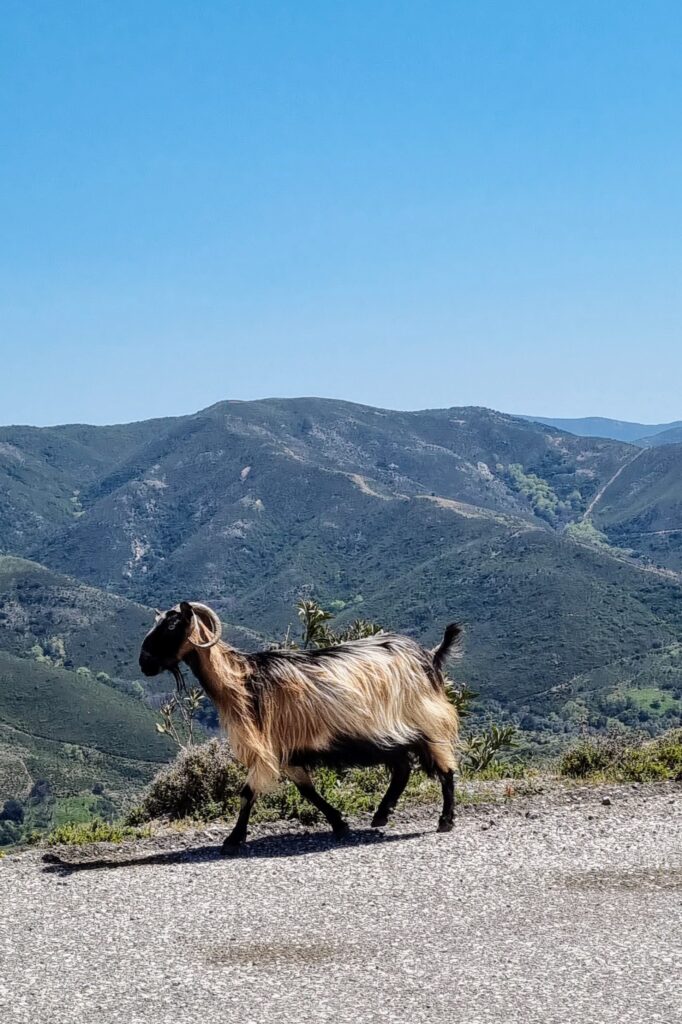
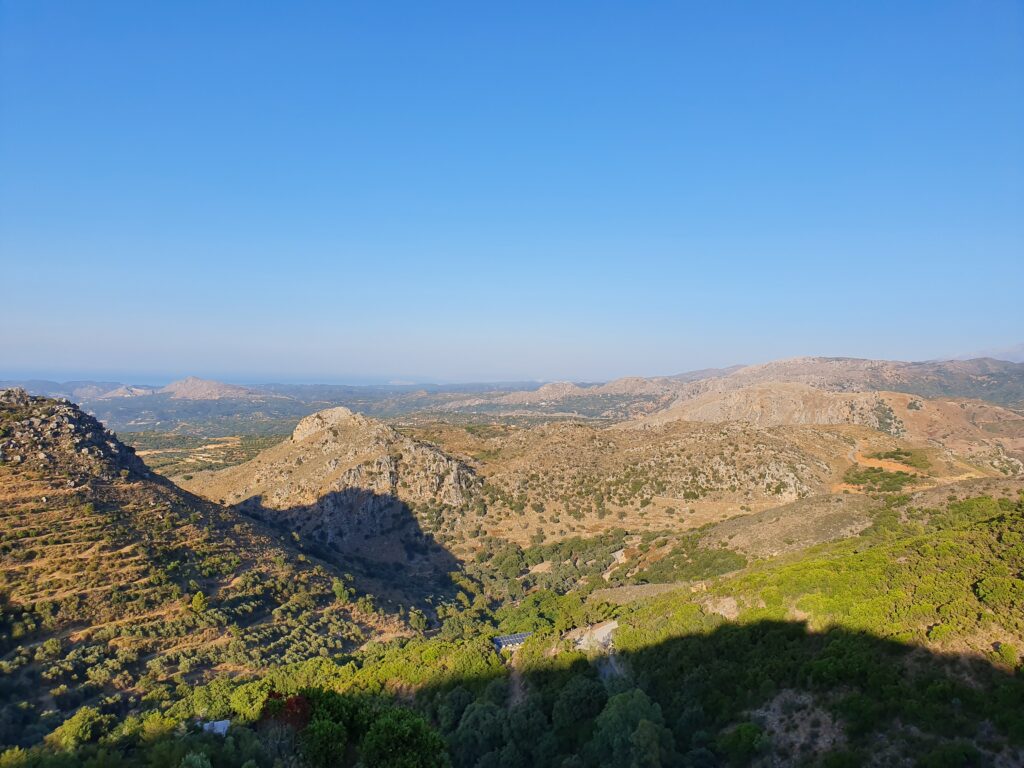
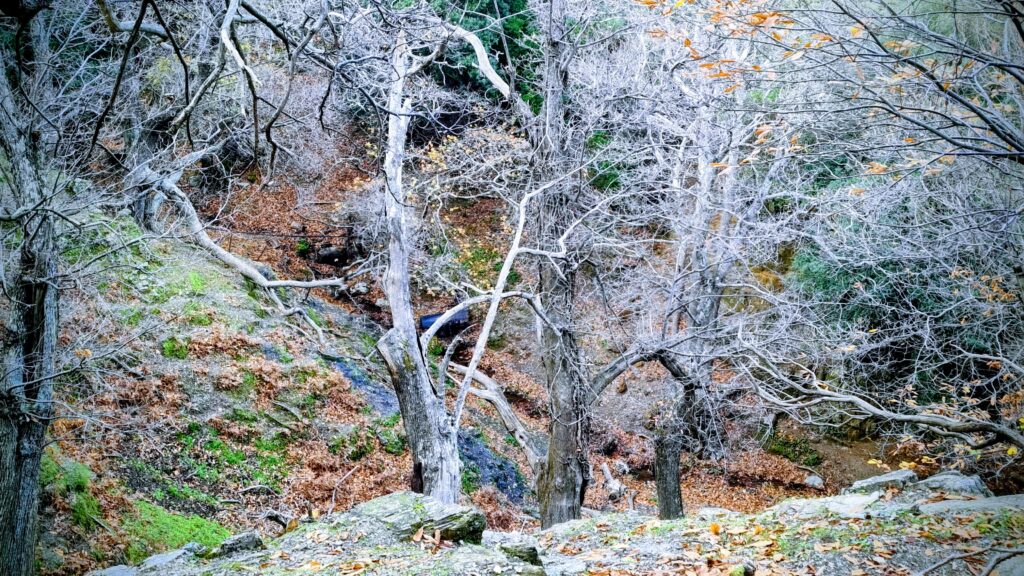
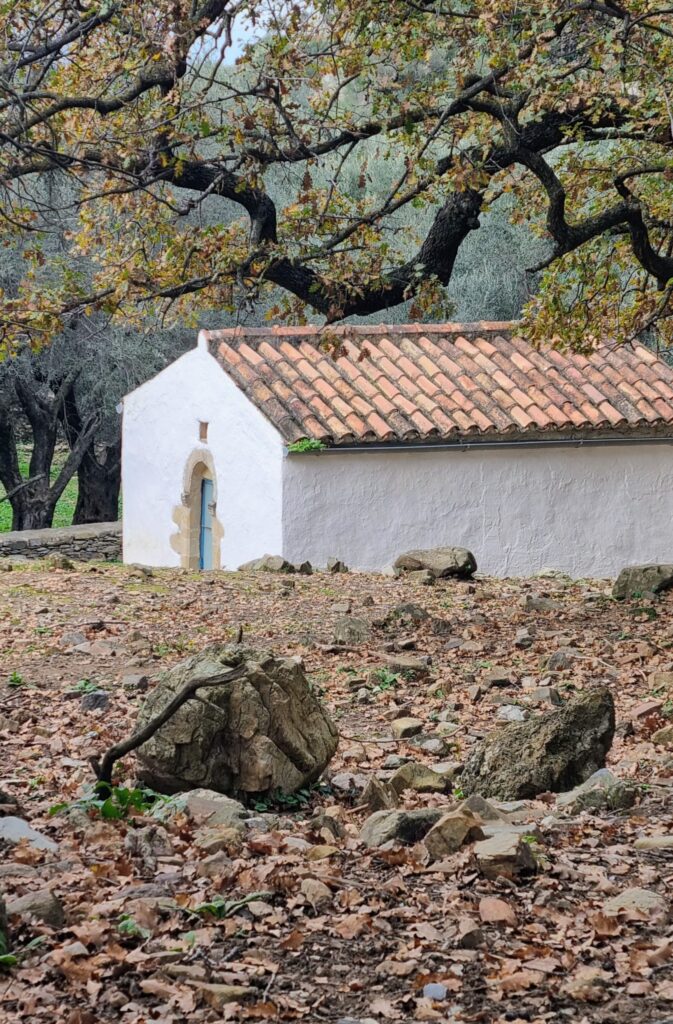
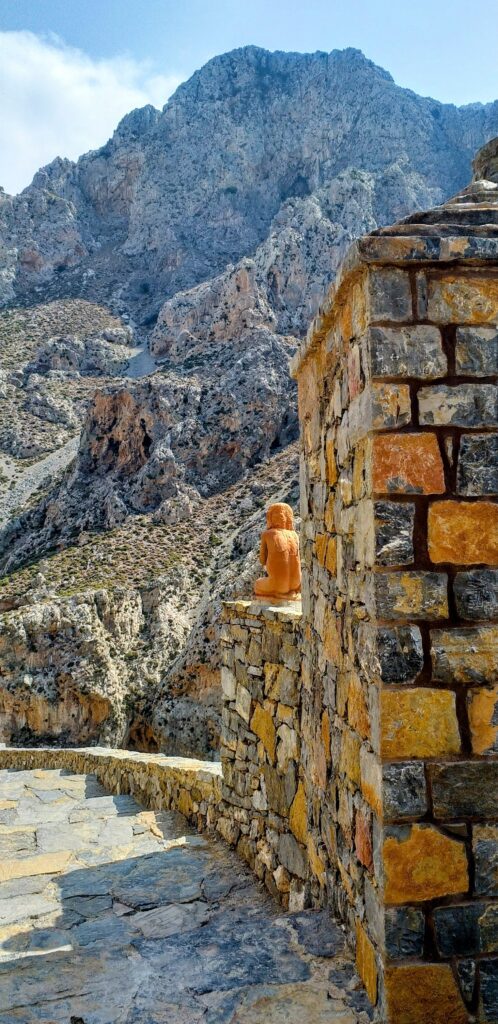
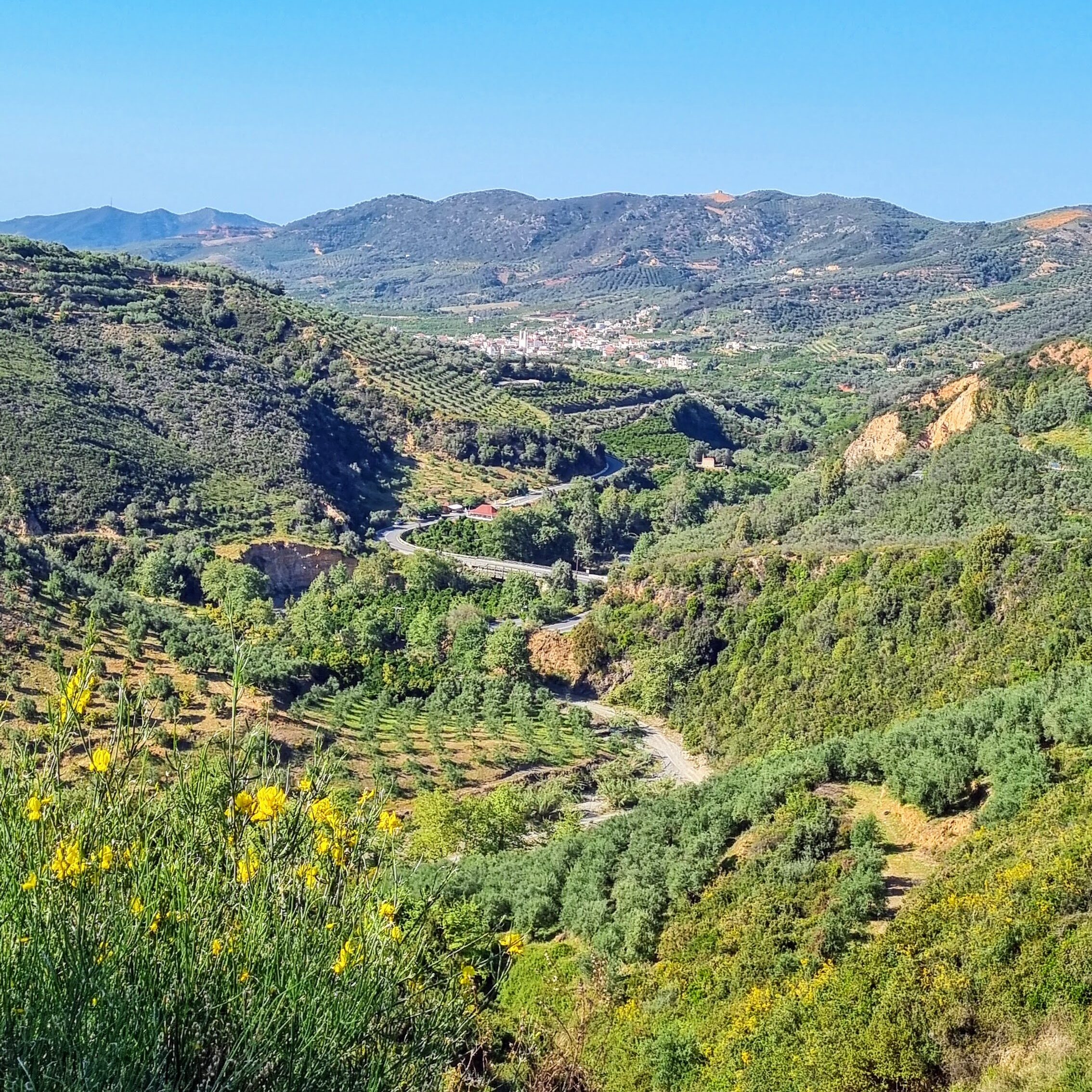
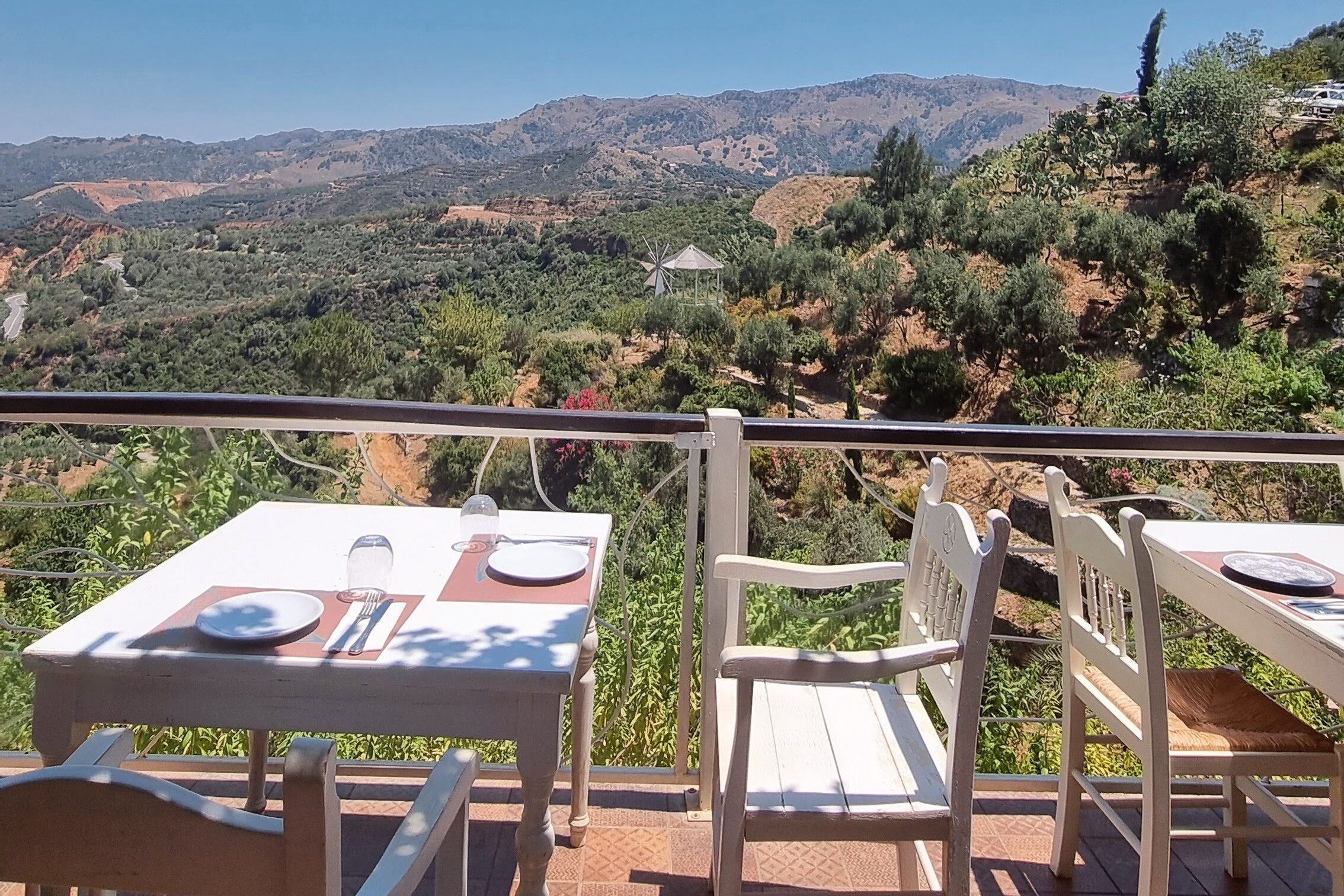
To reach this magical place, nestled between mountains and gorges, you have to drive for over an hour from Chania, and the road winds like a snake, eventually turning into a dirt track.
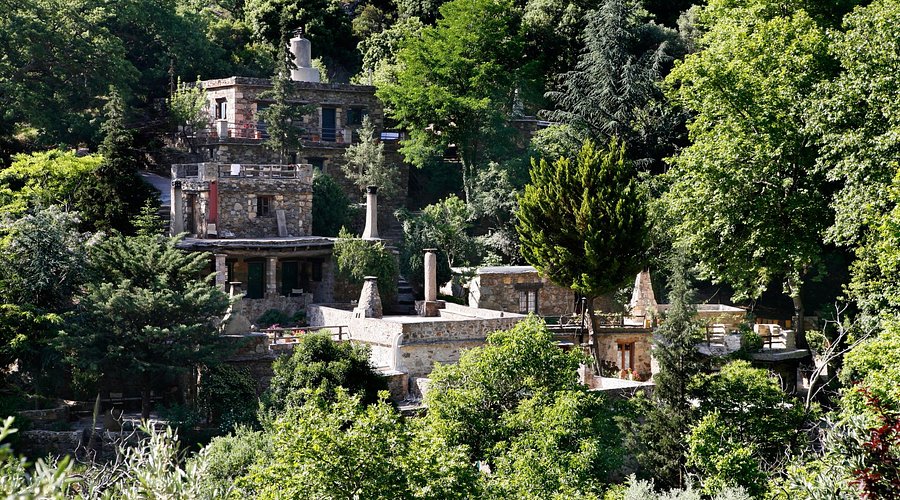
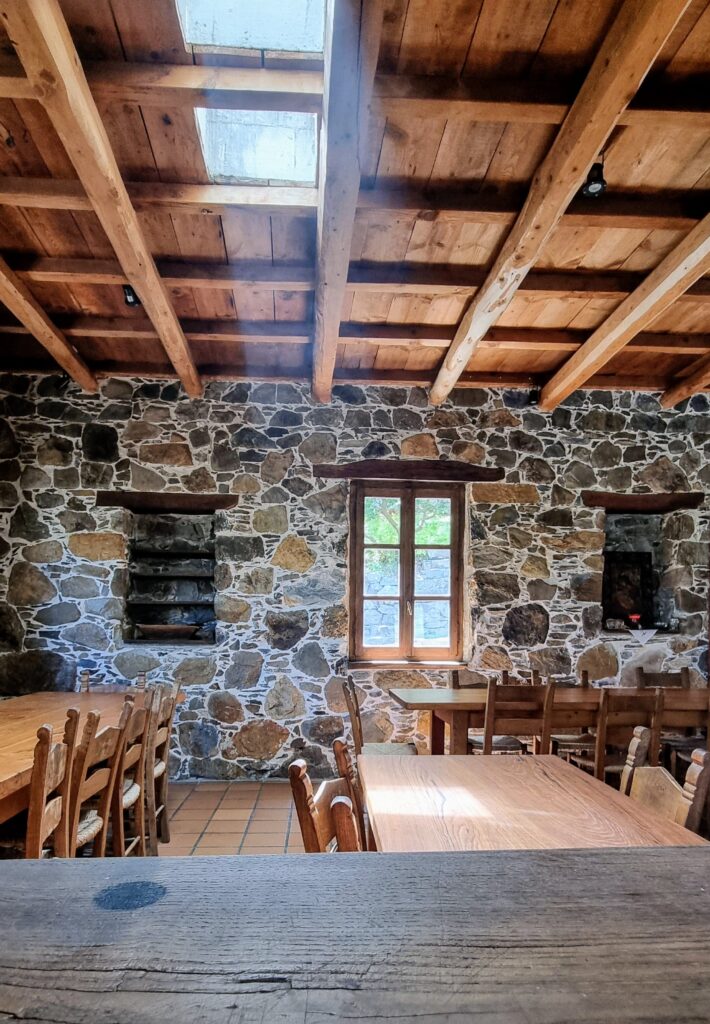
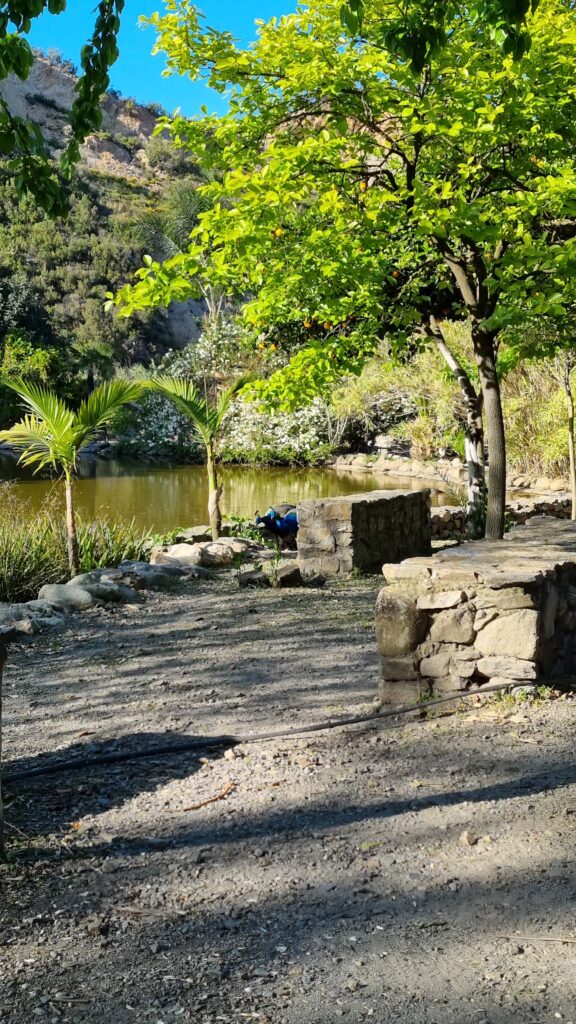
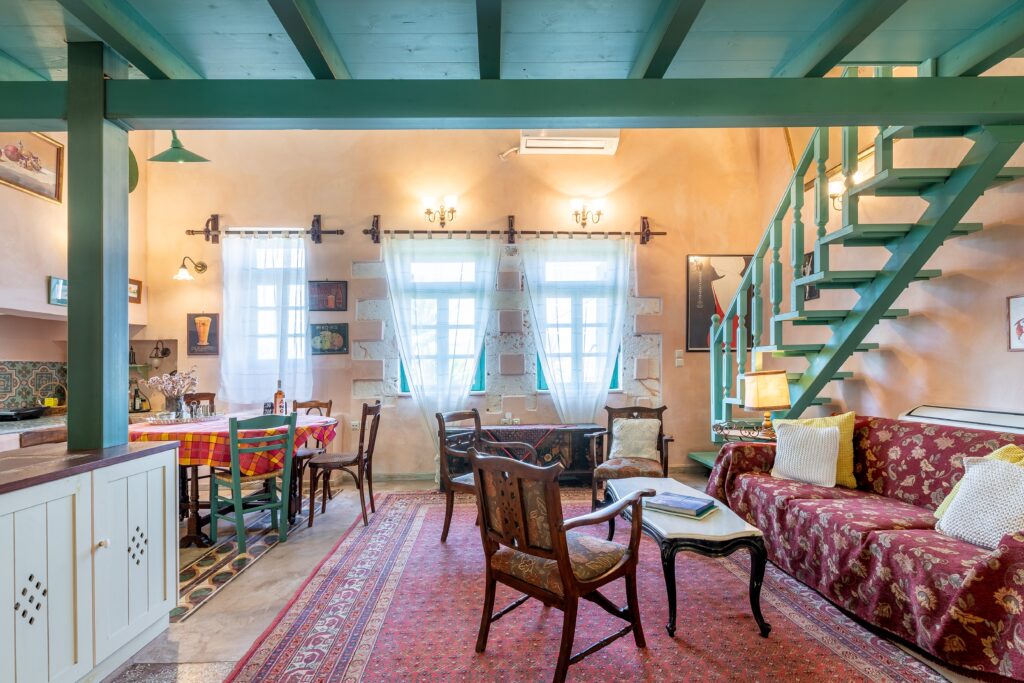
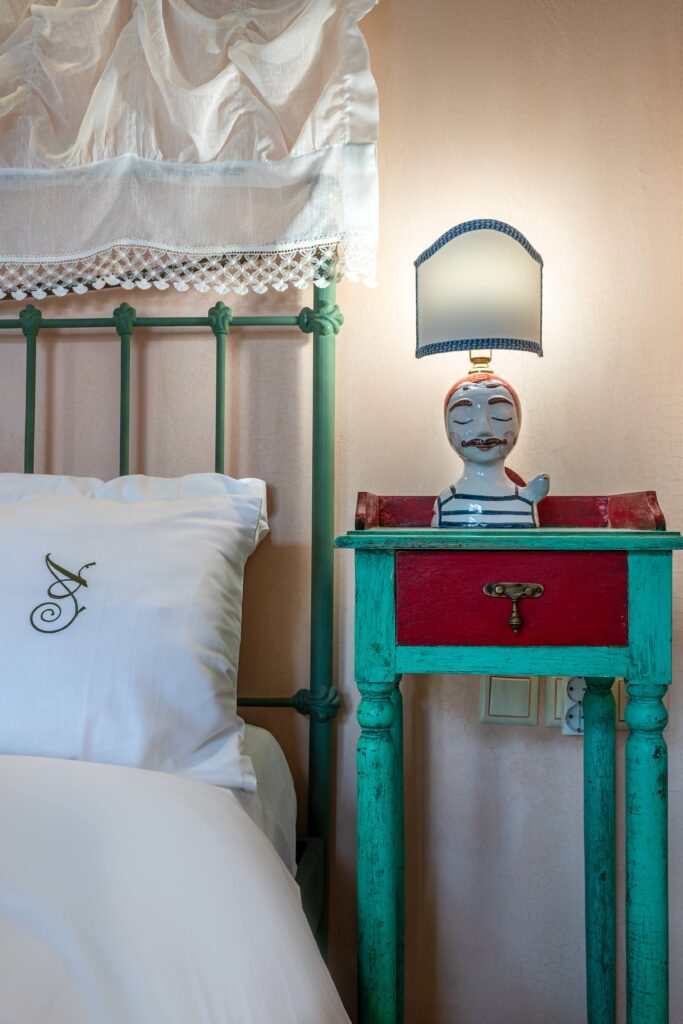
At the end of the journey, a unique place awaits us, beautiful in its simplicity and fidelity to tradition. Milia is now a tourist resort, but it is housed in beautifully restored cottages that were once part of a mountain settlement. The owners have put a lot of work into creating such an atmospheric and authentic place from the remains of medieval buildings.
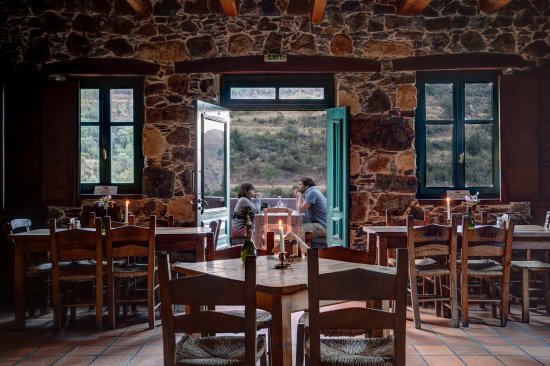
Milia is not only an eco-friendly retreat, but it also boasts one of the best restaurants in Crete. Word of honour!
In line with the philosophy of the place, the dishes are prepared with local products, some of which come from their own garden, and although the recipies are essentially Cretan, they often feature an innovative approach.
If you want to eat there, I recommend booking a table in advance, especially during the holiday season.
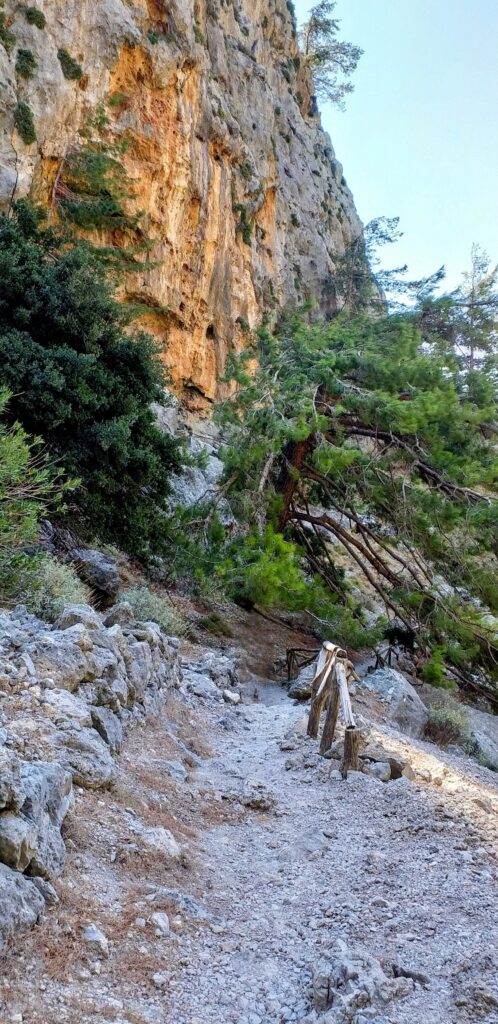
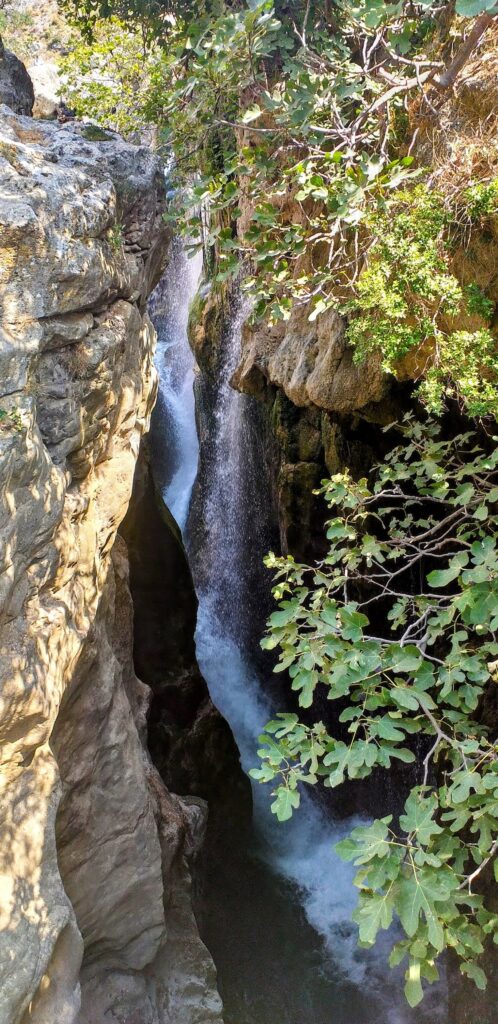
Milia offers more than acommodation or dining experience, though. Several walking trails start there, ranging from leisurely walks to long, demanding trails in the surrounding mountains and gorges (e.g.Topolia Gorge Circuit, Sirikari Gorge).
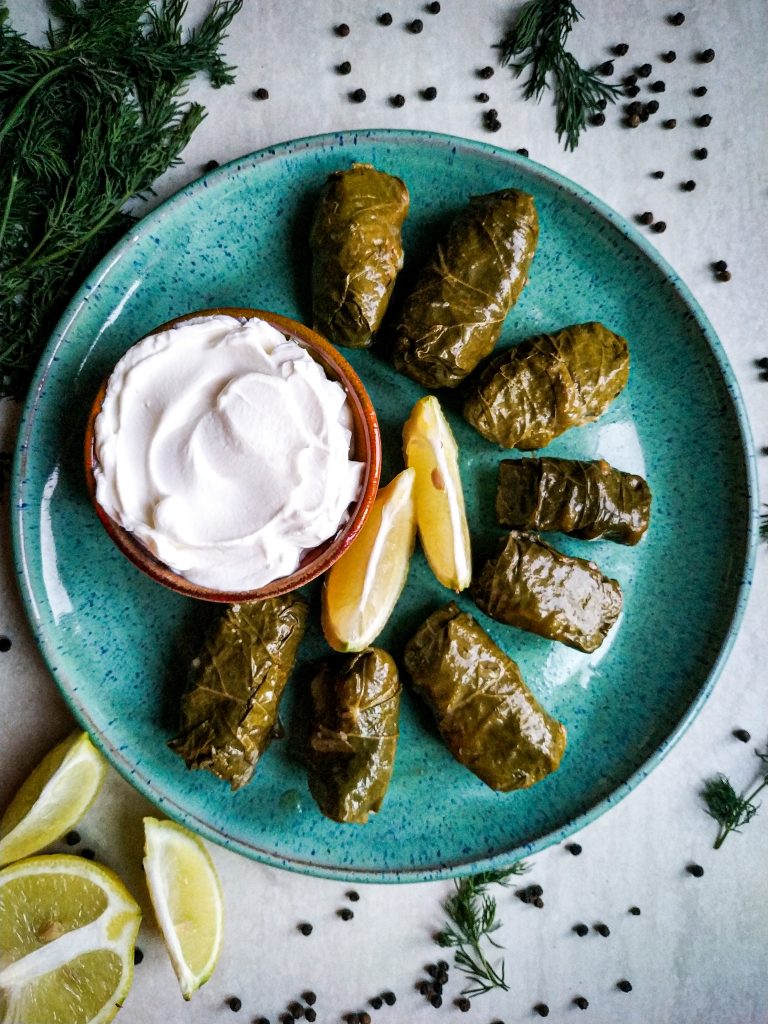
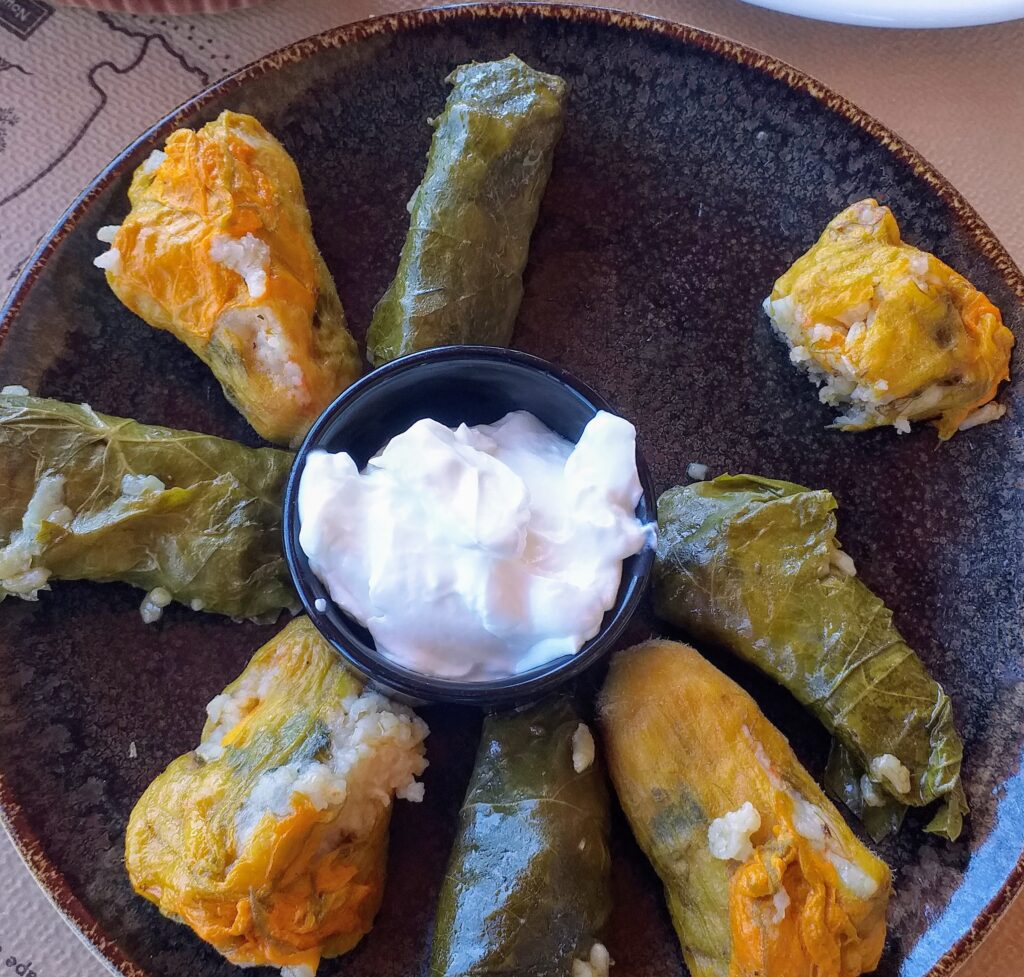
In fact, in every tavern, and certainly in a traditional Greek tavern, you will find dolmades (or dolmadakia, the diminutive form) among the starters. What is it? Of the dishes known to us Poles, it most resembles stuffed cabbage rolls, except that it has a vegan filling based on rice with onion, parsley and herbs, which is formed into neat oblong parcels using young grape leaves.
Although the roots of this dish are Turkish, it is now considered typically Greek, served cold, lightly drizzled with olive oil, but I have also eaten it warm with yoghurt to break up the flavour.
It is worth mentioning that during the season when they are available, courgette flowers are also stuffed with the same filling. It tastes like heaven and the chefs at To Stachi in Chania are masters at preparing them.
This reminds me of a little anecdote. Twenty years ago, I attended my first Greek language course. It took place in Warsaw, at the Olimp Society, and the classes were taught by Lefteris Tsirmirakis, who was already quite elderly at the time, but still full of vigour and wit. Our teacher found himself in Poland shortly after the war, fleeing the persecution that threatened all members of the Communist Party of Greece, especially the partisans. In Poland, he started a family, marrying a Polish woman. He was a great Greek patriot and tried to infect us with his fascination for his country of origin. He did this by sometimes bringing delicacies to class that he had grown up with in the Thessaloniki area. One day, he brought dolmadakia made by his Polish wife and was clearly proud that she knew how to prepare this typical Greek delicacy so well 🙂
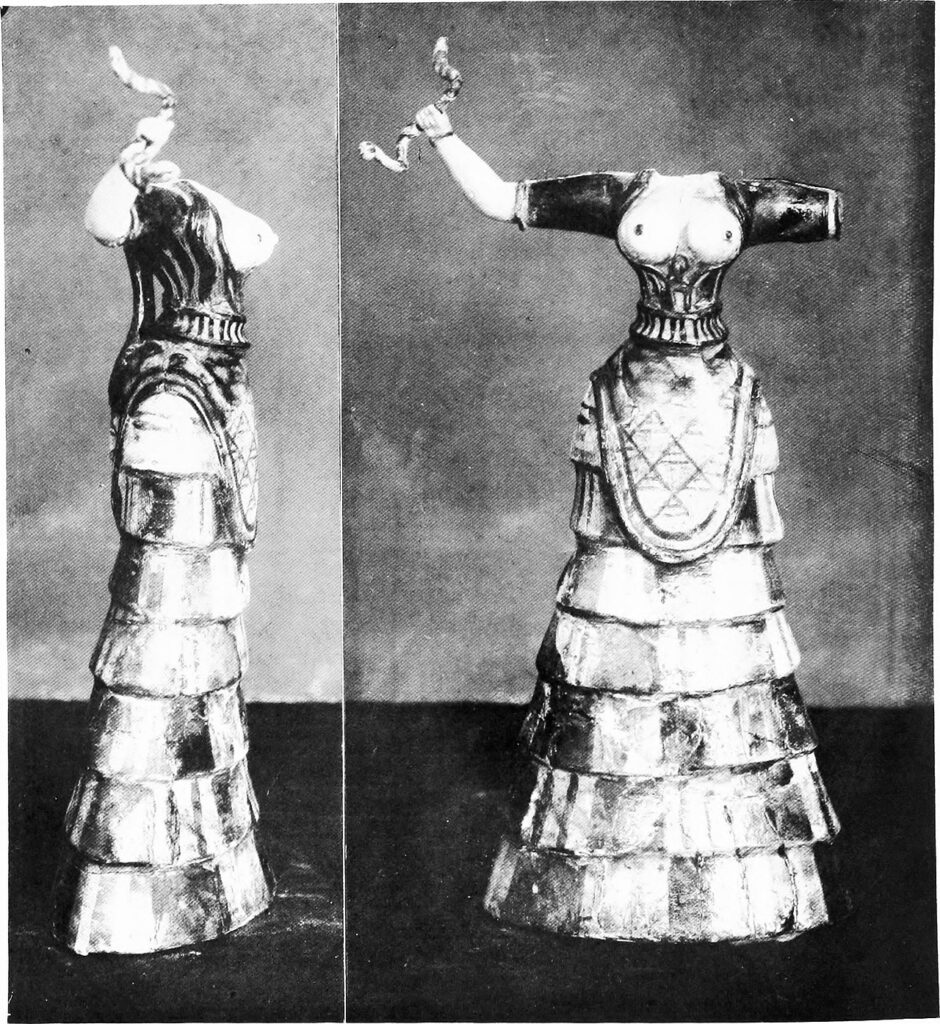
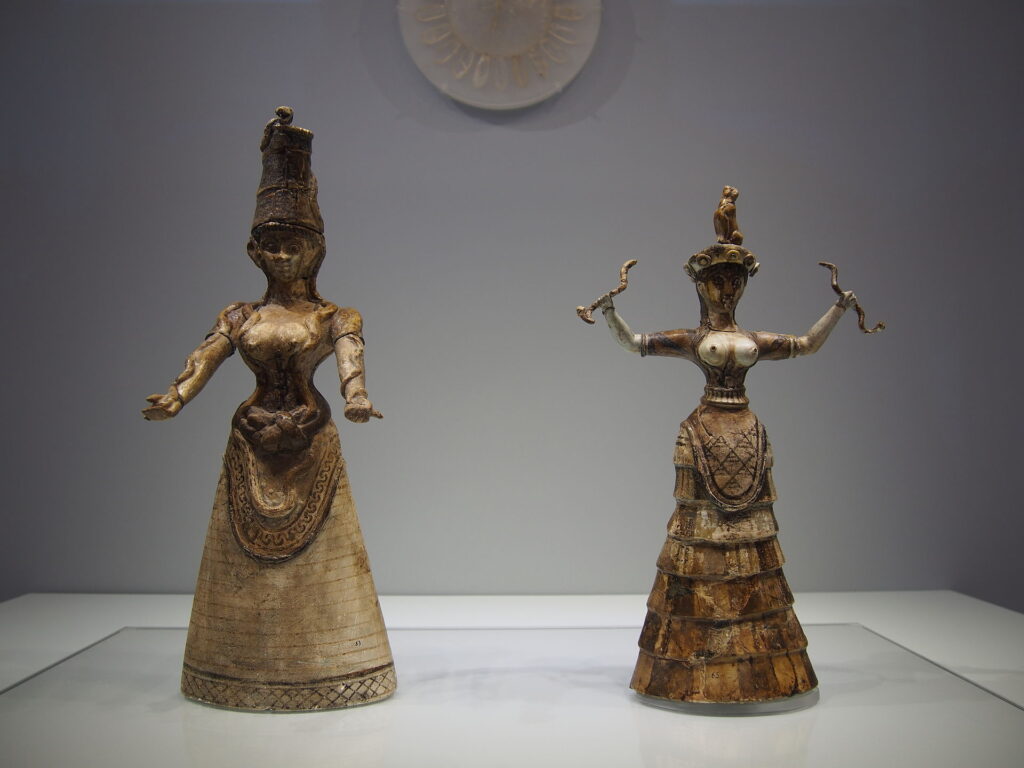
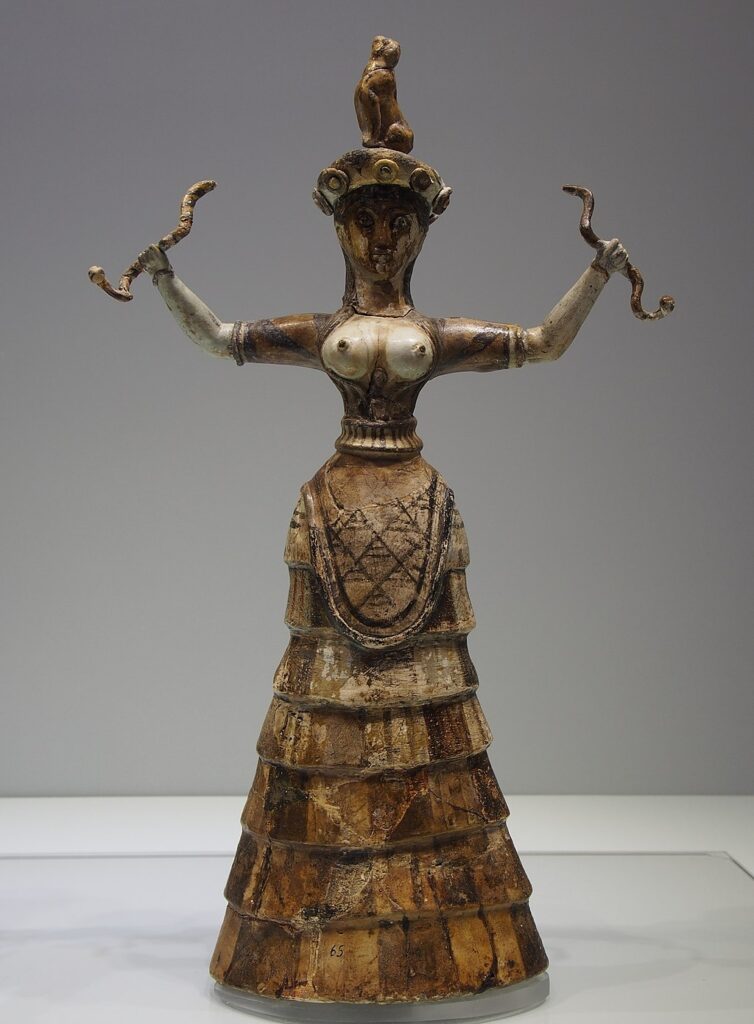
The Snake Goddess is one of the most recognisable artefacts of the Minoan civilisation, dating back to around 1600 BC. The statuette, excavated at the Palace of Knossos by Sir Arthur Evans in 1903, was considered enigmatic and shrouded in mystery from the outset, and the explorer’s actions further confused the matter.
Sir Evans, known for his rather free but creative approach to interpreting finds, actually excavated two figurines, not one. The better known one was incomplete, missing one arm and the head. The archaeologist decided that it would be reconstructed from other elements found at the excavation site. In his reconstruction, he was strongly influenced by the appearance of the second statue excavated.
photo credit Wkipedia
The result was a 30-centimetre faience figurine (the fired faience was painted and its surface shone) depicting a woman dressed in an ornate Minoan dress, with exposed breasts, two snakes in her raised hands and a cat or panther on her head. It is worth mentioning that the individual parts of the statuette were fired separately and then joined together with wire.
photo credit Wikipedia
The fun began when researchers attempted to interpret the meaning of this find. Sir Evans arbitrarily called her a goddess, but is that really what she represents? It is believed that she could also have been a priestess or even a wealthy woman.
The animals surrounding her led some scientists to conclude that she was the Lady of the Animals, but if we assume that Evans incorrectly added the cat to her head and that the snakes are actually strings or twigs (as claimed by scientist Emily Bonney), this interpretation loses its meaning. If we assume that they are indeed snakes, there are also different ways of interpreting them. On the one hand, as in Mesopotamia and ancient India, they were a symbol of rebirth and renewal. On the other hand, there are voices interpreting them as a sign of death and the afterlife.
photo credit Wikipedia
Even the abundant, exposed breasts are ambiguous. In Greek religion, they are a symbol of fertility, but in ancient Egypt they symbolised mourning, and we find such a reference in Homer’s Iliad.
Interestingly, the mystery hidden in the statue and its attractive, sensual appearance caused such a sensation and desire that there was a proliferation of ‘miraculous’ discoveries of other Snake Goddesses, which were, of course, fakes. Two fakes are particularly well known because they can still be found in the collections of respected museums today! One is in the Museum of Fine Arts in Boston and is an ivory figurine purchased in 1914. The second masterful forgery is a steatite statue of a naked woman with snakes adorning her head, purchased from a dealer in Paris by Henry Walters in 1929 and brought to the Baltimore Museum in 1931.
The authentic figurine, dating back over 3,500 years, can be viewed in the excellent Archaeological Museum in Heraklion, Crete.
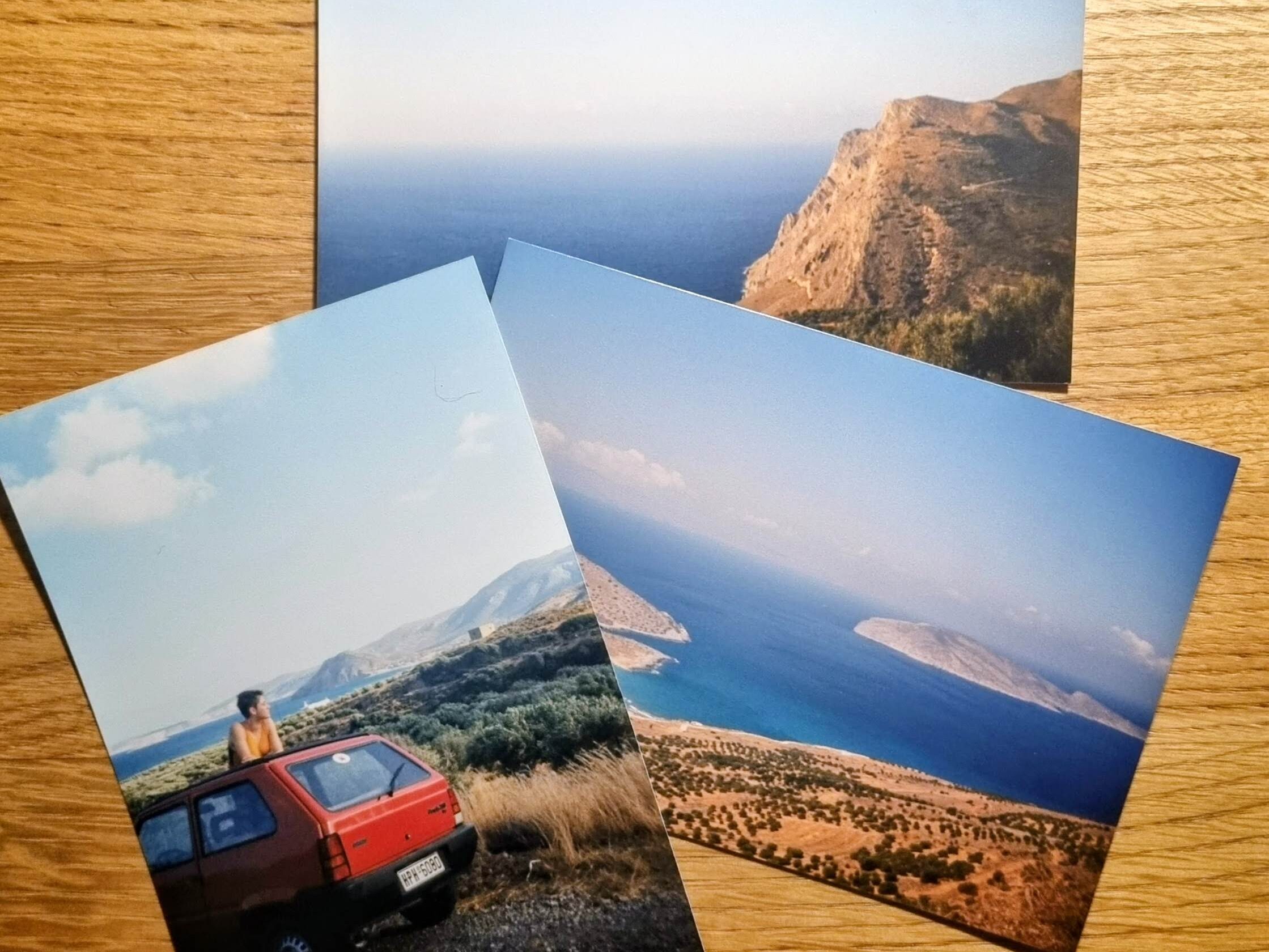
I first set foot in Crete in 1995. We had so little money at the time that the small amount we had saved allowed us to escape from an uninteresting town near Heraklion for only two trips. One day by car, to the southern tip of the island, through the mountains, to Vai beach, and one day by scooter (oh my God!) to the caves carved into the rocks in Matala. Although we came back from the scooter trip soaked, because somehow it was raining in the summer, I also came back stunned by the beauty of this island.
It was love.
Since then, I have visited Crete many times. And basically every time, whether we were as a couple, with a child, or I was travelling alone, I went to the nearest accessible gorge. Because hiking in gorges is my thing, my passion, my beloved activity.
And in Crete, mainly in the west, there are over 400 of them!!! From pleasant walks with children, through more technically demanding ones with ropes and ladders, to the famous Samaria (not recommended in summer), the longest dry gorge in Europe.
So… there’s plenty to do!
From Chania, where we invite you to our Thimari Gardens, you can easily reach several interesting gorges within two hours, and private buses will also take you to Samaria.
It doesn’t take long to get there, just half an hour by car from Chania. The road itself is a feast for the eyes, with valleys and mountains and picturesque twists and turns in the asphalt. Eventually you arrive at an oasis, a place that offers respite, especially in summer – the Botanical Park and Gardens of Crete, located 20 kilometres south of the city.
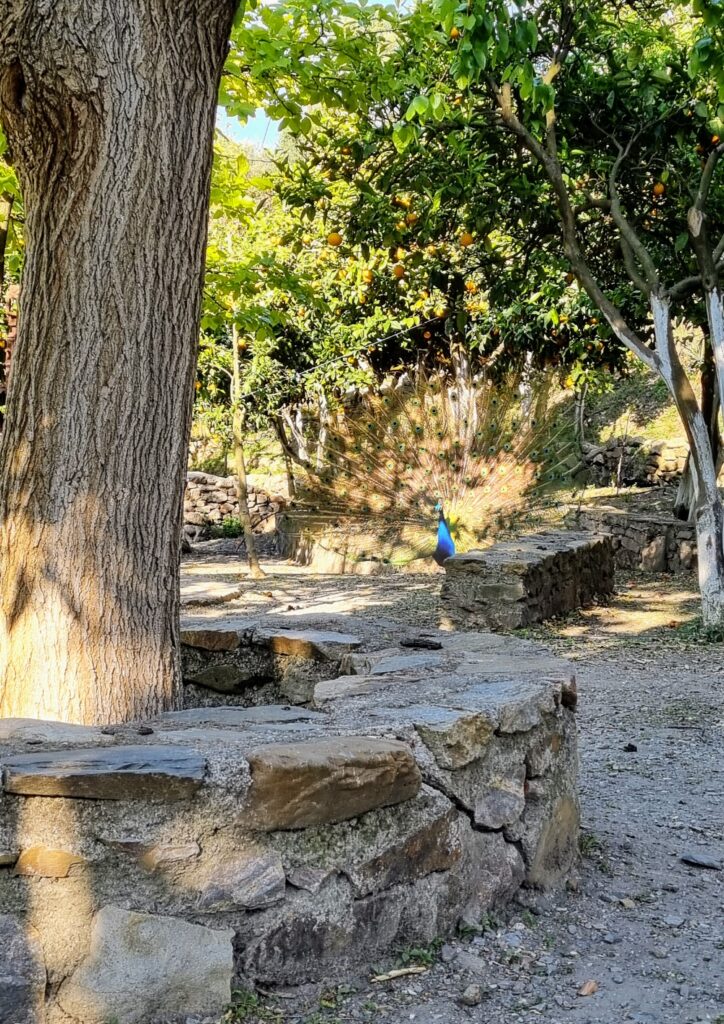
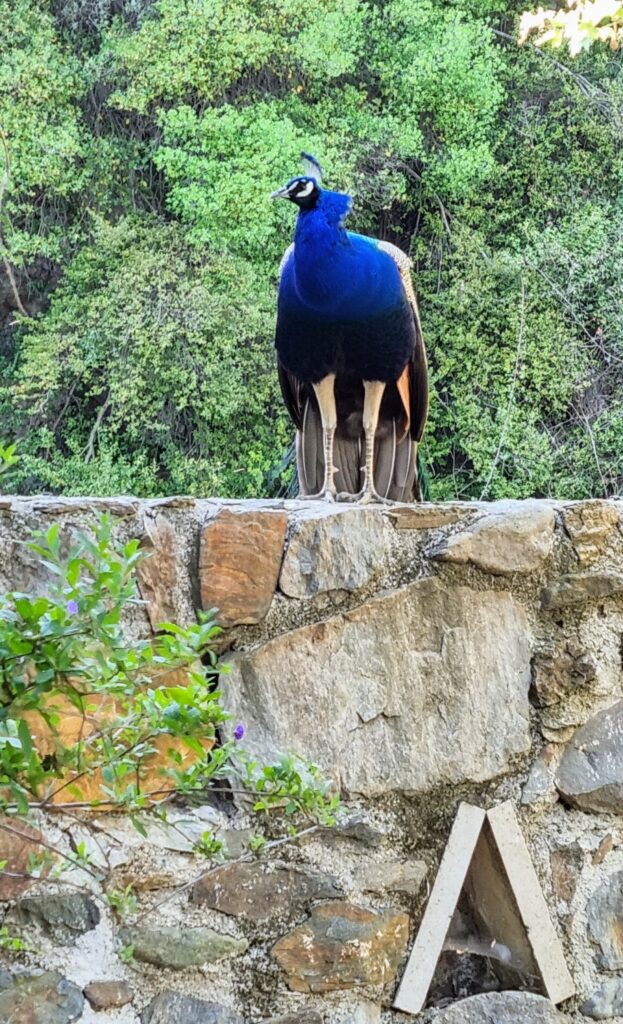
Twenty hectares of park and gardens are spectacularly spread out on the slopes and, even from a distance, encourage visitors to come and explore. We park, pay a few euros for admission, and the park is open to us. And there is plenty to see along the 2.5-kilometre loop that leads through all its corners. You will find themed gardens (e.g. Mediterranean, aromatic herbs, citrus or tropical), encounter a variety of animals (from peacocks and donkeys to a multitude of butterflies), and take a stroll along the lake.
The flora is diverse and interesting. It is impressive that the park was established just over 20 years ago and has achieved such results. In 2003, a terrible fire ravaged the area, burning 100,000 ancient olive trees and leaving only ashes. Thanks to the inspiration and hard work of founder Petros Marinakis, the area has been beautifully restored, to the benefit of all.
After a walk, which takes about 2 hours, you leave the park at a very nice restaurant, ideal for lunch or early dinner in beautiful surroundings.
There is also a shop on site, selling mainly famous Cretan herbs and typical locally produced spirits: raki, or as they call it in Crete – tsikoudia.
Let me start from the end. Summer is not the best time to visit this place. It is hot, really hot, and you are exposed to the scorching sun, because most of what you want to see is located in open courtyards or terraces.
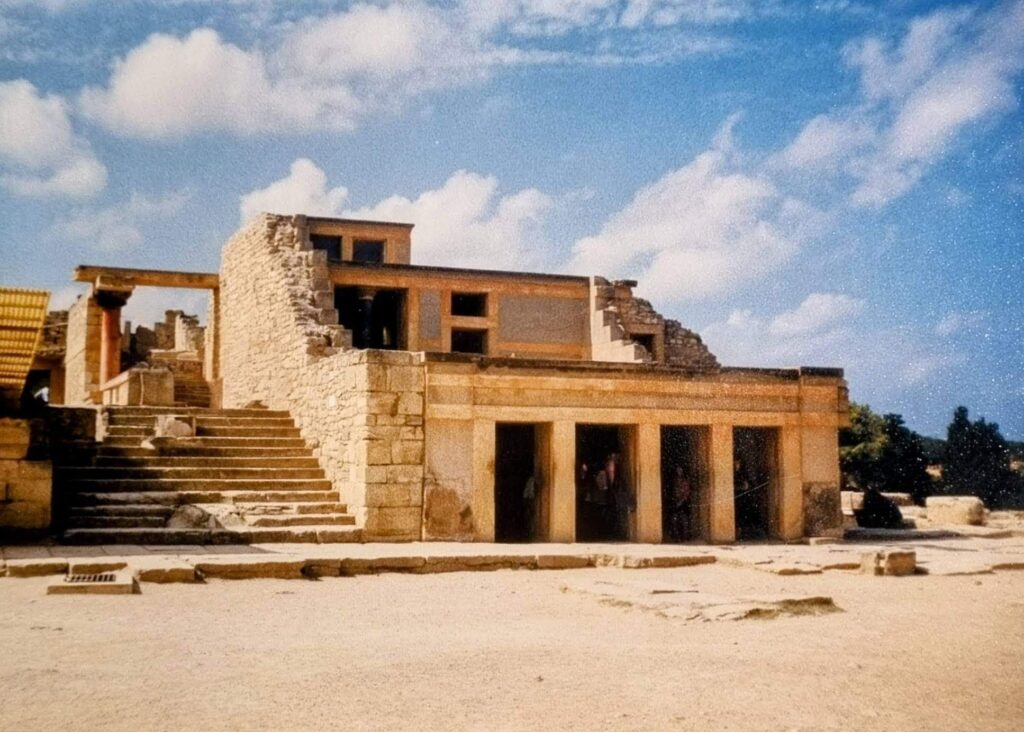
But if you have no choice because you are on holiday in Crete in August and consider the Palace of Knossos a must-see (after all, it ranks second among the most visited archaeological sites in Greece, after the Acropolis), do it in the morning, right after opening, or an hour or an hour and a half before closing.
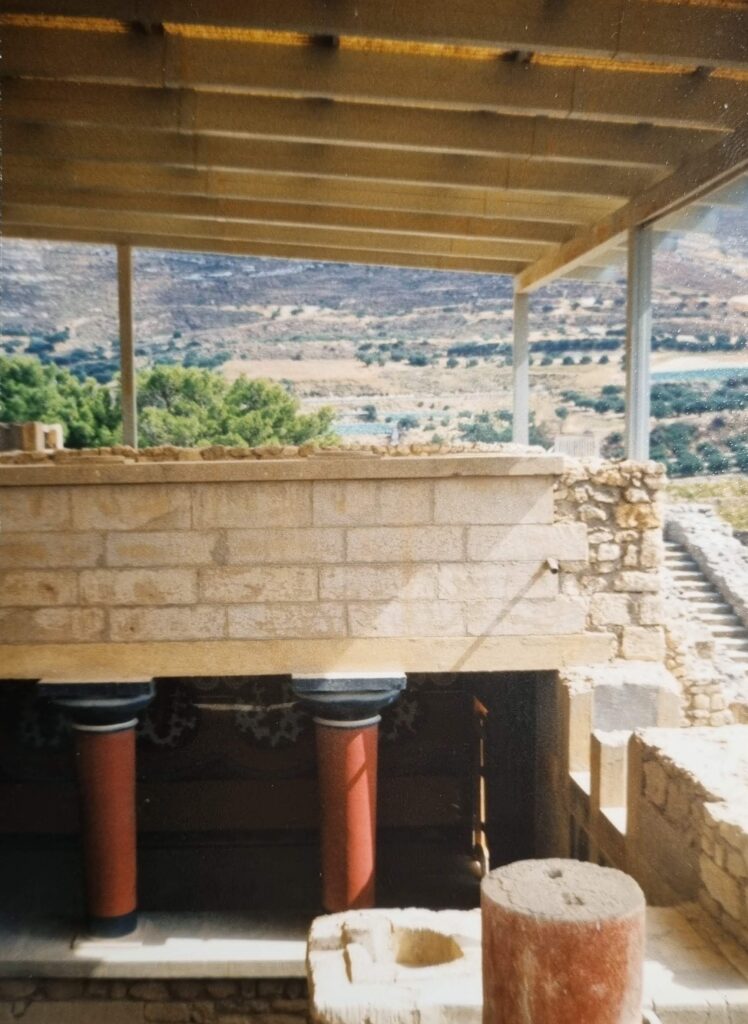
You may also be discouraged from visiting Knossos (5 km south of Heraklion and 140 km from Chania) by the opinion that British archaeologist Sir Arthur Evans, who between 1900 and 1905 after buying the entire hill with the palace and excavating most of what can be seen today, undertook a controversial and, as we now know, in several respects misguided reconstruction of the buildings and rooms.There is no denying that this was the case. The biggest mistakes concern the use of excessive amounts of concrete to reinforce the remaining ruins and arbitrary decisions regarding the appearance and content of the restored frescoes. Sir Evans commissioned a Swiss artist to paint the latter in the throne room without having any archaeological basis for their appearance.
But don’t let that discourage you. It’s a minor detail when you consider that it was thanks to this passionate archaeologist that the palace complex was excavated (not discovered, as the credit for that goes to the Greek Minos Kolokairinos, who was already aware of the existence of the then underground complex in 1878) and protected from looting. The palace buildings owe their stability to the infamous concrete, and some of the original frescoes have been preserved and can be admired in the Archaeological Museum in Heraklion.
It is difficult not to be impressed by the grandeur of 4,000 years ago. The Minoan culture, which was present in Crete between 2000 and 1400 BC, allowed for the creation of a complex of buildings covering an area of 22 hectares, which was inhabited by 80,000 people at the peak of its development. The palace complex boasted 1,500 rooms, and some buildings were five storeys high.
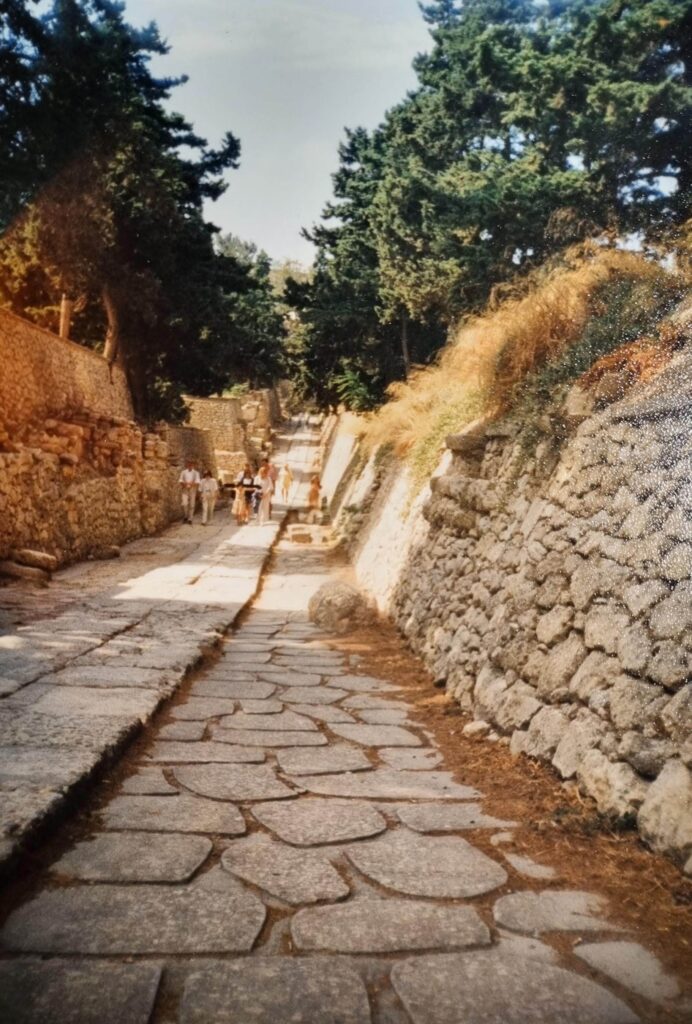
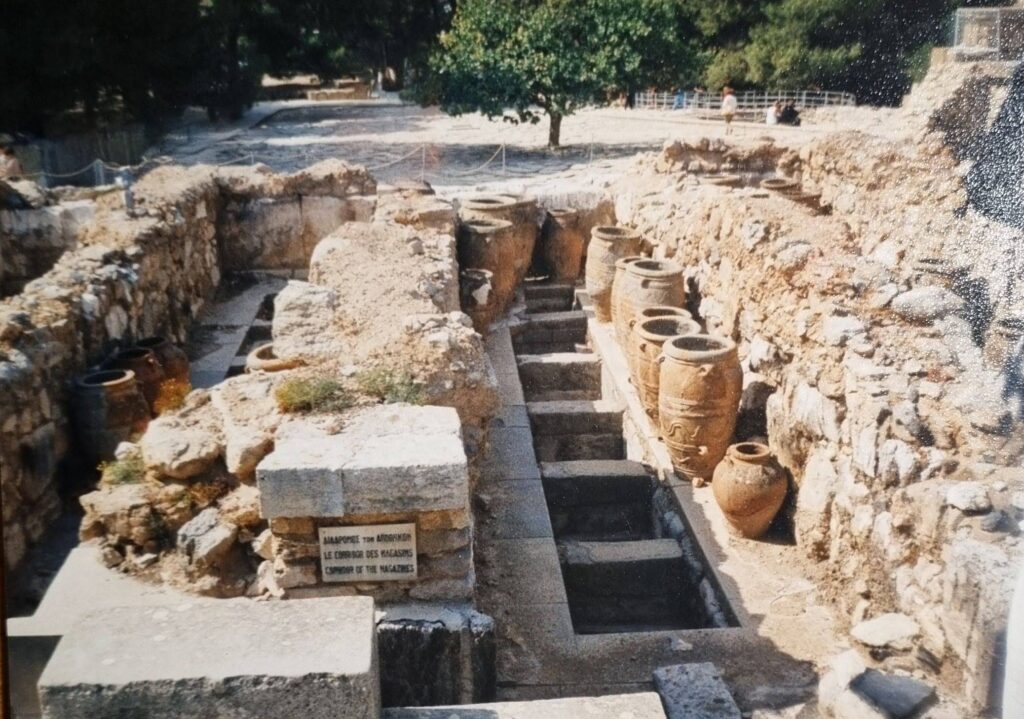
Walking around the excavations, we can see magnificent staircases, porticoes, a columned hall, pottery and stonemason workshops, courtyards, a theatre and a sanctuary. Of course, there are also royal halls, called megarons. The queen’s hall is decorated with replicas of famous frescoes with dolphins. It is also interesting to see traces of the ordinary, everyday life of the Minoans. In the warehouses, or rather pantries, there are huge clay containers, called pithos, which were used to store grain, wine and oil. We know that the buildings were equipped with toilets and that water and sewage systems distributed through clay pipes were used. The buildings provided coolness in summer, and light entered through skylights.
Many figurines and tablets with Linear A and B writing were also found at the excavation site. However, these treasures, along with pottery and jewellery, can be admired in the aforementioned museum in Heraklion.
We were assured that tickets to the museum could be easily purchased on site, so we set off leisurely from Thimari Gardens on a beautiful October day around 11 a.m. Leisurely and on foot. Google suggested that the walk would take 25 minutes and would run picturesquely along the coast, from Splantzia in the old town of Chania, eastwards towards the Halepa district, where the modern and eco-friendly new building of the Archaeological Museum is located.
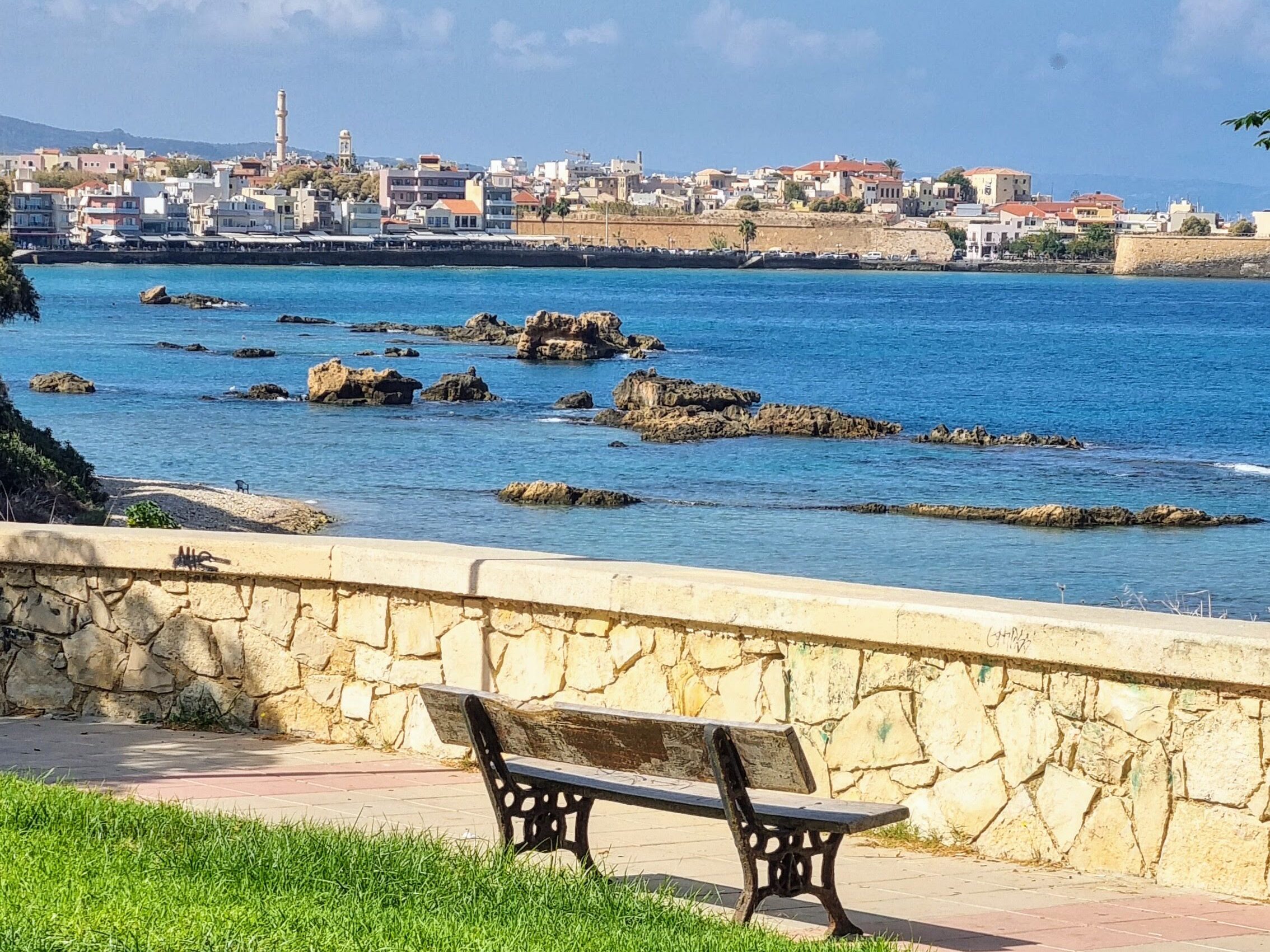
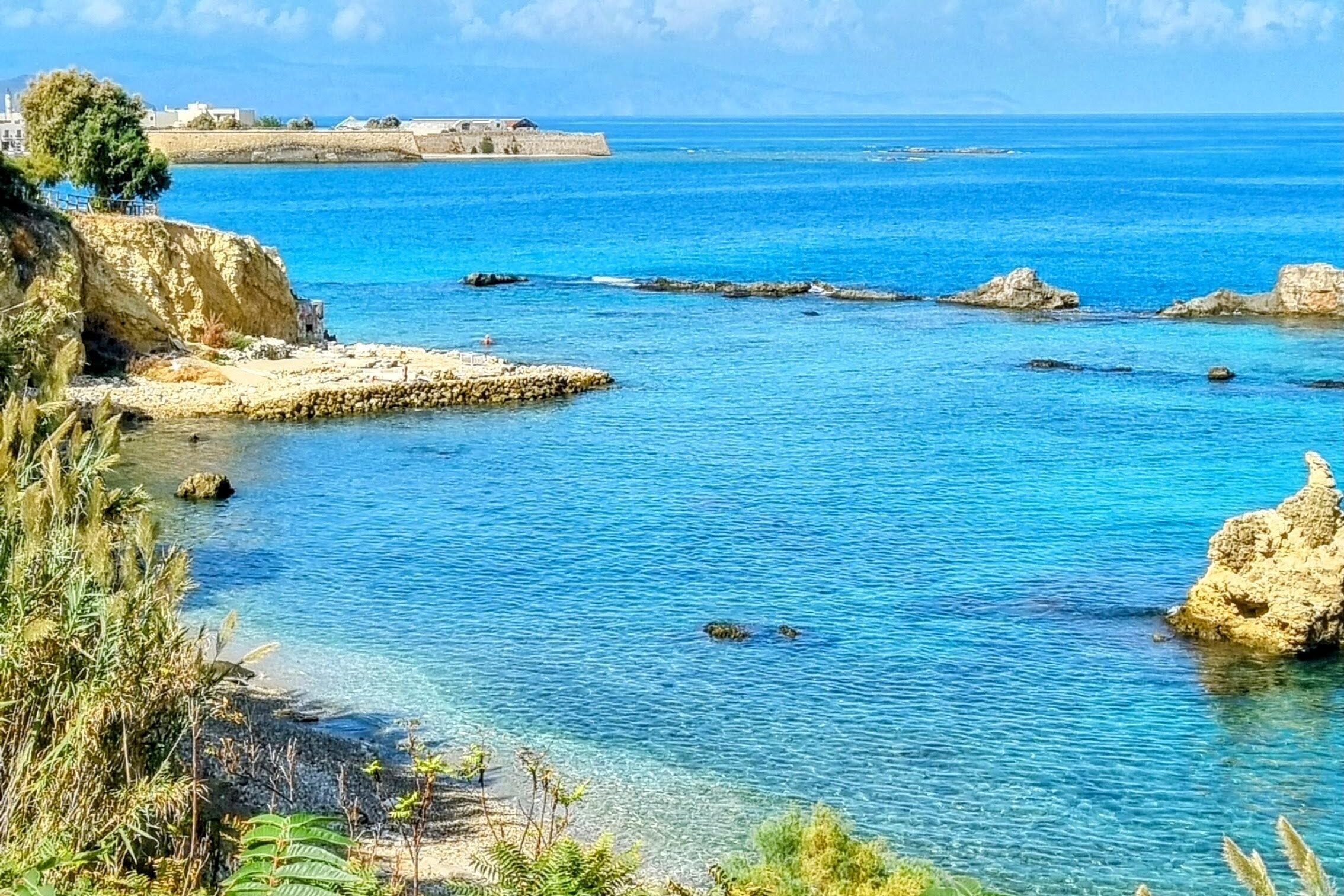
We were not disappointed. The coastal road winds along the high rocky shore and allows you to either see the magnificent Venetian gate of Chania (Sabbionara) from a new perspective or enjoy tropical views. The last 300 metres lead into the city, but there is still plenty to admire here, because Halepa gained its fame in the 19th century as a centre of politics and business for the greats of this world, which resulted in the creation of many beautiful and unusual villas and estates, which, either carefully renovated or still waiting for an investor with a bag of money, can be seen on the way to the museum.
But there is also the museum building. Low, blending into the hill, quite discreet from the outside, bright, uncluttered and open inside.
Standard tickets cost €6, but all EU residents under the age of 25 enter for free. Audio guides are also free of charge.
The permanent exhibition, covering the period from the Palaeolithic to Roman times, is housed in three large rooms. Most of the 4,100 exhibits come from the Chania area and the island of Gavdos, which is famous for its remains indicating that it was inhabited as early as 700,000 BC.
The first room presents the prehistory of this part of the world from the Palaeolithic period to the heyday of Minoan culture, with its palatial period, the remains of which are now mostly hidden in the Kastelli district of Chania, then known as Kydonia.
In the second room, we see a collection covering the Iron Age, the time of city-states, led by Kydonia and Aptera.
The third room is a narrative built around the destruction wrought by the terrible earthquake of 365 AD, and in particular the story of the destruction of a house called Filargyros, whose buried remains have become an excellent source of knowledge about that era.
There is another room on the first floor, which houses Mitsotakis’ private collection donated to the museum. It contains an absolute rarity – a stone seal engraved with the Minotaur, dated 1350 BC.
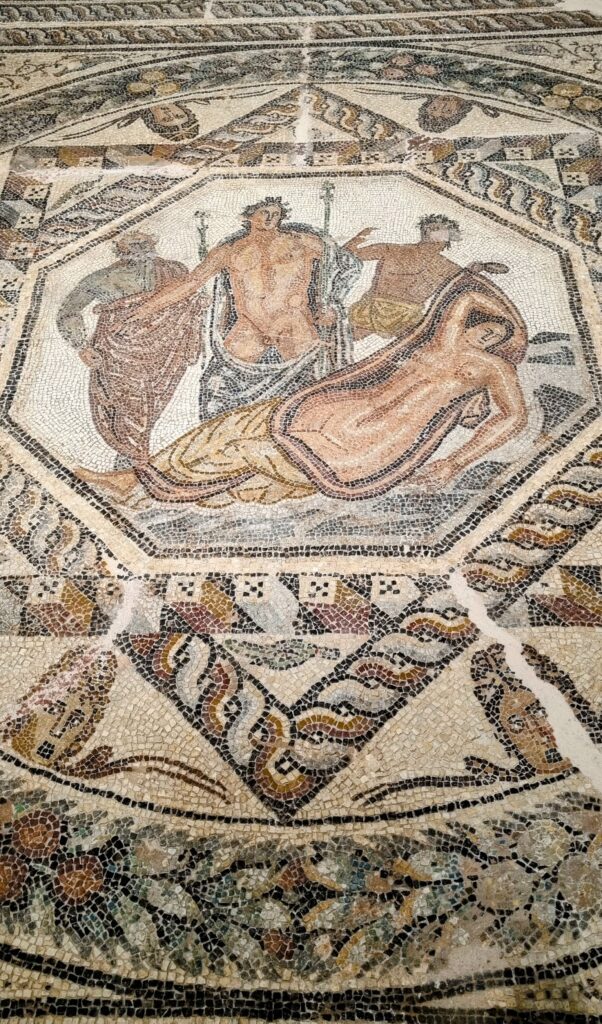
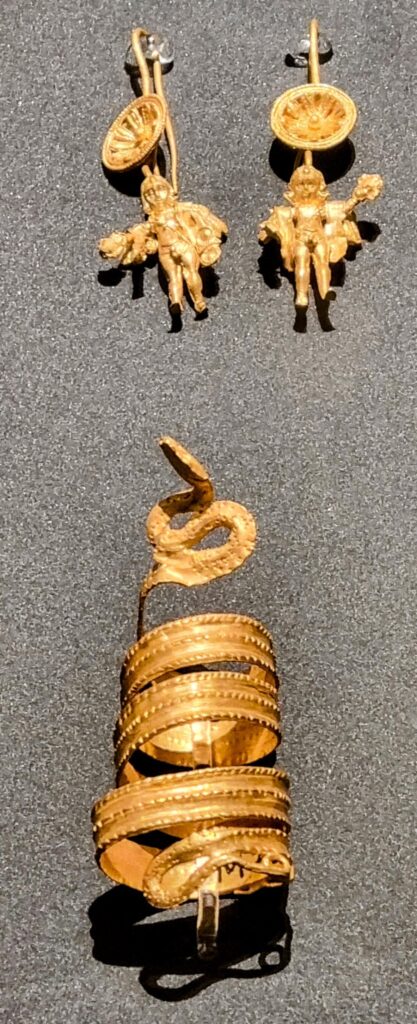
The exhibits are logically arranged, the most interesting ones are displayed and illuminated in an interesting way (I was delighted by the Minoan seal, jewellery, warriors’ graves and Roman mosaics), and clearly described. A leisurely stroll through all the rooms takes about 1.5 hours, and for those who are tired, there is a pleasant café with a terrace on the upper floor, offering an unobstructed, wonderful view of Chania and the Cretan Sea.
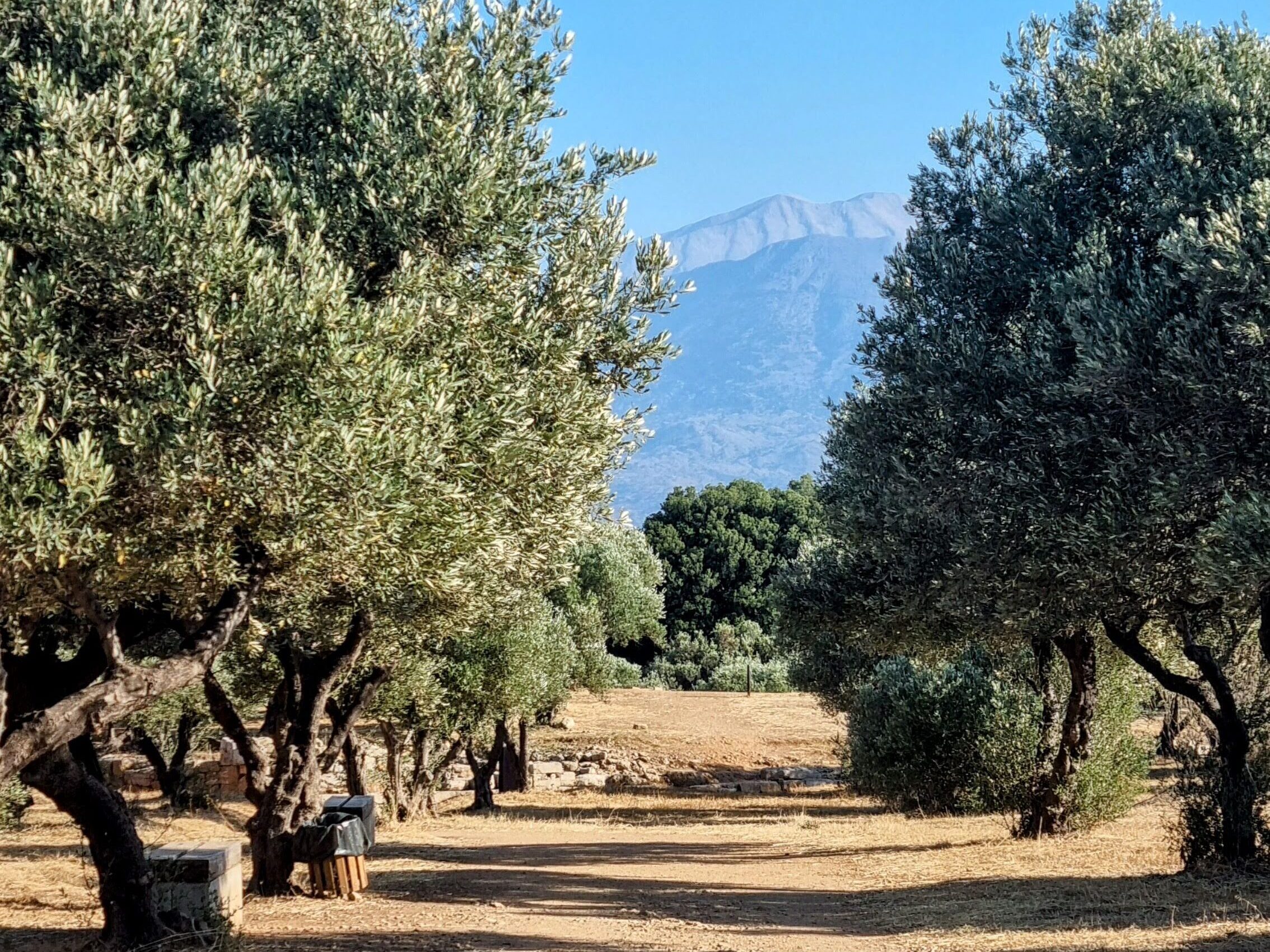
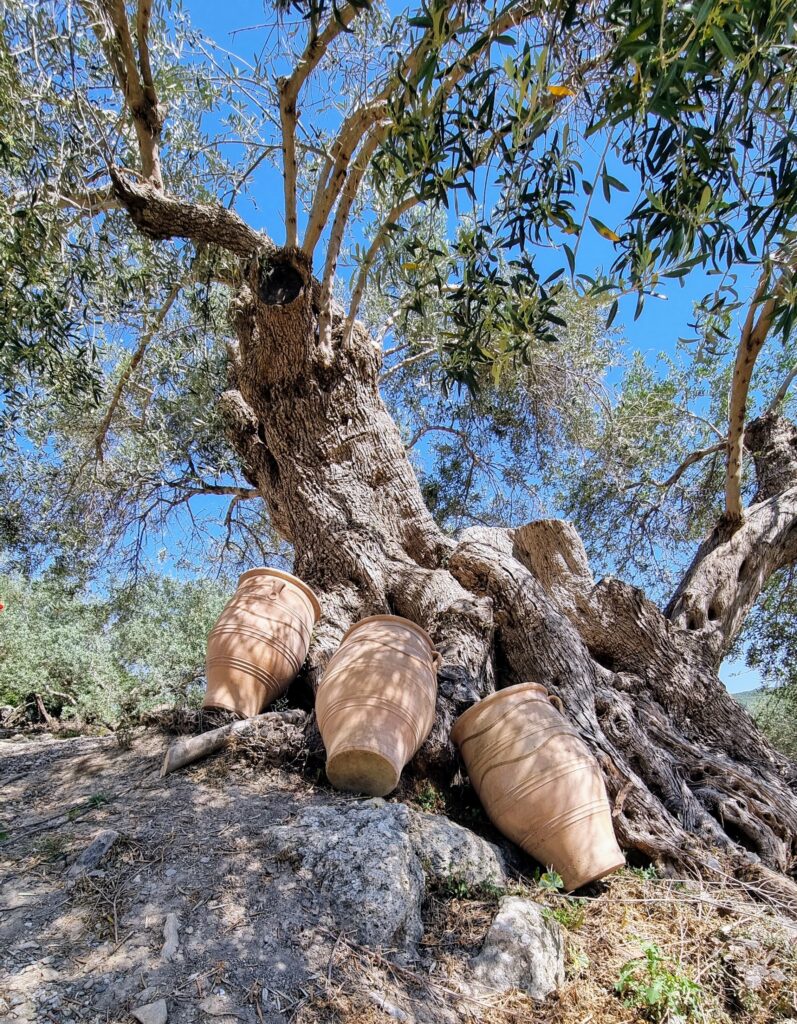
The olive tree, which we know and see today in many Mediterranean countries, has an extremely long history, growing alongside us and satisfying our needs with its wood, fruit and oil. For example, we know that as early as 100,000 years ago in Africa, its wood was certainly used as fuel, and people at that time may also have consumed olives. We also have evidence that it was cultivated in the Mediterranean basin as early as 7,000 years ago. In Crete, its importance as one of the basic crops (along with cereals and vines) reached a very high level in 3000 BC, and many scientists believe that its commercial cultivation and trade were the source of the wealth of the Minoan civilisation. At that time, however, olive oil was mainly used for lamps (including sacred ones), for skin and hair care, and for anointing. Since then, the olive tree and its fruit have held an unshakeable position as the main crop in the Mediterranean region, whether in Spain, Italy or Greece.
The name of the olive tree (Latin: Olea Europea) most likely derives from the Proto-Greek language, and its first written form appeared in the Mycenaean syllabic script Linear B (2200-1900 BC).
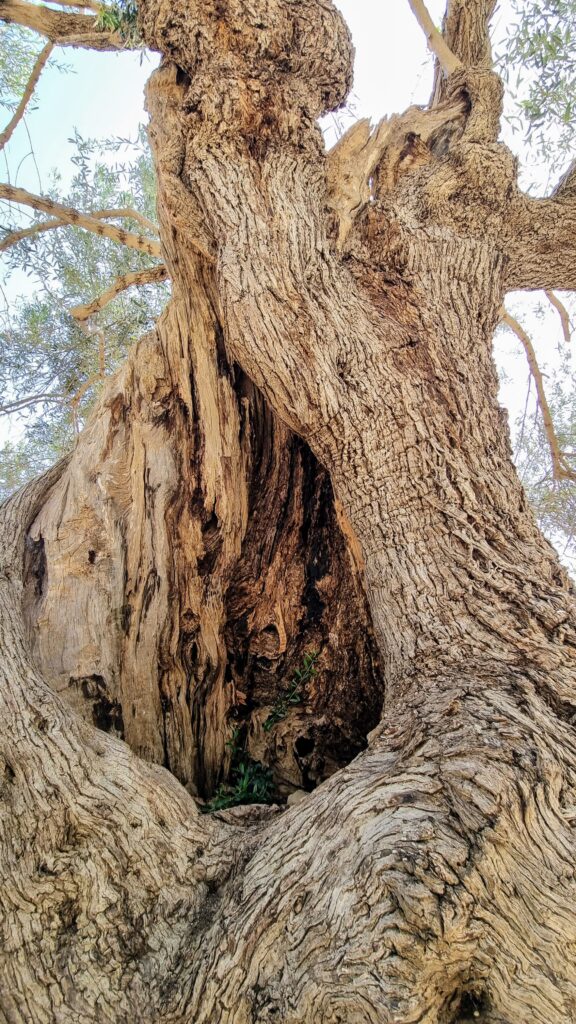
The olive tree has always been a symbol of wisdom, peace, strength, fertility and purity. This is not surprising, as the tree itself is quite remarkable. To thrive, it simply needs sunshine, a little water and well-drained soil. This is enough to keep it alive for hundreds, sometimes thousands, of years. In Crete, in the village of Vouves, 30 kilometres from Chania, you can see the famous olive tree, estimated to be between 2,000 and 4,000 years old. If you decide to visit this national monument, don’t miss the interesting Olive Tree Museum nearby.
Majestic, one of the most ancient olive trees in Crete (Astraka)
Today, Greece remains one of the leading producers of olive oil. Crete alone has about 30 million trees, and annual olive oil production reaches 120,000 metric tonnes, 80% of which is extra virgin olive oil. Although Greece ranks third as a European olive oil producer (after Spain and Italy), it proudly leads the world in olive oil consumption, with 24 litres per capita per year! This is not surprising, as its quality is the highest. The fresher the olive oil, the better. In Crete, olive oil production takes place immediately after the autumn harvest (October-November), the olives are crushed whole, and the greenish, intensely fragrant liquid fills bottles and cans. It is available for sale from December.
Cretan olive oil is mainly obtained from two varieties: Koronaiki and Tsounadi. The quality of the oil is excellent (as I mentioned earlier, 80% is Extra Virgin, which translates into low acidity – below 0.8% free acidity and a fruity flavour), but the oils naturally differ in taste depending on the region they come from. The Chania region is famous for the producers Chania Kritis and Kolymvari Chanion Kritis, whose oils are known for their slightly peppery taste. Those who prefer milder, less ‘demanding’ types can try olive oil from Kritsa or Sitia. For the more adventurous, many producers offer oils with added herbs (e.g. rosemary), lemon or orange peel.
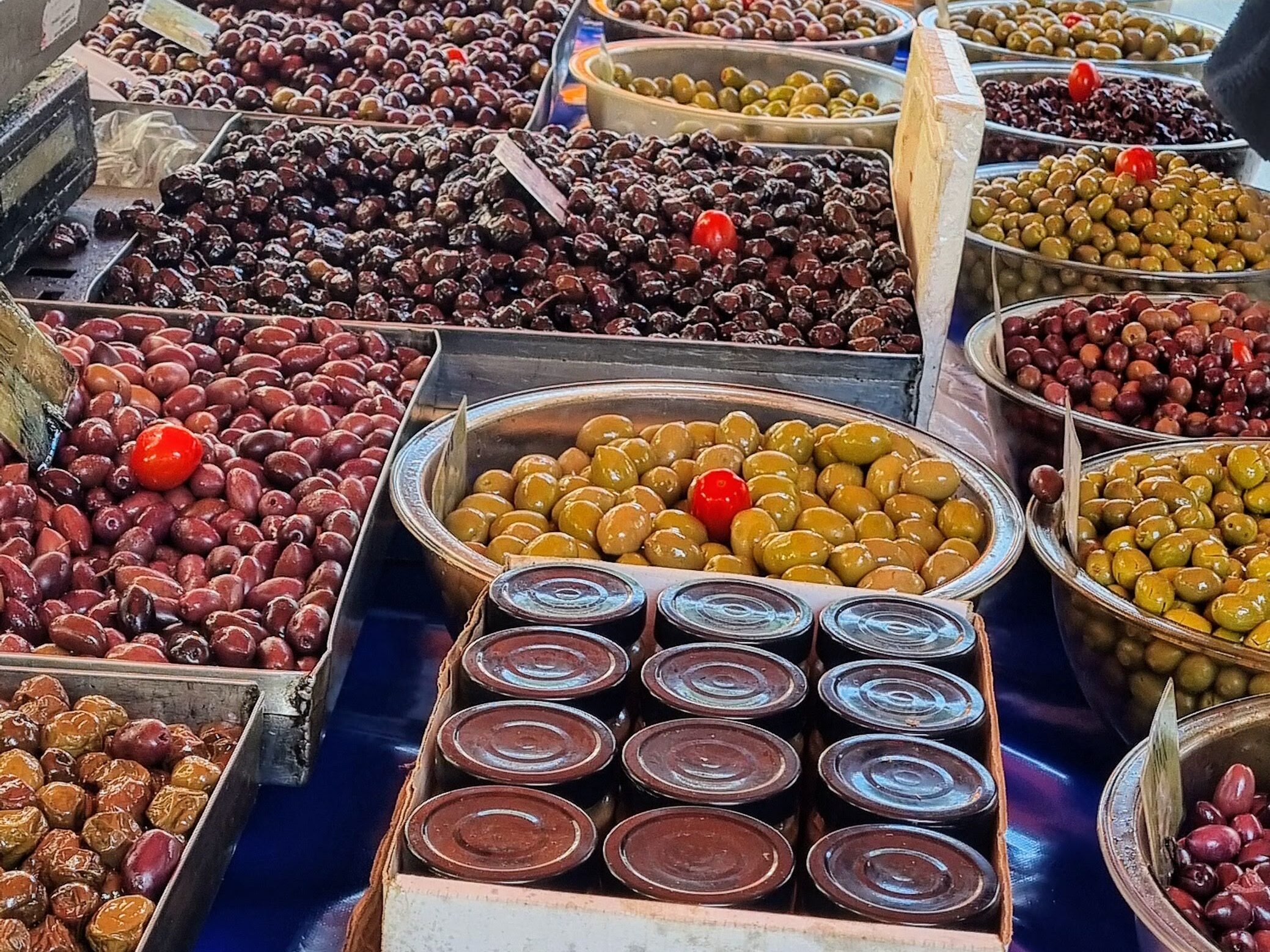
In addition to buying olive oil, tourists are keen to choose from dozens of types of marinated olives, and often buy kitchen utensils or bowls made of hard, durable but very decorative olive wood.
Being an animal lover and a fan of Crete, I thought I had the perfect topic for a blog post.
However, exploring the topic turned out to be not entirely satisfactory, and the material I gathered was rather sparse. Well, Crete, being an island, is by definition practically devoid of predators, boasts a small number of mammals, and, in addition, human activity has decimated and limited the local fauna. Unfortunately, though once upon a time even small elephants lived there, now if someone spots a WILD animal in the wilderness or in a ravine, it immediately becomes an event, as if it were a great animal migration in Tanzania.
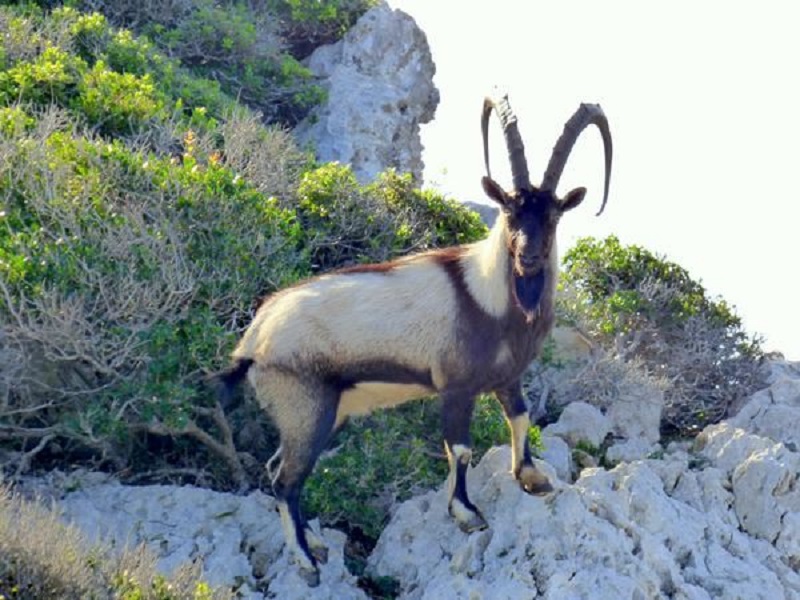
photo credit villaterracreta.com
But to the point, what can lucky and observant travellers hope to see? The most talked about animal is the wild and shy Cretan kri-kri goat (also known as agrimi), of which there are about 2,500 left. These goats are famous for their acrobatic agility, which allows them to stay on almost vertical rocky cliffs or outcrops. The males with long, twisted horns look particularly impressive. Currently, these animals can be found in the gorges of Samaria, Agia Irini or Tripiti and their wild surroundings. In an attempt to prevent the kri-kri from interbreeding with domestic goats (which were very eager to diversify their genetic makeup), many of them were transported to two uninhabited islands near Crete, Dia and Theodorou, but apparently they did not like the conditions there.
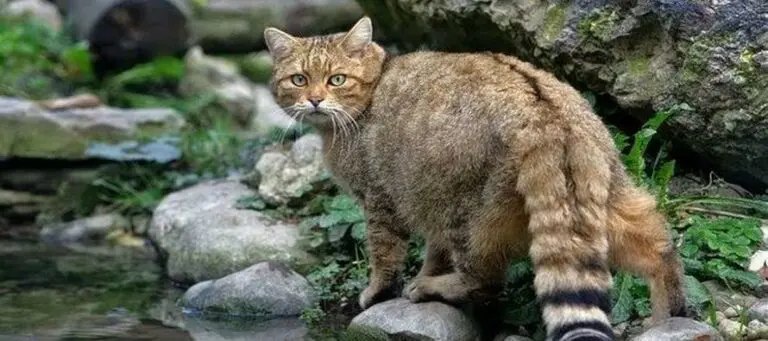
My dream would be to encounter the elusive and extremely rare Cretan wildcat (fourogatos). In all likelihood, there are only a few left on the island; in 2016, one individual was seen on the Lasithi plateau. These cats are larger than domestic cats and have thick fur covered with a distinctive pattern.
In addition to the animals mentioned above, there are many smaller mammals living on the island. We may encounter hedgehogs, rabbits, badgers, weasels, shrews, rats and bats. Interestingly, there are no foxes in Crete and therefore no problem with rabies.
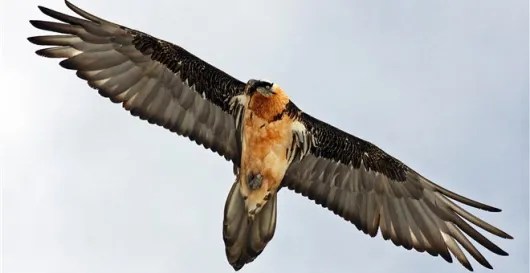
Birds are also moderately represented, despite the fact that Crete lies on the migration route to Africa for many species, providing them with a convenient stopover on their long journey. In the mountains, look out for the impressive griffon vultures circling in search of food. The island is also home to golden eagles, bearded vultures, falcons and owls. Smaller but particularly beautifully coloured birds are represented by bee-eaters.
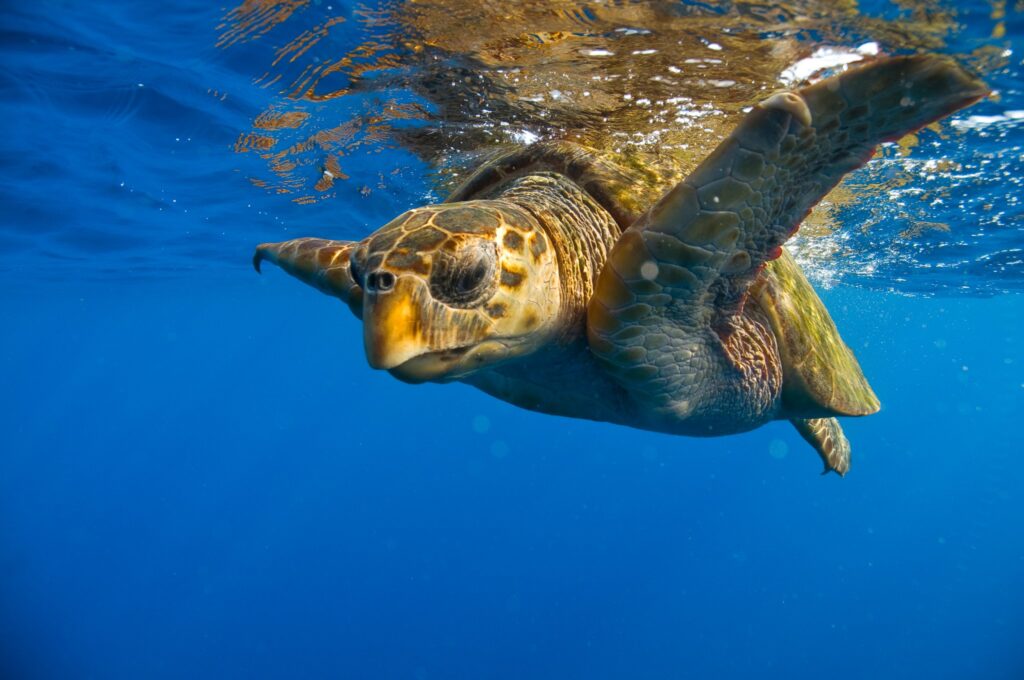
Among the reptiles, the magnificent Caretta turtles, which can measure 120-130 cm and weigh up to 160 kg, are sure to attract attention! These are sea turtles that come out of the sea 2-3 times a year to lay their eggs on the beach. They prepare a nesting site for about 100 eggs, each the size of a tennis ball, by digging a hole 50-100 cm deep. After laying their eggs, they carefully bury the hole and return to the sea.
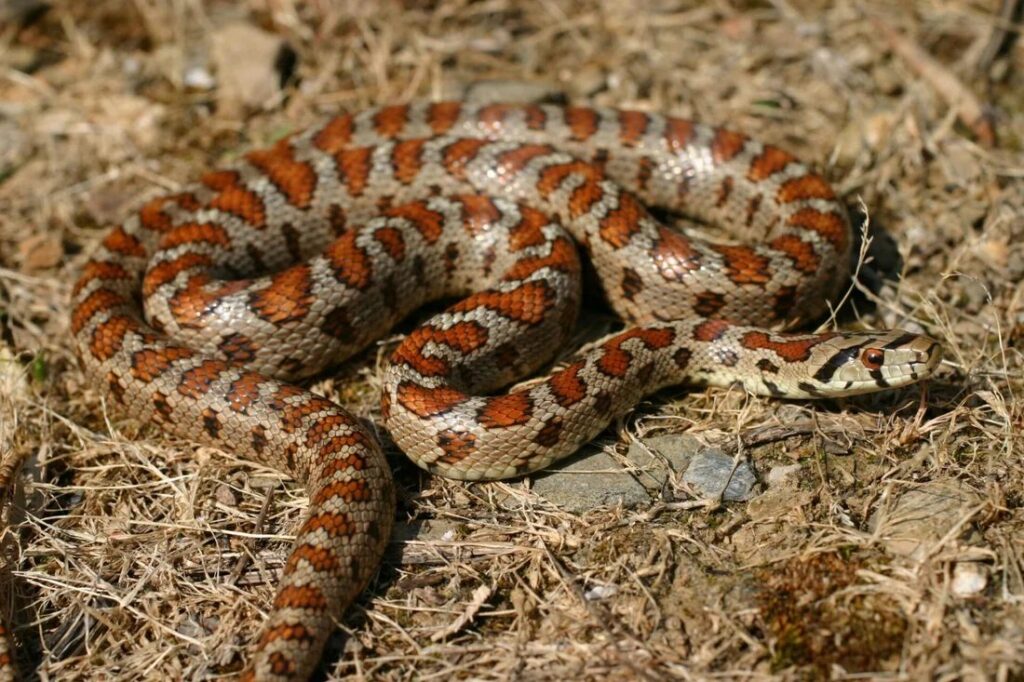
Apart from turtles, Crete is home to several species of small geckos and lizards (only the Podarcis cretensis, or Cretan wall lizard, is endemic) and four species of completely harmless snakes, of which the leopard snake is particularly striking in appearance.
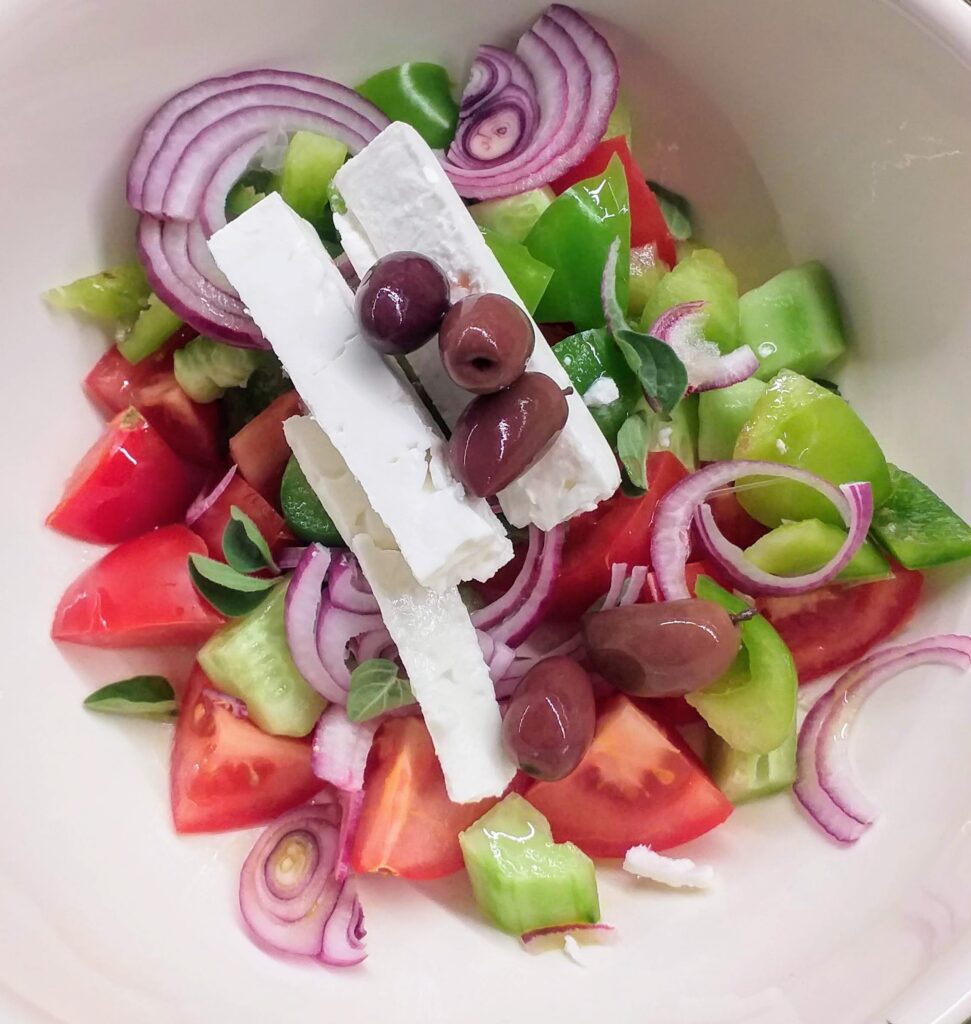
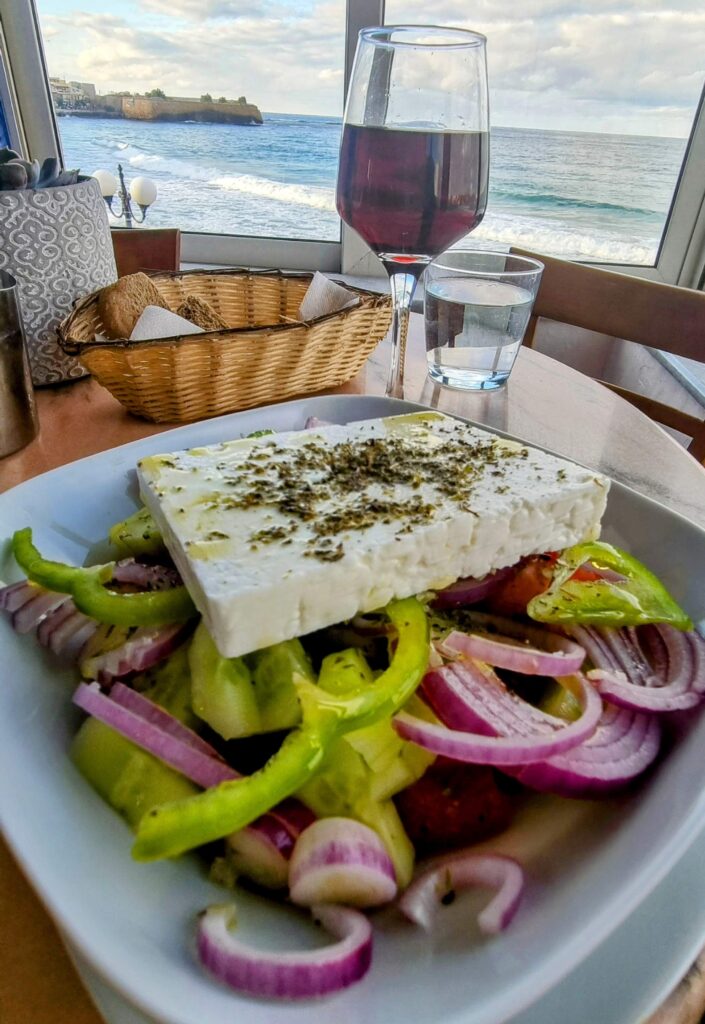
Khoriatki salata (Χωριάτικη σαλάτα) is one of the most classic Greek dishes. The ingredients of this salad, brilliant in its simplicity (rural in its name), are always the same in Greece, small variations are allowed. But really small ones, and I will defend this conviction like King Leonidas – Thermopylae.
TRight side photo taken at a lovely Demek, Koum Kapi, Chania
Well, the bowl should contain ripe tomatoes, cucumbers, red onions, which are juicy and sweet in the south, peppers (but green, green!), all chopped thickly and drizzled generously with the best quality olive oil. A thick slice of feta cheese is placed on top and sprinkled with Greek oregano. Often you’ll also find black olives, white wine vinegar for a little acidity, and a little salt, although in my opinion good feta is salty enough. It is standard to serve bread with choriatiki, usually unsophisticated but good enough to soak up the remaining juice at the bottom of the bowl.
There is nothing better in hot weather, when the crisp and cool vegetables release their juices and flavours with every bite, the friendly human bustle echoes in the background and the air smells of sun, herbs, sea and freedom.
It takes a lifetime for someone to discover Greece, but it only takes an instant to fall in love with her – Henry Miller.
About
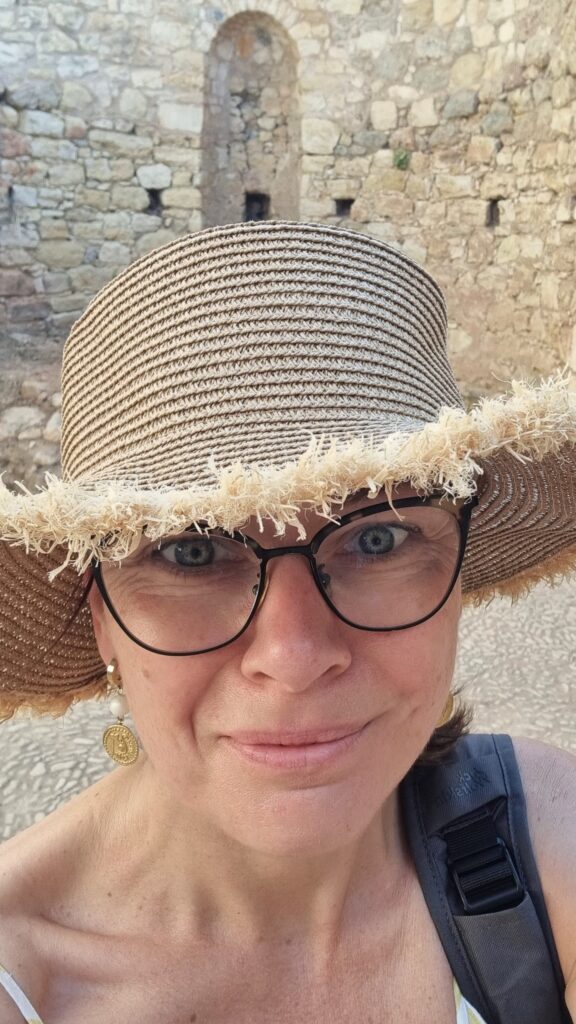
My name is Marta, a Pole with Greece in heart. I am also a living proof that longlife dreams can come true. I always dreamt of having my place in beloved Greece and now here it is! And not just anywhere, but in the most wonderful city, steeped in the culture of ancient Greece, the Venetian Republic and the Ottoman Empire, my dream city of Chania, Crete.
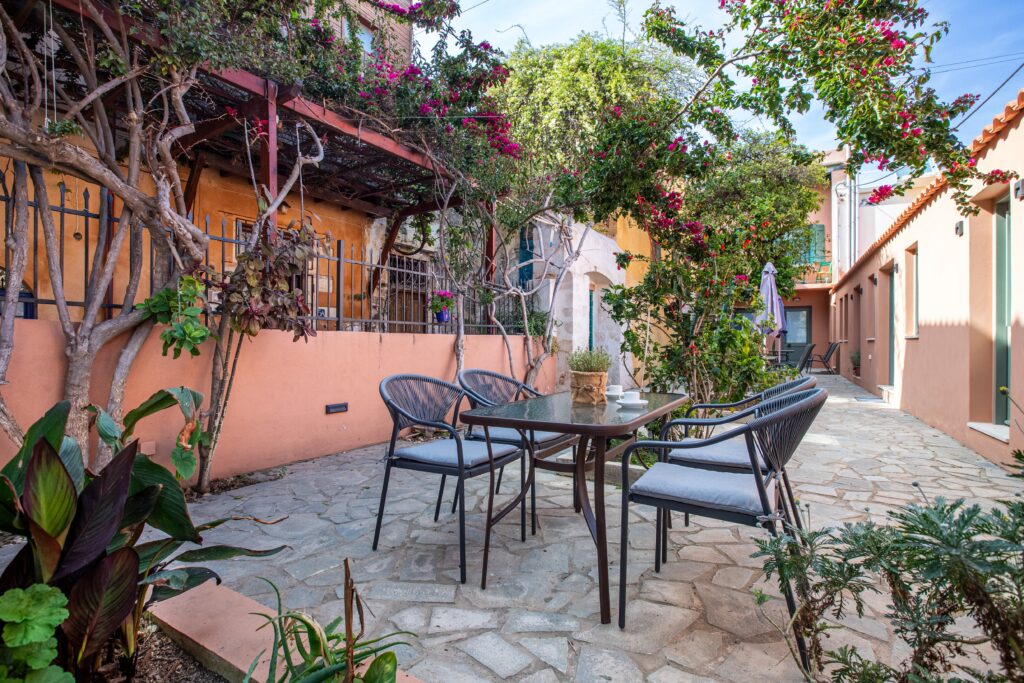
This blog aims at promoting Crete, Chania but also our home there- Thimari Gardens - which is seasonally rented out. More information about the apartment is available when you press the tab above named Thimari Gardens.
If you wish to ask about our rental offer, send an email at thimarigardens@gmail.com