First, let’s determine when winter begins and ends in Crete.
Plouti, central CretePloutiChania to MiliaTabakaria, Chania
According to the calendar, one could say that it begins on 22 December, but that is not entirely true. Winter begins when the crowds of tourists stop coming, that’s all. In Crete, this means the beginning or, at the latest, the middle of November. By the same token, spring begins in early March, although here the calendar loses out to the logic of the nature of the Mediterranean climate.
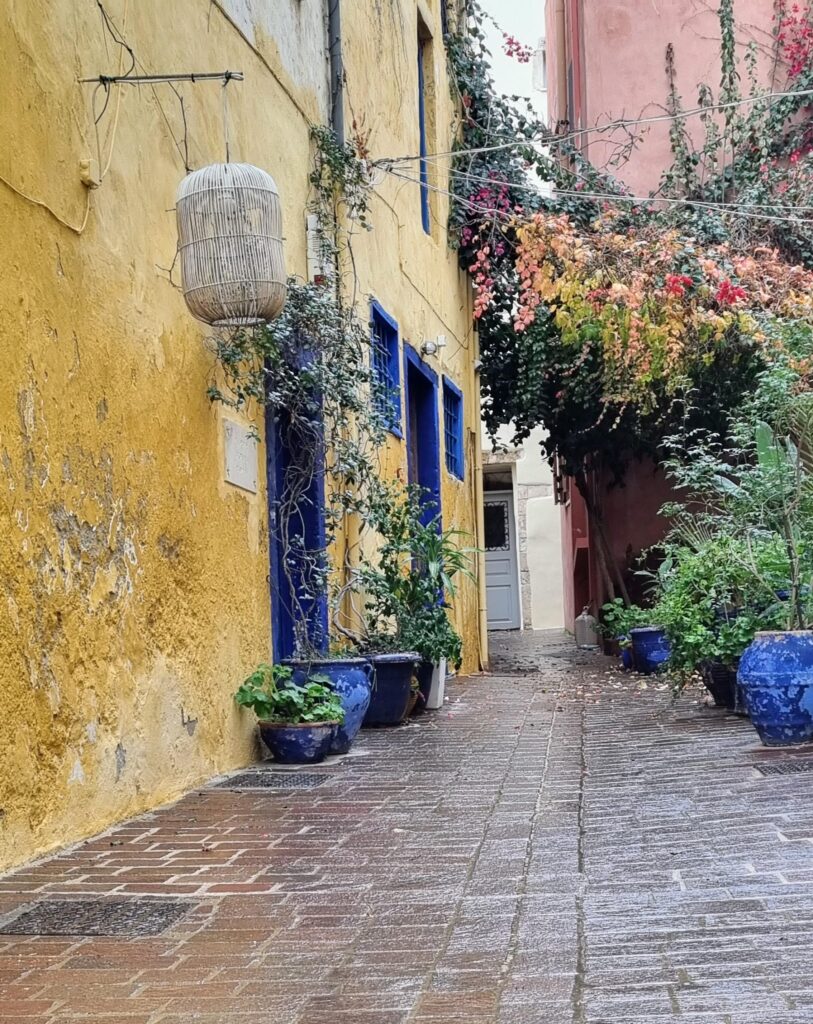
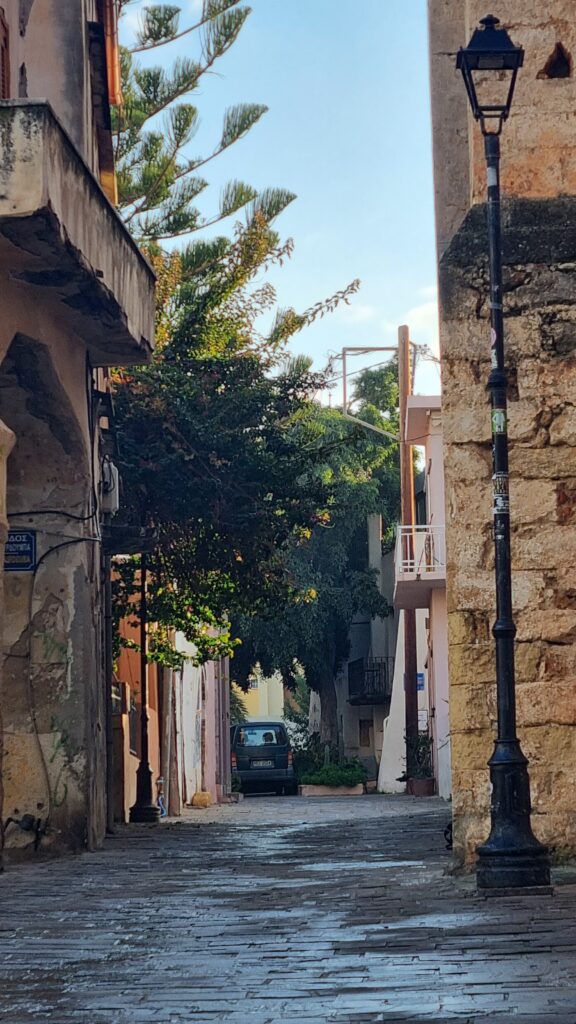
Hiking trail near MiliaOld town, ChaniaApproaching Thimari GardensFrangokastelloNot far from Xerokampos
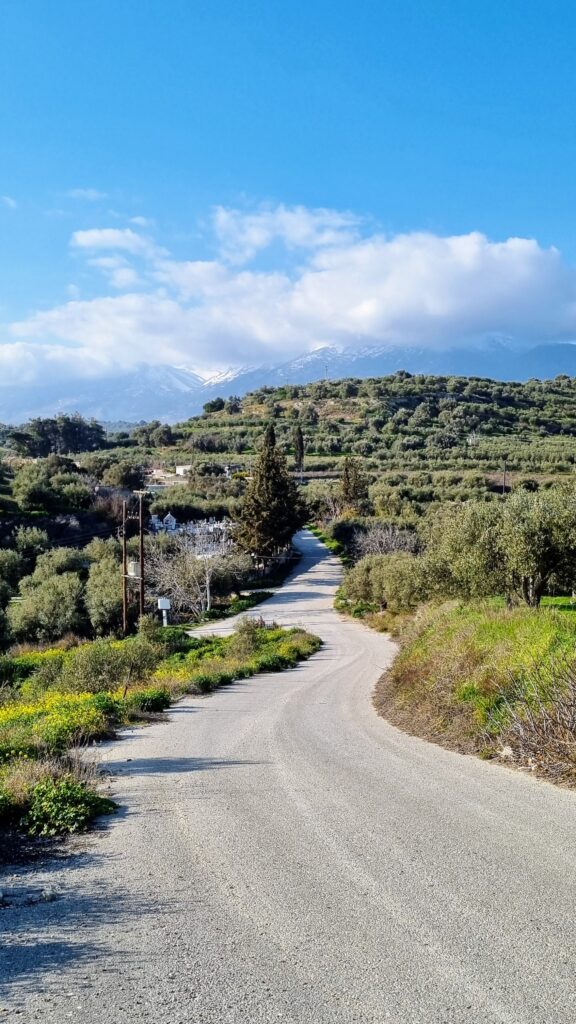
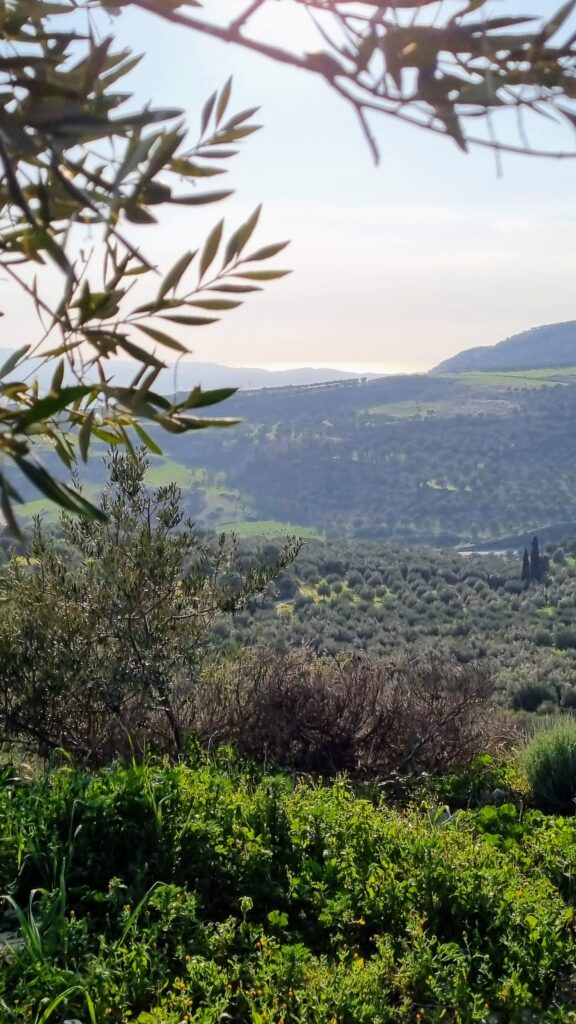
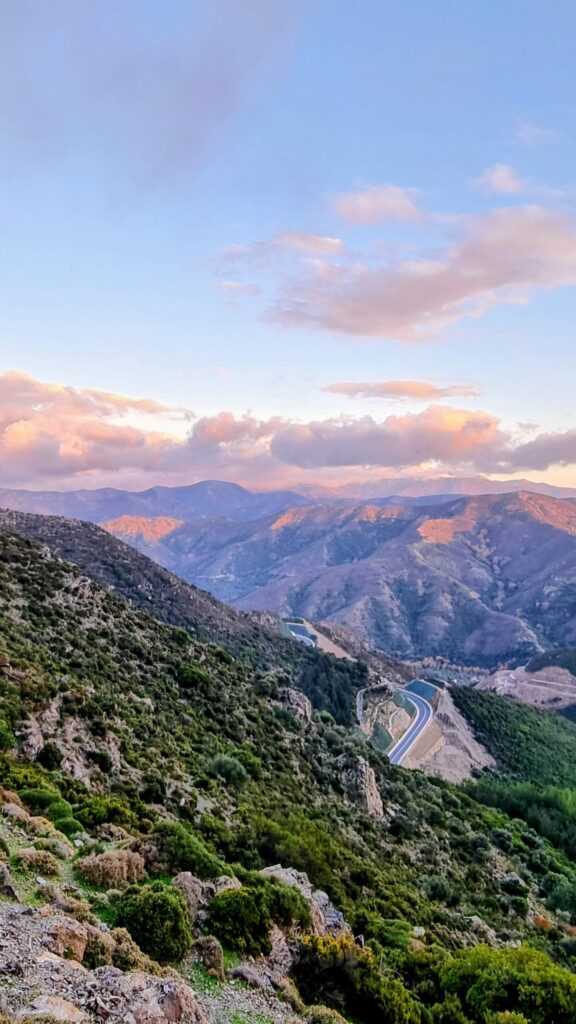
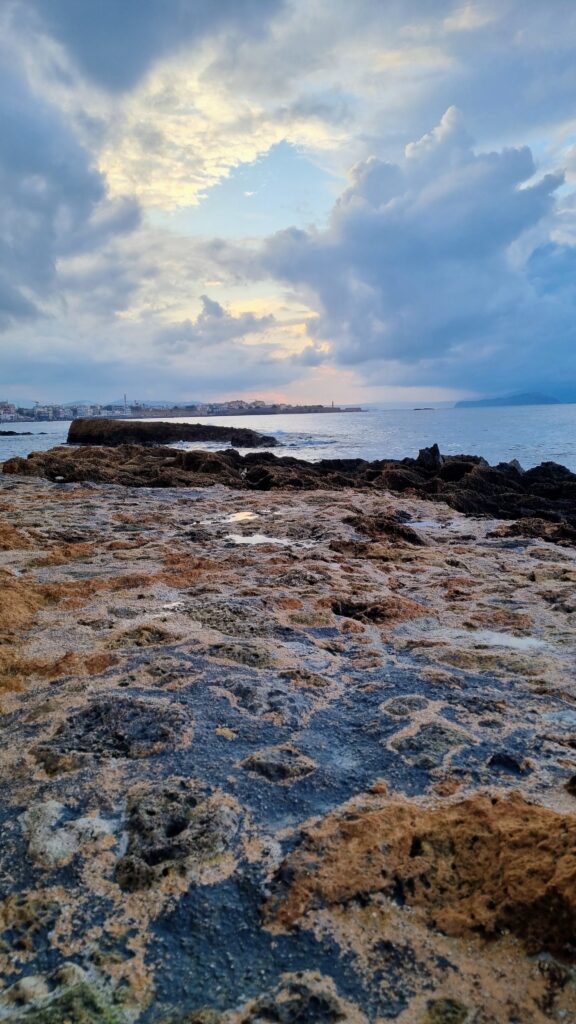
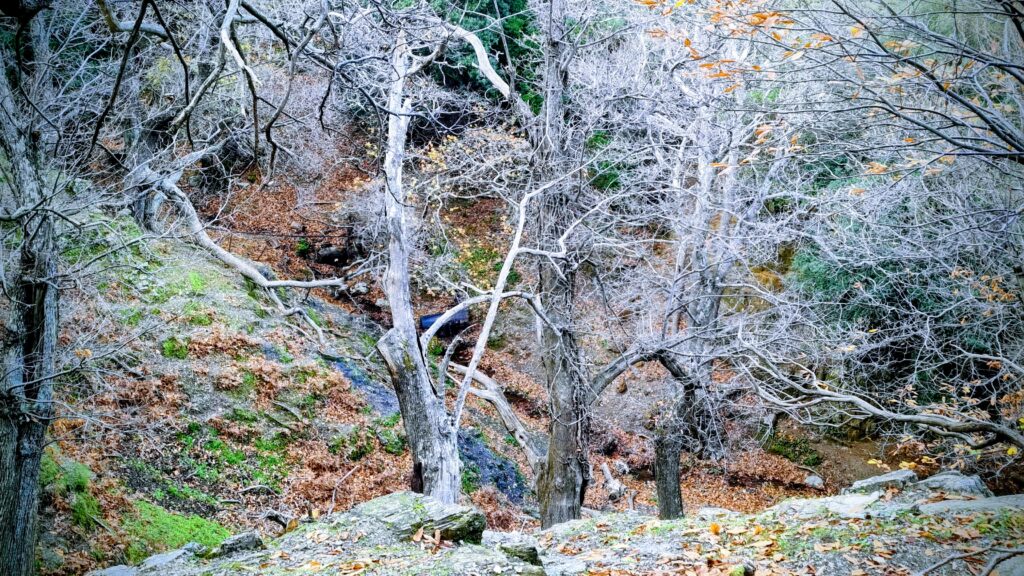
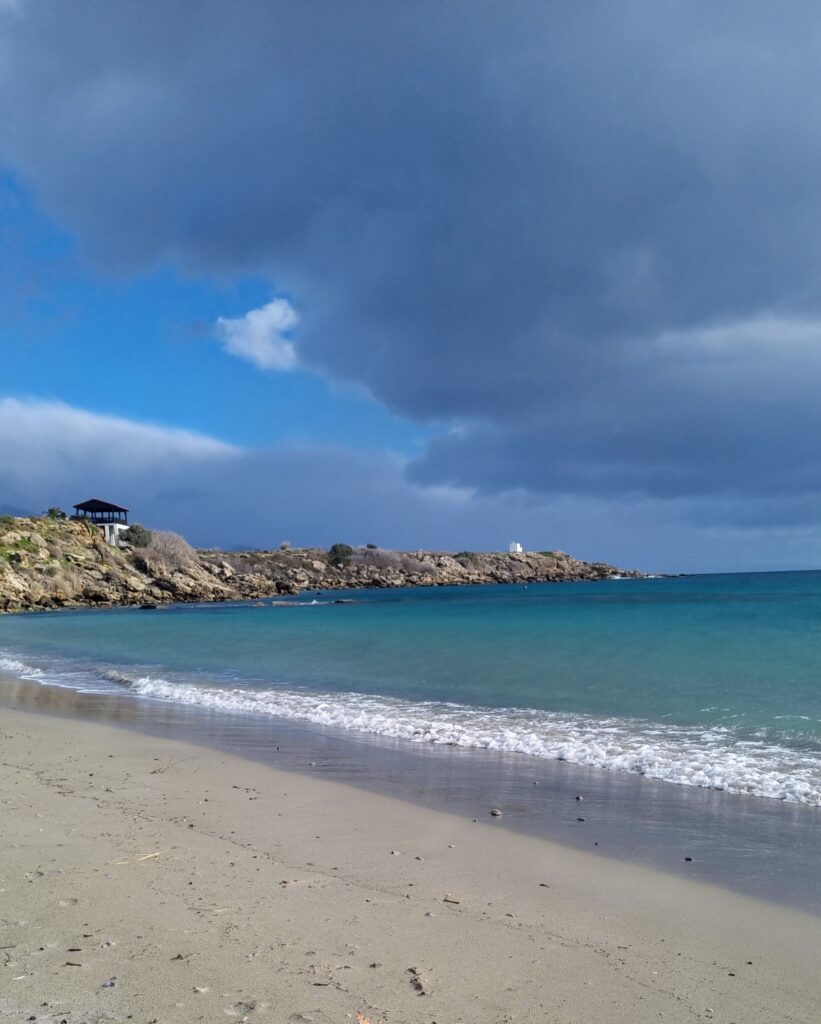
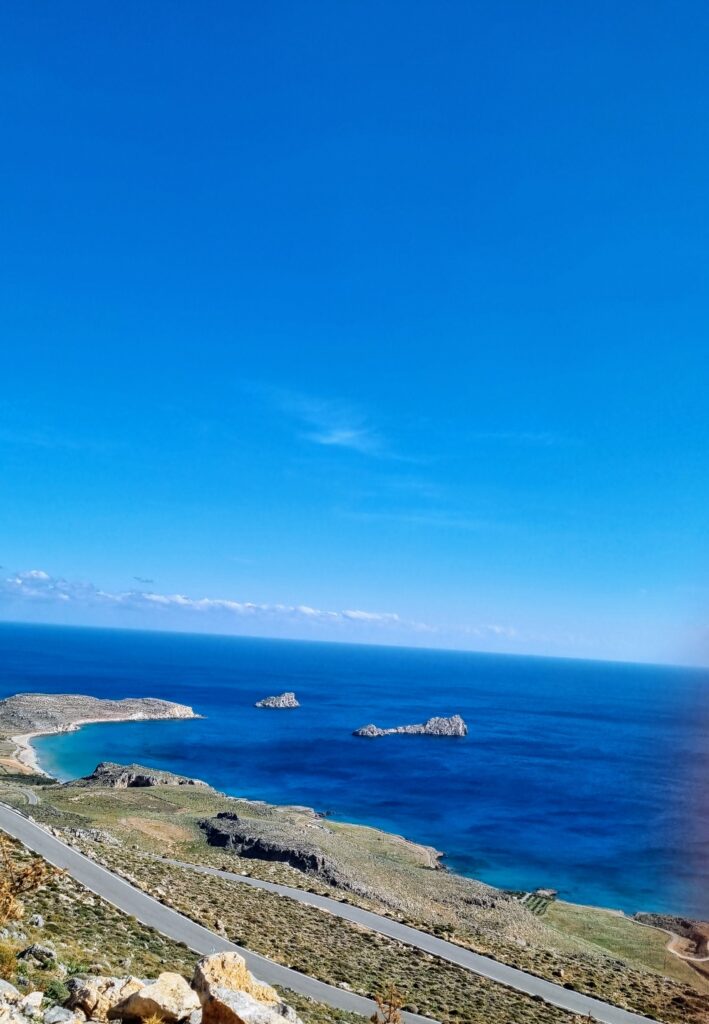
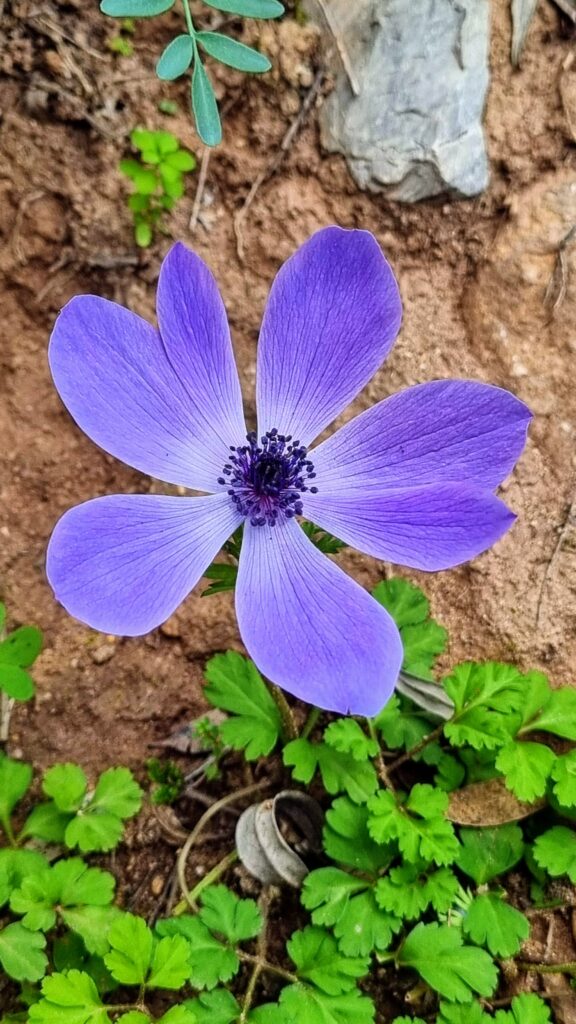
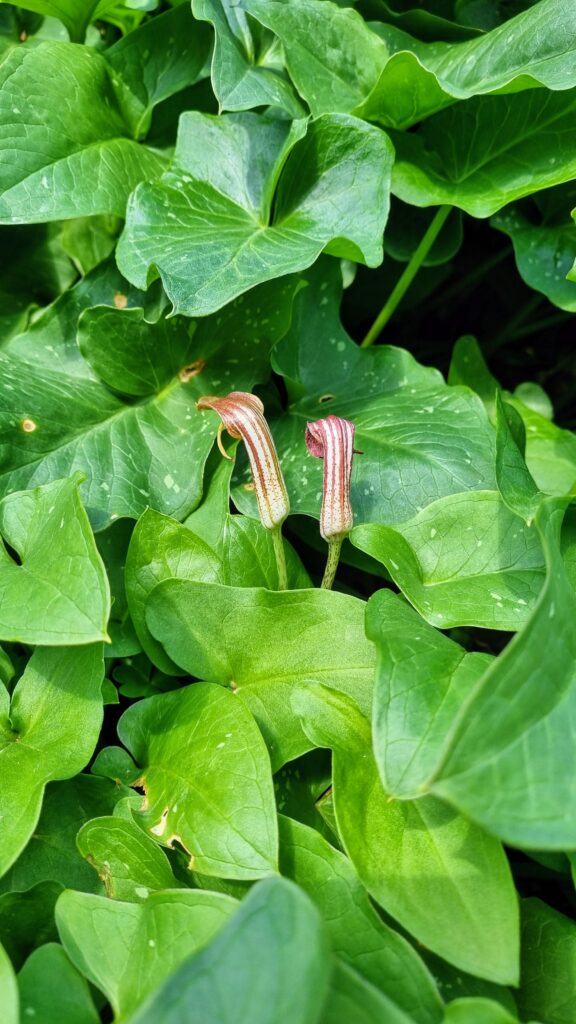
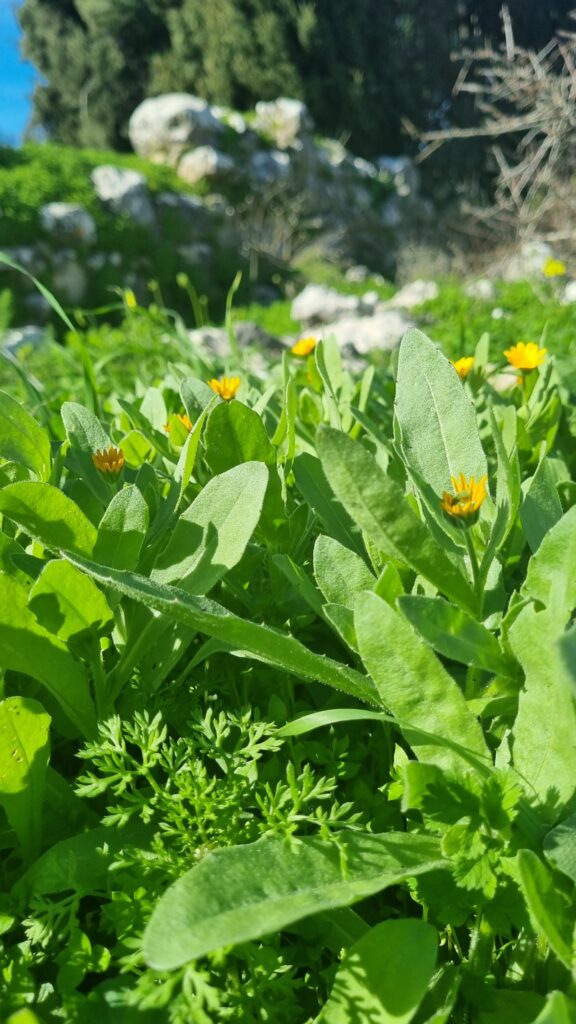
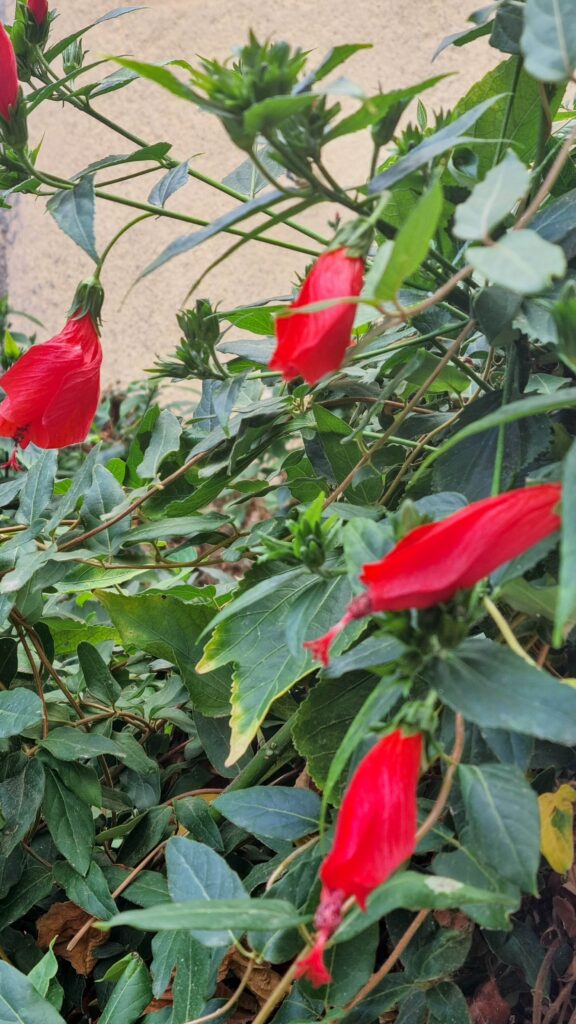
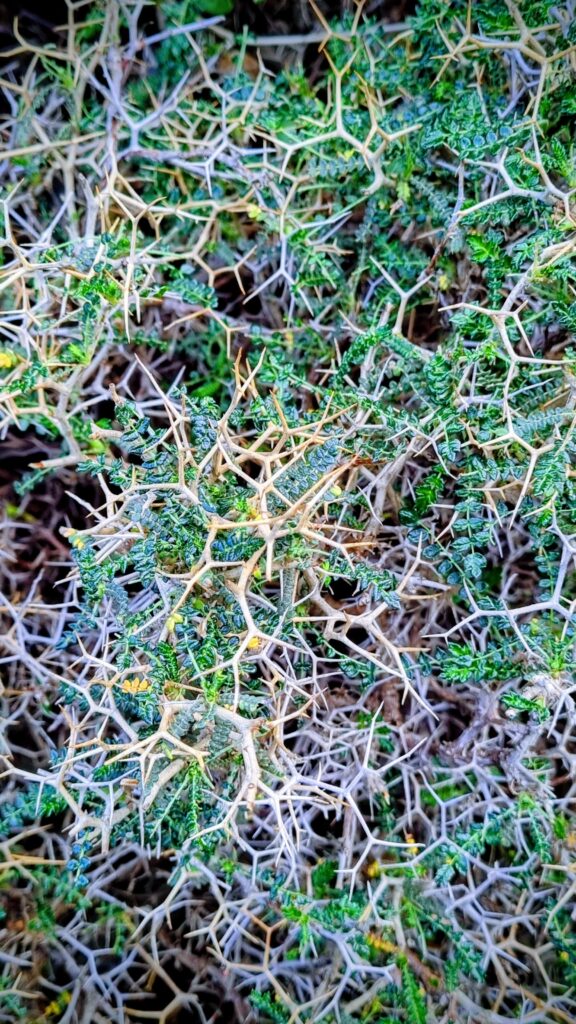
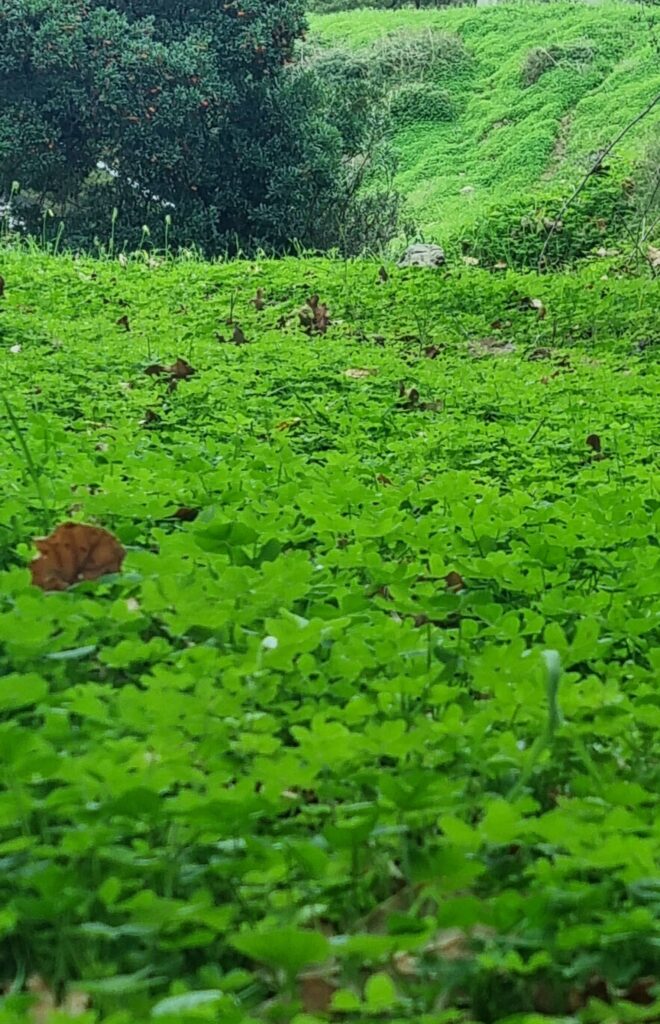
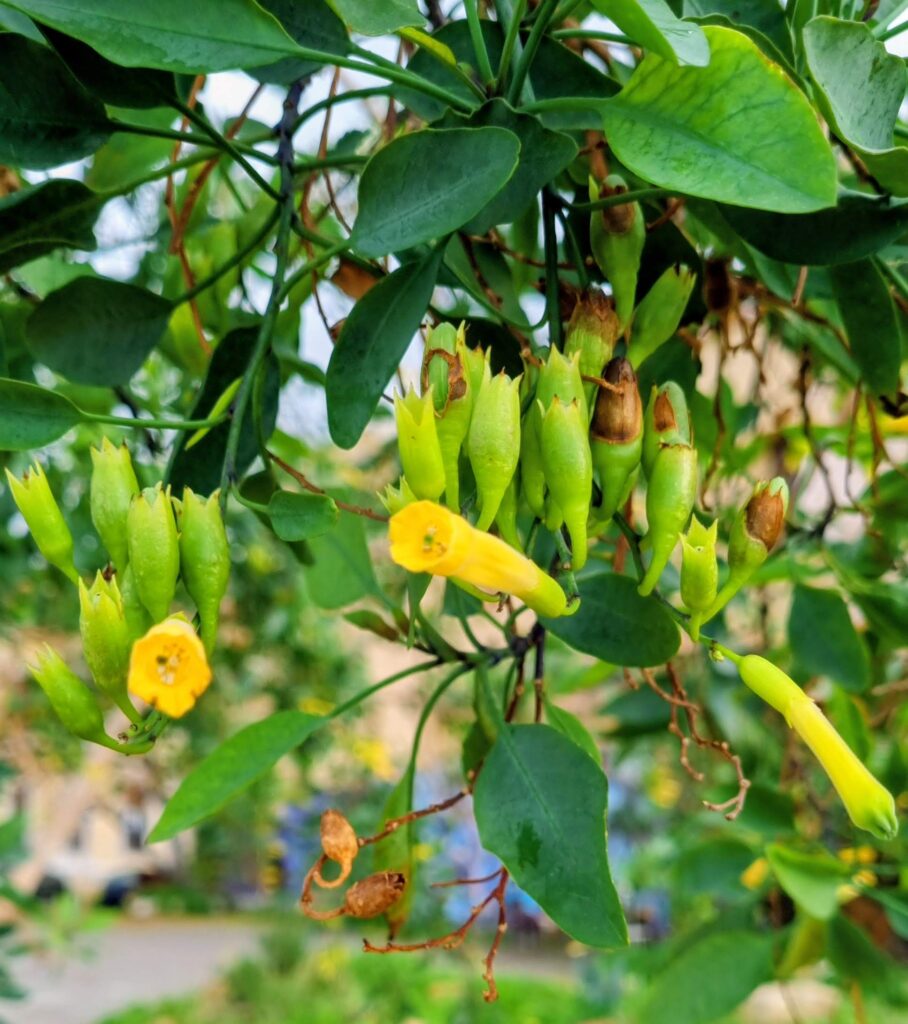
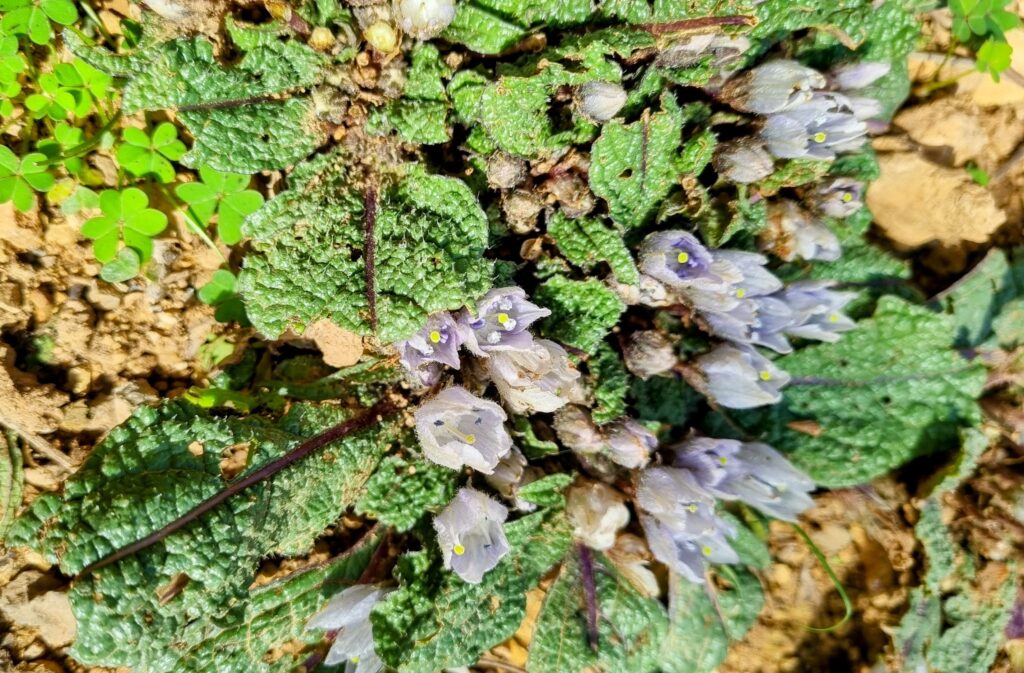
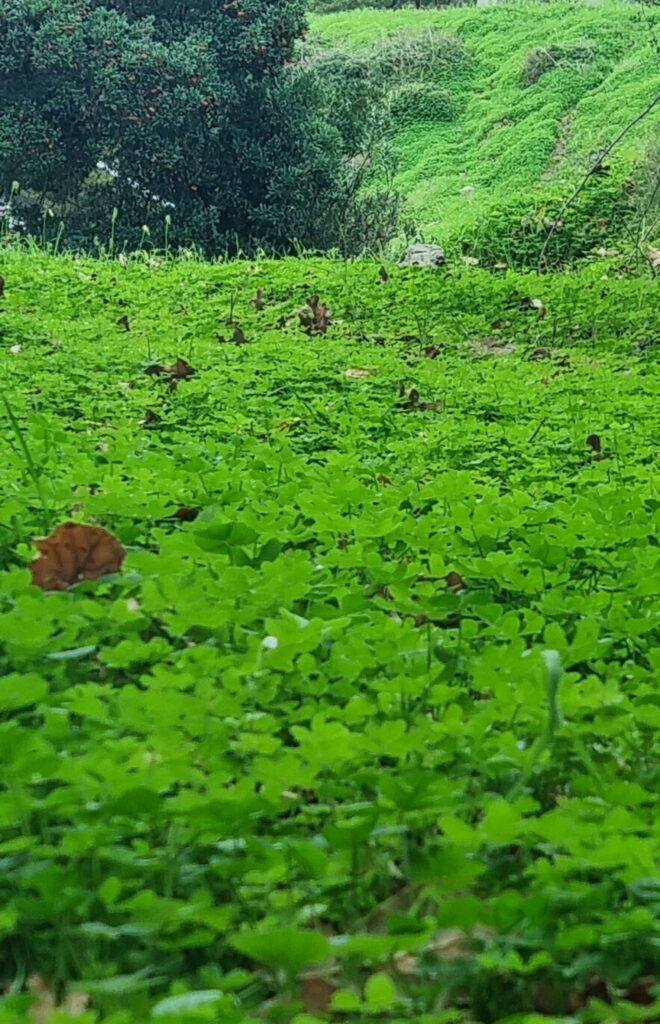
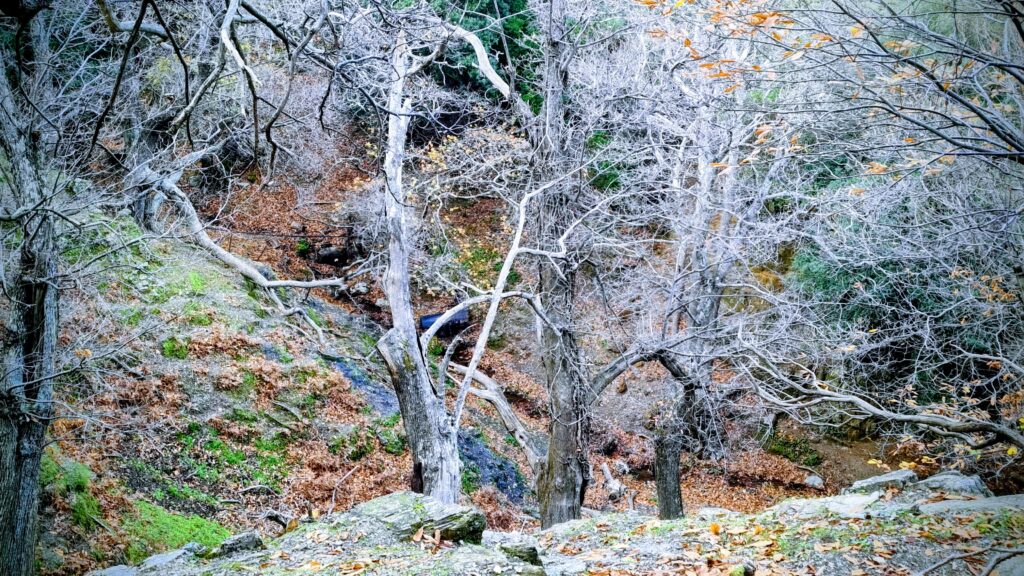
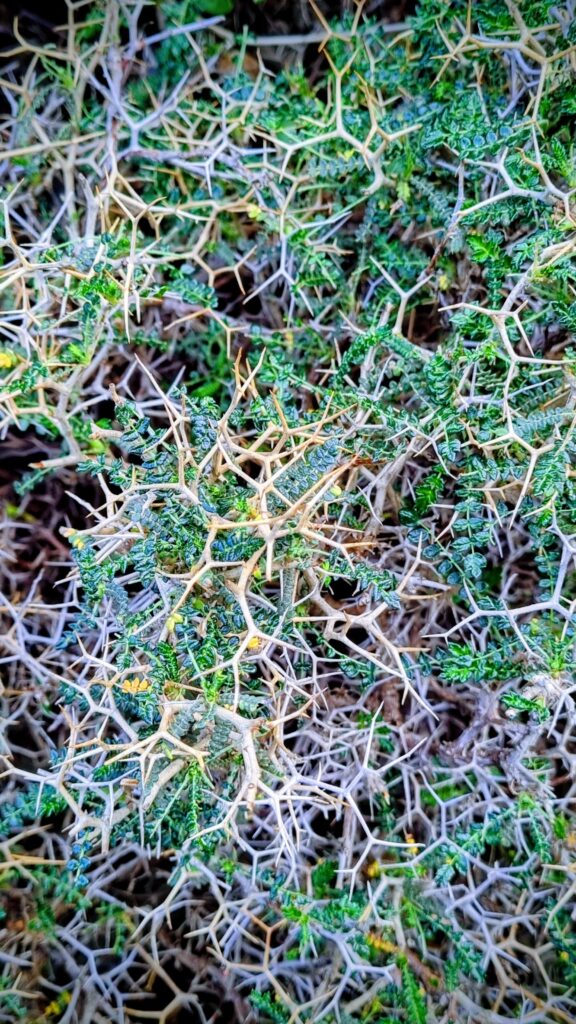
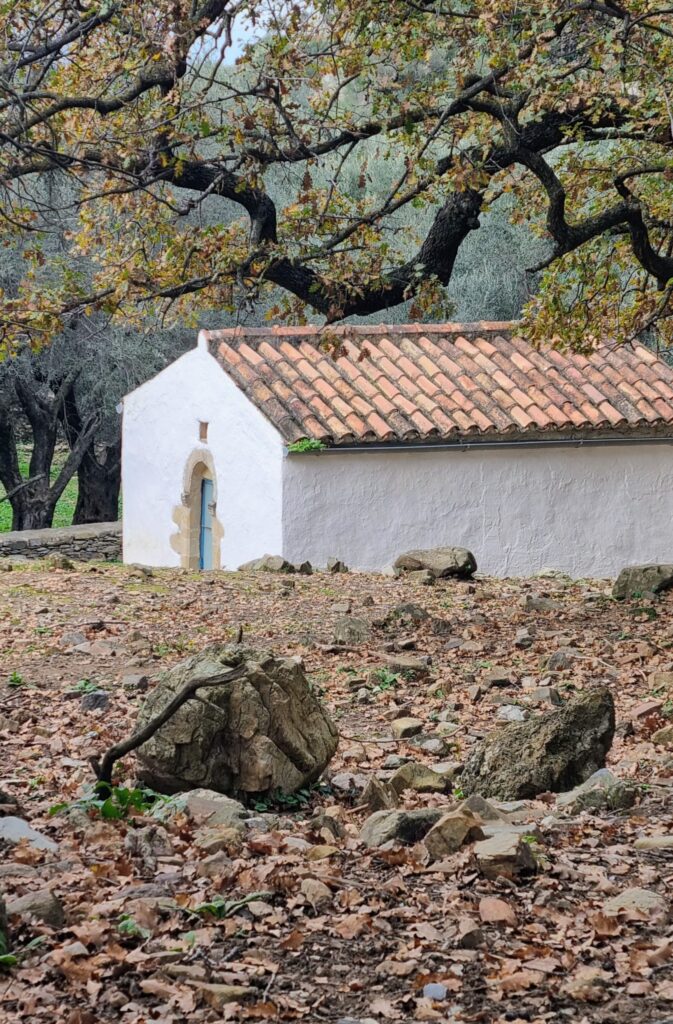
Winter, or the low season, is a time of calm, peace and respite for the people on the island, but also a time of rushing clouds interspersed with the dazzling blue of the sky; turquoise sea by the calm coves, but also waves crashing onto pavements and piers. On the one hand, nature loses its exuberant riot of colours, becomes quieter, turns grey in places, and sepia and smoky shades appear. But on the other hand, winter rains also bring the long-awaited moisture, and where in August there were burnt herbs and brushwood underfoot, now there are green carpets. We also encounter flowers, not as spectacular or lush as in summer, but perhaps all the more sought after and appreciated.
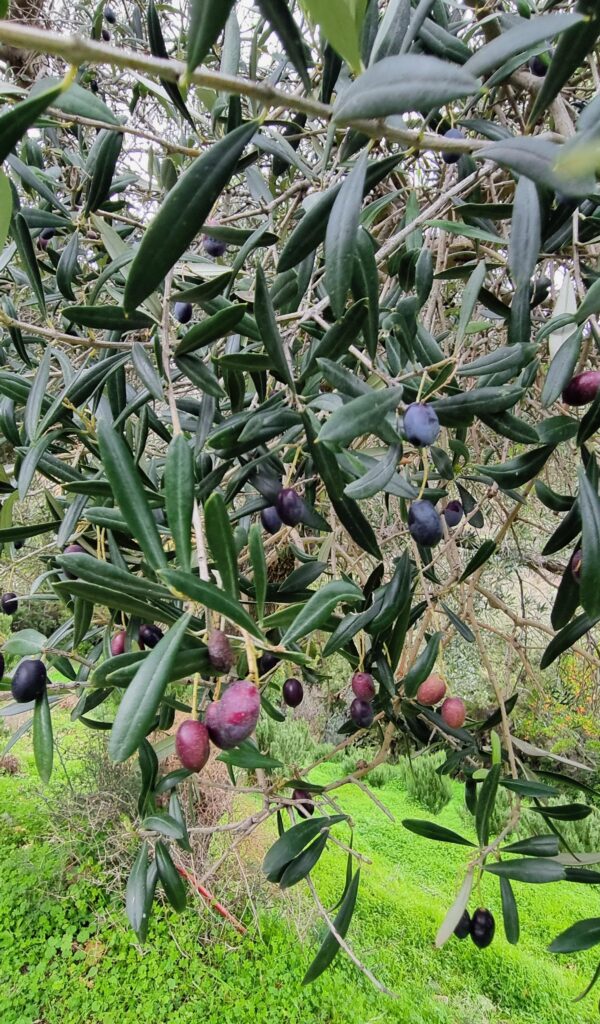
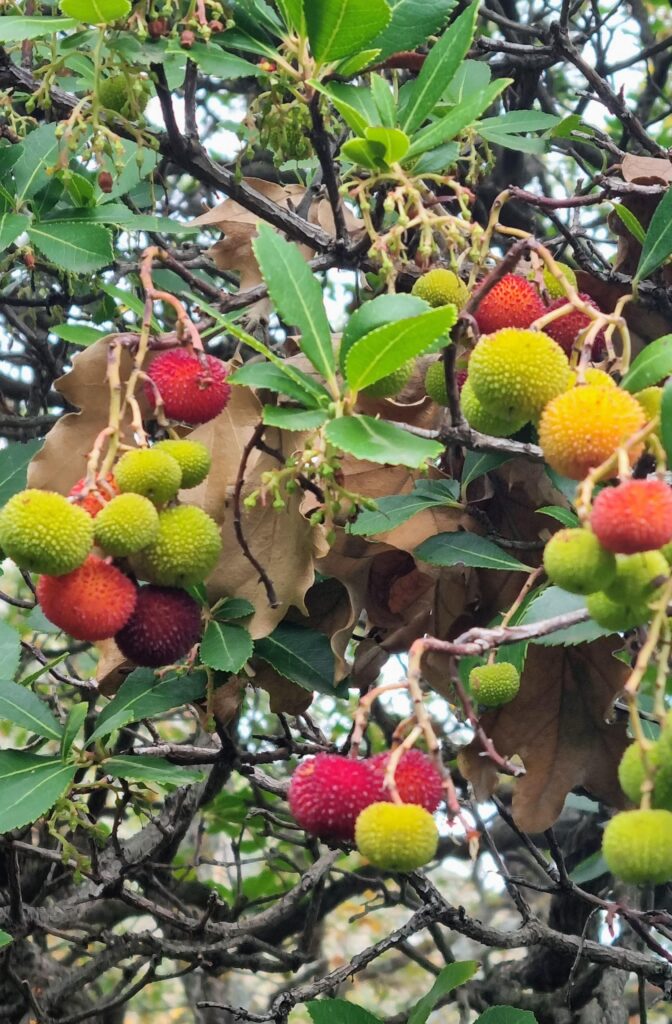
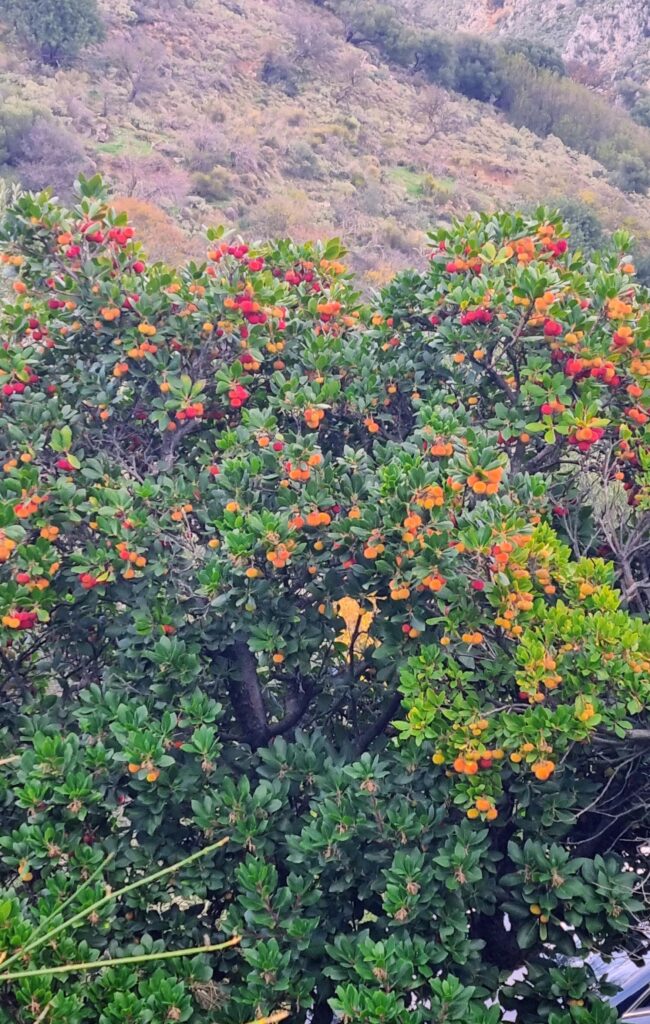
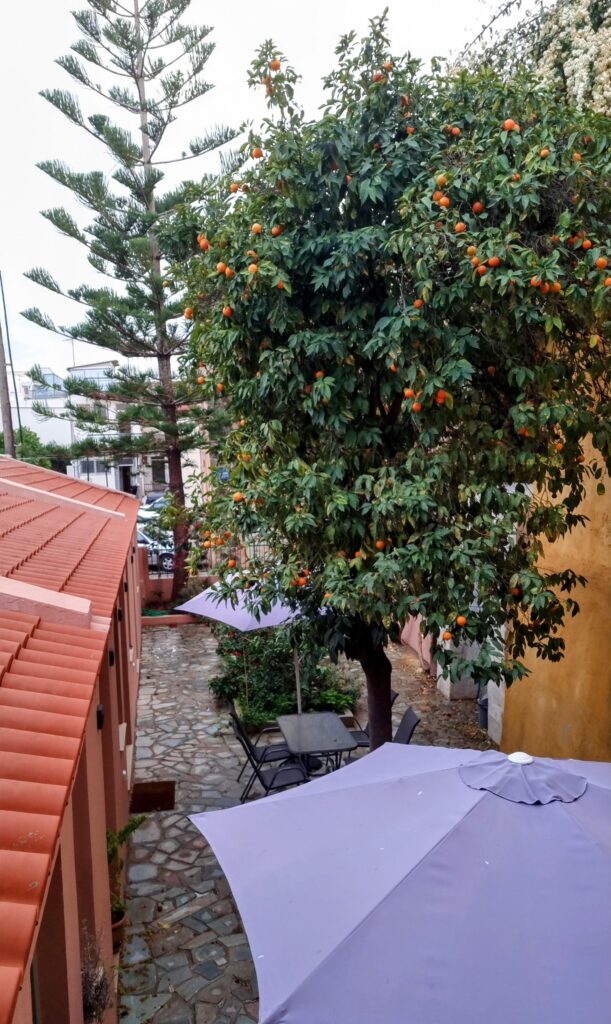
Some trees also bear fruit in winter. From November to January, olives are harvested, bitter oranges, saturated with rain and juices, bend delicate branches to the ground, and you can taste the sensually red berries from the wild strawberry tree.
Fresh olives, some ripe but inedible. Must be cured.Strawberry treeStrawberry treeBitter orange tree, viewed from Thimari Gardens
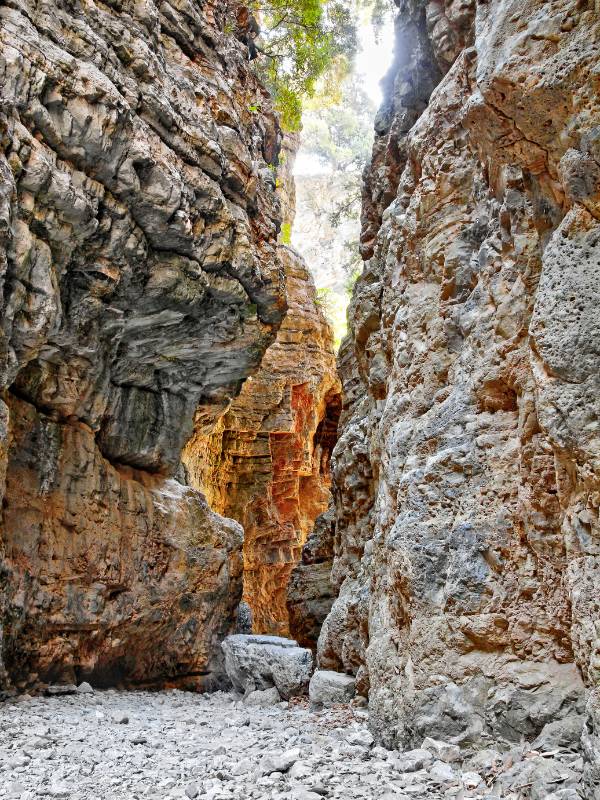
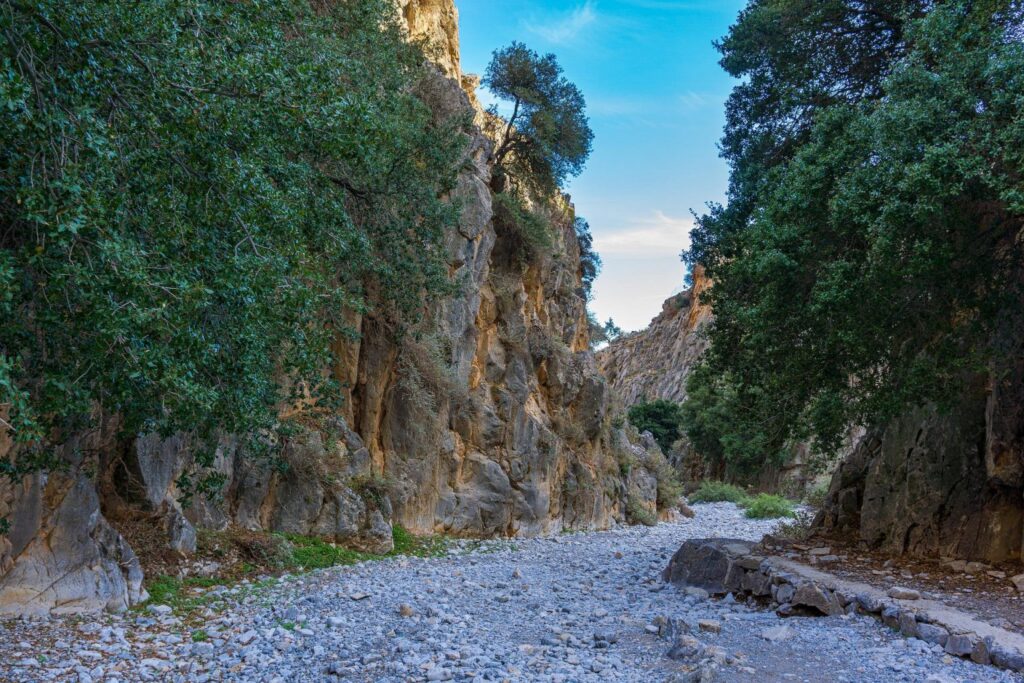
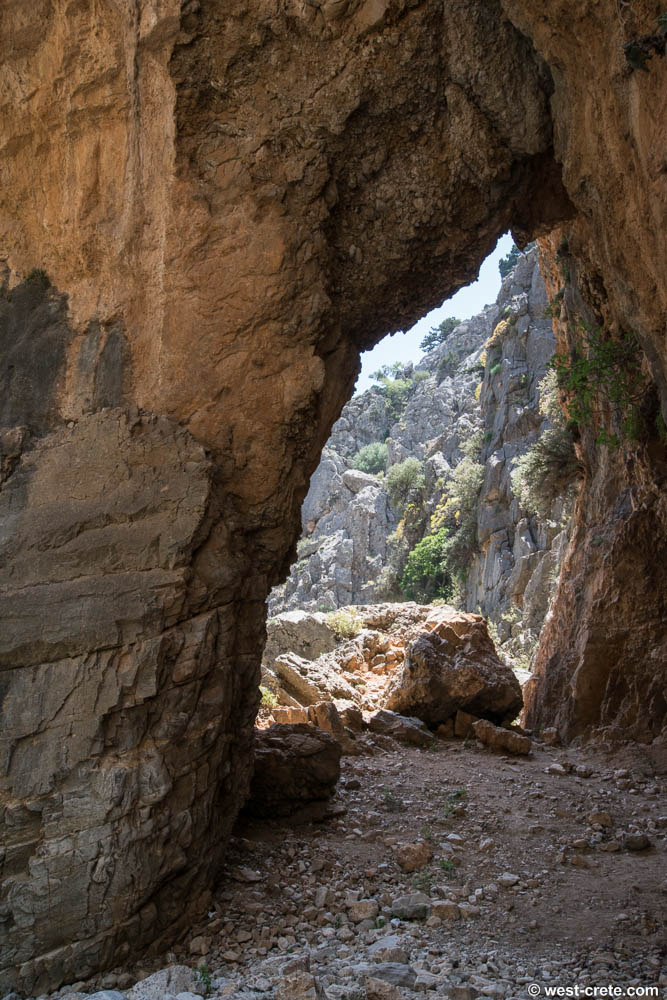
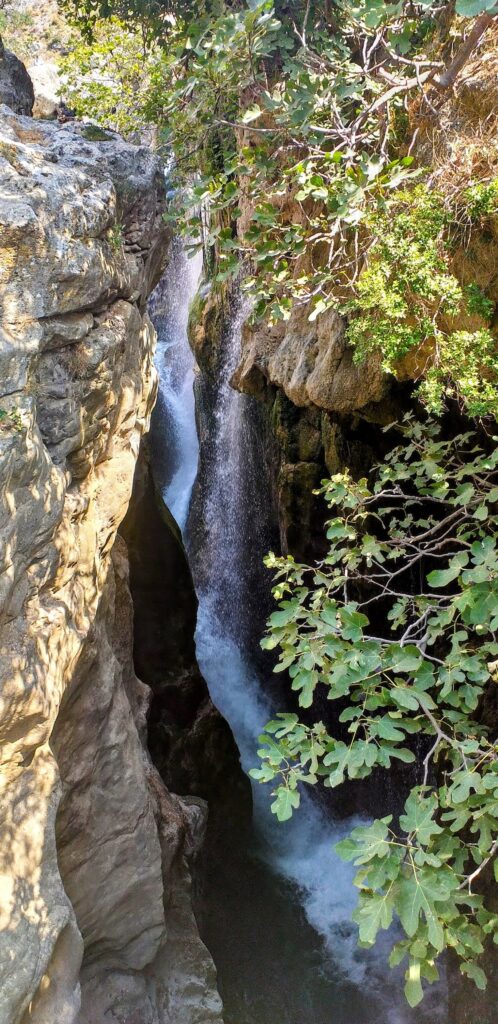
If I had to choose an inviting gorge to start with, one that is not too demanding, not too long, offers plenty of excitement and is not too far from Chania, it would be Imbros Gorge.
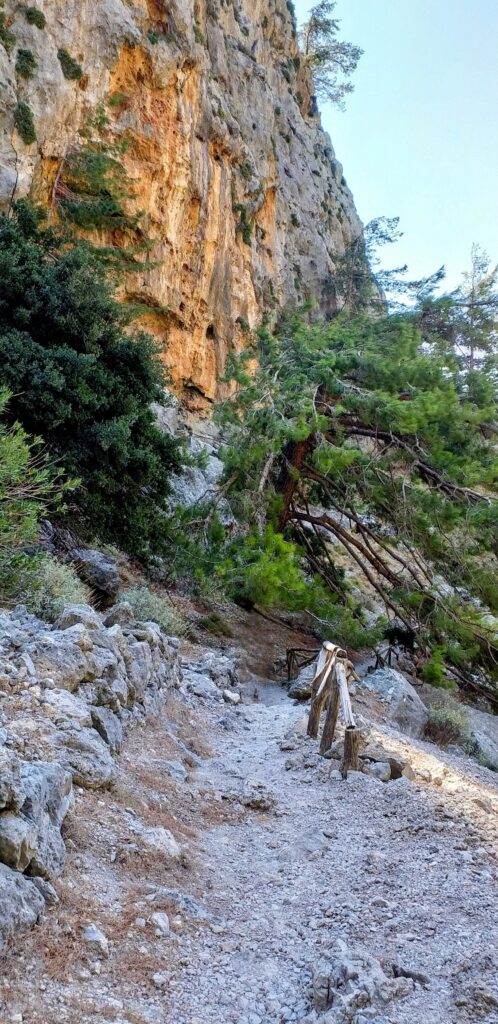
The gorge (Greek: Φαράγγι Ίμπρου, Faragi Imbrou) is an 11 km long canyon located near Hora Sfakion in southern Crete. It runs parallel to Samariá Gorge, its narrowest part is 1.60 m wide and it ends at the village of Kommitádes (8 km/ 650 m for hiking).
It is a historical fact that The Imbros Gorge was used for the retreat of allied troops during the end of Operation Merkur (20th May 1941 – 1st June 1941). Between 28th and 31st May 1941, allied troops were evacuated from Chora Sfakion before heading to Egypt.
For those who reach Imbros with their own car from Chania (54 km/1h10min), they can leave it in the car park at the entrance , behind the village of Askifou, then pass the gorge and return to the car park with a taxi from Kommitádes or walk through the gorge all the way back again, as it is not so tiring. An additional attraction may be returning to the car park in the back of an open pick-up truck. It’s great fun, and the views are breathtaking.
It takes 2-3 hours to cross the gorge, it does not require climbing or wading, and the route is often shaded. You can safely go with children, both small ones in a baby carrier and older ones, 7-8 years old, they can do it. I know what I’m talking about, I’ve done both! Just do not forget your sturdy walking boots and water.
Milia is a secret known only to those in the know, but I will share it with you.
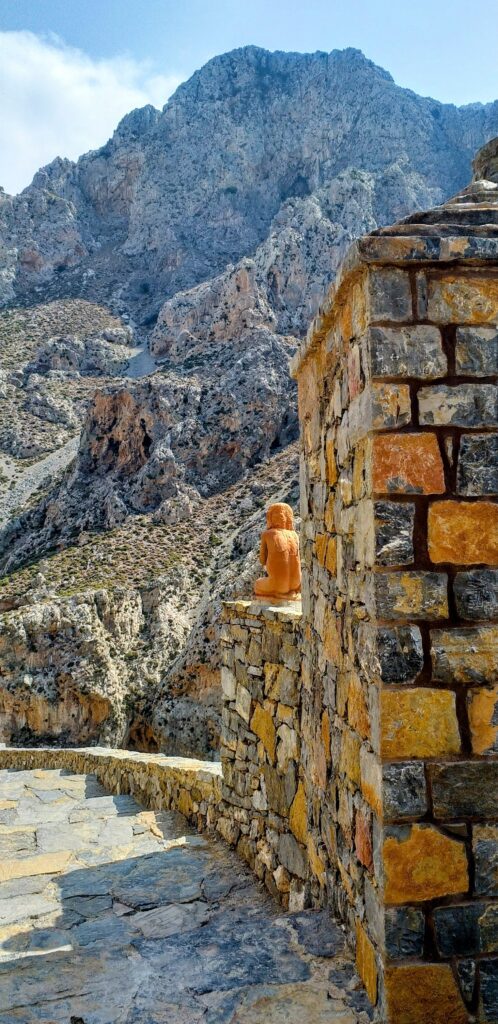
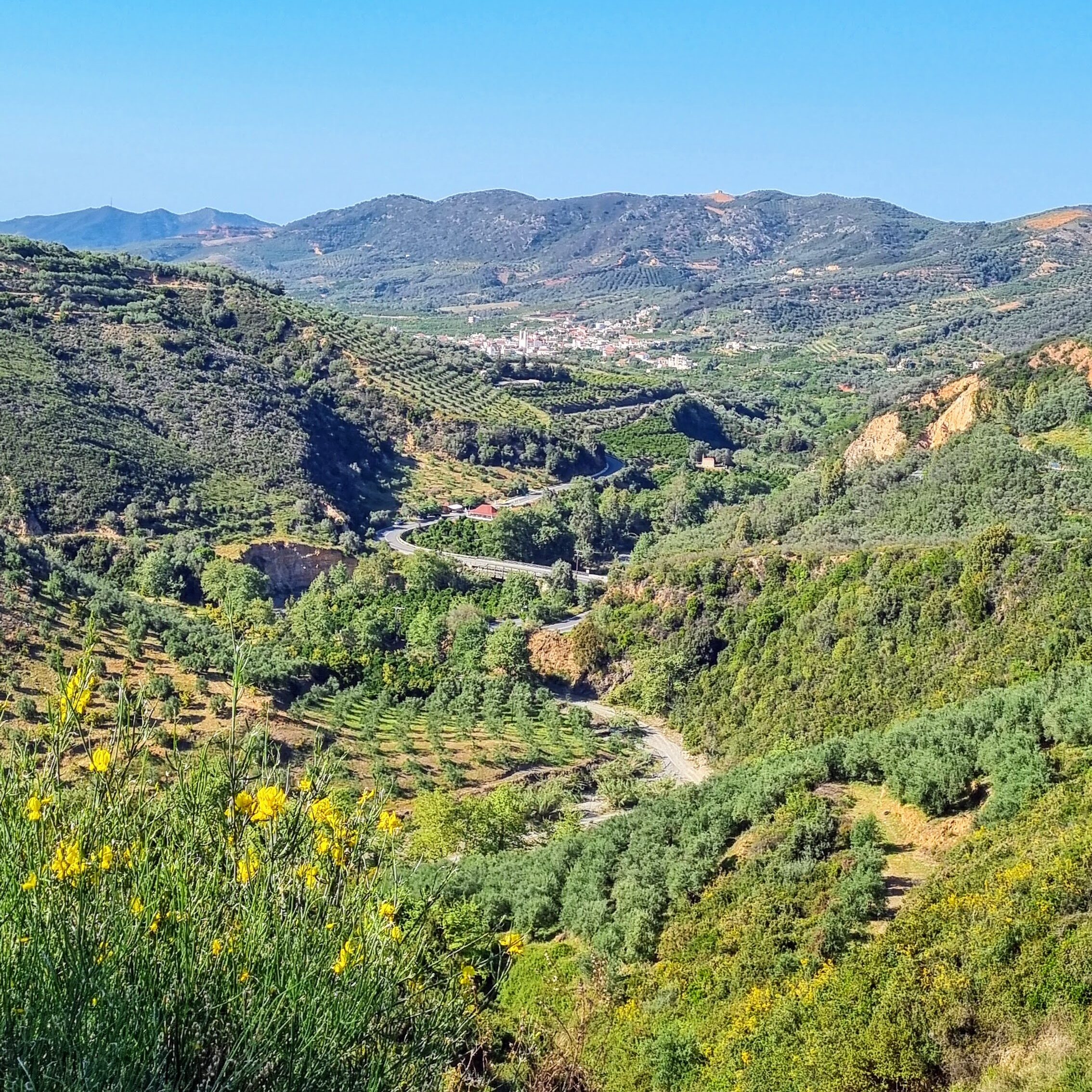
To reach this magical place, nestled between mountains and gorges, you have to drive for over an hour from Chania, and the road winds like a snake, eventually turning into a dirt track.
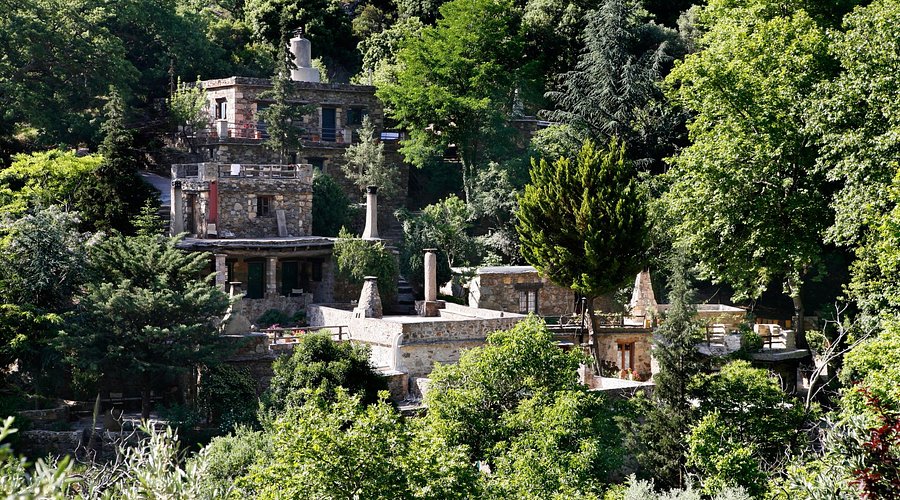
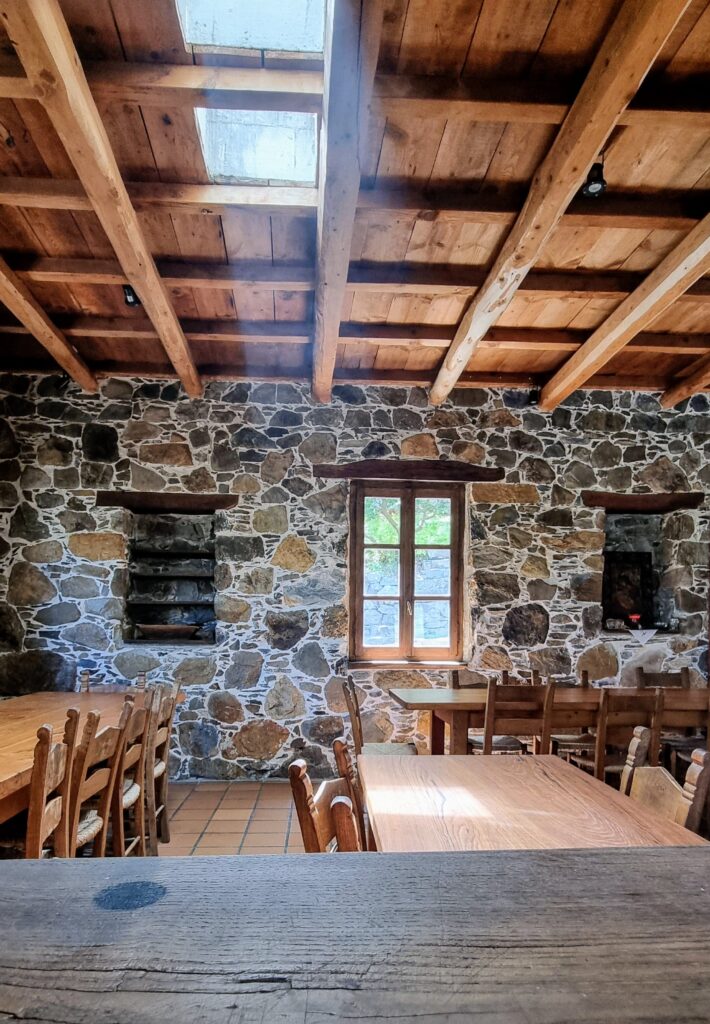
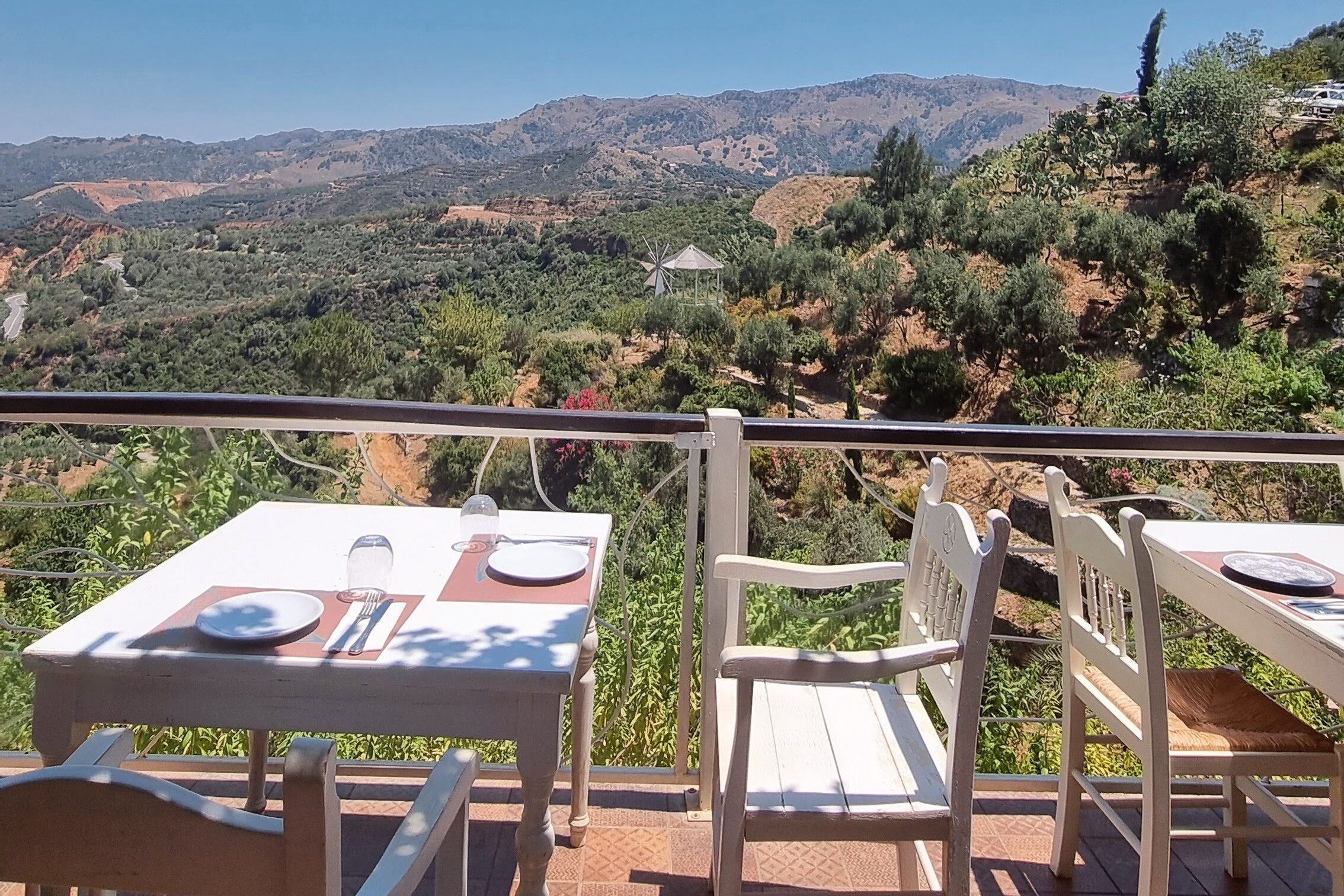
At the end of the journey, a unique place awaits us, beautiful in its simplicity and fidelity to tradition. Milia is now a tourist resort, but it is housed in beautifully restored cottages that were once part of a mountain settlement. The owners have put a lot of work into creating such an atmospheric and authentic place from the remains of medieval buildings.
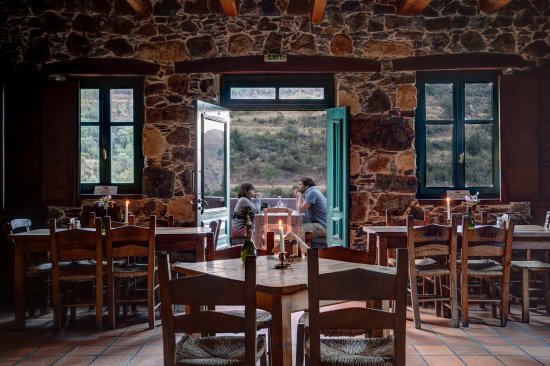
Milia is not only an eco-friendly retreat, but it also boasts one of the best restaurants in Crete. Word of honour!
In line with the philosophy of the place, the dishes are prepared with local products, some of which come from their own garden, and although the recipies are essentially Cretan, they often feature an innovative approach.
If you want to eat there, I recommend booking a table in advance, especially during the holiday season.
Milia offers more than acommodation or dining experience, though. Several walking trails start there, ranging from leisurely walks to long, demanding trails in the surrounding mountains and gorges (e.g.Topolia Gorge Circuit, Sirikari Gorge).
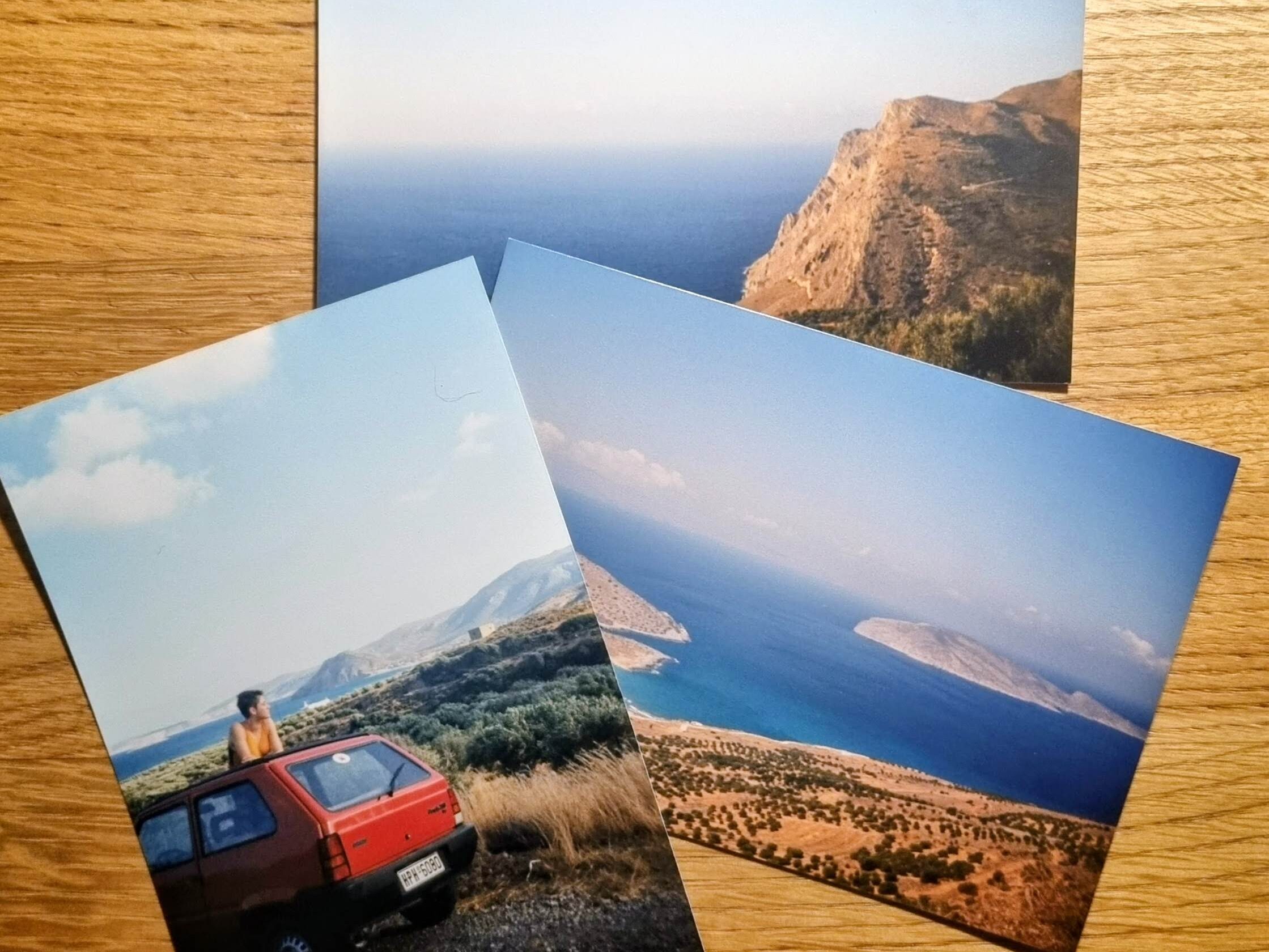
I first set foot in Crete in 1995. We had so little money at the time that the small amount we had saved allowed us to escape from an uninteresting town near Heraklion for only two trips. One day by car, to the southern tip of the island, through the mountains, to Vai beach, and one day by scooter (oh my God!) to the caves carved into the rocks in Matala. Although we came back from the scooter trip soaked, because somehow it was raining in the summer, I also came back stunned by the beauty of this island.
It was love.
Since then, I have visited Crete many times. And basically every time, whether we were as a couple, with a child, or I was travelling alone, I went to the nearest accessible gorge. Because hiking in gorges is my thing, my passion, my beloved activity.
And in Crete, mainly in the west, there are over 400 of them!!! From pleasant walks with children, through more technically demanding ones with ropes and ladders, to the famous Samaria (not recommended in summer), the longest dry gorge in Europe.
So… there’s plenty to do!
From Chania, where we invite you to our Thimari Gardens, you can easily reach several interesting gorges within two hours, and private buses will also take you to Samaria.
It doesn’t take long to get there, just half an hour by car from Chania. The road itself is a feast for the eyes, with valleys and mountains and picturesque twists and turns in the asphalt. Eventually you arrive at an oasis, a place that offers respite, especially in summer – the Botanical Park and Gardens of Crete, located 20 kilometres south of the city.
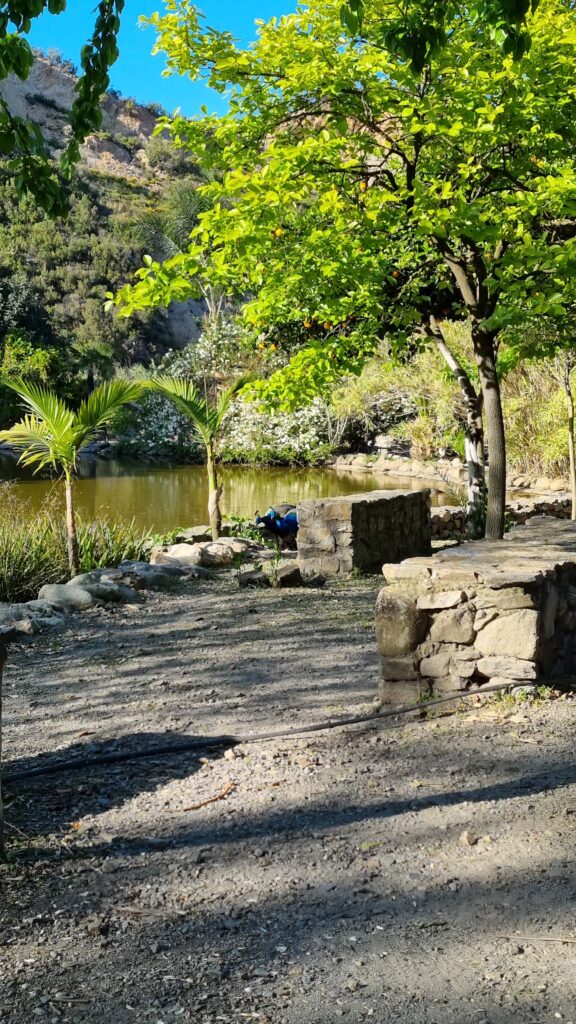
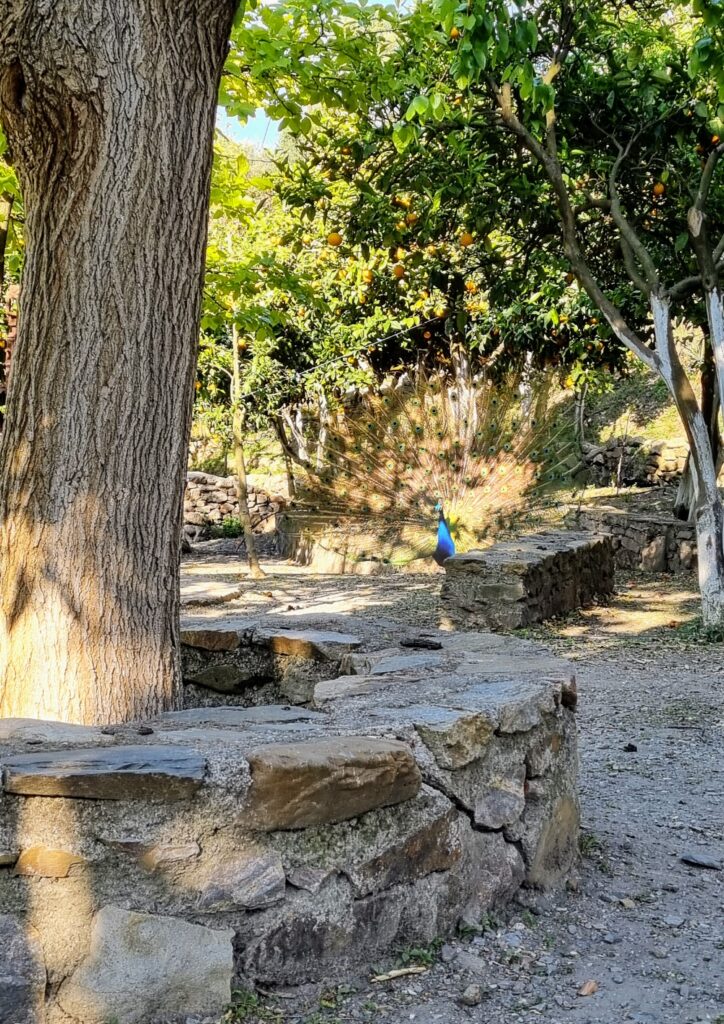
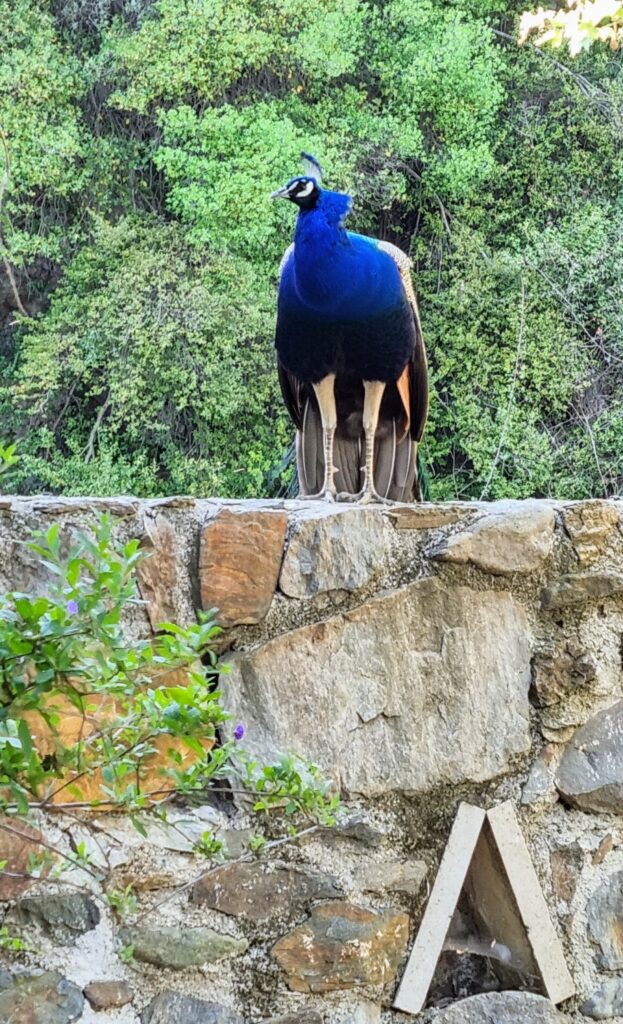
Twenty hectares of park and gardens are spectacularly spread out on the slopes and, even from a distance, encourage visitors to come and explore. We park, pay a few euros for admission, and the park is open to us. And there is plenty to see along the 2.5-kilometre loop that leads through all its corners. You will find themed gardens (e.g. Mediterranean, aromatic herbs, citrus or tropical), encounter a variety of animals (from peacocks and donkeys to a multitude of butterflies), and take a stroll along the lake.
The flora is diverse and interesting. It is impressive that the park was established just over 20 years ago and has achieved such results. In 2003, a terrible fire ravaged the area, burning 100,000 ancient olive trees and leaving only ashes. Thanks to the inspiration and hard work of founder Petros Marinakis, the area has been beautifully restored, to the benefit of all.
After a walk, which takes about 2 hours, you leave the park at a very nice restaurant, ideal for lunch or early dinner in beautiful surroundings.
There is also a shop on site, selling mainly famous Cretan herbs and typical locally produced spirits: raki, or as they call it in Crete – tsikoudia.
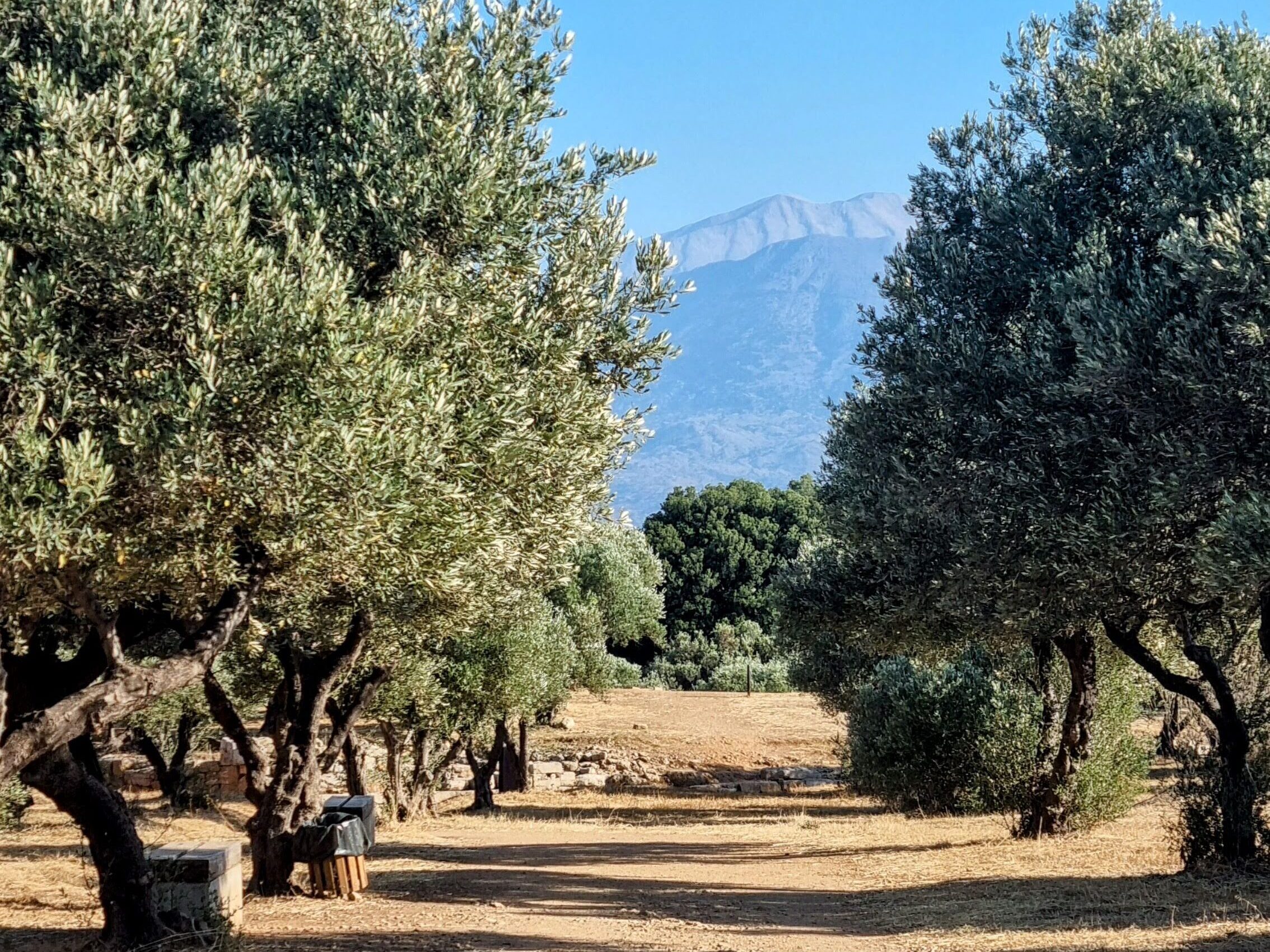
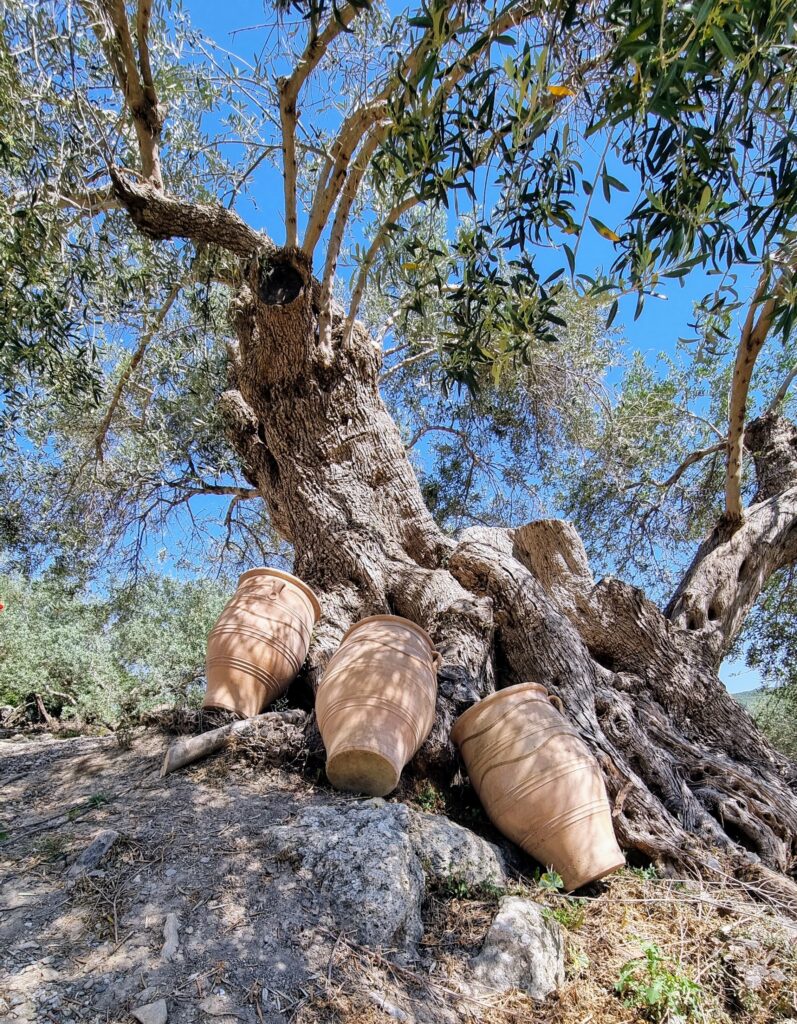
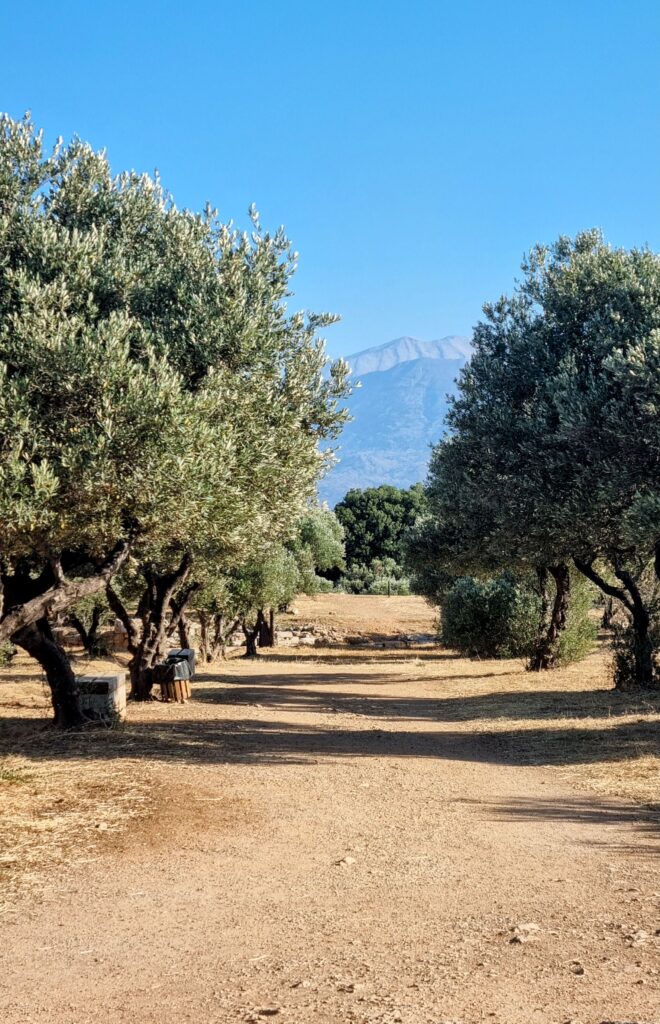
The olive tree, which we know and see today in many Mediterranean countries, has an extremely long history, growing alongside us and satisfying our needs with its wood, fruit and oil. For example, we know that as early as 100,000 years ago in Africa, its wood was certainly used as fuel, and people at that time may also have consumed olives. We also have evidence that it was cultivated in the Mediterranean basin as early as 7,000 years ago. In Crete, its importance as one of the basic crops (along with cereals and vines) reached a very high level in 3000 BC, and many scientists believe that its commercial cultivation and trade were the source of the wealth of the Minoan civilisation. At that time, however, olive oil was mainly used for lamps (including sacred ones), for skin and hair care, and for anointing. Since then, the olive tree and its fruit have held an unshakeable position as the main crop in the Mediterranean region, whether in Spain, Italy or Greece.
The name of the olive tree (Latin: Olea Europea) most likely derives from the Proto-Greek language, and its first written form appeared in the Mycenaean syllabic script Linear B (2200-1900 BC).
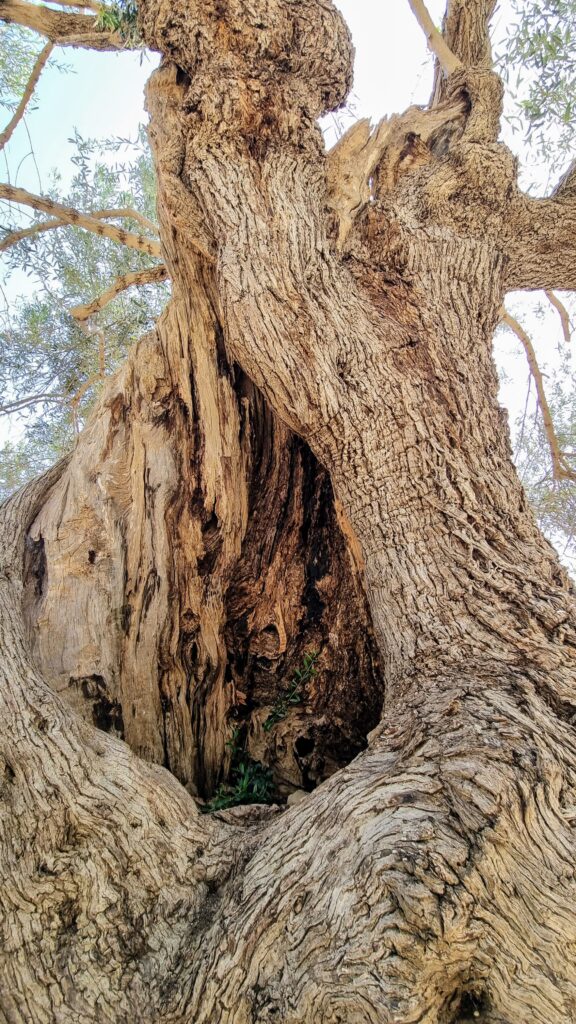
The olive tree has always been a symbol of wisdom, peace, strength, fertility and purity. This is not surprising, as the tree itself is quite remarkable. To thrive, it simply needs sunshine, a little water and well-drained soil. This is enough to keep it alive for hundreds, sometimes thousands, of years. In Crete, in the village of Vouves, 30 kilometres from Chania, you can see the famous olive tree, estimated to be between 2,000 and 4,000 years old. If you decide to visit this national monument, don’t miss the interesting Olive Tree Museum nearby.
Majestic, one of the most ancient olive trees in Crete (Astraka)
Today, Greece remains one of the leading producers of olive oil. Crete alone has about 30 million trees, and annual olive oil production reaches 120,000 metric tonnes, 80% of which is extra virgin olive oil. Although Greece ranks third as a European olive oil producer (after Spain and Italy), it proudly leads the world in olive oil consumption, with 24 litres per capita per year! This is not surprising, as its quality is the highest. The fresher the olive oil, the better. In Crete, olive oil production takes place immediately after the autumn harvest (October-November), the olives are crushed whole, and the greenish, intensely fragrant liquid fills bottles and cans. It is available for sale from December.
Cretan olive oil is mainly obtained from two varieties: Koronaiki and Tsounadi. The quality of the oil is excellent (as I mentioned earlier, 80% is Extra Virgin, which translates into low acidity – below 0.8% free acidity and a fruity flavour), but the oils naturally differ in taste depending on the region they come from. The Chania region is famous for the producers Chania Kritis and Kolymvari Chanion Kritis, whose oils are known for their slightly peppery taste. Those who prefer milder, less ‘demanding’ types can try olive oil from Kritsa or Sitia. For the more adventurous, many producers offer oils with added herbs (e.g. rosemary), lemon or orange peel.
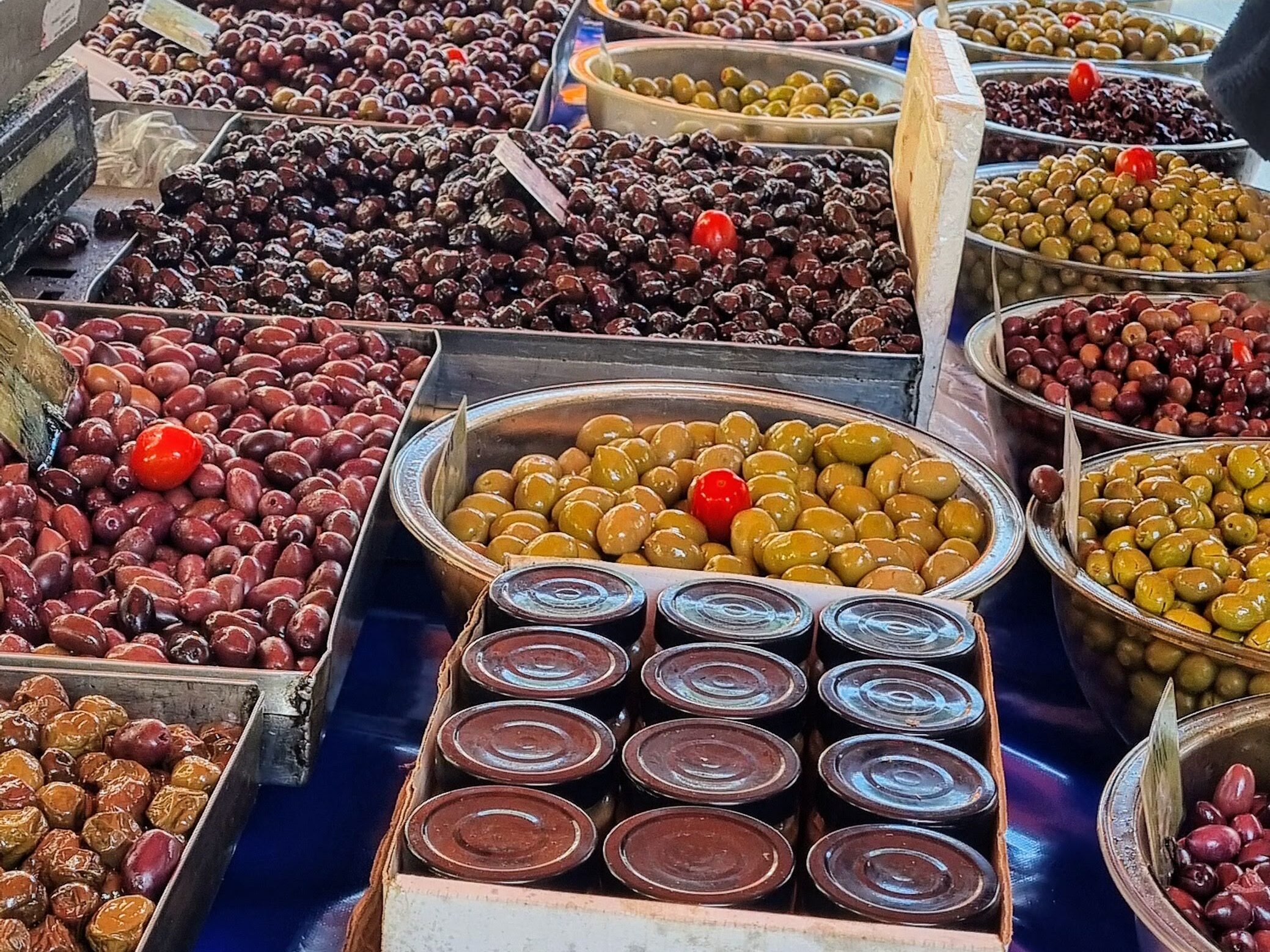
In addition to buying olive oil, tourists are keen to choose from dozens of types of marinated olives, and often buy kitchen utensils or bowls made of hard, durable but very decorative olive wood.
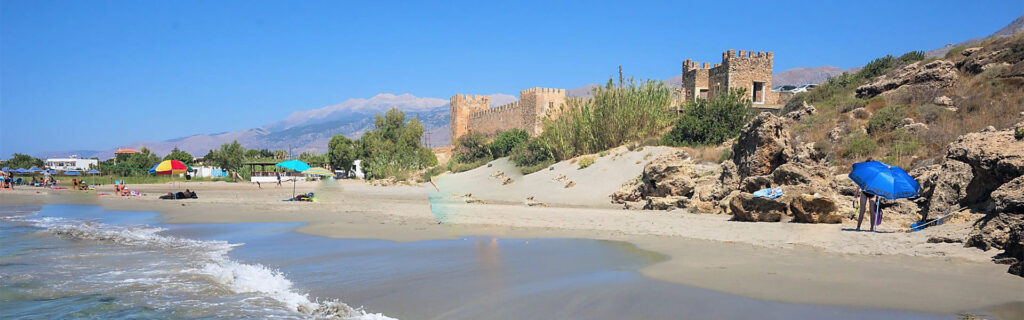
It is a little bit longer trip (80 km) but what awaits you at your destintation is double worth it. We are heading South, to Frangocastello and its beautiful beach.
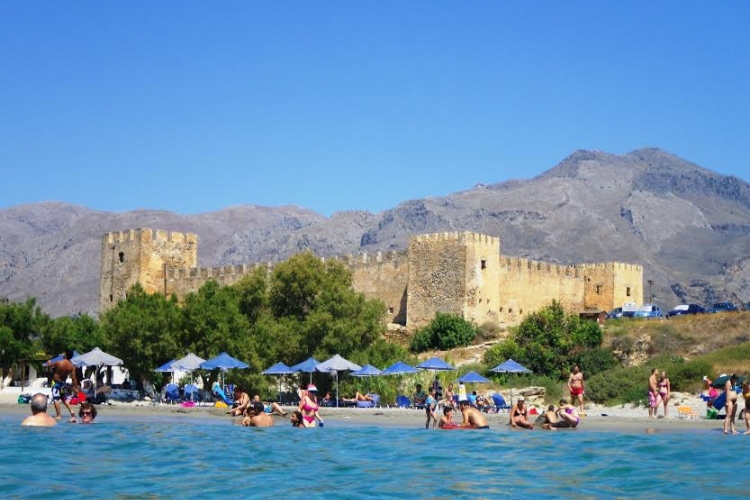
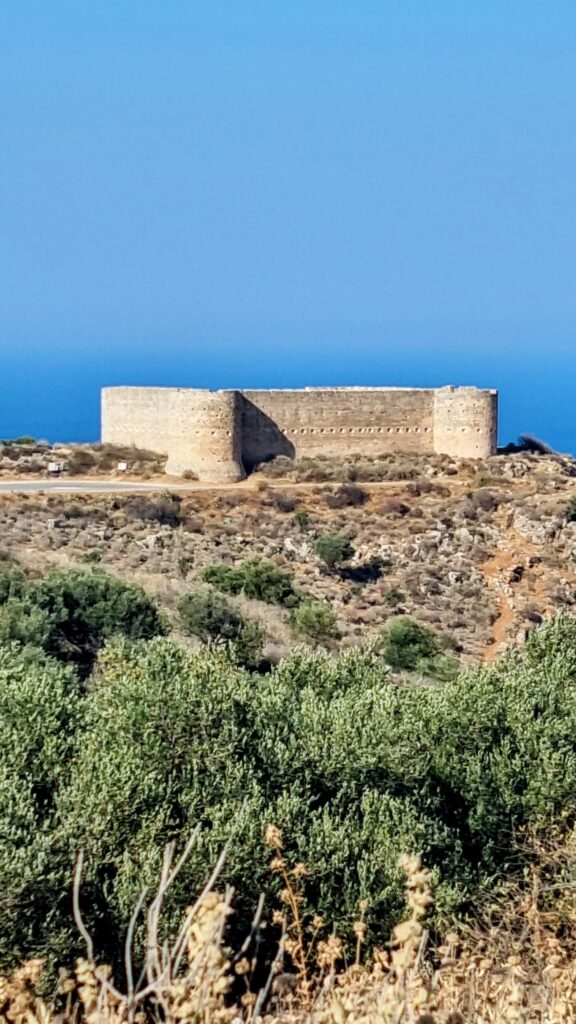
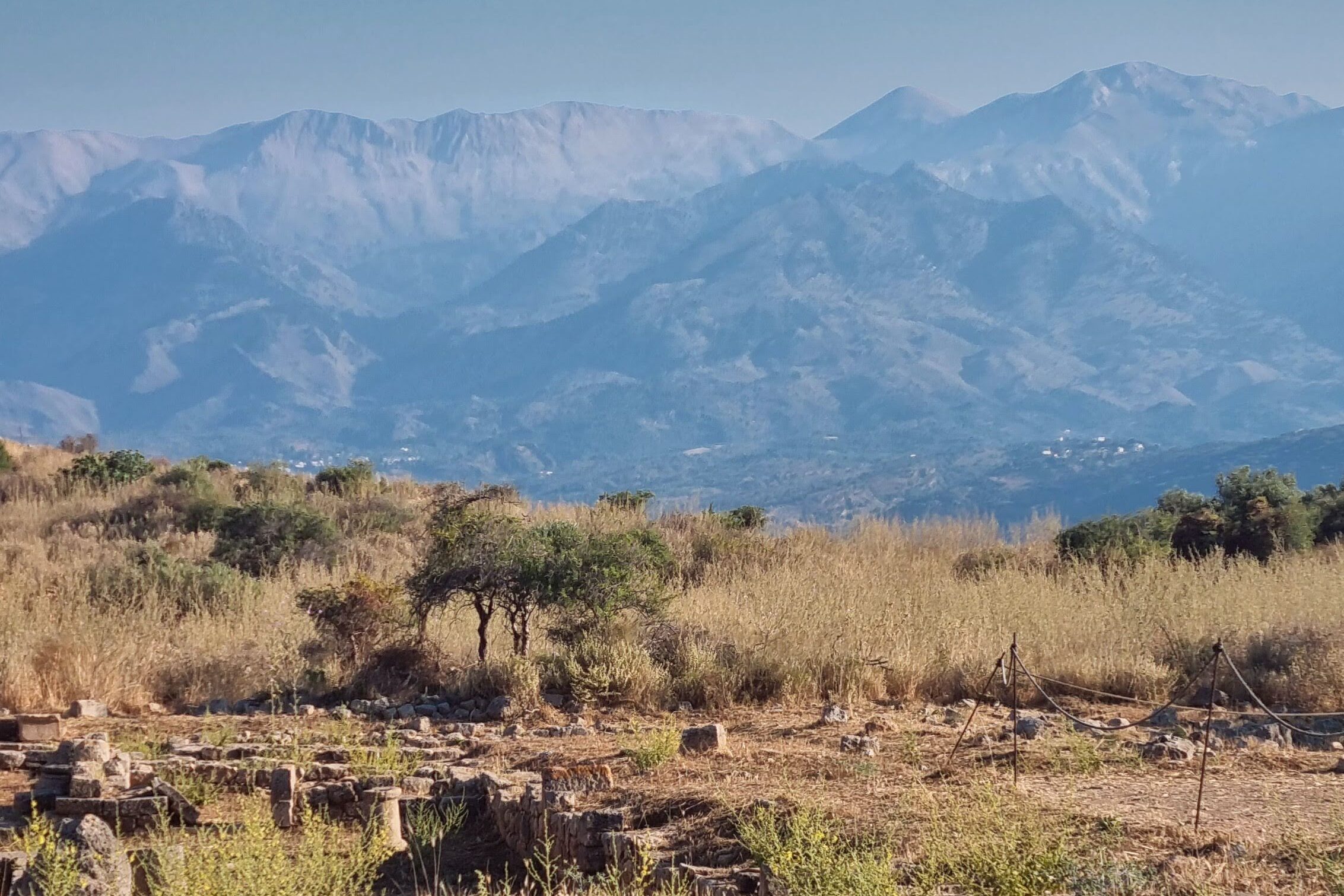
Frangocastello is a small village of no apparent appeal, but what does have tons of charm and beauty is the sandy, child-friendly, peaceful and laid-back beach located just by the Venetian castle which gave the village its name. The castle, what is interesting, played a significant role in the Greek War of Independance.
To spoil you further, when you turn your eyes from the beach towards the land you will see the range of majestic White Mountains (Lefka Ori).
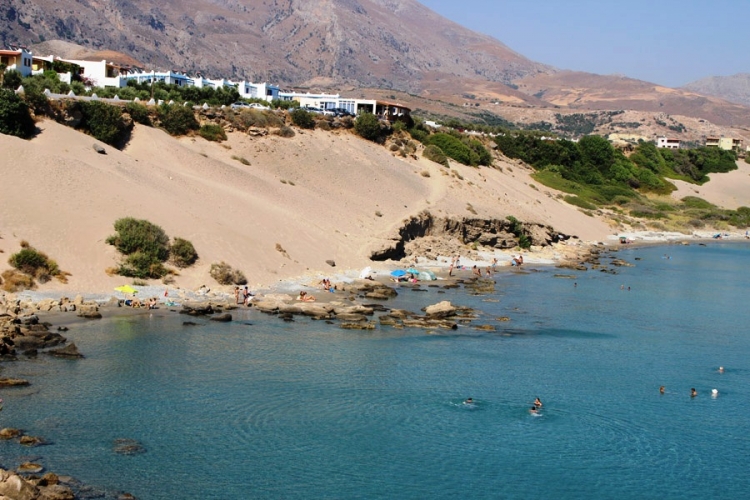
If you like variety, you will easily reach in 10-15 minutes on foot smaller but rocky or pebbly beaches laying eastwards. There, you can eat in a lovely Sunrise taverna.
If you need more choice for food or a livelier spot, head to Chora Sfakion (12 km away from Frangocastello).
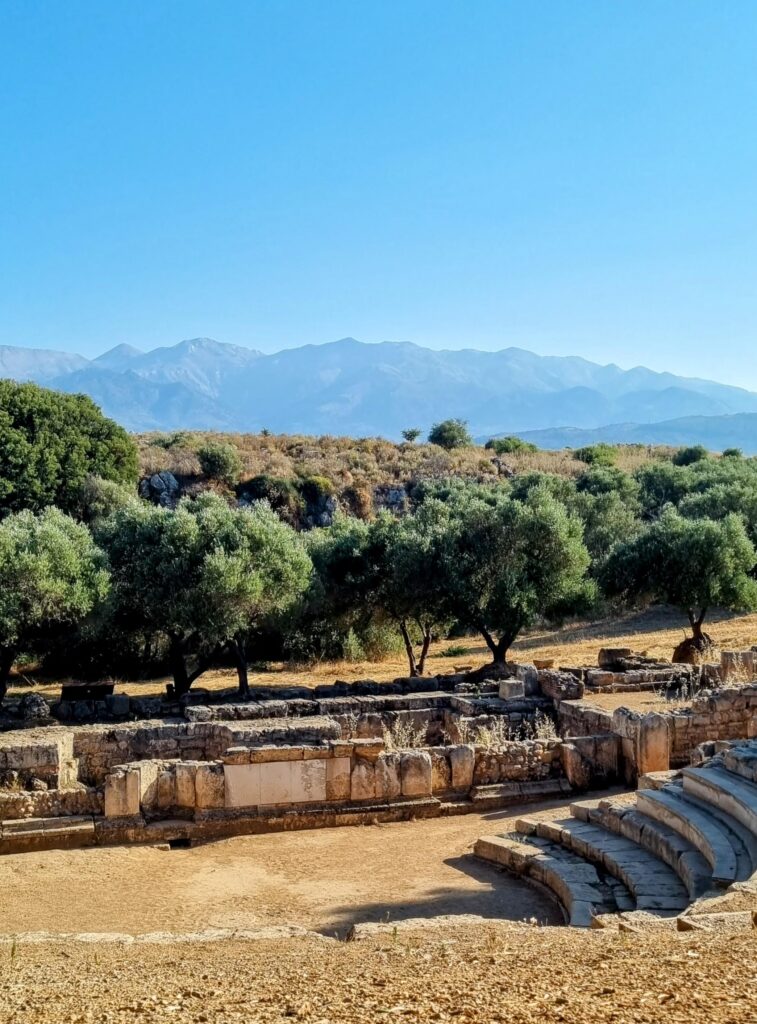
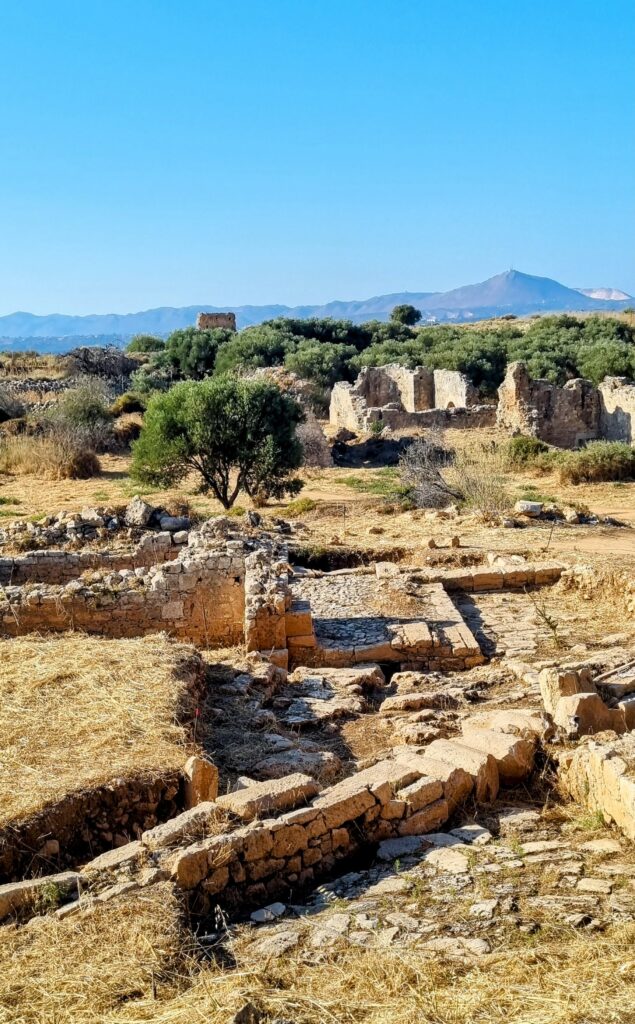
Ancient Aptera, a 30-minute drive east of Chania, stretches across a plateau near the hill of Paliokastro, which dominates the south-eastern part of Souda Bay. Recent archaeological research suggests that settlement in this area began in the 11th-12th century BC.
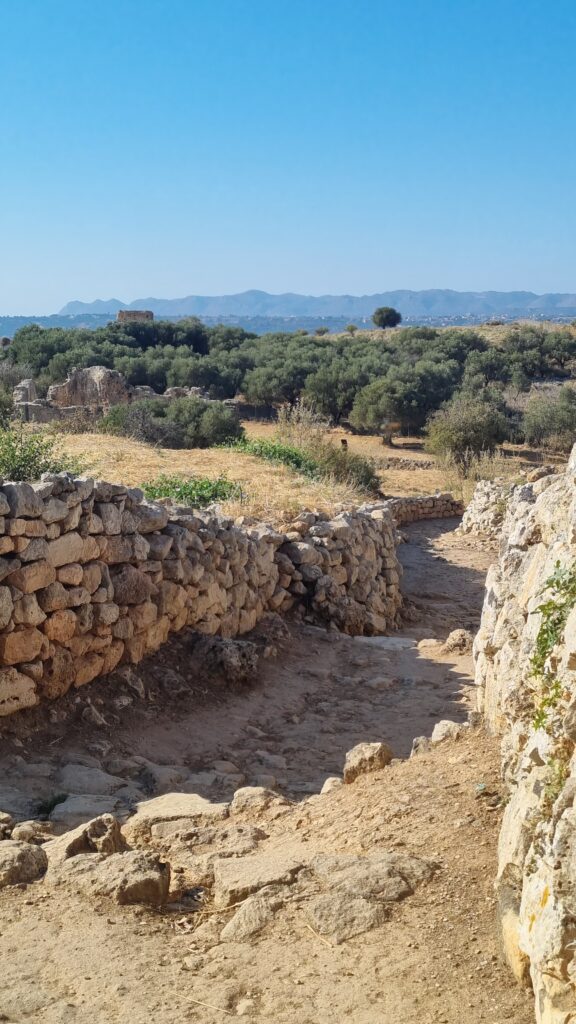
The 3,480-metre-long defensive wall surrounding the main settlement was built before the mid-4th century BC. The city enjoyed an era of prosperity during the Roman period, but after a terrible earthquake in the 7th century, it was so badly damaged that it was not until the 12th century that it became a significant urban centre again and played an important role until the Venetian period (16th and 17th centuries).
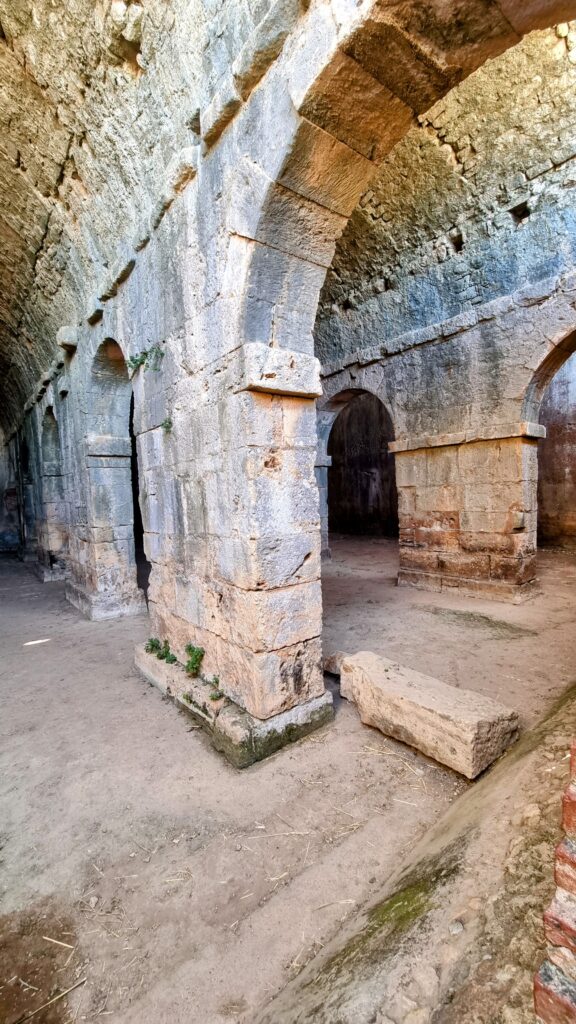
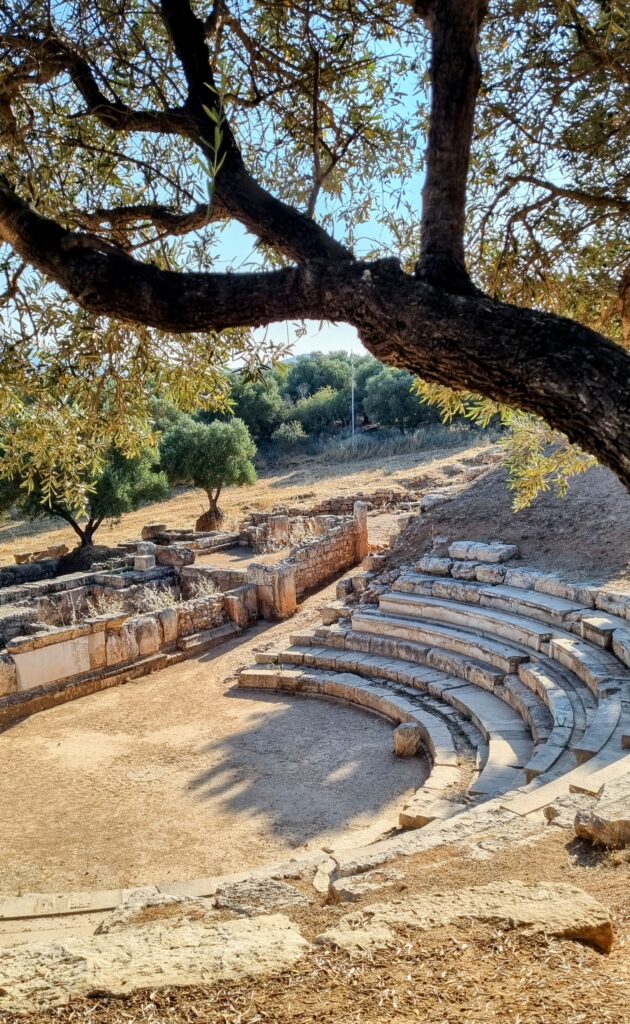
In today’s Aptera, visitors can admire the remains of ancient fortifications, three cemeteries from different periods, Roman cisterns and baths, as well as an ancient theatre, which has recently been partially restored, with comfortable steps leading to the stage, called skene.
I found Aptera charming, atmospheric and simply beautiful. Perhaps it was its beautiful location between the sea and the mountains, perhaps the vastness of the settlement, or perhaps the fact that there were so few other people there during my visit, but it made a greater impression on me than Knossos.
On the practical side, tickets cost €10 and there is convenient parking for visitors.
As the site is largely unsheltered, you should bring water, sunscreen and a hat.
You can also, and this is what I would suggest, visit this place during the golden hour, both for the temperature and the magnificent views.
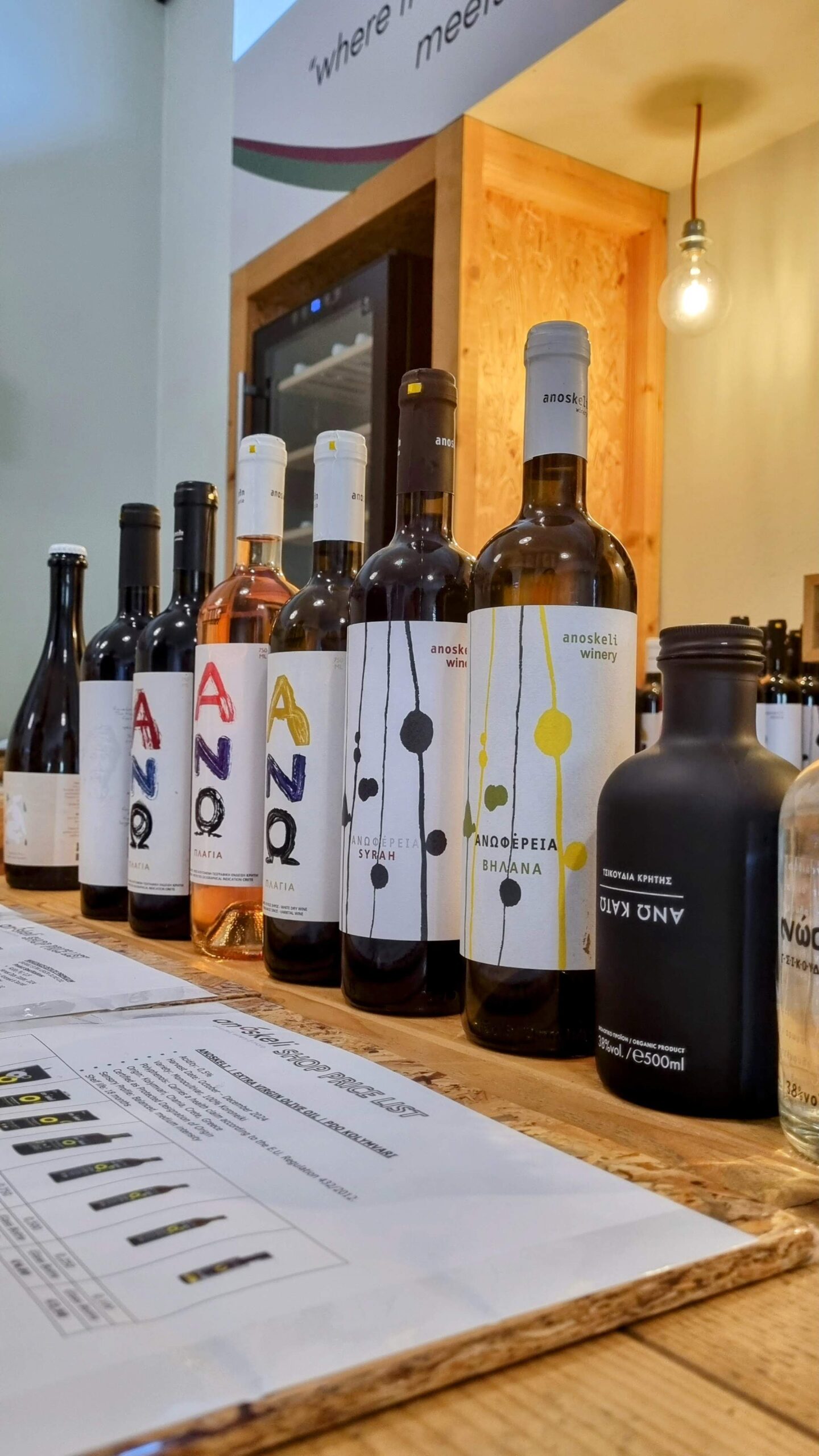
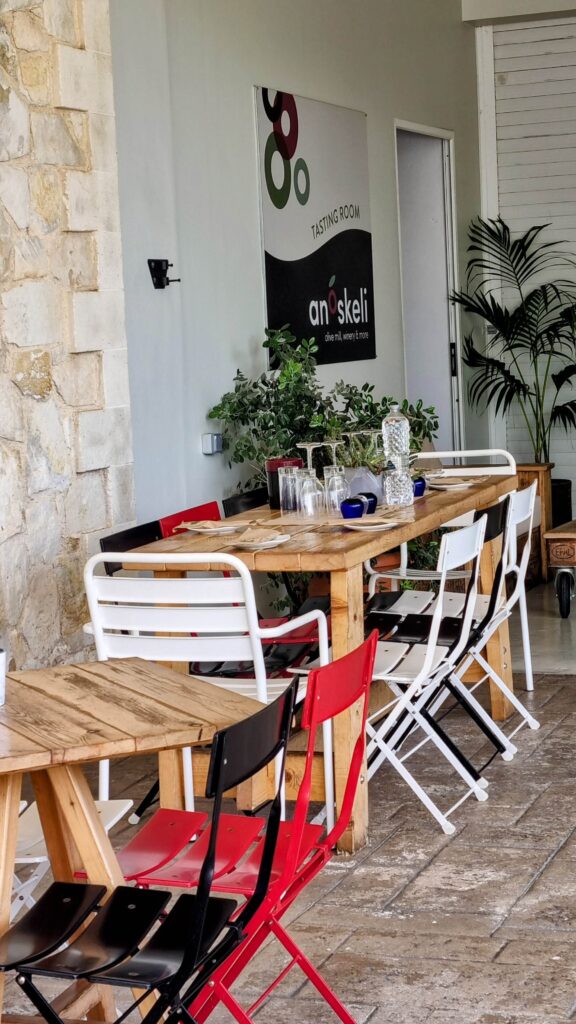
Wine tasting at Anoskeli Olive Mill and Winery, Chania region, Crete.
Another relaxing and short trip from Thimari Gardens took us to Anoskeli Olive Mill and Winery. It takes about 35 minutes to reach the rolling hills where this place is located.
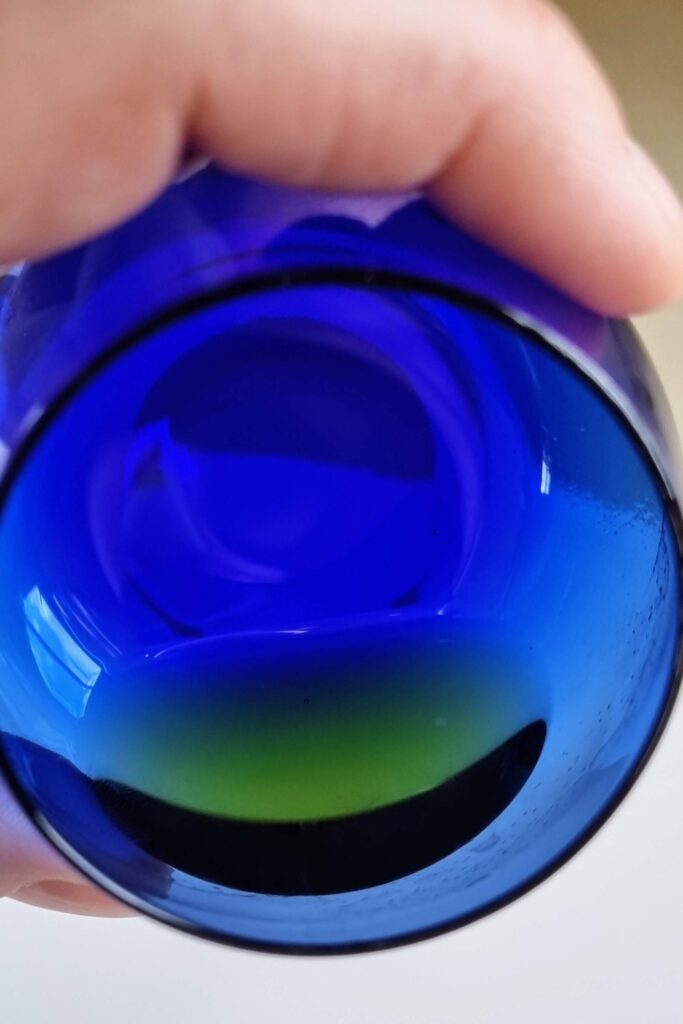
Tasting sessions at Anoskeli are led by an experienced sommelier and include olive oil tasting, wine tasting and food pairing.
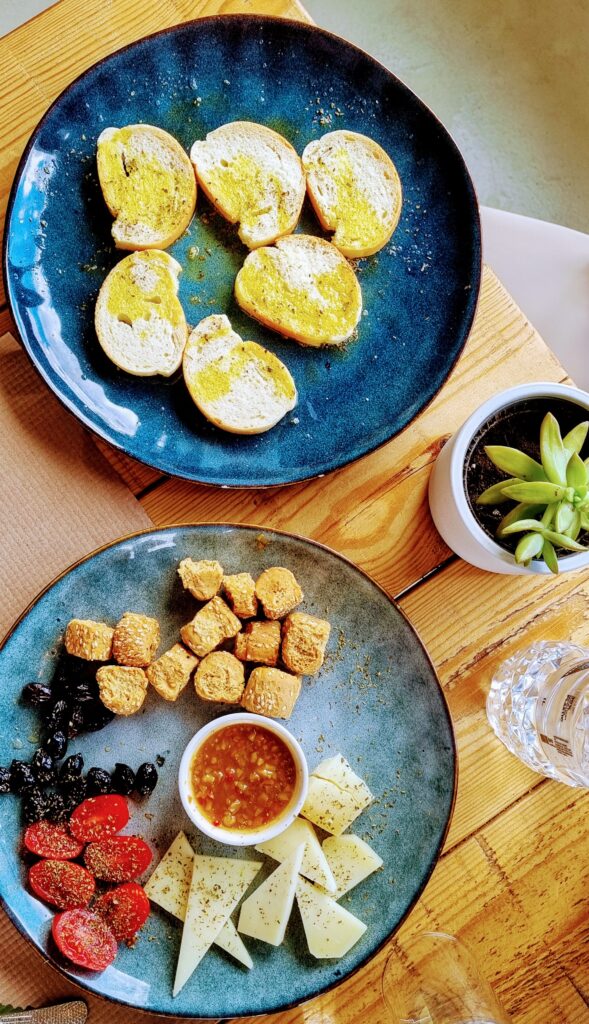
We opted for the Signature wine tasting and had the opportunity to try their excellent, very fresh olive oil and six different wines with vegetarian food in our case.
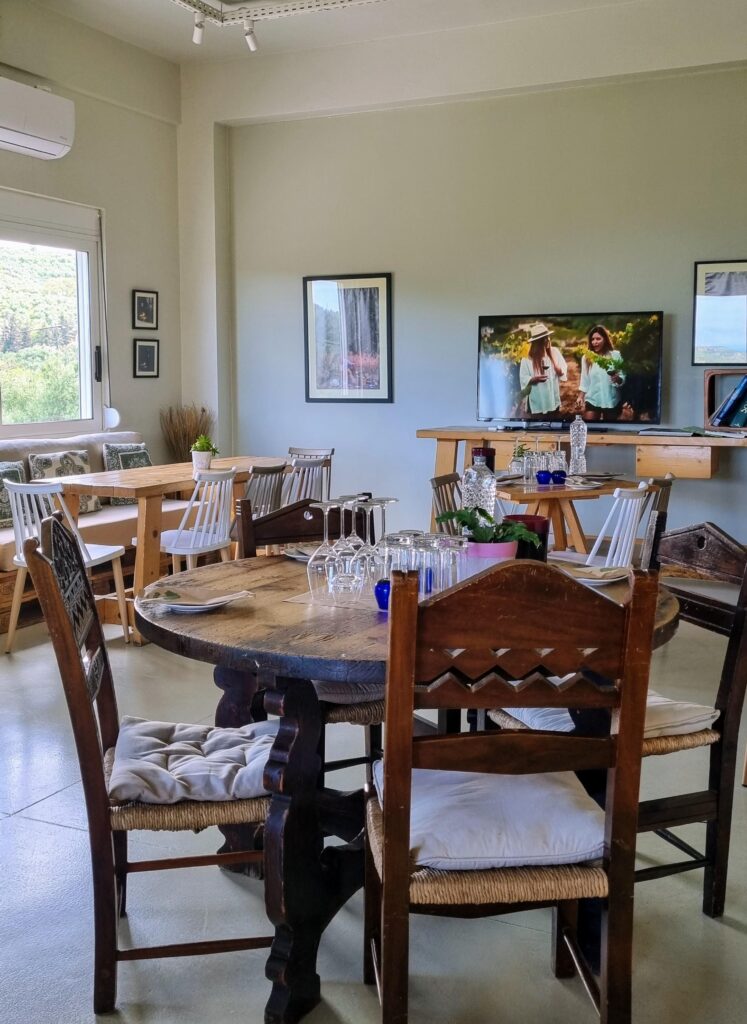
Both the wine and food were beautifully presented, the tasting room was tastefully decorated, and the view of the green hills and the sea only enhanced the experience.
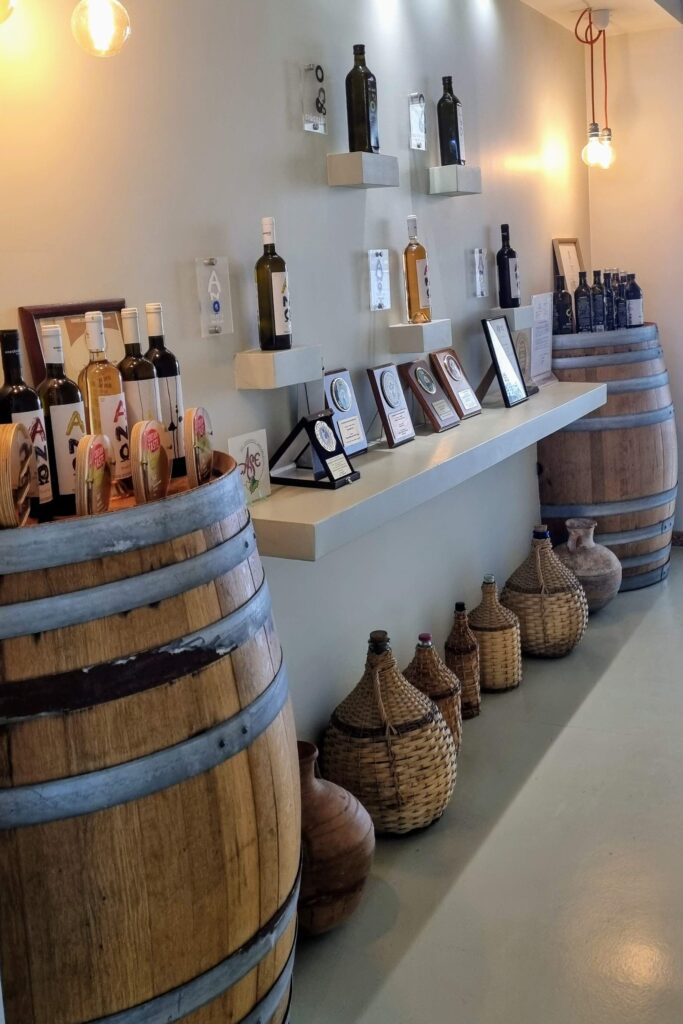
Wine and olive oil production at Anoskeli is very limited, and because their olive oil has won numerous international awards, it is very popular and difficult to buy anywhere else. We only saw their wine labels once in the Votani shop on Dakalogianni Street in Chania.
This type of attraction costs €18 per person, but in our opinion, anyone who is even slightly interested in oenology and, more broadly, Greek flavours, will enjoy it.
It takes a lifetime for someone to discover Greece, but it only takes an instant to fall in love with her – Henry Miller.
About
My name is Marta, a Pole with Greece in heart. I am also a living proof that longlife dreams can come true. I always dreamt of having my place in beloved Greece and now here it is! And not just anywhere, but in the most wonderful city, steeped in the culture of ancient Greece, the Venetian Republic and the Ottoman Empire, my dream city of Chania, Crete.
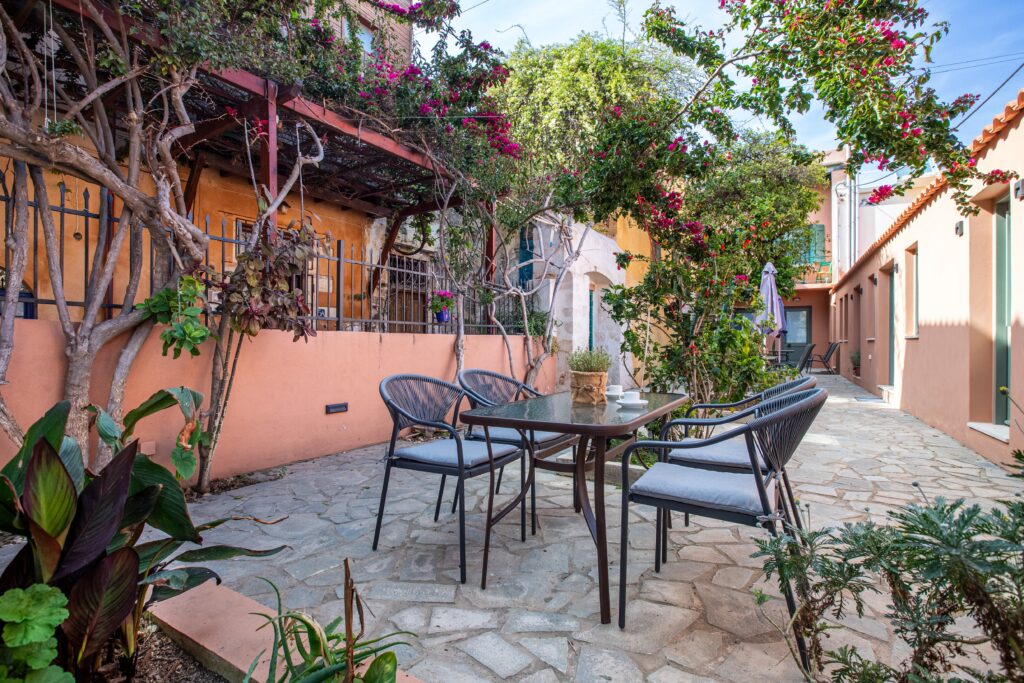
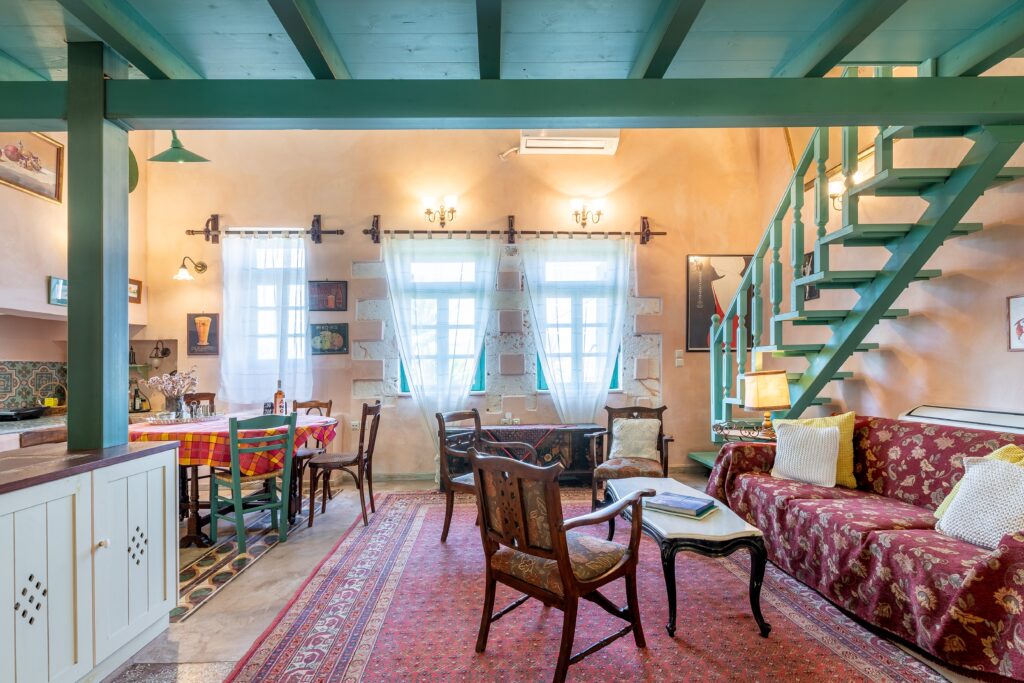
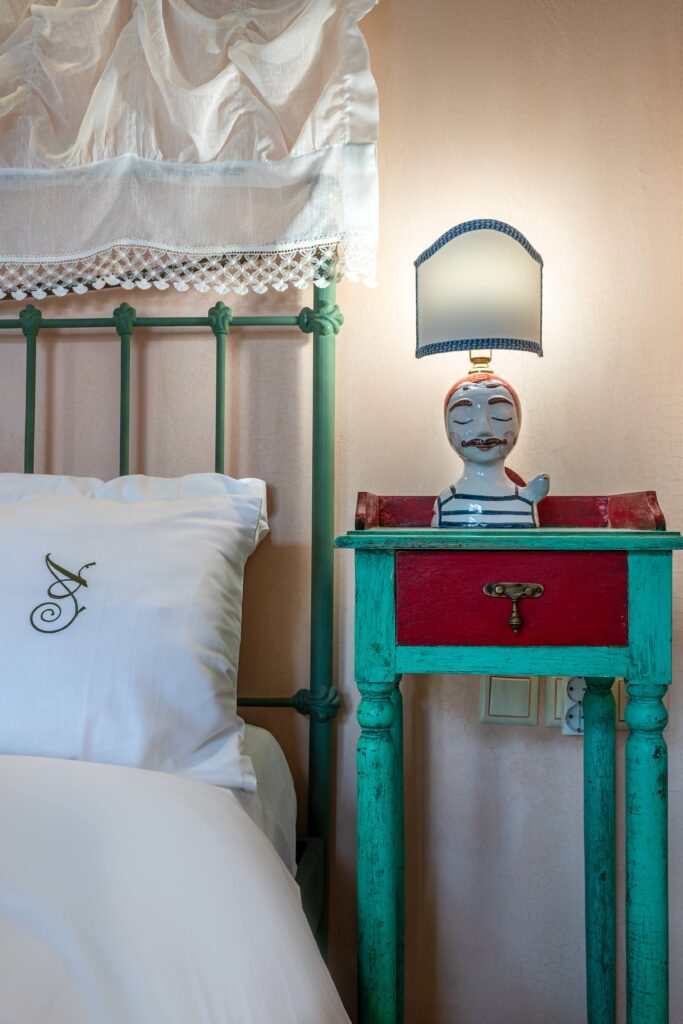
This blog aims at promoting Crete, Chania but also our home there- Thimari Gardens - which is seasonally rented out. More information about the apartment is available when you press the tab above named Thimari Gardens.
If you wish to ask about our rental offer, send an email at thimarigardens@gmail.com