Being an animal lover and a fan of Crete, I thought I had the perfect topic for a blog post.
However, exploring the topic turned out to be not entirely satisfactory, and the material I gathered was rather sparse. Well, Crete, being an island, is by definition practically devoid of predators, boasts a small number of mammals, and, in addition, human activity has decimated and limited the local fauna. Unfortunately, though once upon a time even small elephants lived there, now if someone spots a WILD animal in the wilderness or in a ravine, it immediately becomes an event, as if it were a great animal migration in Tanzania.
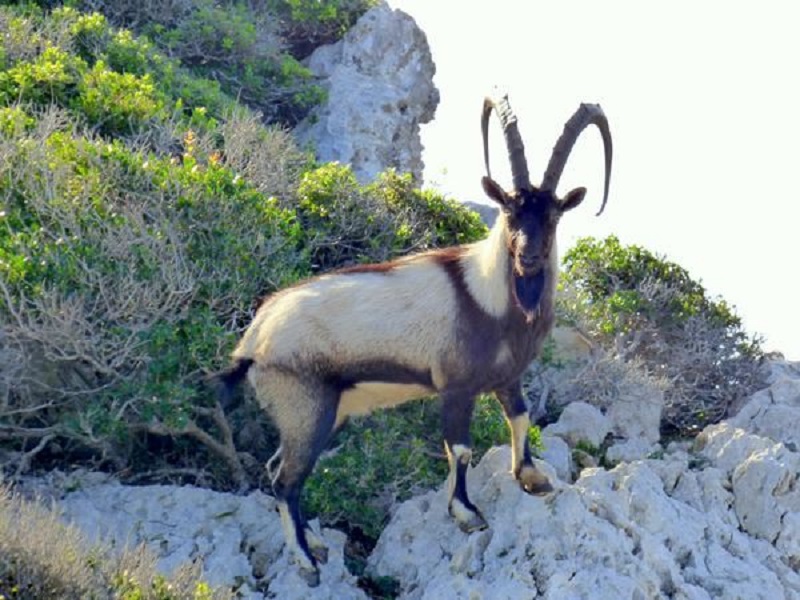
But to the point, what can lucky and observant travellers hope to see? The most talked about animal is the wild and shy Cretan kri-kri goat (also known as agrimi), of which there are about 2,500 left. These goats are famous for their acrobatic agility, which allows them to stay on almost vertical rocky cliffs or outcrops. The males with long, twisted horns look particularly impressive. Currently, these animals can be found in the gorges of Samaria, Agia Irini or Tripiti and their wild surroundings. In an attempt to prevent the kri-kri from interbreeding with domestic goats (which were very eager to diversify their genetic makeup), many of them were transported to two uninhabited islands near Crete, Dia and Theodorou, but apparently they did not like the conditions there.
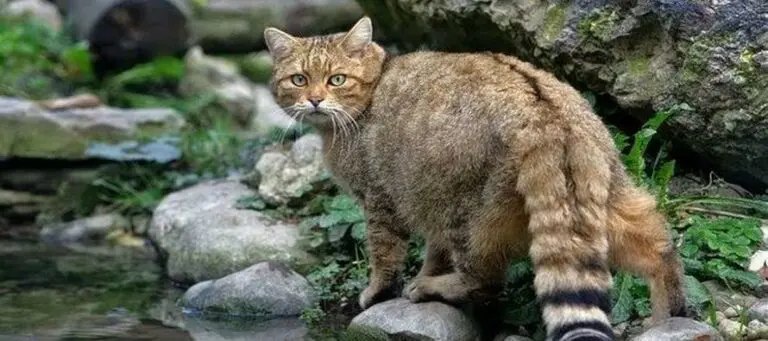
My dream would be to encounter the elusive and extremely rare Cretan wildcat (fourogatos). In all likelihood, there are only a few left on the island; in 2016, one individual was seen on the Lasithi plateau. These cats are larger than domestic cats and have thick fur covered with a distinctive pattern.
In addition to the animals mentioned above, there are many smaller mammals living on the island. We may encounter hedgehogs, rabbits, badgers, weasels, shrews, rats and bats. Interestingly, there are no foxes in Crete and therefore no problem with rabies.
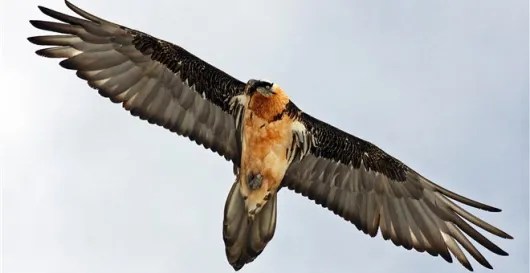
Birds are also moderately represented, despite the fact that Crete lies on the migration route to Africa for many species, providing them with a convenient stopover on their long journey. In the mountains, look out for the impressive griffon vultures circling in search of food. The island is also home to golden eagles, bearded vultures, falcons and owls. Smaller but particularly beautifully coloured birds are represented by bee-eaters.
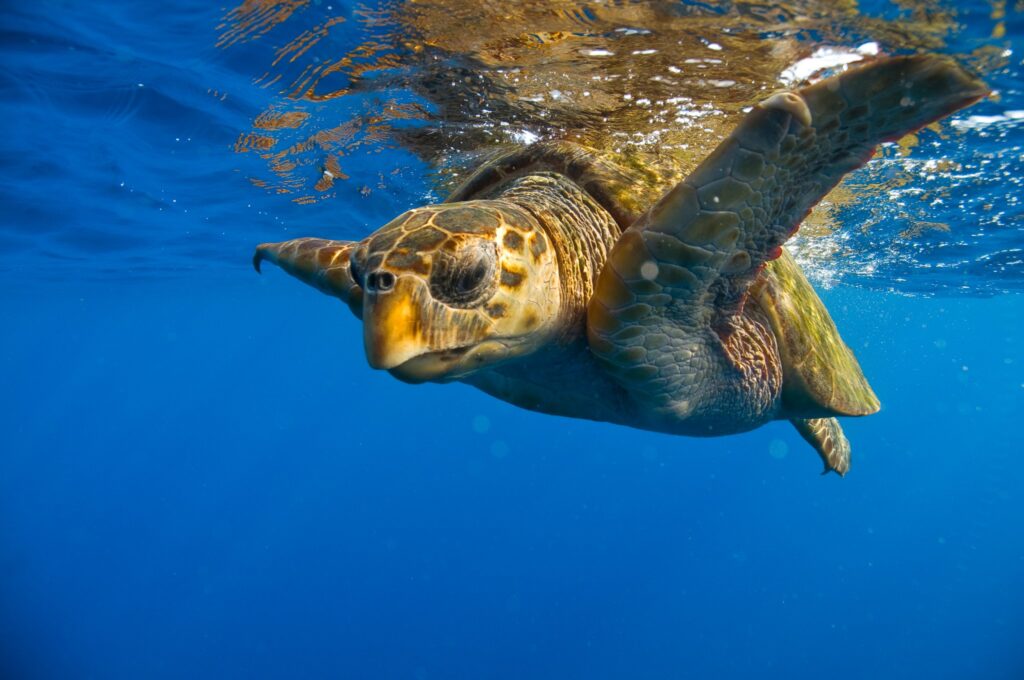
Among the reptiles, the magnificent Caretta turtles, which can measure 120-130 cm and weigh up to 160 kg, are sure to attract attention! These are sea turtles that come out of the sea 2-3 times a year to lay their eggs on the beach. They prepare a nesting site for about 100 eggs, each the size of a tennis ball, by digging a hole 50-100 cm deep. After laying their eggs, they carefully bury the hole and return to the sea.
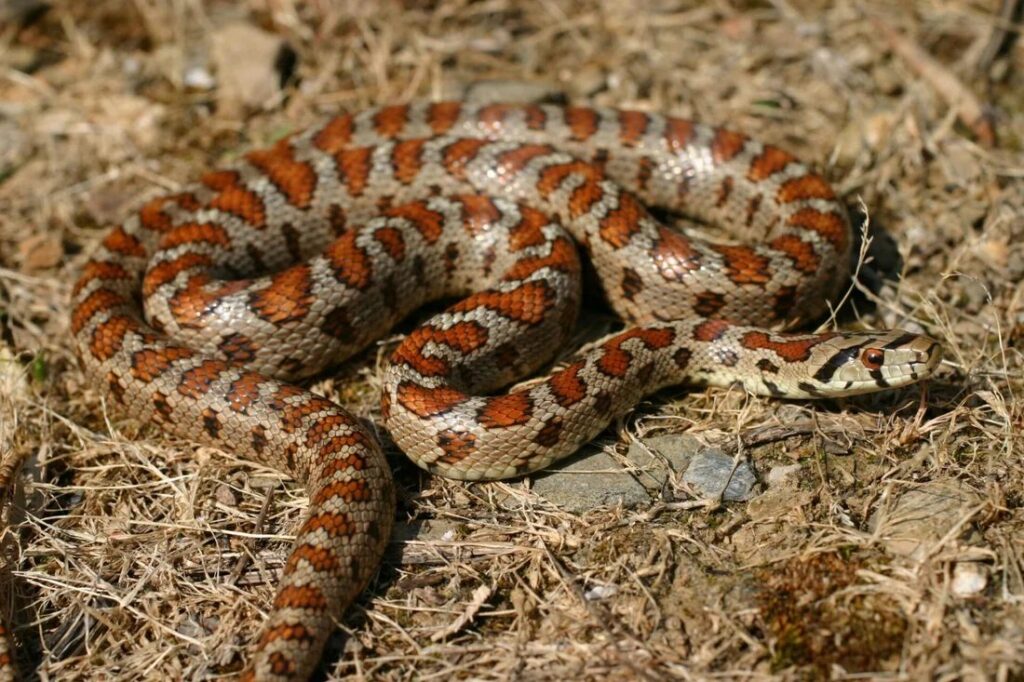
Apart from turtles, Crete is home to several species of small geckos and lizards (only the Podarcis cretensis, or Cretan wall lizard, is endemic) and four species of completely harmless snakes, of which the leopard snake is particularly striking in appearance.
Photos from: discoveronfoot.com, cretanvioma.gr