Let me start from the end. Summer is not the best time to visit this place. It is hot, really hot, and you are exposed to the scorching sun, because most of what you want to see is located in open courtyards or terraces.
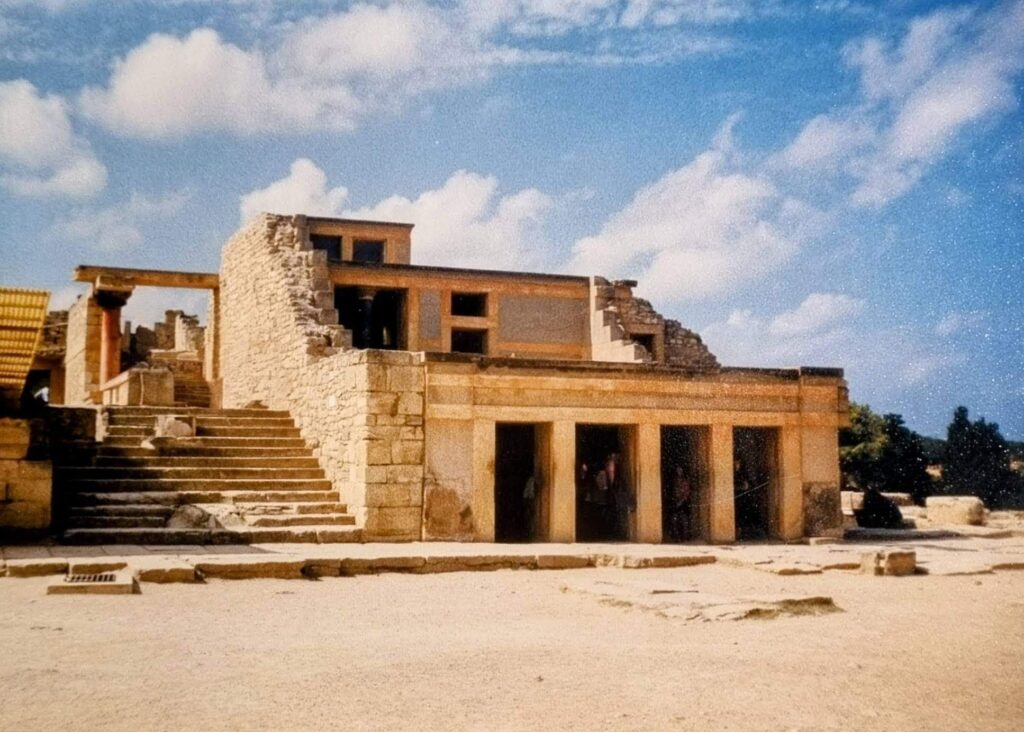
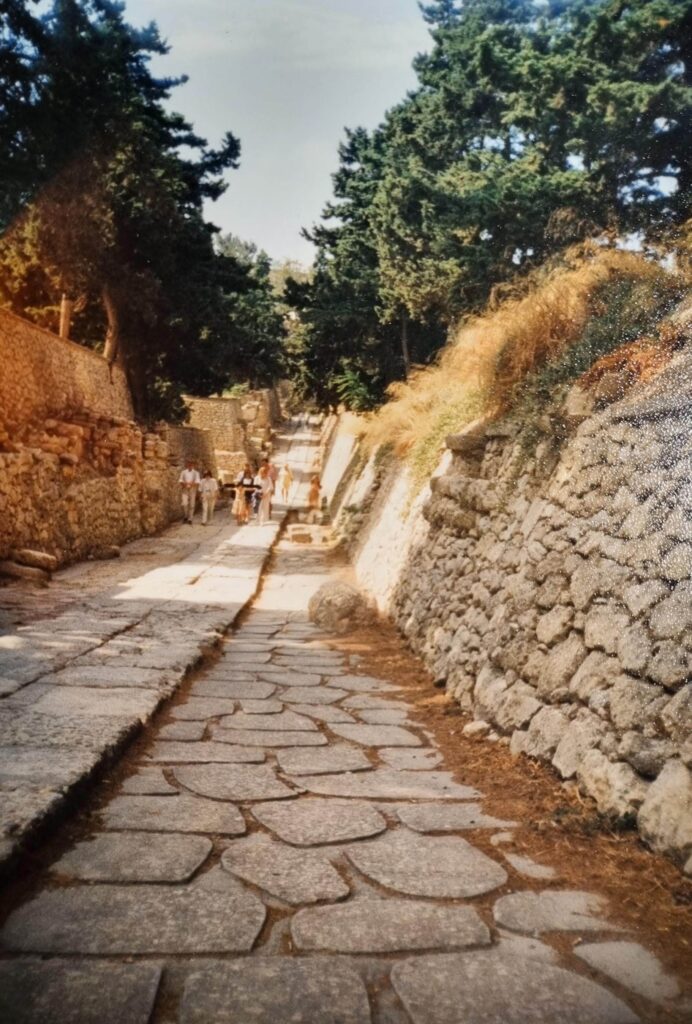
But if you have no choice because you are on holiday in Crete in August and consider the Palace of Knossos a must-see (after all, it ranks second among the most visited archaeological sites in Greece, after the Acropolis), do it in the morning, right after opening, or an hour or an hour and a half before closing.
You may also be discouraged from visiting Knossos (5 km south of Heraklion and 140 km from Chania) by the opinion that British archaeologist Sir Arthur Evans, who between 1900 and 1905 after buying the entire hill with the palace and excavating most of what can be seen today, undertook a controversial and, as we now know, in several respects misguided reconstruction of the buildings and rooms.There is no denying that this was the case. The biggest mistakes concern the use of excessive amounts of concrete to reinforce the remaining ruins and arbitrary decisions regarding the appearance and content of the restored frescoes. Sir Evans commissioned a Swiss artist to paint the latter in the throne room without having any archaeological basis for their appearance.
But don’t let that discourage you. It’s a minor detail when you consider that it was thanks to this passionate archaeologist that the palace complex was excavated (not discovered, as the credit for that goes to the Greek Minos Kolokairinos, who was already aware of the existence of the then underground complex in 1878) and protected from looting. The palace buildings owe their stability to the infamous concrete, and some of the original frescoes have been preserved and can be admired in the Archaeological Museum in Heraklion.
It is difficult not to be impressed by the grandeur of 4,000 years ago. The Minoan culture, which was present in Crete between 2000 and 1400 BC, allowed for the creation of a complex of buildings covering an area of 22 hectares, which was inhabited by 80,000 people at the peak of its development. The palace complex boasted 1,500 rooms, and some buildings were five storeys high.
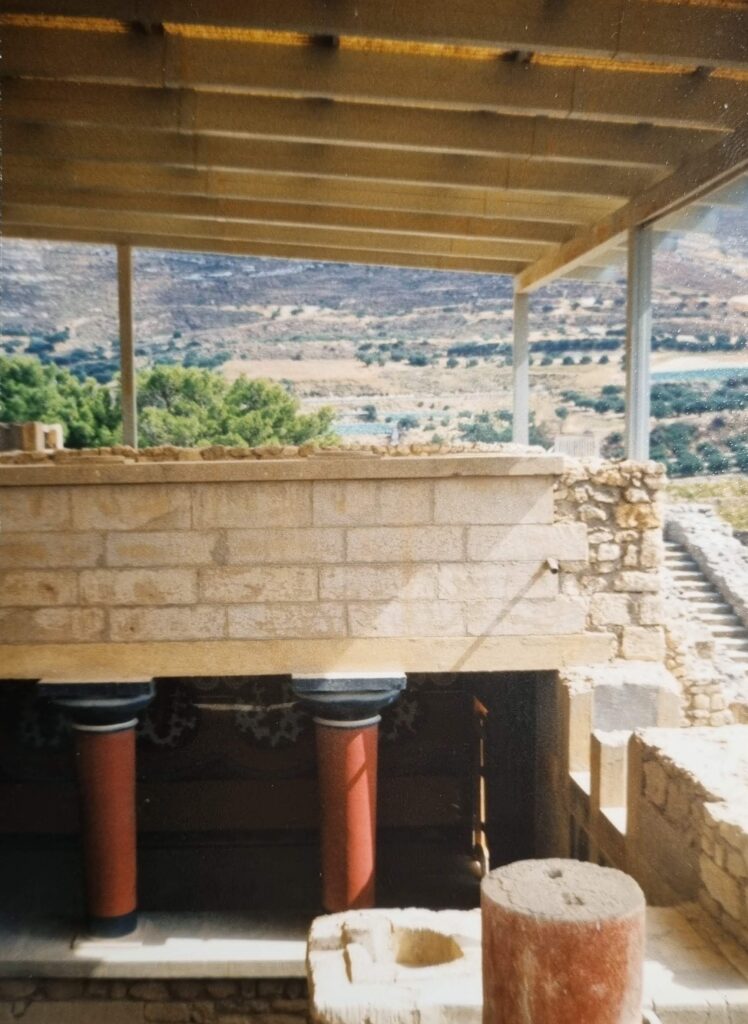
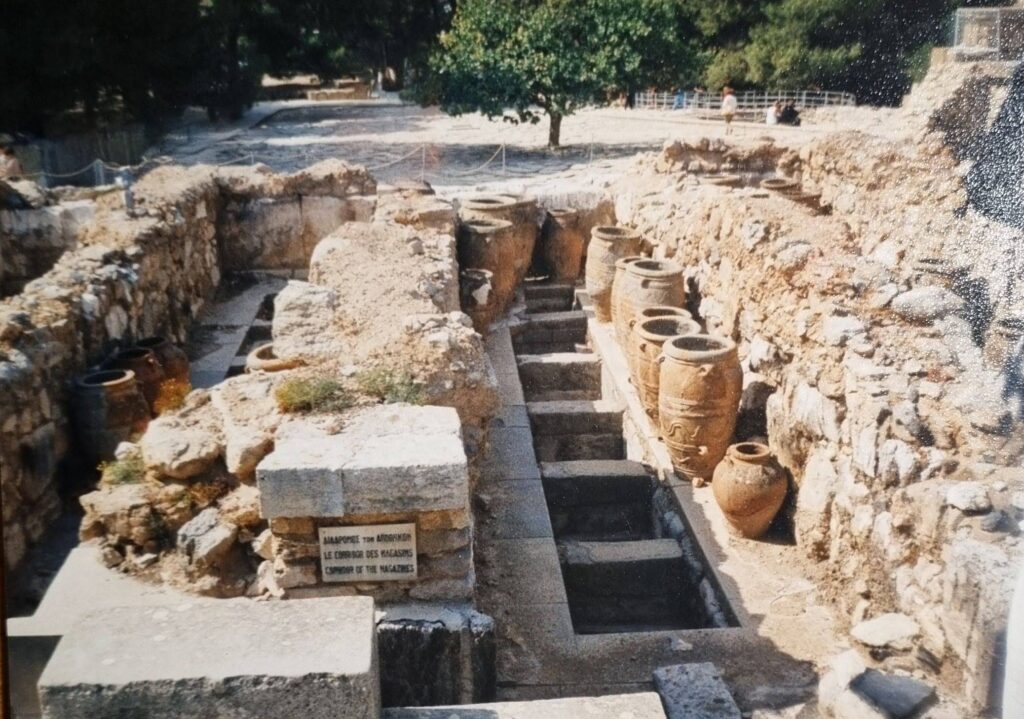
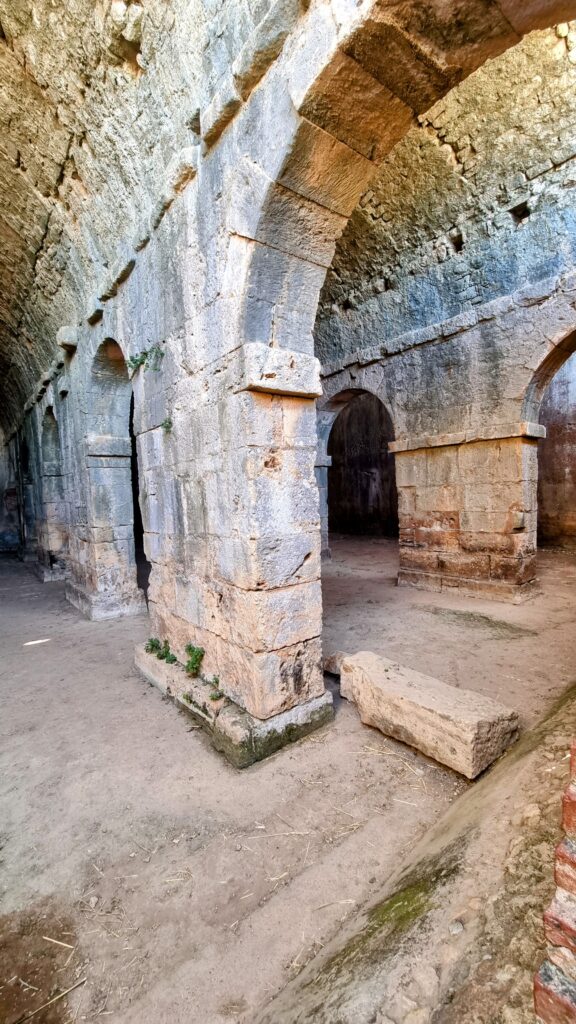
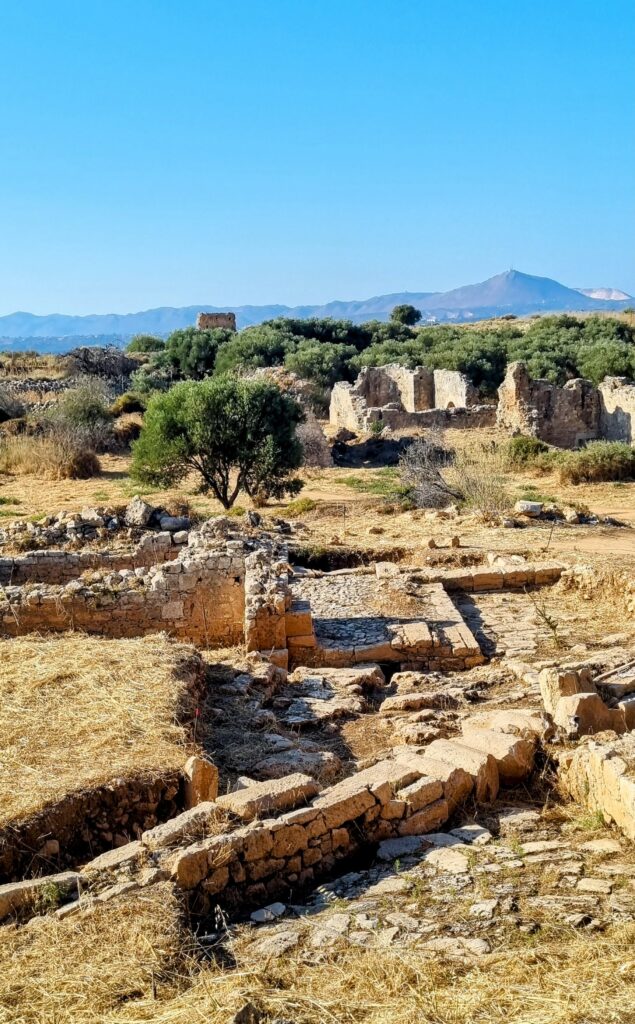
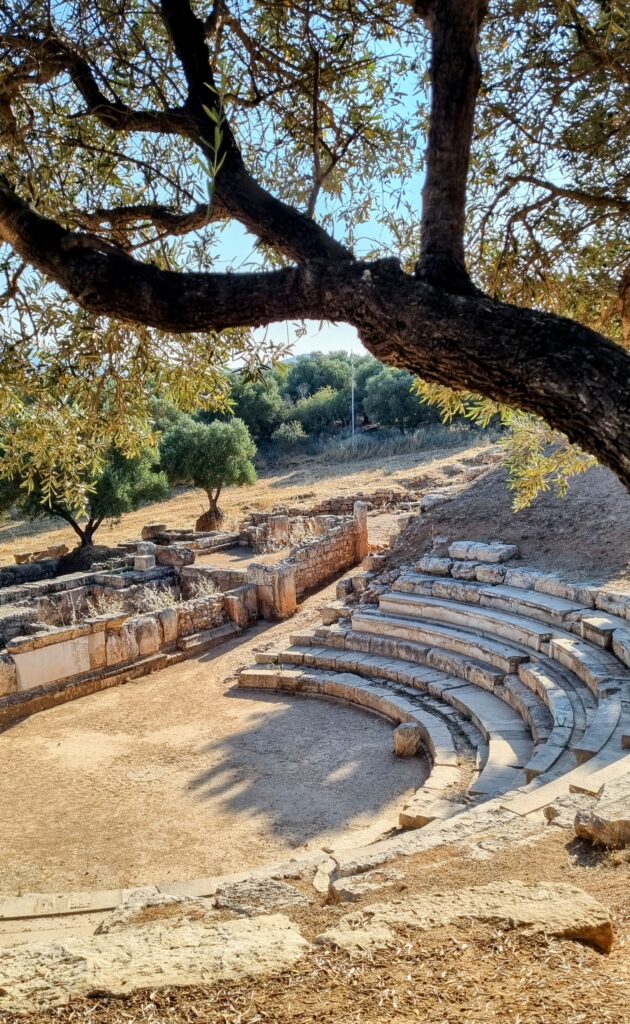
Walking around the excavations, we can see magnificent staircases, porticoes, a columned hall, pottery and stonemason workshops, courtyards, a theatre and a sanctuary. Of course, there are also royal halls, called megarons. The queen’s hall is decorated with replicas of famous frescoes with dolphins. It is also interesting to see traces of the ordinary, everyday life of the Minoans. In the warehouses, or rather pantries, there are huge clay containers, called pithos, which were used to store grain, wine and oil. We know that the buildings were equipped with toilets and that water and sewage systems distributed through clay pipes were used. The buildings provided coolness in summer, and light entered through skylights.
Many figurines and tablets with Linear A and B writing were also found at the excavation site. However, these treasures, along with pottery and jewellery, can be admired in the aforementioned museum in Heraklion.