The Snake Goddess is one of the most recognisable artefacts of the Minoan civilisation, dating back to around 1600 BC. The statuette, excavated at the Palace of Knossos by Sir Arthur Evans in 1903, was considered enigmatic and shrouded in mystery from the outset, and the explorer’s actions further confused the matter.
Sir Evans, known for his rather free but creative approach to interpreting finds, actually excavated two figurines, not one. The better known one was incomplete, missing one arm and the head. The archaeologist decided that it would be reconstructed from other elements found at the excavation site. In his reconstruction, he was strongly influenced by the appearance of the second statue excavated.
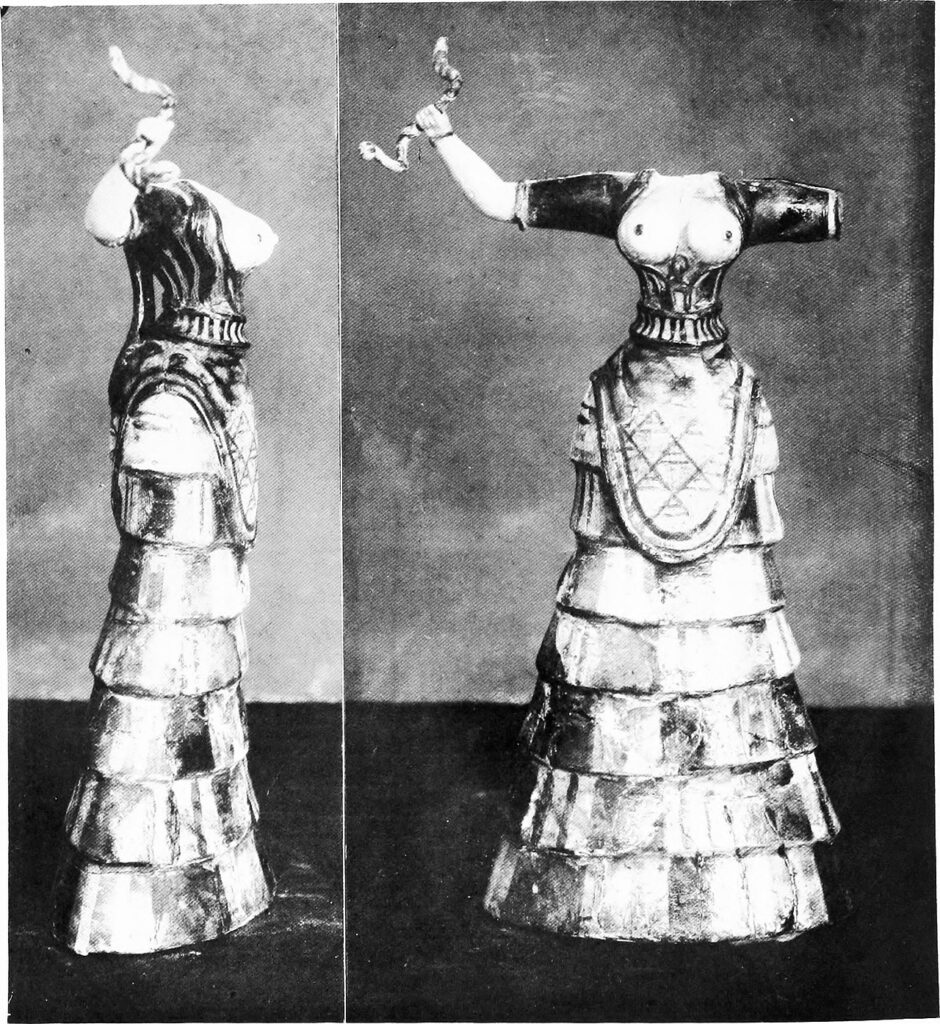
The result was a 30-centimetre faience figurine (the fired faience was painted and its surface shone) depicting a woman dressed in an ornate Minoan dress, with exposed breasts, two snakes in her raised hands and a cat or panther on her head. It is worth mentioning that the individual parts of the statuette were fired separately and then joined together with wire.
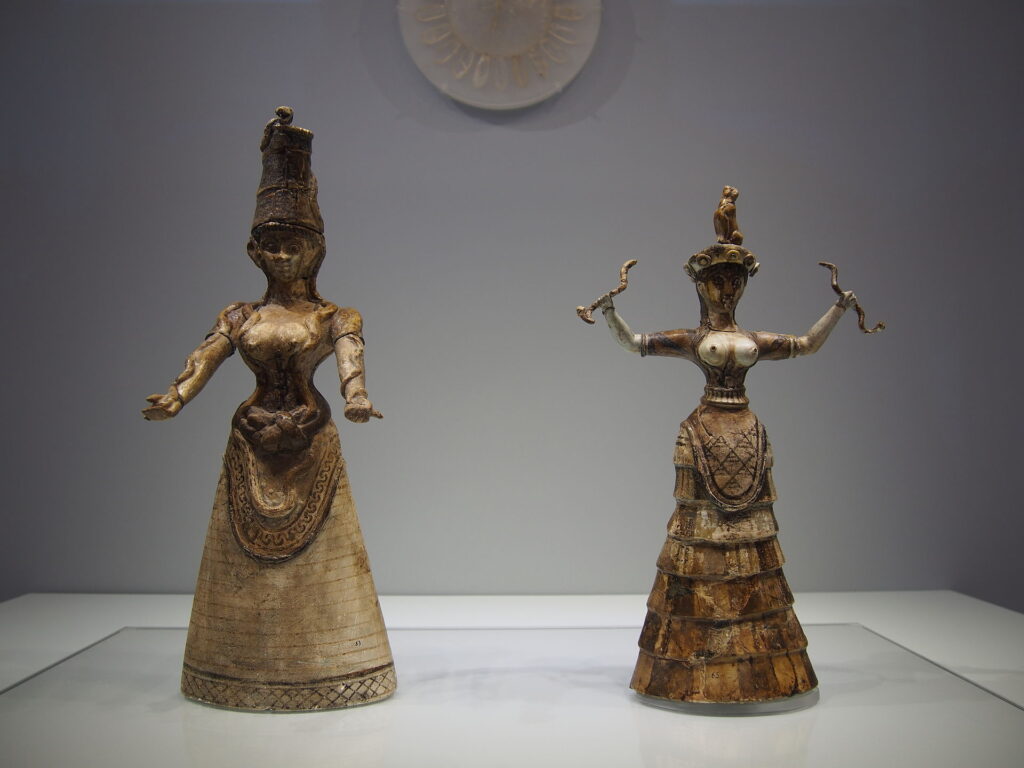
The fun began when researchers attempted to interpret the meaning of this find. Sir Evans arbitrarily called her a goddess, but is that really what she represents? It is believed that she could also have been a priestess or even a wealthy woman.
The animals surrounding her led some scientists to conclude that she was the Lady of the Animals, but if we assume that Evans incorrectly added the cat to her head and that the snakes are actually strings or twigs (as claimed by scientist Emily Bonney), this interpretation loses its meaning. If we assume that they are indeed snakes, there are also different ways of interpreting them. On the one hand, as in Mesopotamia and ancient India, they were a symbol of rebirth and renewal. On the other hand, there are voices interpreting them as a sign of death and the afterlife.
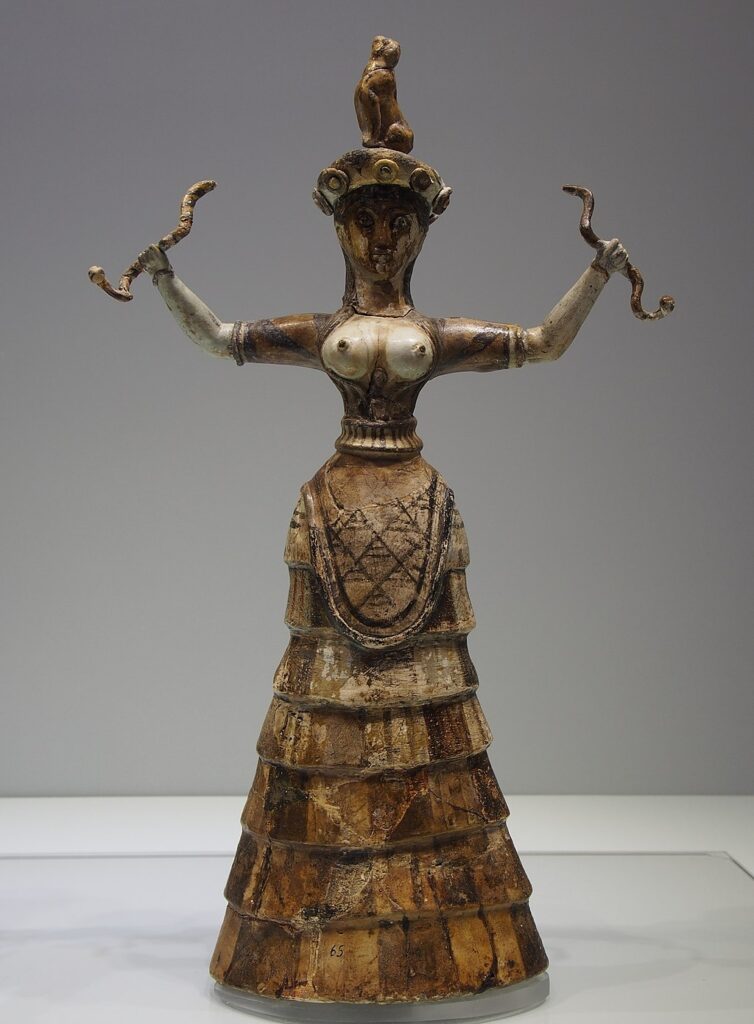
Even the abundant, exposed breasts are ambiguous. In Greek religion, they are a symbol of fertility, but in ancient Egypt they symbolised mourning, and we find such a reference in Homer’s Iliad.
Interestingly, the mystery hidden in the statue and its attractive, sensual appearance caused such a sensation and desire that there was a proliferation of ‘miraculous’ discoveries of other Snake Goddesses, which were, of course, fakes. Two fakes are particularly well known because they can still be found in the collections of respected museums today! One is in the Museum of Fine Arts in Boston and is an ivory figurine purchased in 1914. The second masterful forgery is a steatite statue of a naked woman with snakes adorning her head, purchased from a dealer in Paris by Henry Walters in 1929 and brought to the Baltimore Museum in 1931.
The authentic figurine, dating back over 3,500 years, can be viewed in the excellent Archaeological Museum in Heraklion, Crete.