In this post, I will tell you about an outstanding artist who was born in Crete, where he received his early education, before going on to become a respected and generously rewarded artist in his own time. Nearly forgotten for two centuries, suddenly, at the end of the XIX century he got rediscovered, diligently studied and admired again till our times.
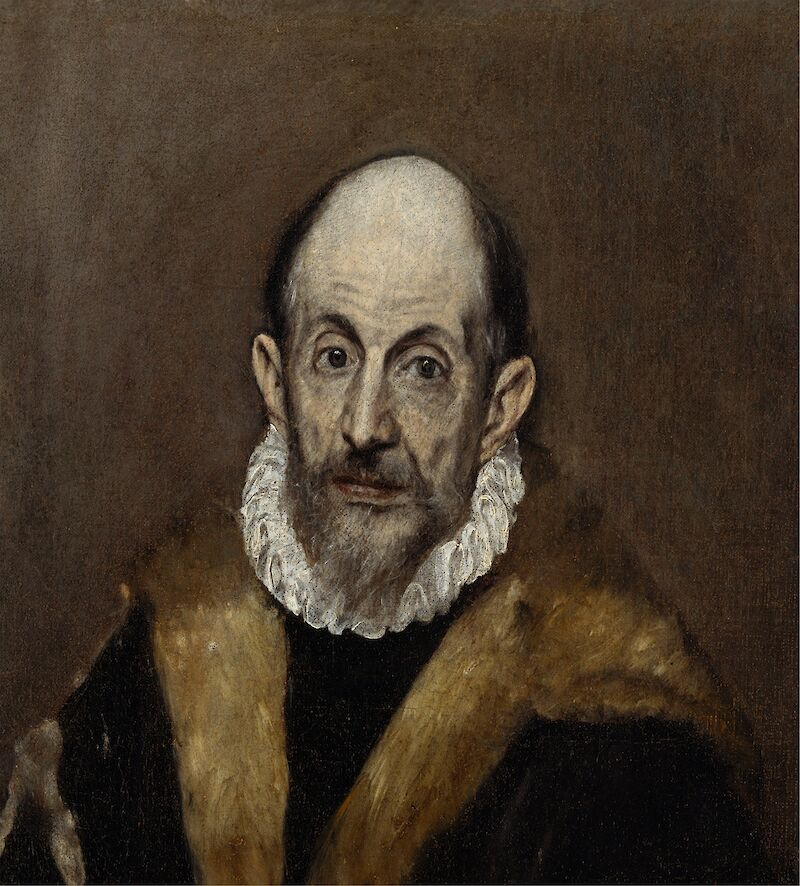
I am writing about Domenikos Theotokopoulos, known by the pseudonym El Greco. The artist was born in 1541 in Crete, near present-day Heraklion (then Candia), in the tiny village of Fodele. We must remember that at that time Crete was under the rule of the Venetian Republic, which directly influenced El Greco’s life, his fate, but also the subjects and style of his painting. It is worth mentioning that the influence of Venice did not extend to the artist’s religion though, which is remarkable considering the content of his works. It is believed that he remained an Orthodox Greek until his death.
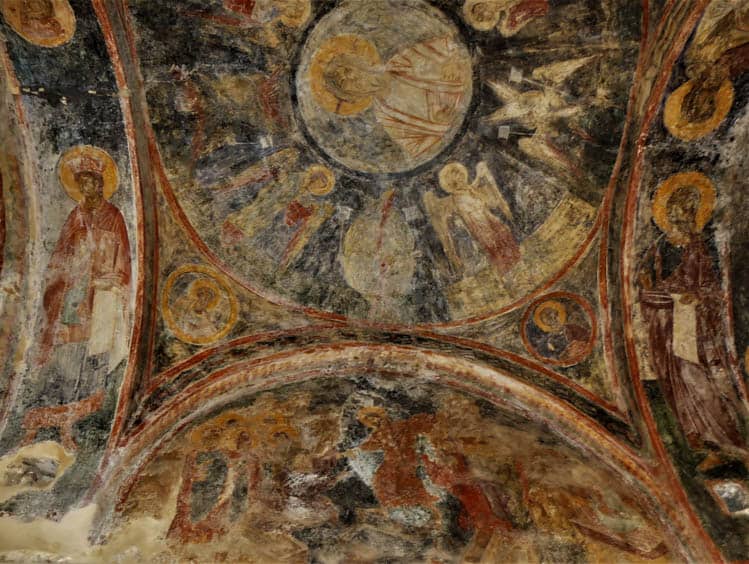
Domenikos Theotokopoulos initially trained in Greece. Researchers assume that he may have apprenticed at the then-famous school in Mistra in the Peloponnese, which instructed fresco painters.
Experts on his painting associate the recognisable features of his works, such as mysticism, spirituality and a peculiar tendency to elongate figures, with this school (Zawanowski, 1979). The style of his paintings from that period also suggests that he studied icon painting.
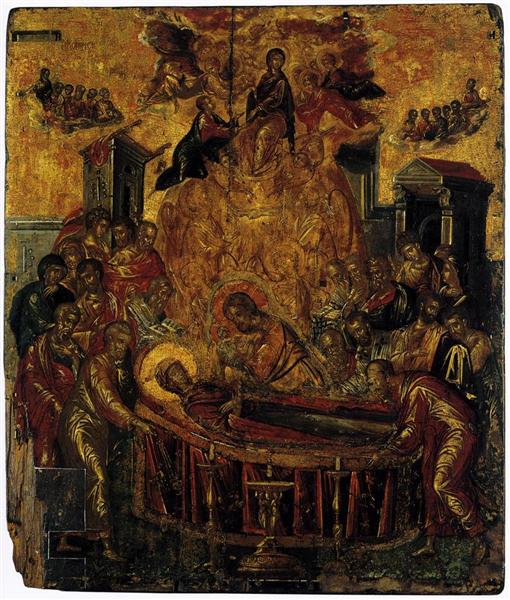
Not many paintings from the period he spent in his homeland have survived to this day, but The Dormition of Mary from 1567 and Saint Luke Painting Mary with the Child from 1560-67 are certainly considered to be among them. They reveal his training in icon painting and both are signed CHEIR DOMENIKOU. The paintings from his Cretan period are painted in tempera on a wooden support.
After leaving Crete, Domeniko went to Venice, the artistic centre of the world at that time. There, he joined the Greek community, which at that time numbered 600 members. His work was undoubtedly influenced by Venetian painters such as Titian, Tintoretto and Jacopo Bassano. Researchers believe that he may have apprenticed with one of them, most likely the last one mentioned. At this time, the painter abandoned flat, gilded backgrounds and began painting on raw canvas. He began to use oil paints. Motifs characteristic of the European style appeared in his work. An example of his work from that period is the Modena Triptych, an altarpiece created between 1560 and 1565.

El Greco’s next stop was Rome. Experts agree that his stay in this city had the greatest influence on the direction of the painter’s life. He came under the protection and patronage of Cardinal Alessandro Farnese and met humanists and art patrons who would become his future clients (e.g. Fulvio Orsini, who eventually acquired seven paintings by the master from Greece). He was able to admire and critically study the works of Raphael and Michelangelo.
His painting style became more colourful and featured several light sources. The artist expanded the subject matter of his works to include portraits. He enrolled in the Guild of St. Luke in Rome under the nickname Domenico Greco. He even opened his own studio, but the competition in Rome at the time was overwhelming and did not allow him to make a name for himself there. Ultimately, he gave up his attempts to spread his wings there after the events mentioned by Giulio Mancini. According to anecdotal evidence, the painter proposed to Pius V that he cover the Sistine Chapel with new frescoes, wanting to replace Michelangelo’s admired but criticised Last Judgement with his own artistic vision. It was probably this risky proposal that forced the painter to leave Rome.
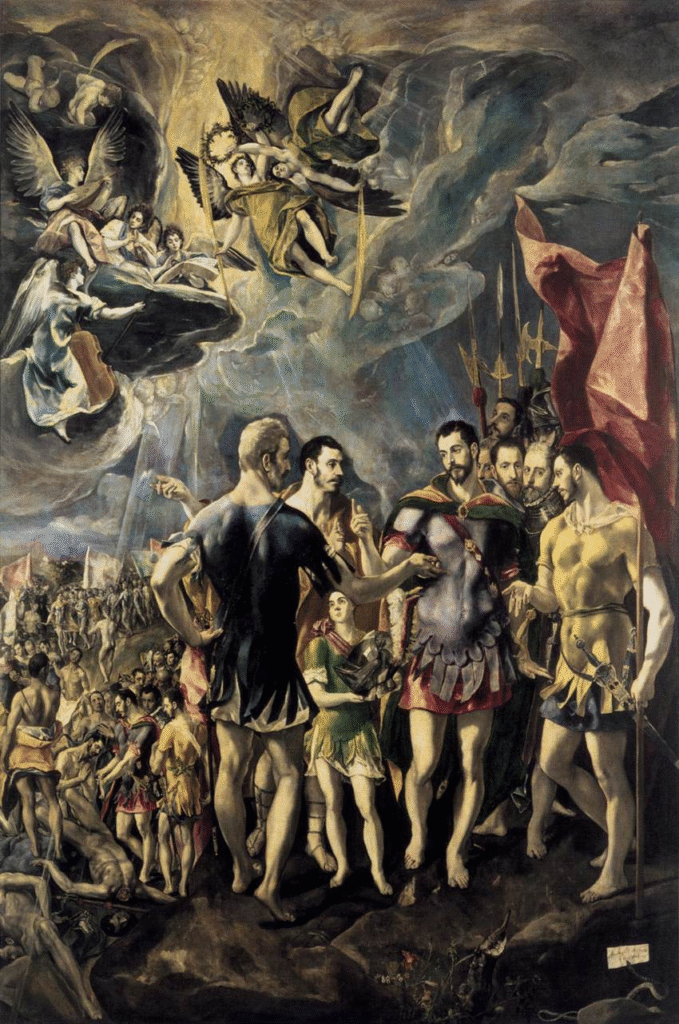
El Greco arrived in Spain, first in Madrid, then around 1576 he moved to Toledo (until recently the capital of Spain), where he received a commission to create the main altar with sculptures and paintings in the monastery of St. Dominic of Silos. and after completing the commission, he decided to settle there. Three years later, he managed to secure the commission he had been hoping for since setting foot in Spain. King Philip II commissioned a painting from the artist, who spent two years creating The Martyrdom of St. Maurice, which he hoped would open the door to work on decorating the famous Escorial (a monumental architectural complex of palaces, monasteries and libraries in San Lorenzo de El Escorial, 45 kilometres north-west of Madrid). Unfortunately, Philip II did not like the painting enough to hang it in the newly built palace. However, it did find its way into the royal collection.
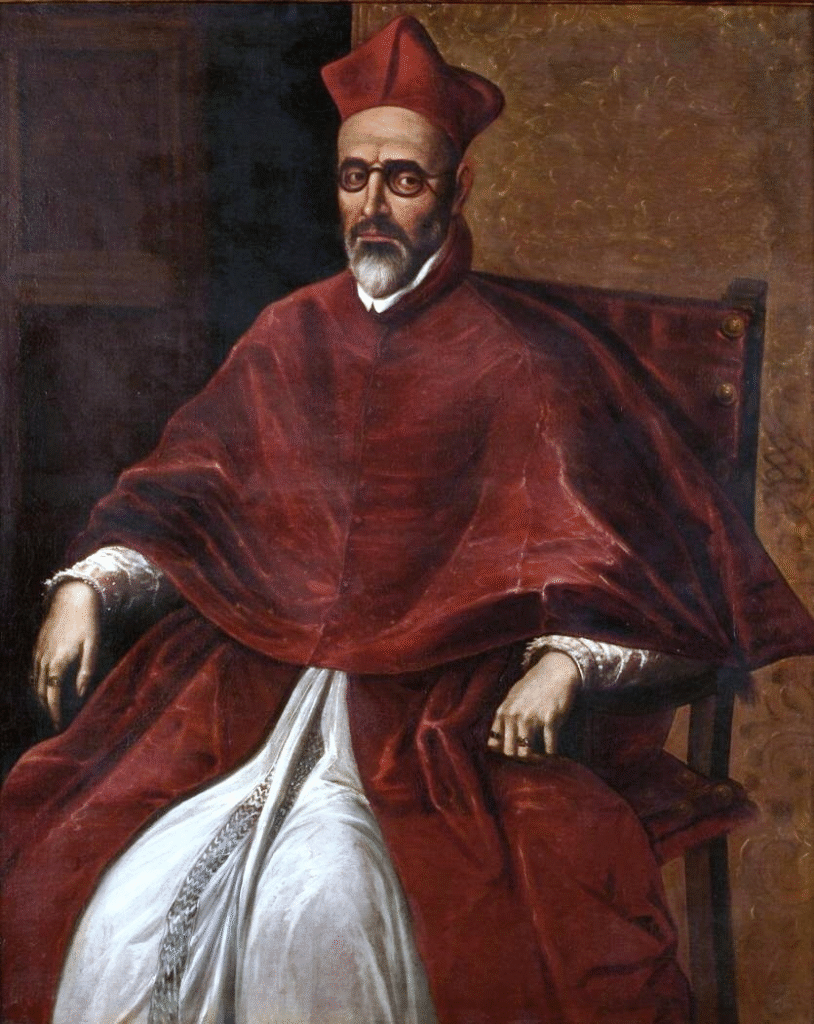
El Greco’s work was strongly influenced by the socio-political situation of the time. In conservative Spain, El Greco had to deal with the Inquisition, and the famous ‘Portrait of a Cardinal’ most likely depicts the Grand Inquisitor of Toledo, Ferdinand Nino de Guevara.
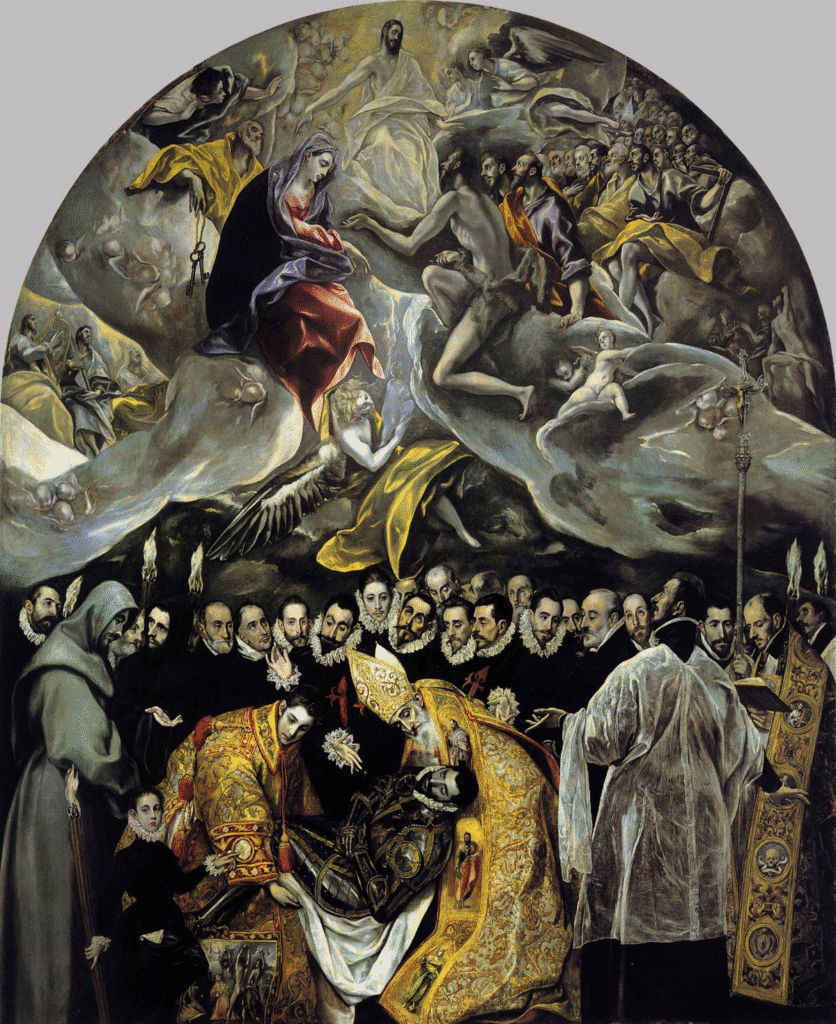
Another admired painting from that period is ‘The Burial of the Count of Orgaz’ (1586-88), which is evidence of the artist’s development of a new Baroque style. Among the people immortalised as participants in the ceremony, many figures contemporary to the painter can be recognised, as well as El Greco himself (the nobleman directly above St. Stephen) and his son, Jorge Manuel (the page). The artist placed his signature on a handkerchief in the young page’s pocket. It bears the date 1578, which is not the date the painting was created, but the date of his son’s birth.
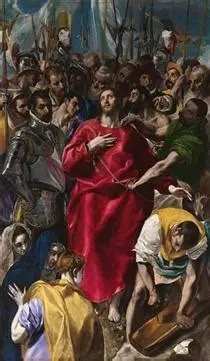
His son was born from his relationship (most likely marriage, as it is difficult to imagine the Spanish elite of that time functioning on any other basis) with Jeronima de las Guevas. It is believed that the artist’s wife could be seen portrayed as Magdalene in the painting ‘The Disrobing of Saint Luke’.
It is difficult to estimate how many works El Greco left behind. The numbers range from 200 to over 800 (including variants). Most of them are religious paintings, portraits of saints (128 Francises!).
Domenikos Theotokoplos died on 7 April 1614, but since the church where his ashes were laid to rest was demolished, his burial place no longer exists.
When you are in Crete, you can visit Fodele, the village where the artist was born. There is a small museum dedicated to him, where some replicas of his paintings are exhibited.
The Historical Museum of Crete in Heraklion presents two of his original works – ‘The Baptism of Jesus’ and ‘View of Mount Sinai and St. Catherine’s Monastery’, both from the artist’s Venetian period.
In writng this post, I used the following sources: Historia Brzydoty, U. Eco, 2007, wikipedia.com, wszystkoconajwazniejsze.pl